
📖 Muse English چیست؟
Muse English یک اپلیکیشن رایگان آموزش زبان انگلیسی است، با درس روزانه برای هر شش سطح، از A1 (مبتدی) تا C2 (تسلط کامل). هر روز لغتهای تازه با معنی فارسی، یک پادکست واقعی، تمرین شدوئینگ، گرامر و آزمون دارید. دربارهٔ اپ
📚 لغتها
۷ لغت تازه لغتهای تازه با معنی فارسی، مثال واقعی و تلفظ.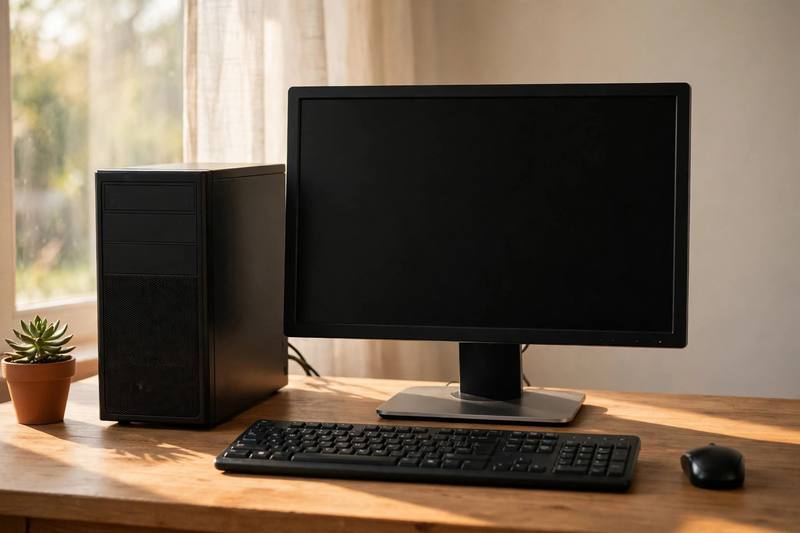

پادکست: فناوری
گفتوگوی امروز را گوش کنید.
📝 متن پادکست
Welcome to Muse English! I'm Maya.
And I'm Lena. Today we are talking about technology, and about something bigger than gadgets. We are talking about destiny.
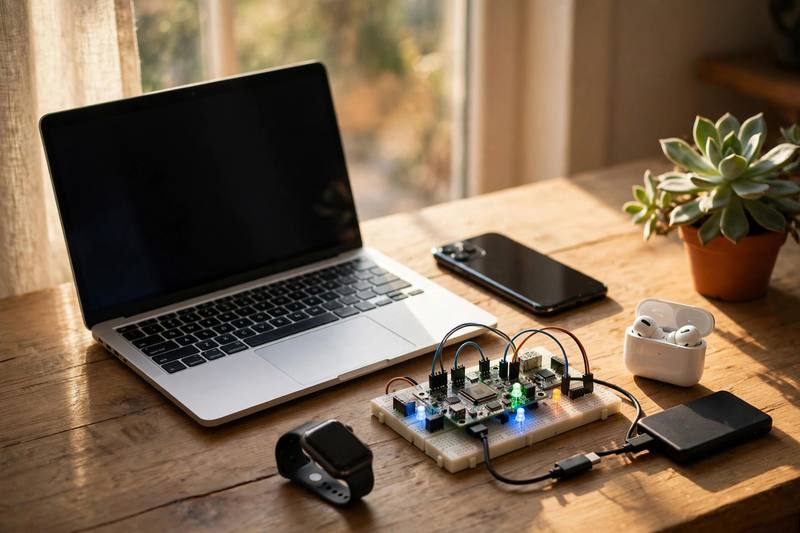
Destiny is a strong word. It usually means the events that will happen to a person, the path their life will take. And here is our question for today. How much of our destiny is shaped by digital technology?
That is a great question, because digital technology is no longer just a tool we pick up and put down. It decides how we work, how we read, how we learn, and even how we grow the food we eat.
Let's start with something ordinary. Think about your desktop. For millions of people, the desktop is where the working day begins. You sit down, you switch on your desktop, and the whole world opens up on that screen.
My desktop is almost like a second office. I write on my desktop, I plan my week on my desktop, and I video call my friends from my desktop. Ten years ago, that would have sounded strange. Now it is completely normal.
Before we go further, a quick word about the Muse English app. If you are enjoying this conversation, the app gives you something extra every single day. You get fresh words with photos and pronunciation, this podcast, shadowing stories you can practise out loud, quick quizzes, grammar lessons, and a leaderboard where you can earn points. It is free to install, so grab the app and keep learning with us.
Thank you, Maya. And the desktop changed reading too. Well, not only the desktop. Let me ask you something, Maya. Do you still read paper books?
I love paper books, but honestly, my e-reader gets more use these days. My e-reader holds hundreds of books, and it fits in my bag. When I travel, my e-reader is the first thing I pack.
I know what you mean. An e-reader is light, the screen is gentle on the eyes, and you can look up a word in seconds. But here is the interesting part. The e-reader did not kill the paper book. It just gave readers a new choice.
Exactly. And that is the pattern with digital technology. It rarely destroys the old thing completely. It changes it. The desktop did not destroy the office. The e-reader did not destroy the library. They changed how we live, quietly, day by day.
Which brings us back to destiny. If the tools around us change how we spend our days, then they also change who we become. That is why the choices we make about technology matter so much.
Now, let's move from the office to the farm, because digital technology is changing farming too, in ways most people never see.
Farming? That feels far away from my desktop. What does technology have to do with a field of wheat?
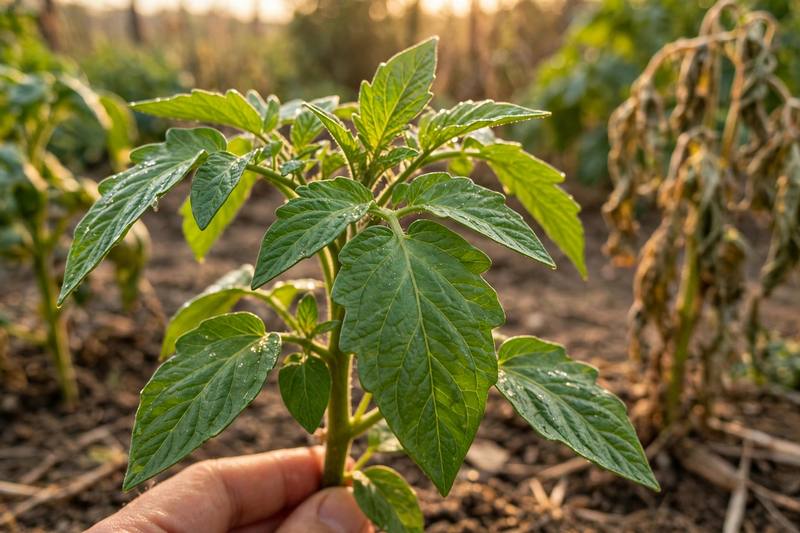
A lot, actually. Scientists are now developing disease-resistant crops. A disease-resistant plant is one that can withstand or fight off diseases, so farmers lose less of their harvest.
So a disease-resistant crop is like a plant with a strong immune system?
That is a good way to think about it. Researchers study the genes of a plant, and they look for the traits that make one variety disease-resistant while another one is not. Then they breed those strengths into the next generation of crops.
And where does digital technology come in?
Everywhere. Computers analyse the genetic data. Satellites watch the fields from above. Sensors in the soil send information to a farmer's desktop every hour. Without digital technology, none of this would be fast enough to help a real farm.
That is amazing. So a disease-resistant crop is not just a lucky accident. It is the result of data, science, and a lot of patient work.
Exactly. And think about what that means for the world. If more crops are disease-resistant, farmers in poor countries lose less food, prices stay steadier, and fewer people go hungry. One small change in a seed can change the destiny of a whole village.
Destiny again. I like how that word keeps coming back. We often think destiny is something that happens to us, but here, scientists are shaping it.
Yes, and that is the hopeful side of technology. But there is also a darker conversation we need to have, and it is about the climate.
I know where this is going. The doomsday scenario.
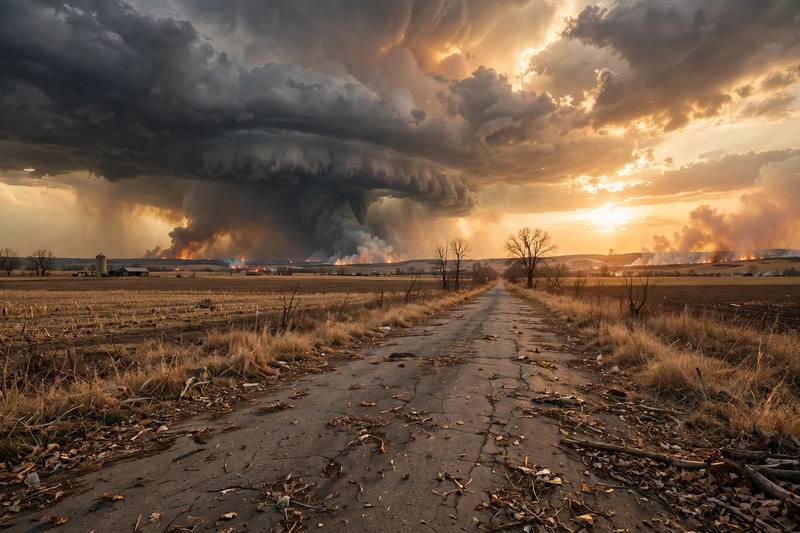
Yes, the doomsday scenario. That phrase means a prediction of a catastrophic future event, a disaster so big it changes everything. You hear it in the news all the time. A doomsday scenario for the climate, a doomsday scenario for the oceans, a doomsday scenario for food and water.
And honestly, Maya, when I hear about a doomsday scenario, my first reaction is to switch off. It feels too big and too frightening.
I understand that. But here is the thing. A doomsday scenario is a warning, not a promise. Scientists describe the worst case so that we can avoid it. The question is what we do with the warning.
Let me pause here with a reminder about the Muse English app. Every day the app gives you seven new words with photos and clear pronunciation, plus this podcast, a shadowing story to speak along with, a quiz to test yourself, and a grammar lesson to build your accuracy. You earn points and climb the leaderboard as you learn. It is free, it is simple, and it is waiting for you.
Thank you, Lena. So what do we do? What would actually help?
Give me an example. What counts as drastic measures?
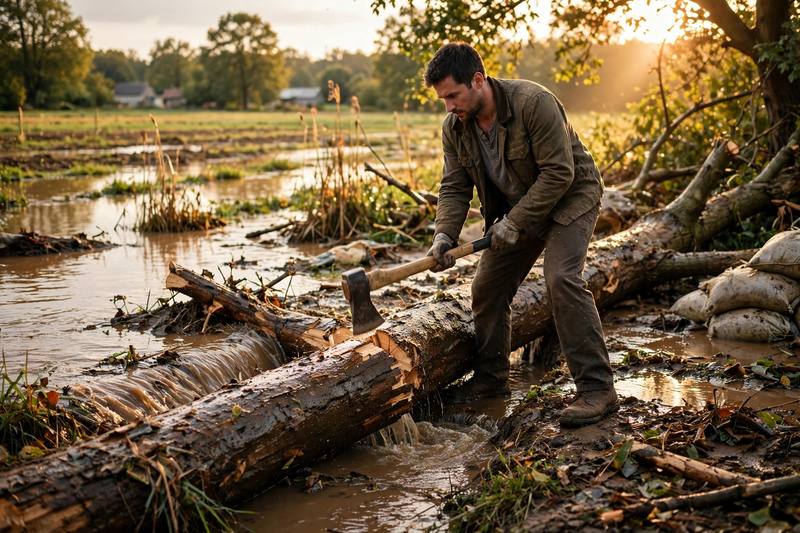
Experts say we need drastic measures. Drastic measures are extreme and severe actions taken to solve a problem. Not small changes, not gentle suggestions, but drastic measures.
That sounds almost impossible. Do drastic measures ever actually work?
They do, but only when people understand why they matter. Think back to the disease-resistant crops. Nobody called those drastic measures, but the science behind them took decades. Big change usually starts with small, patient work.
And digital technology helps there too, right? The same computers that sit on a desktop can model the climate, predict floods, and help cities prepare.
Exactly. The same digital technology that warns us about a doomsday scenario can also help us prevent one. The tools are neutral. The destiny is in how we use them.
So, Maya, we have talked about the desktop and the e-reader, about disease-resistant crops, about the doomsday scenario and drastic measures. What ties all of this together?
For me, it is that word we started with: destiny. We began by asking how much of our destiny is shaped by digital technology. And now I think the answer is clear. Technology shapes our destiny, but it does not decide it alone.
I agree. A desktop is just a machine until a person sits down and uses it to learn something new. An e-reader is just a device until a reader opens it and discovers a new idea.
And a disease-resistant crop is just a seed until a farmer plants it, waters it, and trusts the science behind it. The technology matters, but the human choice matters more.
That is a hopeful way to look at it. We are not passengers in a doomsday scenario. We are the people who decide whether that scenario ever happens.
Right. Drastic measures sound frightening, but every drastic measure starts with one person deciding to act. One city, one company, one family, one reader with an e-reader learning something new.
Let's bring it back to our own lives for a moment. Think about your own desktop. What do you use it for? Is it helping you become the person you want to be?
That is a good question to ask yourself. If your desktop is full of distractions, your days will drift. If your desktop is full of tools for learning, your days will build towards something.
And the same is true of an e-reader. My e-reader holds hundreds of books, but the books only matter if I open them. The device cannot read for me. My destiny is in my own hands, one page at a time.
So the lesson of today is simple. Digital technology is powerful, but it is not destiny by itself. Destiny is what happens when people take powerful tools and use them with purpose.
Beautifully said. Let's recap our seven words before we finish. A desktop is a computer designed for use on a desk. Destiny is the events that will happen to a person, the path of their life. Digital technology means the electronic tools and systems that process data digitally.
A disease-resistant plant can withstand or fight off diseases. A doomsday scenario is a prediction of a catastrophic future event. Drastic measures are extreme and severe actions taken to solve a problem. And an e-reader is an electronic device for reading digital books.
Try using these words this week. Talk about your desktop. Talk about your e-reader. Ask yourself what your destiny looks like, and how digital technology is shaping it.
And if the news talks about a doomsday scenario, ask what drastic measures could prevent it. And if you hear about disease-resistant crops, you will know exactly what that means.
That is our episode for today. Thank you for listening to Muse English. Keep learning, keep practising, and remember, your destiny is something you help to write, one word at a time.
See you tomorrow, everyone. Goodbye.
🎙 تمرین شدوئینگ نمونهٔ رایگان
گوش کنید و همزمان با صدا بلند تکرار کنید. تمرین کامل شدوئینگ در اپ است: هر جمله را تکرار میکنید و میبینید اپ چند کلمه از آن را تشخیص داده است.
Sara sat at her desktop every morning before sunrise.
Her desktop was old, slow, and noisy, but it was her window to the world.
On her desktop she read the news about digital technology and the future of farming.
صحبت کردن را تمرین کنید
در اپ Muse English همهٔ جملهها را شدوئینگ کنید. اپ گوش میدهد و نشان میدهد چند کلمه از جملهتان را تشخیص داده است.
📝گرامر: Probability: Bound To, May Well, Likely To
English has many ways to say how likely something is. Beyond will, might and probably, you can say bound to, may well or likely to. For example, digital technology is likely to change how we read.
Think of a scale from almost certain to impossible. At the top, be bound to, be sure to and be certain to mean something will almost certainly happen.
In the middle, be likely to, may well, there's a good chance and in all likelihood mean something is probable. At the bottom, be unlikely to and there's no chance mean it almost cert
این گرامر را در اپ کامل یاد بگیرید
توضیح کاملتر، مثالهای بیشتر و تمرین تعاملی.
راهنمای کامل و تمرینها: Probability: Bound To, May Well, Likely To ←
هر روز ادامه بدهید
هر روز درس، پادکست و آزمون تازه؛ رایگان در اپ Muse English.