

📖 What is Muse English?
Muse English is a free English learning app with daily lessons across all 6 CEFR levels (A1 Beginner to C2 Proficient). Every day brings new vocabulary, a real podcast conversation, shadowing practice, grammar and quizzes — all at museenglishapp.com.
📚 Vocabulary
10 new words Learn new words with real examples and audio.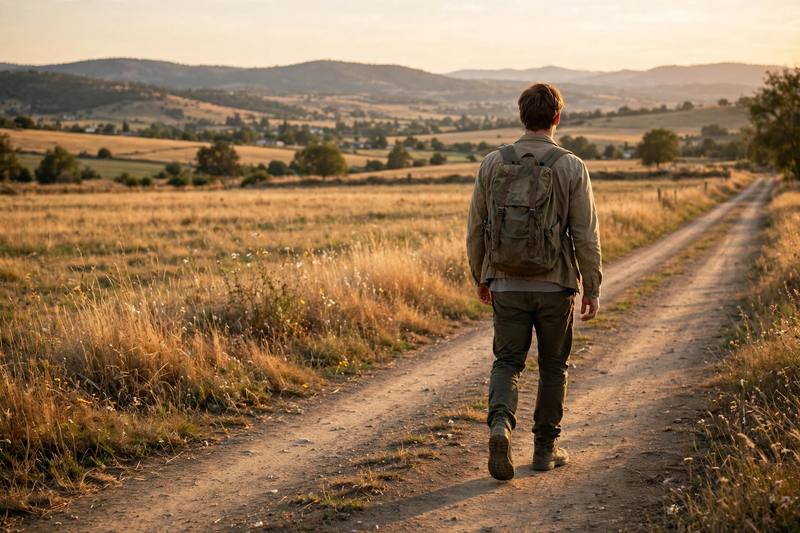

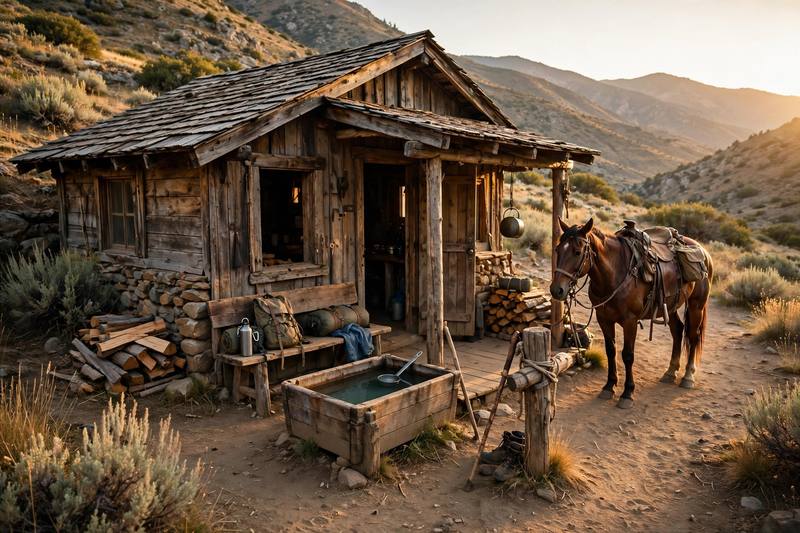
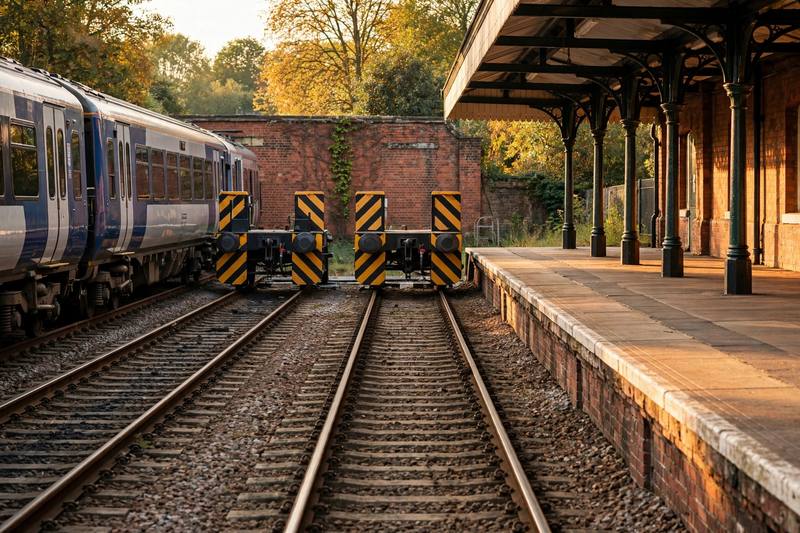
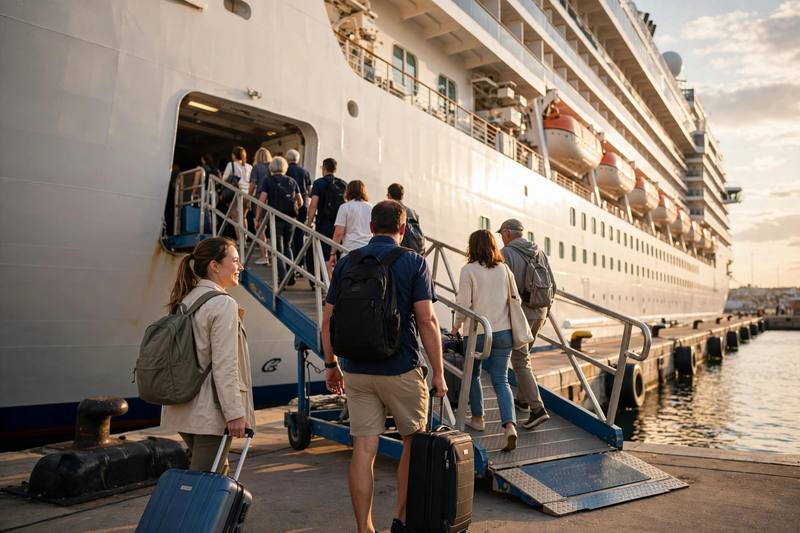
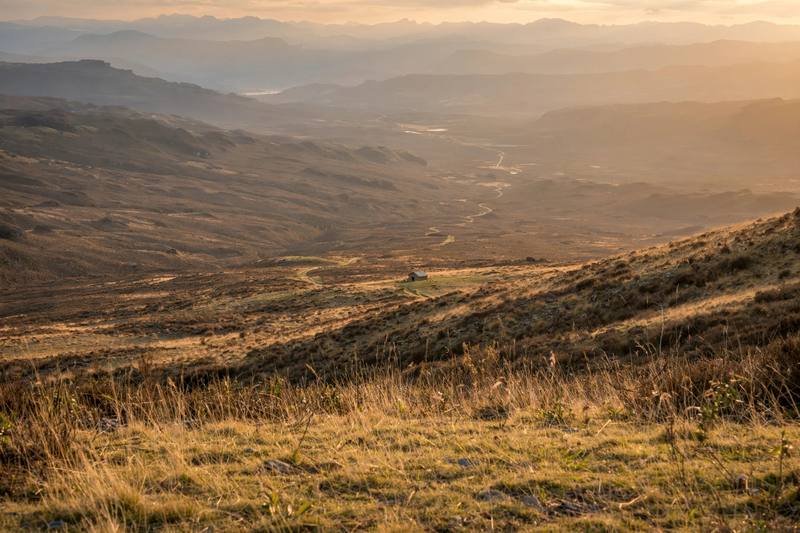
Podcast: Travel & Transport: Wayfarers And Waystations
Listen to today’s conversation.
📝 Podcast Transcript
Hello and welcome back to Word Kitchen, the show where we cook up the English language one delicious word at a time. I am Maya.
And I am Lena. Today we are going on a journey, and I mean that almost literally. Our theme is the art of travel, told through ten beautiful, sophisticated words.
That is right. We have words for wanderers, for slow walkers, for mapmakers, and for the far corners of the earth. So pack a bag, and let us begin with a word that sounds like it belongs in a poem. Lena, what is a peregrine traveler?
A peregrine traveler is someone who wanders far from home, guided more by curiosity than by a plan. The word peregrine comes from the Latin for someone journeying abroad, and it carries this lovely sense of roaming the world with open eyes.
I love that. I once met a peregrine soul in a night train crossing the Balkans. She had no fixed destination. She told me she had been living a peregrine life for three years, moving from city to city, working wherever she landed.
That is the dream for so many people, is it not? To be a little bit peregrine. Not lost, exactly, but deliberately unrooted. There is even the peregrine falcon, the bird that migrates enormous distances every year. So the word carries both freedom and endurance.
Beautifully put. And it makes me think of the difference between a tourist and a peregrine wanderer. A tourist follows a schedule. A peregrine traveler follows a feeling.
Speaking of people who travel for a living, that brings us to our second word, which is itinerant. Maya, how would you describe an itinerant life?
An itinerant worker is someone who moves from place to place for work. Think of an itinerant musician playing in a different town every weekend, or an itinerant nurse taking short contracts in rural hospitals.
Exactly. The classic image is the itinerant craftsman of centuries past, going door to door with his tools. But the modern version is everywhere. The freelance photographer with an itinerant schedule, shooting weddings on three continents in one summer.
And honestly, so many digital nomads today are living an itinerant life without using the word. They rent a desk in Lisbon for two months, then Bangkok for two months. It is the old itinerant pattern with faster Wi-Fi.
Ha, that is true. Though I think the word itinerant keeps a slightly romantic, old-world flavor. It suggests someone with a trade, a skill they carry with them, not just a laptop and a beach.
Agreed. Now, whether you are peregrine or itinerant, the best travelers share a habit, and our next word names it. Lena, do you ever just meander?
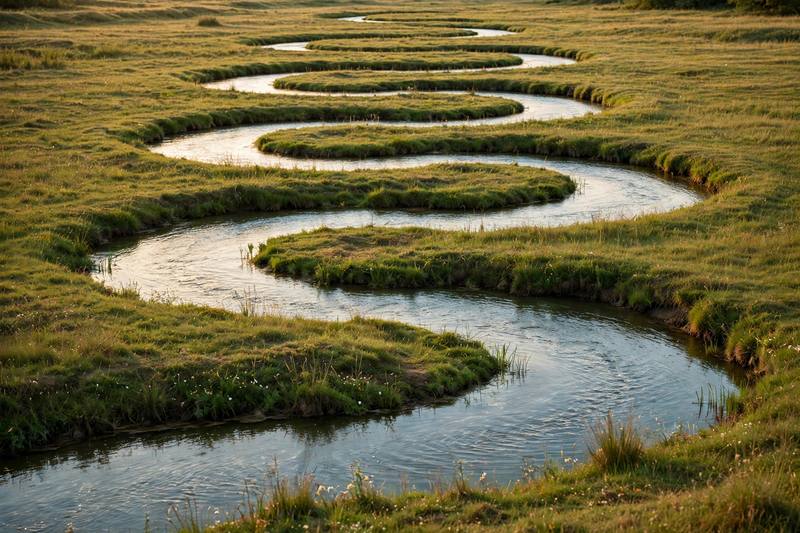
Oh, constantly. To meander is to wander without a fixed direction, the way a river meanders through a valley. When I arrive in a new city, my first day is always a meander. No map, no list, just walking.
That is the perfect first day. I remember landing in Marrakech years ago and deciding to simply meander through the medina. Every alley seemed to meander into another alley, and I got gloriously lost for hours.
And that is the thing. A journey that never meanders is just transportation. The meander is where the discoveries happen. Even rivers know this. A river that does not meander is a canal, efficient but dull.
I love that image. So our advice to listeners: build a meander into every trip. Let your feet meander, let your eyes meander, and the city will show you things no guidebook can.
Our next word is a close cousin of meandering, but with more style. Maya, what does it mean to saunter?
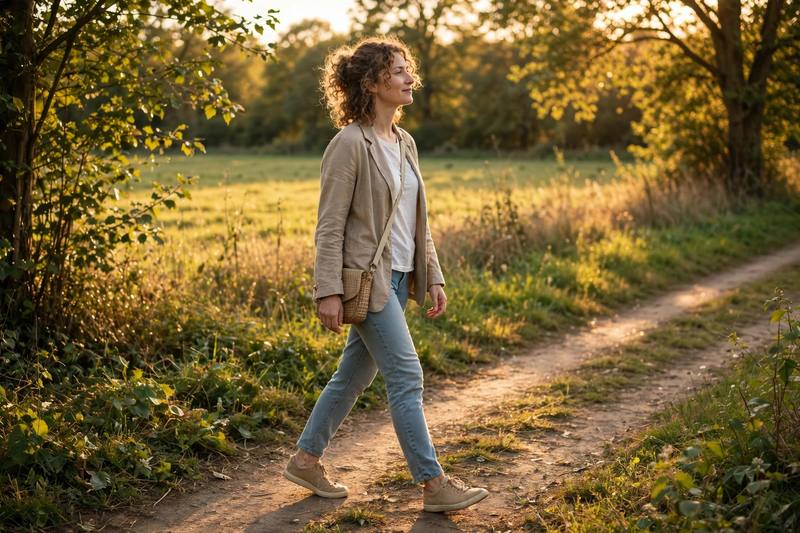
To saunter is to walk slowly, calmly, and confidently, as if you own the street and the afternoon. When you saunter, you are in no hurry at all. Picture someone who can saunter along a promenade at sunset, hands in pockets, smiling at nothing in particular.
The writer Thoreau once said that to saunter is almost a kind of holy walking, like a pilgrim with nowhere urgent to be. I try to saunter through airports, which is ridiculous, because everyone else is sprinting.
That is the ultimate test. Can you saunter when the departure board is flashing? The saunter is a small rebellion against hurry. Next time you are in a beautiful place, do not march through it. Saunter through it.
And let the hurried crowds stream past you while you saunter at your own royal pace. Wonderful. Now let us go bigger, much bigger. Our fifth word is for the most ambitious journeys of all. Maya, what does it mean to circumnavigate the globe?
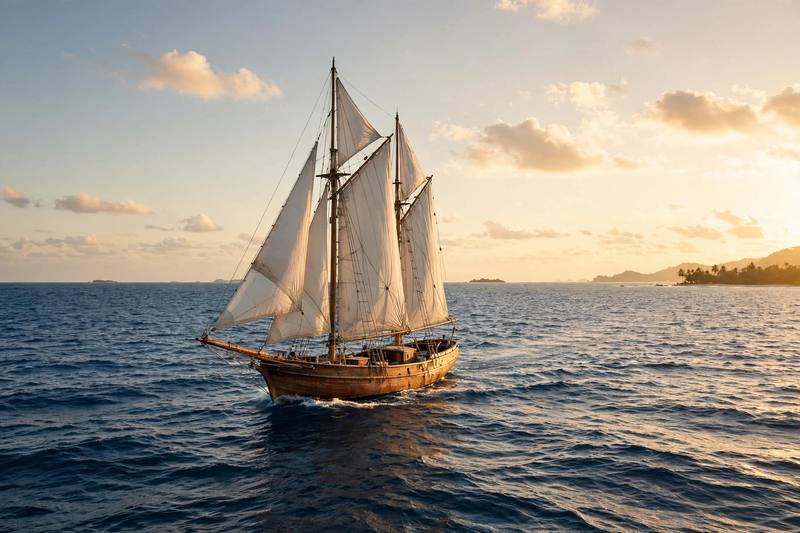
To circumnavigate means to travel all the way around something, usually the earth. Magellan's expedition was the first to circumnavigate the planet, though Magellan himself did not survive the voyage.
Right, and today a small but fearless group of solo sailors still sets out to circumnavigate the world alone. Imagine that. Months at sea, just you and the horizon, trying to circumnavigate an entire planet in a boat shorter than a bus.
It is the ultimate test of seamanship. The first woman to circumnavigate the globe solo did it in the late nineteen sixties, and she described the loneliness as the hardest part, harder than the storms.
What I find moving is that every person who sets out to circumnavigate the earth is repeating a dream that is five hundred years old. The technology changes, but the urge to circumnavigate, to draw a full circle around the world, never fades.
From the grandest voyages, let us come back down to the small, human pauses along the way. Our sixth word is waystation. Lena, paint me a picture.
A waystation is a stopping place on a long journey, somewhere travelers rest, eat, and exchange news before moving on. In ancient times, the caravanserai was the classic waystation, a fortified inn on the Silk Road where camels, merchants, and stories all rested together.
I love the idea that every waystation is also a meeting place. Think of a tiny mountain café that serves as a waystation for hikers, or even a big airport transit hotel, which is really just a modern waystation with better lighting.
Exactly. And some towns exist almost entirely as a waystation. They grew up because travelers needed them, and they keep their character from centuries of strangers passing through. Without the waystation, the long journey would be unbearable.
Every journey needs its pauses. And every journey needs its ending, which brings us to terminus. What is a terminus, Lena?
A terminus is the station at the very end of a railway line, where the tracks simply stop. Think of the great European terminus stations with their vast arched roofs, places where thousands of journeys end every single day.
There is something emotional about a terminus. You step off the train at the terminus, and the journey is officially over. No more motion, no more anticipation. The terminus forces you to arrive, really arrive.
And writers love the word as a metaphor, too. They will call something the terminus of an era, or the terminus of a dream. It sounds so much more final, more architectural, than just saying the end.
It does. Though I will admit, I have mixed feelings at every terminus. Relief to arrive, sadness that the moving part is done. A good terminus should probably have a café, so you can sit with that feeling for a while.
Now let us rewind to the very beginning of a voyage. Our eighth word is embarkation. Maya, why is embarkation such a romantic word?
Embarkation is the formal act of boarding a ship or an aircraft at the start of a journey. There is a ceremony to embarkation, the gangway, the announcements, the moment the doors close. Embarkation is the threshold between ordinary life and adventure.
That is exactly it. The hour before embarkation is electric. You have said your goodbyes, your bag is packed, and embarkation turns waiting into leaving. I always arrive early just to savor the embarkation atmosphere in the terminal.
And historically, embarkation was a huge public event. Whole towns would gather at the docks to watch an embarkation, waving handkerchiefs as the ship pulled away. We have lost some of that pageantry, but the word embarkation keeps the romance alive.
It really does. Our ninth word takes us to the edges of the map. Far-flung. Maya, what makes a place far-flung?
A far-flung place is extremely remote, distant from the centers of the world. Think of far-flung islands in the Pacific, or a far-flung research station in Antarctica. The phrase far-flung always carries a little thrill of inaccessibility.
I have a friend who collects postcards from far-flung outposts, the more far-flung the better. She says a letter from a far-flung village feels like a message from another century.
And in our connected age, the far-flung still exists, which is kind of miraculous. You can video-call someone in a far-flung corner of the planet, and yet that place remains far-flung in spirit, wild, distant, and a little mysterious.
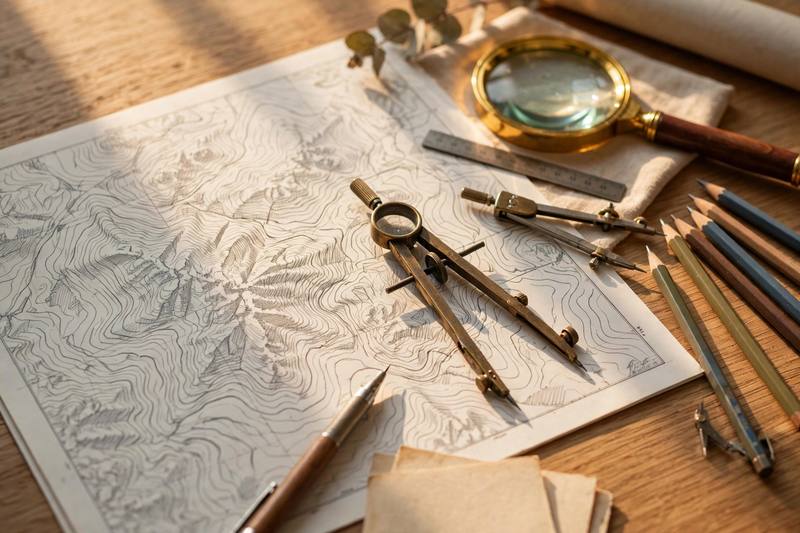
Beautiful. Our final word is for the people who draw the maps that guide all these journeys. Cartography. Lena, tell us about it.
Cartography is the art and science of making maps. For centuries, cartography was one of the most powerful skills in the world, because whoever controlled cartography controlled how people imagined the earth.
The old masters of cartography were artists as much as scientists. Their cartography filled unknown oceans with sea monsters and golden cities. Every piece of antique cartography is a portrait of what its age believed and feared.
And modern cartography is no less fascinating. Satellite cartography maps the planet down to the centimeter, yet digital cartography still makes choices, what to label, what to hide, what to emphasize. All cartography is an argument about what matters.
That is a profound thought to end on. From the peregrine wanderer to the science of cartography, every journey needs both the dreamer and the mapmaker.
Let us recap our ten words for the road. A peregrine traveler roams far from home. An itinerant worker travels from place to place for work. To meander is to wander without direction. To saunter is to walk slowly and confidently. To circumnavigate is to travel all the way around the earth. A waystation is a resting place on a long journey. A terminus is the final station where the line ends. Embarkation is the act of boarding at the start of a voyage. Far-flung means extremely remote. And cartography is the art and science of mapmaking.
Ten words, one grand journey. Try using one of them this week. Tell a friend you are going to meander through the old town, or saunter to the café instead of rushing. Language is a journey too.
Thanks for traveling with us on Word Kitchen. I am Maya.
And I am Lena. Until next time, keep wandering.
🎙 Try Shadowing free sample
Listen and repeat along with the studio audio. Full shadowing practice with pronunciation scoring is in the app.
The Cartographer's Last Voyage
Elena had spent forty years studying cartography, drawing coastlines no tourist had ever seen.
In her youth she was a peregrine soul, happiest with a backpack and an open horizon.
Train your speaking
Shadow every sentence with studio audio and get your pronunciation scored — only in the Muse English app.
📝Grammar: Past and present habits and states — used to, would, and the past simple
**used to** + infinitive describes a past habit or state that is finished: I used to teach English. It has no present form — never say *I use to*. The negative and question drop the d: **didn't use to**, **did you use to**. In conversation, **never used to** often replaces **didn't use to**. For repeated past actions, **would** + infinitive adds a nostalgic, storytelling tone: every summer we would sail to the islands. But **would** can never describe a past state — only **used to** or the past simple can do that. **used to** and the **past simple** overlap for repeated actions: I used to l
Master this grammar in the app
Get clear explanations, more examples and interactive exercises.
Keep learning every day
New lessons, podcasts and quizzes daily — free in the Muse English app.