

📖 What is Muse English?
Muse English is a free English learning app with daily lessons across all 6 CEFR levels (A1 Beginner to C2 Proficient). Every day brings new vocabulary, a real podcast conversation, shadowing practice, grammar and quizzes — all at museenglishapp.com.
📚 Vocabulary
10 new words Learn new words with real examples and audio.






Podcast: The Strong, Healthy Body
Listen to today’s conversation.
📝 Podcast Transcript
Welcome to Word Kitchen, everyone. I am Maya, and this is Lena, and today we are cooking up something really special for your health vocabulary.
That is right, Maya. Today is all about the body, about feeling strong, staying healthy, and talking about all of it like a truly advanced English speaker.
Exactly. We have ten wonderful, sophisticated words for you today, all connected to health and the body. By the end of this episode, you will not just know them, you will feel them.
Oh, I like that. Let us start with something energizing. Maya, what did you do this morning?
Well, I went for a cold morning swim, actually, and it was so invigorating. There is nothing quite like cold water to wake up every cell in your body.
A cold swim sounds invigorating, but also terrifying. I am more of a slow, gentle walk person in the morning.
You should try it once. The feeling afterwards is invigorating in a way coffee never manages. It is like your whole body is humming with energy.
I believe you. An invigorating start to the day can change your whole mood. What makes an activity invigorating, do you think?
I think it is anything that wakes your body up and makes you feel alive and refreshed. A brisk walk in the cold air can be invigorating too. It does not have to be extreme.
That is a good definition. So, invigorating means giving you energy and freshness. Now, what is the opposite? Let us talk about the word debilitating.
Oh, that is a heavy one. Debilitating describes something that takes all your strength away, something that leaves you weak and unable to function.
Right. We often hear it with chronic conditions. Chronic pain can be debilitating. Severe flu can feel debilitating for a week.
Yes, and at an advanced level you can use it metaphorically too. Stress can be debilitating. A toxic work schedule can be truly debilitating for your health.
That is so true. I read once that sleep deprivation has a debilitating effect on concentration. So debilitating is about being weakened, drained of power.
Exactly. Invigorating gives you strength, debilitating takes it away. A perfect pair. Now, Lena, you mentioned your morning walks. How long do you walk?
About forty minutes every day. I am trying to build my stamina.
Stamina is such an important word. It is your ability to keep going, physically or mentally, over a long time.
Yes. When I started, after fifteen minutes I was done. Now my stamina is much better. Building stamina takes patience and consistency.
It really does. Runners talk about stamina all the time, but office workers need stamina too. Mental stamina matters as much as physical stamina.
Absolutely. A long exam, a demanding project, a full day of caregiving, all of these require stamina. How do you build yours?
Slowly. You increase the effort a little at a time, and your stamina grows. That is the secret of stamina: gradual, steady challenge.
Beautiful. And speaking of challenge, let us talk about the enemy of stamina: the sedentary life.
Oh yes. Sedentary is one of those words every advanced learner should own. It describes a lifestyle with very little movement, lots of sitting.
Desk jobs make us sedentary. Long commutes make us sedentary. Even relaxing on the sofa all evening is sedentary behavior.
And the research is clear: a sedentary lifestyle is linked to all kinds of health problems. The body was built to move.
It was. Breaking up sedentary time is so important. Even standing up every hour helps. Small movements fight the sedentary trap.
I love that phrase, the sedentary trap. Now, when we do eat, what should we eat? That brings us to wholesome.
Wholesome is such a warm word. It means natural, pure, and genuinely good for you, especially food.
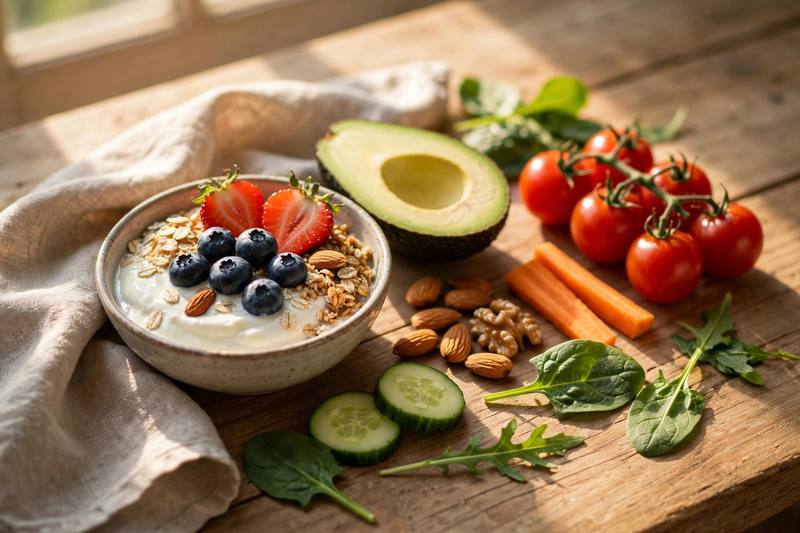
Yes. A bowl of vegetable soup, fresh bread, fruit, these are wholesome foods. Nothing artificial, nothing overprocessed.
And it goes beyond food, does it not? We talk about wholesome habits, wholesome entertainment, even a wholesome lifestyle.
Exactly. Wholesome describes anything simple and healthy and good. A wholesome breakfast sets up the whole day.
So wholesome is natural goodness. Now let us move to a word doctors use a lot: ailment.
An ailment is a mild illness or health problem. Not something dramatic, just a small thing that bothers you.
Right. A cold is an ailment. A headache is an ailment. A sore back after gardening is an ailment.
It is a gentle, slightly formal word. Instead of saying I am sick, you might say I have a minor ailment. It sounds calm and precise.
Every family has its little ailments. My grandfather always says, at his age, some small ailment is just part of life.
That is a lovely attitude. And when you have an ailment, what do you look for? A remedy.
Yes. A remedy is a treatment, a cure, a solution that makes the ailment go away.
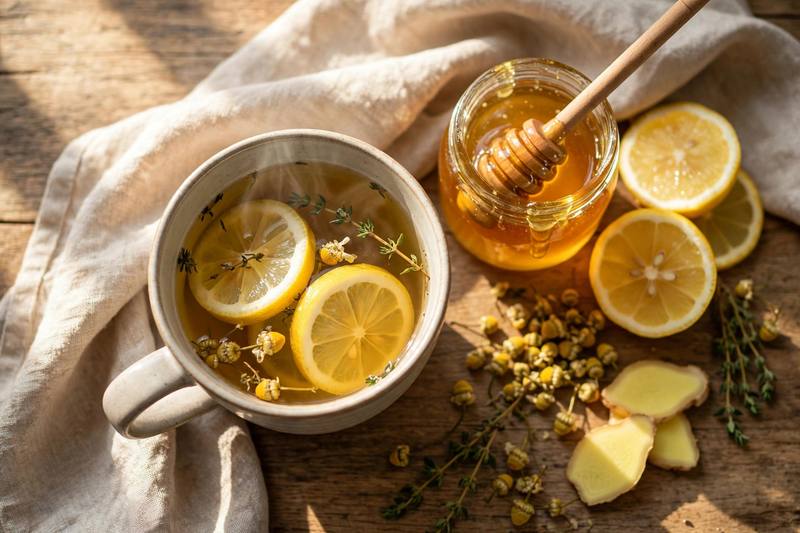
Hot tea with honey is an old remedy for a sore throat. Rest is the simplest remedy for exhaustion.
And again, we can use it metaphorically. Laughter is a remedy for a bad mood. A walk in nature can be a remedy for stress.
I love that. Finding the right remedy is an art. Sometimes the best remedy is simply time and patience.
Beautifully said. Now, Maya, let us zoom out. What is the big goal of all this healthy living?
Longevity, of course. A long, healthy life.
Longevity is such a rich word. It is not just living long, it is living long and well.
Researchers study longevity in places where people routinely live past a hundred. They look at diet, movement, community.
And the secrets of longevity are often simple: wholesome food, daily movement, strong relationships, purpose.
Exactly. Chasing longevity is not about fear of aging. It is about loving life so much you want more of it.
That is a wonderful way to put it. More years, and more life in those years. That is the dream of longevity.
Now, a word our bodies understand deeply: immunity.
Immunity is your body's defense system, its protection against disease.
Yes. When you are vaccinated, your immunity learns to recognize the virus. Good sleep and nutrition support your immunity too.
Strong immunity does not mean you never get sick. It means your body fights back fast and effectively.
Exactly. Building immunity is a long game: consistent habits, not quick fixes. Your immunity is your silent guardian.
I like that image. And when immunity fails and illness wins, what follows? Our final word: convalescence.
Convalescence is the quiet period of recovery after an illness or an operation. It is the body's time to heal.
It is such an elegant word. During convalescence, you rest, you eat well, you take gentle walks, and slowly you return to yourself.
Hospitals discharge people quickly now, so much of convalescence happens at home. A peaceful convalescence needs support and patience.
Rushing convalescence is a mistake. The body knows its own timetable. Respecting convalescence is respecting yourself.
So true. Before the recap, let us play a quick game, a little rapid round to test our own vocabulary.
Oh, I love this. You give me a situation, and I answer with one of our ten words.
Deal. Situation one: you climb three flights of stairs and you are barely out of breath, because you have been training for months.
That is stamina. Months of training build real stamina.
Situation two: you drink a glass of icy fresh orange juice after a run on a hot day.
Invigorating. That first cold sip is pure invigorating refreshment.
Situation three: your grandmother is ninety four, she gardens every day, and her doctor says her heart is perfect.
Longevity. She is the very picture of longevity.
Situation four: you sit at your computer for ten hours straight without standing up once.
A completely sedentary day. My back is already complaining just thinking about it.
Situation five: a bowl of lentil soup made from scratch, with fresh vegetables from the market.
Wholesome. Nothing could be more wholesome than that.
Situation six: you wake up with a scratchy throat and a runny nose, nothing serious.
Just a minor ailment. A small ailment that needs rest, not panic.
Situation seven: chicken soup, warm blankets, and an early night, and by morning you feel human again.
The classic remedy. Sometimes the oldest remedy is still the best remedy.
Situation eight: after the flu, you spend a week reading by the window, taking short slow walks, getting stronger day by day.
Convalescence. A gentle, unhurried convalescence.
Situation nine: you have not been sick all winter, even though everyone around you caught the seasonal cold.
Strong immunity. My immunity did its job quietly in the background.
And situation ten: a week of four hours of sleep, endless deadlines, and by Friday you can barely think straight.
Debilitating. That kind of exhaustion is genuinely debilitating.
Ten out of ten. You are a Word Kitchen champion, Lena.
And so are our listeners, if they played along. Now let us do a quick tour of all ten, to lock them in.
Great idea. One, invigorating: full of fresh energy, like that cold swim.
Two, debilitating: draining your strength, like chronic fatigue.
Three, stamina: the power to keep going, built slowly over time.
Four, sedentary: sitting too much, the modern trap.
Five, wholesome: natural, pure, and good for you.
Six, ailment: a small, mild illness.
Seven, remedy: the cure, the fix, the solution.
Eight, longevity: a long and healthy life.
Nine, immunity: the body's protection against disease.
Ten, convalescence: the gentle period of recovery.
Maya, which of these words do you think about most in your own life?
Honestly, stamina. I am training for a long hike, and building stamina is my daily project. What about you?
For me it is probably the balance between invigorating and debilitating. I want more invigorating mornings and fewer debilitating weeks.
That is a great goal. And listeners, here is a challenge: use one of these words today. Describe your lunch as wholesome. Call your walk invigorating.
Or notice one sedentary habit and break it. Small steps protect your longevity and your immunity.
And if a little ailment finds you, find a gentle remedy, and give yourself a proper convalescence if you need one.
Words are tools, and now you have ten powerful new ones. Use them, and your English will be as strong as your body.
Thanks for joining us on Word Kitchen. I am Maya.
And I am Lena. Stay healthy, keep learning, and we will see you next time.
🎙 Try Shadowing free sample
Listen and repeat along with the studio audio. Full shadowing practice with pronunciation scoring is in the app.
A cold shower in the morning feels truly invigorating.
Nothing is more invigorating than crisp mountain air.
An invigorating walk can clear even the heaviest mind, unless a debilitating migraine ruins the day.
Train your speaking
Shadow every sentence with studio audio and get your pronunciation scored — only in the Muse English app.
📝Grammar: Choosing between comparatives and superlatives
Use **comparative adjectives + than** to compare two people, places, or things. Short adjectives take **-er**; longer ones take **more**. Spelling matters: **big → bigger**, **easy → easier**, **hot → hotter**. One-syllable adjectives ending in **-ed** take **more**: **more tired**, **more stressed**. Three adjectives are irregular: **good → better**, **bad → worse**, **far → further** (use **farther** only for physical distance). To show equality, use **(not) as + adjective + as**: her recovery was as swift as his. **The same as** marks identical things: his symptoms were the same as mine.
Master this grammar in the app
Get clear explanations, more examples and interactive exercises.
Keep learning every day
New lessons, podcasts and quizzes daily — free in the Muse English app.