

📖 What is Muse English?
Muse English is a free English learning app with daily lessons across all 6 CEFR levels (A1 Beginner to C2 Proficient). Every day brings new vocabulary, a real podcast conversation, shadowing practice, grammar and quizzes — all at museenglishapp.com.
📚 Vocabulary
10 new words Learn new words with real examples and audio.






Podcast: Travel & Transport
Listen to today’s conversation.
📝 Podcast Transcript
Hello and welcome to Word Kitchen, the show where we cook up new English words and serve them fresh. I am Maya.
And I am Lena. Maya, today we are packing our bags, because our theme is travel and transport, and we have ten rich, sophisticated words for people who love the road.
Exactly. Ten words that will make your travel stories sound far more interesting. Shall we start with a personal one? I once had a sojourn in Lisbon. Just six weeks, but those six weeks changed me.
A sojourn is a temporary stay in one place, right? Longer than a visit, shorter than a move. A little pause in life where you really settle into a place.
Yes, that is the beauty of a sojourn. You are not rushing. You rent a little apartment, you find your favorite coffee spot, and the city slowly becomes yours. My Lisbon sojourn gave me friendships I still keep today.
I love that. A sojourn is travel with roots. You unpack your suitcase instead of living out of it. I had a short sojourn in Montreal once, and by the second week the baker at the corner knew my order.
That is the dream. And speaking of slower, deeper journeys, let me introduce our second word: peregrination. It means a long, wandering journey with no fixed destination.
Peregrination. That sounds poetic. Like those travelers who just walk and let the road decide.
Exactly. A peregrination is not about efficiency. It is about wandering with curiosity. The nineteenth-century naturalists went on peregrinations across continents, collecting plants and stories.
So a peregrination is the opposite of a rushed business trip. You might start a peregrination with a rough direction and end up somewhere you never imagined.
Right. And honestly, every great gap year is a small peregrination in spirit. You wander, you learn, you grow. My dream peregrination would be along the old Silk Road, slowly, on foot where possible.
On foot? That makes you a wayfarer, Maya! Our next word. A wayfarer is a traveler, especially one who walks from place to place.
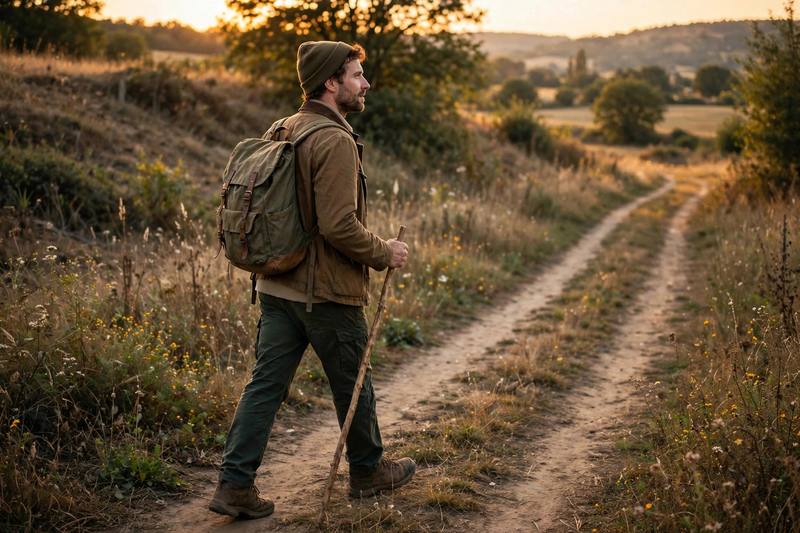
A wayfarer. I love how old-fashioned and romantic that word sounds. The wayfarer carries a backpack, not a suitcase. The wayfarer stops at small inns and talks to strangers.
In old stories, the wayfarer is always welcome at the village table. There is something noble about it. I picture a wayfarer crossing mountain passes with nothing but a map and good boots.
And every modern hiker is a wayfarer at heart. You know, Lena, some people are born wayfarers. They cannot stay in one place for long. They need the horizon.
That reminds me of our next word: peripatetic. It describes someone who travels from place to place rather than settling down. A peripatetic life.
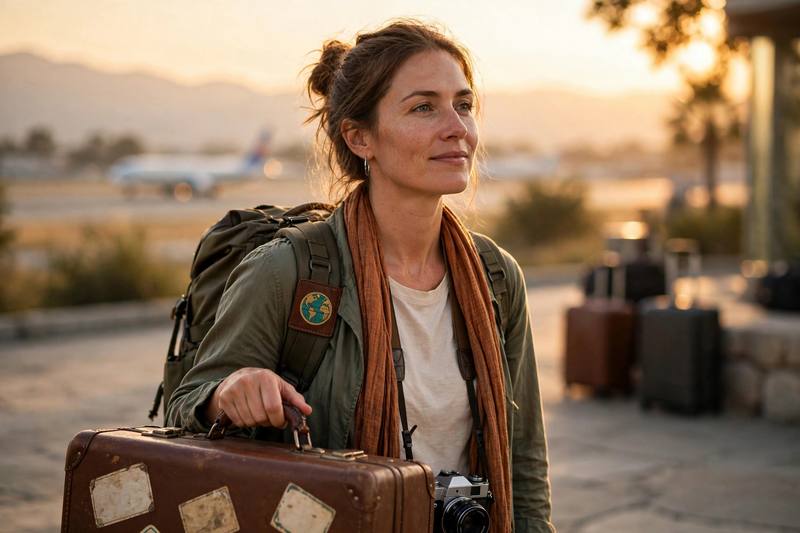
Yes. Consultants, touring musicians, travel writers. They live a peripatetic existence. My cousin is a peripatetic photographer, and her address is basically her camera bag.
A peripatetic lifestyle sounds exciting but exhausting. The peripatetic worker is always in airports, always in hotels. You gain the world but lose your favorite chair.
True. But some people thrive on it. A peripatetic childhood can make you adaptable and open. Though I must admit, after two weeks of travel, even I stop being peripatetic in spirit and start missing my own bed.
Ha! Me too. Now, let us talk about journeys that test you. Our fifth word is odyssey. An odyssey is a long, eventful journey, full of adventures and surprises.
Odyssey. From the ancient Greek story of Odysseus. An odyssey is never smooth. It has storms, detours, and lessons. My friend called her move across three countries an odyssey, because everything that could go wrong did.
That is the thing about an odyssey. It changes the traveler. You do not come back from an odyssey the same person. The hard parts are the point.
Exactly. Even a complicated trip can become an odyssey. Missed flights, lost luggage, a bus that breaks down in the desert. At the time it is stressful. Later, it is your favorite story.
So an odyssey is a journey with a plot. If your travel story has twists and turns, call it an odyssey and people will listen twice as carefully.
Wonderful. Now let us lighten up with jaunt. A jaunt is a short, enjoyable trip, usually for pleasure. The perfect weekend escape.
A jaunt! That word sounds like fun. A Saturday jaunt to the countryside. A quick jaunt to the beach with friends.
Yes. A jaunt is small and happy. You do not need a visa or a big plan for a jaunt. My favorite jaunt this year was a Sunday drive to a vineyard an hour away.
That is the charm of a jaunt. It is low effort and high reward. Honestly, a little jaunt every month keeps me sane. Work hard, then jaunt a little.
Agreed. Now, even a jaunt needs a plan, and that brings us to itinerary. An itinerary is a detailed plan of a journey: the route, the dates, the stops.
An itinerary. The document that turns chaos into a trip. A good itinerary lists your flights, your hotels, your sightseeing days.
And the great debate: strict itinerary or loose itinerary? I like a loose itinerary. Plan the big things, leave room for surprises. A rigid itinerary kills the magic.
I am the opposite. A detailed itinerary calms me down. When my itinerary is clear, I can actually relax and enjoy. But I leave one free day in every itinerary for pure wandering.
That is a smart compromise. And here is a pro tip: always share your itinerary with someone back home. Safety first, especially on solo trips. An itinerary is also useful when friends join you halfway.
True. Okay, next word. This one is a verb: traverse. To traverse means to travel across or through a place, especially somewhere difficult.
Traverse. Strong word. Explorers traverse deserts. Sailors traverse oceans. To traverse is to cross with effort and purpose.
I like how active it sounds. You do not just visit a mountain range, you traverse it. Hikers traverse ridgelines. Trains traverse continents.
Exactly. And you can use it metaphorically too, but for travel it is perfect. My dream is to traverse Patagonia from north to south. Slowly. On foot.
On foot again! You really are a wayfarer at heart, Maya.
Maybe I am. Now, Lena, tell me about the word globetrotter. That one feels like a compliment.
A globetrotter is someone who travels widely around the world. The seasoned globetrotter has stories from every continent.
It does sound like a badge of honor. A true globetrotter does not just collect passport stamps. The globetrotter collects perspectives.
Yes! Every globetrotter I know is a better storyteller. My uncle is a globetrotter, and dinner with him is like a world tour.
I aspire to that. Though to be a real globetrotter, you need time, money, and curiosity. The curiosity is the most important part.
Absolutely. And our last word is one every air traveler knows: layover. A layover is a stop between flights during a journey.
The layover. That strange in-between time at an airport. A short layover is stressful. A long layover is a gift if you use it well.
I love a long layover. A six-hour layover in a new city is a free mini-trip. I once had a layover in Singapore and saw the whole city in eight hours.
Smart. The worst is a layover at midnight with nothing open. But even then, a layover is a pause, a breath between journeys. Plan for the layover and it becomes part of the adventure.
And that is our ten! Let us do a quick review, Maya. I will say the word, you give the meaning.
Ready.
Sojourn.
A temporary stay in one place. You unpack, you settle in, you live there for a while.
Peregrination.
A long, wandering journey with no fixed destination. Travel as exploration.
Wayfarer.
A traveler, especially on foot. The romantic walker of the roads.
Peripatetic.
Traveling from place to place. The adjective for a life on the move.
Odyssey.
A long, eventful journey full of adventures and surprises. The epic trip.
Jaunt.
A short, enjoyable trip. The happy weekend escape.
Itinerary.
A detailed plan of a journey. Your route, your dates, your stops.
Traverse.
To travel across or through a place, especially somewhere challenging.
Globetrotter.
Someone who travels widely around the world. The world citizen.
And layover.
A stop between flights during a journey. The pause between skies.
Perfect. Listeners, try using these words this week. Tell someone about your last jaunt. Share your dream itinerary. Describe your longest layover.
And if you have had a real odyssey, write to us and tell the story. We might read it on the show.
Before we close, Maya, let us give our listeners a small challenge. Write one sentence with any of these words and post it in the comments.
Great idea. For example, describe your last layover in one sentence. Or write about a dream odyssey you would love to take.
Or tell us your perfect itinerary for a weekend jaunt. I will read every single one, and I will reply to the most creative answers.
And if your sentence uses a word like peregrination or peripatetic correctly, I will be seriously impressed. Show us what you learned today.
That is all for today. Keep wandering, keep learning, and remember: the world is wide, and your vocabulary should be too.
See you next time on Word Kitchen. Happy travels, everyone.
🎙 Try Shadowing free sample
Listen and repeat along with the studio audio. Full shadowing practice with pronunciation scoring is in the app.
The Long Road Home
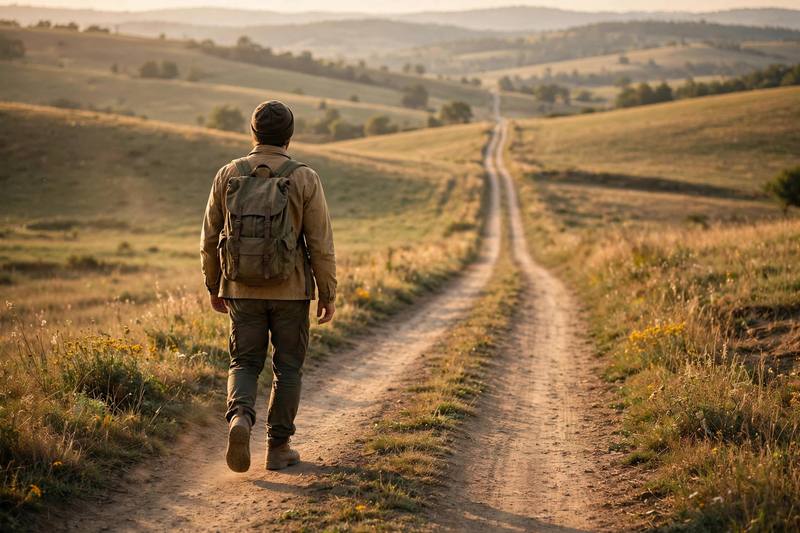
Last year I began a peregrination that changed my life forever.
I had no strict itinerary, only a backpack and an open heart.
Train your speaking
Shadow every sentence with studio audio and get your pronunciation scored — only in the Muse English app.
📝Grammar: Present perfect + for / since, present perfect continuous
Use the **present perfect + for / since** for things that started in the past and are still true now. Think of an unfinished state, like a *sojourn* that has not ended. Use **for** with a period of time and **since** with a starting point. A flexible *itinerary* still needs **for** or **since** to anchor it in time. Ask about unfinished periods with **How long + present perfect**. The answer often describes a *peregrination* still in progress. Use the **present perfect continuous (have / has been + verb-ing)** for actions that began in the past and are still happening now. The *peripatetic*
Master this grammar in the app
Get clear explanations, more examples and interactive exercises.
Keep learning every day
New lessons, podcasts and quizzes daily — free in the Muse English app.