

📖 What is Muse English?
Muse English is a free English learning app with daily lessons across all 6 CEFR levels (A1 Beginner to C2 Proficient). Every day brings new vocabulary, a real podcast conversation, shadowing practice, grammar and quizzes — all at museenglishapp.com.
📚 Vocabulary
10 new words Learn new words with real examples and audio.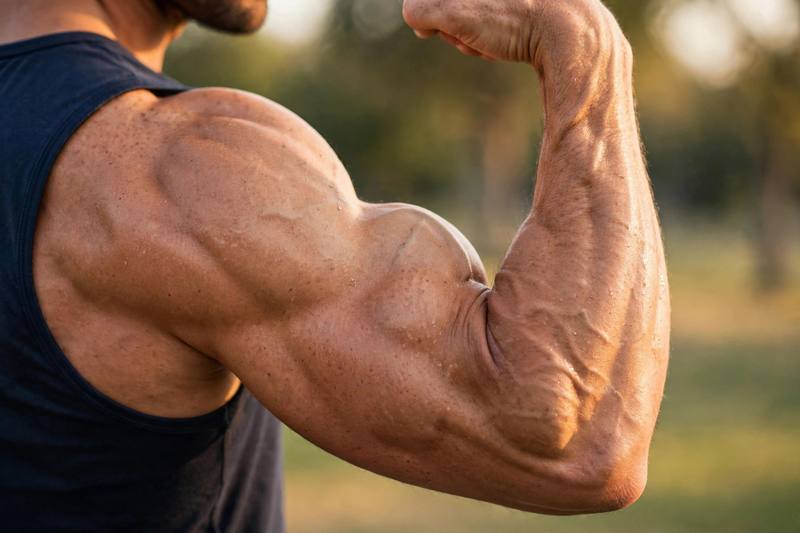







Podcast: The Science Of Training
Listen to today’s conversation.
📝 Podcast Transcript
Welcome back to Word Kitchen, the show where we take ten powerful English words and cook them into real conversation. I'm Maya.
And I'm Lena. Today's menu is the science of sports and fitness. We have ten advanced words that athletes, coaches, and physiotherapists actually use when they talk about training.
These are C two level words, so they are precise and sophisticated. If you train hard, or you just want to understand how the body adapts, this episode is for you. Let's start cooking.
Our first word is hypertrophy. Hypertrophy means the growth of muscle tissue that makes muscles larger. When someone lifts weights to build bigger muscles, they are training for hypertrophy.
Right, and there is a subtle point here. Hypertrophy is not the same as strength. A beginner can get much stronger in the first month with almost no visible hypertrophy, because the early gains come from the nervous system learning to recruit muscle fibers.
Exactly. Real hypertrophy takes months of consistent overload plus enough protein and sleep. So if your goal is hypertrophy, you need patience, progressive volume, and recovery. It is a slow biological process, not a two-week transformation.
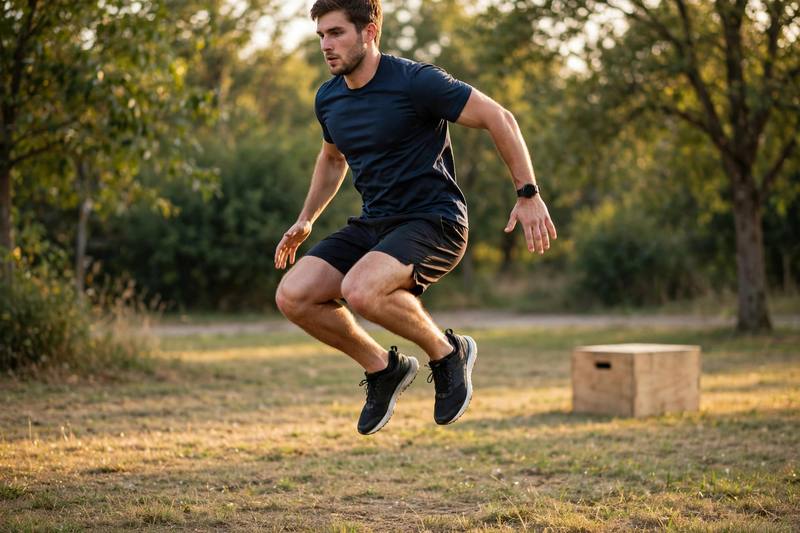
Great framing. Our second word is plyometrics. Plyometrics are jump-based exercises that develop explosive power. Think box jumps, bounding, and depth jumps.
Plyometrics train the stretch-shortening cycle, that spring-like action of muscles and tendons. Sprinters and basketball players live on plyometrics because their sports demand instant, explosive force.
But a warning from the coaching world: plyometrics are high impact. Doing advanced plyometrics on tired legs or hard concrete is asking for injury. Quality over quantity, a few crisp sets of plyometrics beat twenty sloppy ones.
Word three is proprioception. Proprioception is the body's sense of where it is in space. Close your eyes and touch your nose. That works because of proprioception.
Athletes with sharp proprioception move efficiently and avoid injury. After an ankle sprain, rehab is largely about rebuilding proprioception, often with balance boards and single-leg drills.
I love that. So proprioception is like an internal GPS for your joints. Gymnasts and surfers have extraordinary proprioception, and the rest of us can train it with simple daily balance work.
Word four: ergogenic. Ergogenic means intended to improve physical performance. Caffeine is probably the most famous ergogenic aid in sport.
The supplement industry is full of so-called ergogenic products, but very few have real evidence. Creatine and caffeine have solid ergogenic research behind them. Most other ergogenic claims are marketing, not science.
And at the elite level, the line between a legal ergogenic aid and doping can be razor thin, which is why athletes check every ergogenic product against the banned list.
Word five is taper. To taper means to gradually reduce training before a competition. Marathon runners taper for two or three weeks before race day.
Tapering feels wrong psychologically. You have trained for months, and suddenly your coach tells you to taper, to do less. But a proper taper lets fatigue fade while fitness stays, so you arrive fresh.
The classic mistake is refusing to taper and training hard right up to the event. Trust the taper. The fitness is already in the bank.
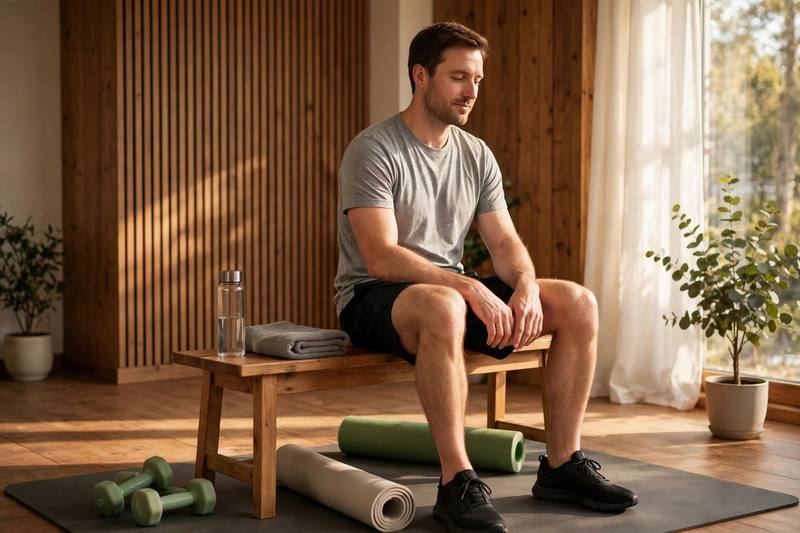
Word six: deload. To deload means to train lighter for a short period to allow recovery. Many programs schedule a deload week every fourth week.
A deload is not a week off. You still move, you still practice technique, but you deload the intensity and volume, maybe lifting at sixty percent. It is planned recovery, not laziness.
Lifters who never deload usually hit a wall: stalled progress, achy joints, flat motivation. A smart deload week often leads to personal bests the week after.
Word seven is calisthenics. Calisthenics are exercises using only body weight, such as push-ups, pull-ups, and dips. No gym required.
Calisthenics build impressive relative strength. A strict muscle-up demands more coordination than most machine exercises. And calisthenics scale beautifully, from knee push-ups to one-arm push-ups.
During lockdowns, calisthenics exploded in popularity because all you need is a floor and maybe a pull-up bar. Some of the strongest people I know train mostly calisthenics in a park.
Word eight: macrocycle. A macrocycle is a long-term training plan lasting several months. Coaches divide the year into one or two macrocycles.
Inside a macrocycle you have smaller blocks: build phases, peak phases, and recovery weeks. A well-designed macrocycle ends with the athlete peaking exactly at the championship.
Without a macrocycle, training becomes random workouts. With a macrocycle, every session has a purpose inside a bigger story. That is the difference between exercising and training.
Word nine is neuromuscular. Neuromuscular relates to the connection between nerves and muscles. Sprinting is the ultimate neuromuscular skill.
Heavy lifting and sprint drills create neuromuscular adaptations: faster signaling, better coordination, more fibers firing together. That is why those early strength gains we mentioned are neuromuscular, not hypertrophy.
As we age, neuromuscular power declines faster than muscle size, so explosive, neuromuscular training becomes even more important after forty.
Our final word is eustress. Eustress is positive stress that motivates and improves performance. The buzz before a race is eustress, not anxiety.
Hans Selye, the stress researcher, coined eustress as the good twin of distress. A hard workout is eustress for the body: challenging enough to trigger adaptation, but not so much that it breaks you down.
Reframing nerves as eustress is a genuine performance tool. Studies show athletes who interpret pre-competition arousal as eustress perform better than those who fight it.
Before the recap, let's put all ten words to work in one story. Imagine Lena is coaching a fictional sprinter, let's call her Sara, through a full macrocycle.
Love it. Sara's macrocycle is sixteen weeks, ending at the national championships. Weeks one to eight are the base phase: strength work for hypertrophy, plus calisthenics circuits for general athleticism.
So in the base phase, Sara does her squats and presses for hypertrophy, building the muscle cross-section she will later teach to fire fast. Twice a week she adds low-volume plyometrics, just to keep the elastic qualities alive.
Exactly, and her coach tests proprioception monthly with single-leg balance tasks, because sprinting at top speed with poor proprioception is how hamstrings tear. Good proprioception keeps her mechanics clean when fatigue sets in.
Nutrition-wise, Sara keeps it simple. She uses one ergogenic aid with real evidence, caffeine before key sessions, and ignores the exotic ergogenic powders her teammates swear by. Food, sleep, and sunlight do the heavy lifting.
Weeks nine to twelve shift toward neuromuscular power. Less hypertrophy work, more sprint-specific neuromuscular drills: flying thirties, resisted sprints, and sharper plyometrics. The neuromuscular system learns to express the strength she built.
Then week thirteen is a deload. Sara will deload the volume by half, keep the intensity moderate, and let her tendons calm down. She has learned that a well-timed deload is what lets the previous twelve weeks actually sink in.
Weeks fourteen and fifteen, she starts to taper. To taper correctly she cuts volume sharply but keeps a few fast, short efforts so she stays sharp. The taper is where many athletes panic, so we talk about it constantly.
And psychologically, we reframe everything as eustress. The championship pressure, the hard sessions, even the taper restlessness, it is all eustress, fuel for adaptation, as long as recovery is respected.
Race week arrives. Sara is rested from the taper, her proprioception is dialed in, her neuromuscular system is firing, and she treats the final nerves as pure eustress. She runs a personal best.
That story is the whole episode in one athlete: hypertrophy in the base, plyometrics for power, proprioception for safety, one honest ergogenic aid, a planned deload, a brave taper, calisthenics for athleticism, all inside a smart macrocycle, driven by neuromuscular adaptation and healthy eustress.
One more thing before the recap. We got two great listener questions this week. First: should a recreational lifter ever deload, or is that just for athletes?
Great question. Anyone training hard three or more days a week benefits from an occasional deload. You do not need a formal macrocycle to use one. When your sleep is fine but your lifts feel heavy for no reason, take a deload week and watch your numbers rebound.
Second question: are plyometrics safe for beginners? The honest answer is that basic plyometrics like small hops are fine, but advanced plyometrics belong later, after you have built base strength and decent proprioception. Walk before you bound, literally.
And a bonus tip on eustress versus distress: if your resting heart rate is climbing and you dread training, that is no longer eustress. Back off, deload, sleep. Eustress builds you up. Distress breaks you down.
Let's do a quick lightning round to lock these in. Hypertrophy is muscle growth from training. Plyometrics are explosive jump drills.
Proprioception is your body's position sense. Ergogenic means performance-enhancing. Taper is reducing training before competition, and deload is a planned easy week for recovery.
Calisthenics use only body weight. A macrocycle is a months-long training plan. Neuromuscular describes the nerve-muscle connection. And eustress is the good kind of stress.
Beautiful. Ten words, one connected story of how athletes train smarter. Use them this week: describe your own training with hypertrophy, taper, deload, and the rest, and they will stick.
Thanks for cooking with us on Word Kitchen. Train smart, recover smarter, and we will see you in the next episode.
🎙 Try Shadowing free sample
Listen and repeat along with the studio audio. Full shadowing practice with pronunciation scoring is in the app.
Every serious athlete trains inside a long-term macrocycle aimed at one peak event, and learns to treat pressure as eustress.
The early phase of her macrocycle focuses on strength and steady hypertrophy.
Patient hypertrophy gives muscles the size needed for later power work.
Train your speaking
Shadow every sentence with studio audio and get your pronunciation scored — only in the Muse English app.
📝Grammar: Articles - a / an, the, no article
Use **a / an** the first time you mention a singular countable noun. It says what kind of thing it is, not which one. Her coach wrote **a** macrocycle for the season. The same **a / an** appears in **What ...!** exclamations and frequency phrases. What **a** neuromuscular performance that was! She lifts four times **a** week. Switch to **the** once the noun is already mentioned or clearly identified. She wrote **a** macrocycle. **The** macrocycle peaks in June. **The** also marks the only one, well-known places, and superlatives. **The** sun, **the** gym on Main Street, **the** best ergogen
Master this grammar in the app
Get clear explanations, more examples and interactive exercises.
Keep learning every day
New lessons, podcasts and quizzes daily — free in the Muse English app.