📖 Muse English چیست؟
Muse English یک اپلیکیشن رایگان آموزش زبان انگلیسی است، با درس روزانه برای هر شش سطح، از A1 (مبتدی) تا C2 (تسلط کامل). هر روز لغتهای تازه با معنی فارسی، یک پادکست واقعی، تمرین شدوئینگ، گرامر و آزمون دارید. دربارهٔ اپ
📚 لغتها
۷ لغت تازه لغتهای تازه با معنی فارسی، مثال واقعی و تلفظ.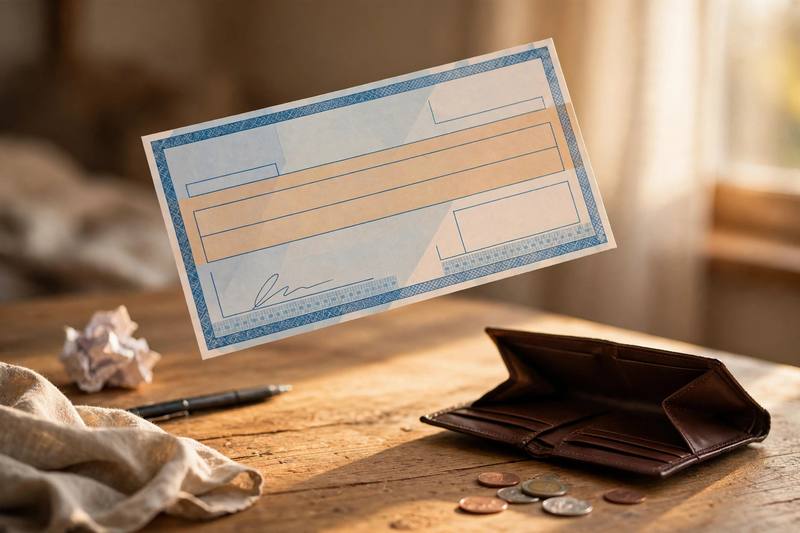
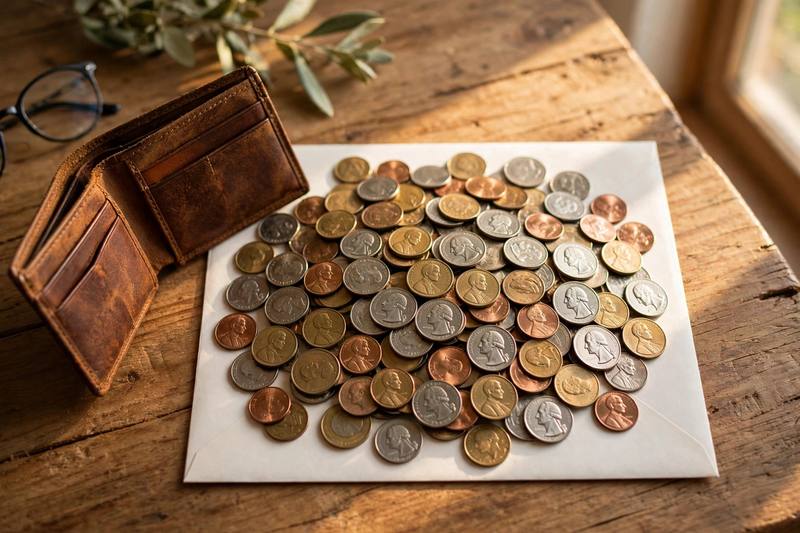
پادکست: پول و خرید
گفتوگوی امروز را گوش کنید.
📝 متن پادکست
Welcome to Muse English! I'm Maya, and today Lena and I are talking about money. Not the boring kind of money talk, but the real, everyday kind. The kind that decides whether you can go out on Friday night or stay home and cook noodles.
And that is a very real decision, Maya. I think everyone knows that feeling. You check your bank account, and the number is much smaller than you expected.
Exactly. And today we have seven useful words and phrases that describe those moments. Words like broke, and bounce, and contactless. By the end of the show, you will know them all, and you will hear them again and again, because that is how you really learn a word.
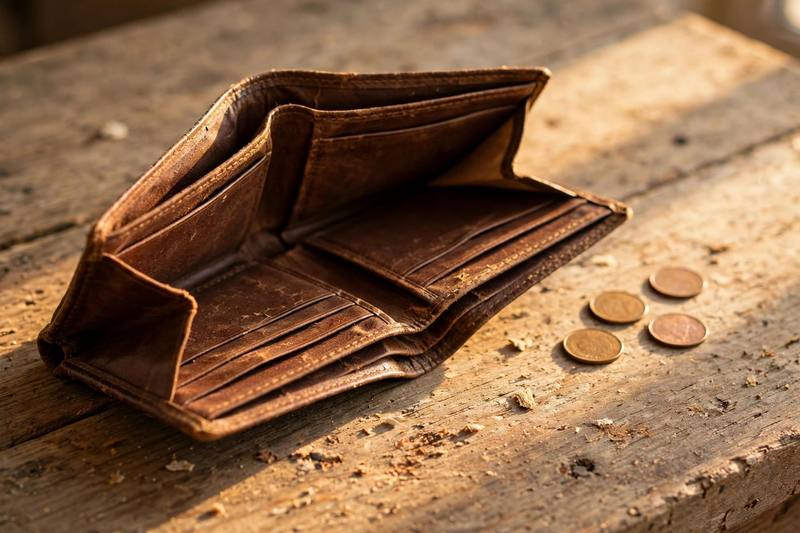
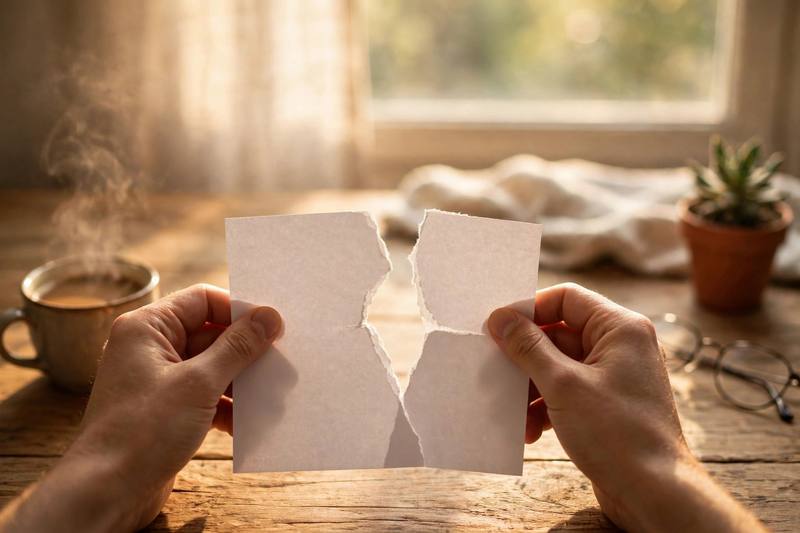
Let's start with broke. Broke is a simple, honest word. It means you have no money. Not a little money. No money at all.
I was completely broke in my first year at university. I remember standing in a shop, holding a sandwich, and realising I could not afford it. I was broke, and it was embarrassing, but it was also a lesson.
That is the thing about being broke. It is usually temporary. You are broke until payday, and then life feels normal again. But when you are broke, every small decision feels big. Can I take a taxi, or do I walk? Can I buy coffee, or do I make it at home?
And sometimes being broke teaches you more than having money does. When I was broke, I learned to cook, I learned to plan, and I learned to say no to things I did not need. Honestly, I still use those habits today, even though I am not broke anymore.
I had a similar time. My first job paid very little, and by the third week of the month I was always broke. My friends would invite me out, and I would say, sorry, I am broke this week. It was hard, but it made me respect money.
So, broke is our first word, and it is a word you will hear in films, in songs, and in real conversations. I am broke. She is broke. We are all broke until payday.
Speaking of money surprises, have you ever had a cheque bounce? That is our second word, bounce. When a cheque bounces, the bank returns it unpaid because there is not enough money in the account.
Oh yes. My uncle wrote a cheque for his rent once, and it bounced. He had forgotten to move money into the right account. The cheque bounced, and the landlord was not happy at all.
A cheque that bounces is more than embarrassing. The bank can charge you a fee, and the person you were paying might lose trust in you. If your cheque bounces, you usually have to pay again, quickly, and sometimes you pay extra.
So the lesson is simple. Before you write a cheque, check the balance. Otherwise, the cheque will bounce, and the problem will only grow. And if a cheque bounces twice, some shops will never accept a cheque from you again.
Before we go on, a quick word about the Muse English app. If you like learning words like this, the app gives you fresh words every day, with photos, pronunciation, and a short quiz. You can listen to this podcast, practise shadowing stories, and study grammar, all in one place. It is free to install, and it keeps your English moving forward a little bit every day. Give it a try after the show.
Now let's talk about how we actually pay. Do you usually charge things to a credit card, Lena?
Sometimes. If I buy a flight or a laptop, I charge it to a credit card, because the card gives me extra protection. But for small things, I try to use my debit card instead.
That is a smart rule. When you charge a purchase to your credit card, you are borrowing money for a short time. If you pay it back quickly, it costs you nothing. If you forget, the interest grows fast, and the card can become a real problem.
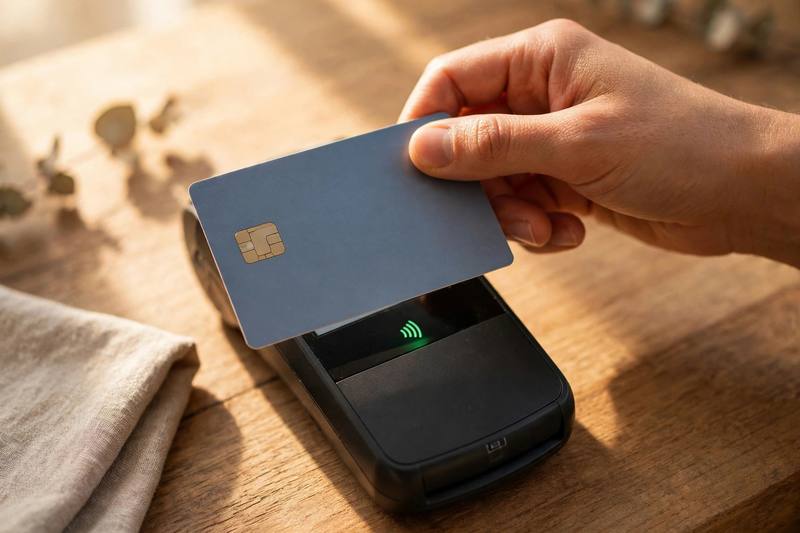
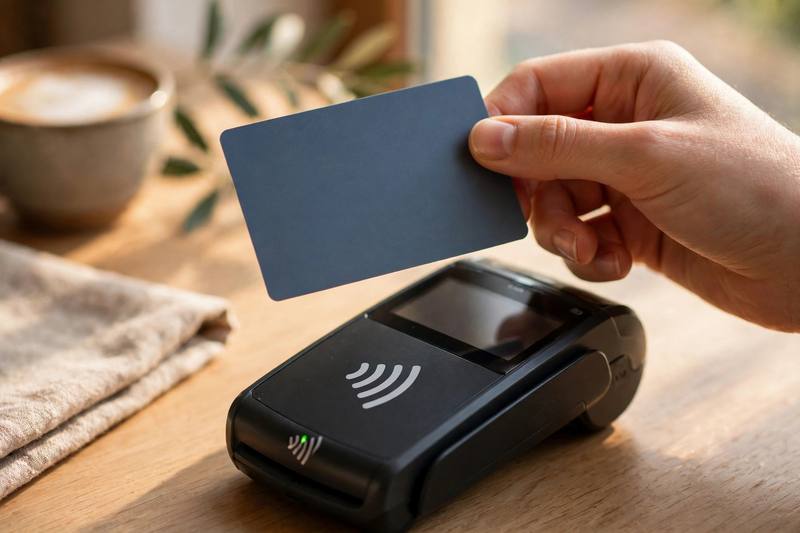
And these days, paying is so easy that it is almost dangerous. I paid for my coffee this morning using a contactless card. I just tapped the card on the reader, and that was it. No PIN, no signature, no cash.
Contactless payment is everywhere now. You can tap your card, or your phone, or even your watch. A contactless card is fast and clean, and in a busy cafe, it saves a lot of time.
True, but contactless payments can also make spending feel unreal. When you tap a contactless card, you do not see the money leave your hand. It is so quick that you can spend more than you planned without noticing.
That is why I try to check my card statement every week. If I charge too much to a credit card, and I pay with a contactless card for every little thing, the total can surprise me at the end of the month. And that is how people end up broke without even knowing why.
So the trick is balance. A credit card is a tool, and a contactless card is a tool. Use them well, and they make life easier. Use them carelessly, and they make life harder.
I agree. I have one rule for myself. I never charge a holiday to a credit card unless I can pay it back in two months. A holiday is lovely, but paying for it for a year is not.
Let's move to bigger money words. Cancel debt. When a bank or a government decides to cancel debt, it officially stops the requirement to repay the money owed.
That sounds generous. And sometimes it is. A few years ago, a charity asked the government to cancel debt for some developing nations, because those countries could never repay it, and the debt was stopping them from building schools and hospitals.
It is a big decision, though. To cancel debt is to say, you do not have to pay this back. A bank rarely wants to cancel debt, because the bank loses money. But sometimes, after a disaster, a government will cancel debt to help people start again.
Our next word is cover, as a verb. To cover something means to provide enough money to pay for it. For example, does your insurance cover dental treatment? That is a very useful question to ask before you visit the dentist.
Exactly. My travel insurance will cover a cancelled flight, but it will not cover a lost phone. So I always check what the policy will cover before I travel.
And in everyday life, cover is everywhere. Will your salary cover the rent? Will your savings cover the car repair? If the answer is yes, you can relax. If the answer is no, you need a plan.
I like that question. Will it cover it? It is short, it is clear, and it works for almost any bill. Will my budget cover a new laptop? Will the gift card cover the whole meal? It is a word you will use again and again.
A quick pause to remind you about the Muse English app. Every day you get new words with photos and clear pronunciation, plus this podcast, shadowing stories to practise speaking, and grammar quizzes to test yourself. You earn points, climb the leaderboard, and build a daily habit that actually sticks. It is free, it is fun, and it is waiting on your phone. Search for Muse English and start today.
Now our final phrase: come out of recession. A recession is a period when the economy shrinks, people lose jobs, and businesses close. To come out of recession means to recover from that difficult time.
The country is slowly coming out of recession, and you can feel it. Shops are opening again, companies are hiring, and people are spending a little more freely.
It takes time to come out of recession, though. Even when the numbers improve, families still feel careful. They save more, they borrow less, and they wait before making big purchases.
But there is hope in it. When a country starts to come out of recession, confidence returns. People plan holidays, they buy homes, and small businesses take a chance on something new.
And on a personal level, we all have our own small recessions. A month when you are broke, a cheque that bounces, a bill your insurance will not cover. You get through it, and you come out of recession in your own life, a little wiser than before.
That is a lovely thought, Lena. Money goes up and down, for countries and for people. The words we learned today help us talk about those ups and downs clearly.
Let's recap our seven words. If you are broke, you have no money. If a cheque bounces, the bank returns it unpaid. You can charge a purchase to your credit card, or tap a contactless card and pay in one second. A government can cancel debt, and good insurance will cover the costs you cannot. And slowly, a country can come out of recession.
That is a strong set of words. Try using one of them today. Tell a friend about the time you were broke, or ask whether your insurance will cover something. Using a word is the fastest way to keep it.
And if you want to practise, open the Muse English app. You can read today's words, hear them again, and take the quiz. A few minutes a day really does add up.
Thanks for listening to Muse English. Join us tomorrow for seven more words, another story, and another conversation. Until then, take care of your money, and take care of your English. Goodbye!
Goodbye, everyone. See you tomorrow!
🎙 تمرین شدوئینگ نمونهٔ رایگان
گوش کنید و همزمان با صدا بلند تکرار کنید. تمرین کامل شدوئینگ در اپ است: هر جمله را تکرار میکنید و میبینید اپ چند کلمه از آن را تشخیص داده است.
Sara's Tight Month
Sara looked at her bank account on Monday morning.
She was completely broke, and payday was still ten days away.
صحبت کردن را تمرین کنید
در اپ Muse English همهٔ جملهها را شدوئینگ کنید. اپ گوش میدهد و نشان میدهد چند کلمه از جملهتان را تشخیص داده است.
📝گرامر: Mixed Conditionals
Mixed conditionals mix two times in one sentence. The condition is in one time, and the result is in another.
There are two main patterns. For a past condition with a present result, use if + past perfect, would + base verb. *If I had saved money, I would not be broke now.*
For a present condition with a past result, use if + past simple, would have + past participle. *If I spoke French, I would have understood the film.*
Watch the time words. Now and by now point to a present result, so the result uses would + base verb. Yesterday and last night point to a past
این گرامر را در اپ کامل یاد بگیرید
توضیح کاملتر، مثالهای بیشتر و تمرین تعاملی.
هر روز ادامه بدهید
هر روز درس، پادکست و آزمون تازه؛ رایگان در اپ Muse English.