
📖 Muse English چیست؟
Muse English یک اپلیکیشن رایگان آموزش زبان انگلیسی است، با درس روزانه برای هر شش سطح، از A1 (مبتدی) تا C2 (تسلط کامل). هر روز لغتهای تازه با معنی فارسی، یک پادکست واقعی، تمرین شدوئینگ، گرامر و آزمون دارید. دربارهٔ اپ
📚 لغتها
۱۰ لغت تازه لغتهای تازه با معنی فارسی، مثال واقعی و تلفظ.





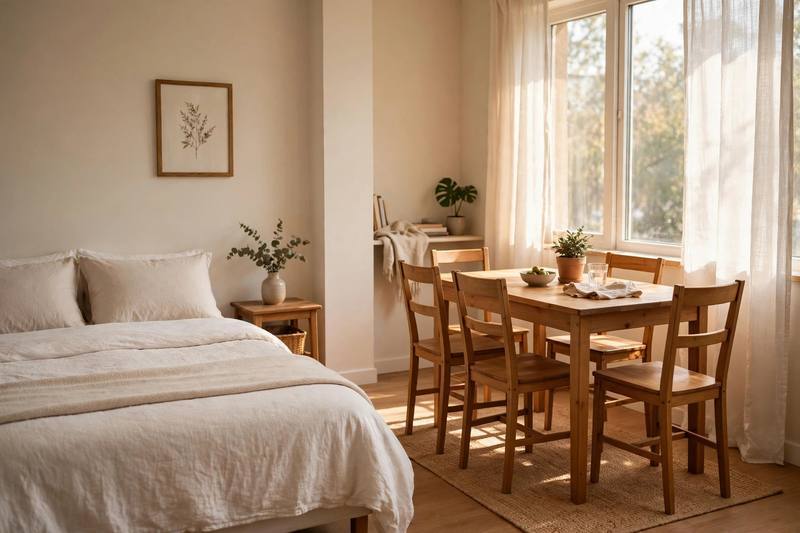
پادکست: روز مرور
گفتوگوی امروز را گوش کنید.
📝 متن پادکست
Welcome to Muse English! I'm Maya.
And I'm Lena. And today is a special one, because it is review day.
That's right. No new words today. Instead, we are revisiting every word from the last three days, so they really stick.
Twenty-one words in total, from housing, technology, and city life. Let's warm up with the housing theme from Monday.
Okay, Monday's lesson was all about housing and renting. One of my favorites was the idiom breathe new life into.
Oh, I love that one. To bring new energy or ideas to something. The new manager hopes to breathe new life into the team.
And in the housing context, the old house got a new lease of life after renovation. That's a close cousin: to become healthy, active, or interesting again.
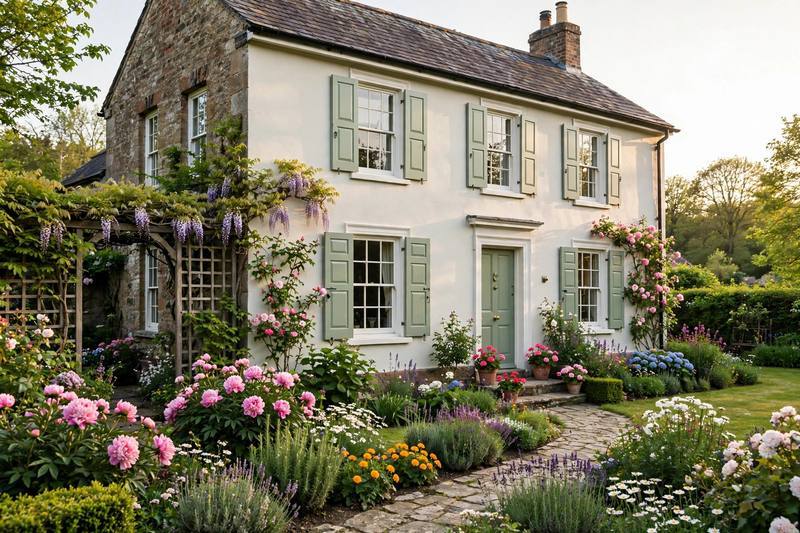
So breathe new life into is what you DO to something, and get a new lease of life is what happens to it. The couple decided to breathe new life into their old cottage, and soon the cottage had got a new lease of life.
Nice pair. On the tougher side, we had the phrase dog's life. A very unhappy and difficult existence. After losing his job, he felt he was living a dog's life.
Not a phrase you want to need, but a useful one to know. Much happier news: a furnished flat. Rented with furniture included. We're looking for a furnished apartment to rent, the example said.
Yes! And that takes us to council estate and council housing. An area with houses built by the local council, and houses provided by the local authority at low rent.
Many families live on the large council estate, and there's a long waiting list for council housing. Both from the same world, but one is the place, the other is the system.
And one more housing gem: granny flat. A small apartment attached to a house for an elderly relative. They built a granny flat for her aging mother.
Before we move on to technology, a quick reminder. You are listening to Muse English, the show that turns your daily words into real conversation.
And if you love learning this way, you will love the Muse English app. Every day you get fresh vocabulary with photos and pronunciation audio, plus this podcast, shadowing stories you can repeat out loud, quick quizzes, grammar lessons, and a leaderboard where you earn points for every lesson you finish.
It is completely free, and it takes just a few minutes a day. Search for Muse English in your app store and install it today. Your future self will thank you.
Now, Tuesday's words were all technology. Let's start with the big one: AI.
Artificial intelligence, computer systems performing human-like tasks. AI is transforming many industries rapidly.
It really is. I asked an AI tool to help me plan a trip last week, and honestly, AI is transforming the way I work, too.
It is transforming many industries rapidly, from medicine to education. And at home, my headphones connect to my phone via Bluetooth.
Wireless technology for short-range device communication. Bluetooth is one of those words that became a household word. Everyone knows it.
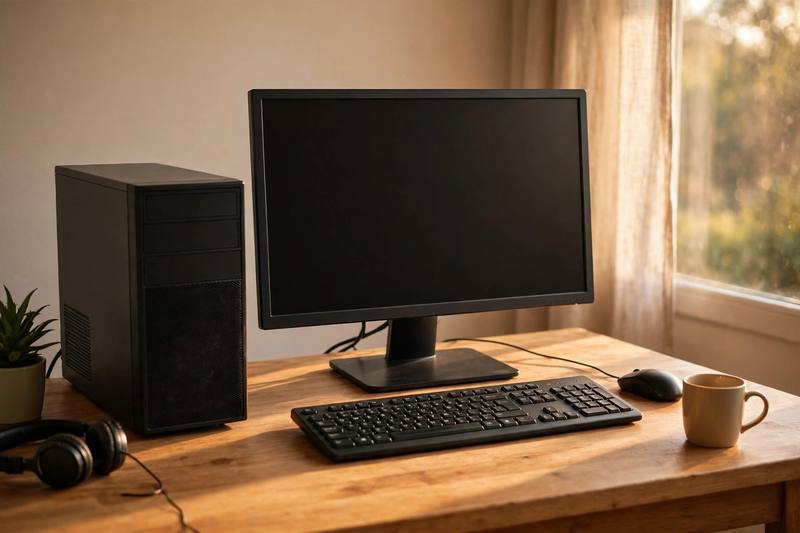
True. My new desktop has a very powerful processor, though. A computer designed for use on a desk.
I still use my desktop every day for work. But my grandfather still misses analogue technology. Relating to a signal or data that is continuous. Many older devices still use analogue technology.
Like vinyl records. Pure analogue. Now the heavier science words: biotechnology. Using living organisms to develop products or processes.
Biotechnology offers solutions for medicine and agriculture. It is a huge field, and biotechnology is creating jobs all over the world.
And cloning. The process of creating an exact genetic copy of an organism. Ethical debates surround the potential of human cloning.
Which leads to designer baby. A baby whose genetic makeup is chosen by parents. The ethics of creating a designer baby are widely debated.
Heavy topics for a Tuesday. Wednesday's theme was cities and daily life, and it gave us some wonderful idioms. Let's start with hit home.
Hit home means to be fully understood and to have a strong effect. His words about poverty really hit home.
That sentence really hit home for me when I first read it. When something hits home, you feel it, not just understand it.
Exactly. And the news about rents in the city really hit home for young renters this year.
A close neighbor is home truth. An unpleasant fact about oneself that is true. My friend told me some home truths about my spending habits.
Ouch. Sometimes a friend tells you a home truth, and it hits home at the same time. The two words love appearing together.
They do. Now, the happiest idiom of the week: have the time of your life. To enjoy oneself immensely. We had the time of our lives at the party.
I hope everyone listening gets to have the time of their life this weekend. It is a beautiful phrase.
Moving to buildings: high-rise. A tall building with many floors. They live in a modern high-rise flat downtown.
I grew up in a high-rise, and honestly, life in a high-rise has its own rhythm. And at the other extreme, hovel. A small, dirty, and miserable dwelling.
They lived in a tiny, dilapidated hovel. From a hovel to a high-rise, that is the whole city in two words.
And household word. A person or thing widely known by everyone. Coca-Cola has become a household word globally.
Like Bluetooth earlier. Technology can become a household word fast. And the last one: lead a sheltered life. To live protected from difficult or unpleasant experiences.
She led a sheltered life, unaware of real-world challenges. City life, though, rarely lets you lead a sheltered life for long.
That's the full set of twenty-one. But listeners, the review words, the ten we are quizzing you on, deserve one more pass. Quick fire round.
Breathe new life into. A good teacher can breathe new life into a boring subject.
Get a new lease of life. After the repairs, my old bike got a new lease of life.
Furnished. They chose a furnished flat because they travel light.
Dog's life. Without friends nearby, moving abroad can feel like a dog's life at first.
Hit home. The final episode of that series really hit home.
Home truth. The report contained a few home truths about the company.
Have the time of your life. On your birthday, you should have the time of your life.
High-rise. The new high-rise changed the skyline.
Desktop. I cleared my desktop and felt instantly calmer.
And AI. Even this podcast script was checked with a little help from AI.
Speaking of help, here is your second reminder about the Muse English app. If today's review felt good, imagine doing it every single day with fresh words, photos that show you what each word means, pronunciation audio for every word, shadowing stories, grammar quizzes, and points on the leaderboard for every streak you keep.
Download Muse English free today and make review day your favorite day. You will have the time of your life learning.
One more thought before we close. Many of these words pair up in real life. A family might move from a council estate to a furnished high-rise, and suddenly their daily routine gets a new lease of life.
That's lovely. New places really do that. When we moved offices last year, the whole team got a new lease of life, and our manager used the moment to breathe new life into our weekly meetings.
And on the tech side, my old analogue radio finally died, so I got a new lease of life for my mornings with a smart speaker. Though I do miss the warm sound of analogue sometimes.
Nostalgia is powerful. Anyway, listeners, pick three words from today and use each one in a sentence before bed. That is how a word stops being a lesson and starts being yours.
Actually, let me add one more example, because this idiom is worth it. When a neighborhood gets funding for parks and libraries, the whole area can get a new lease of life. Shops reopen, kids play outside again, and the community feels alive.
That is a beautiful use. And it shows the grammar too: get a new lease of life works for people, places, and even old bikes.
Exactly. Okay, listeners, that really is our review now. Twenty-one words, three days, one conversation, and zero new vocabulary to memorize.
Just stronger memory. Say each word out loud, write one sentence of your own, and it will hit home for good.
So, that is our review. Twenty-one words, three days, one conversation.
Remember, on review days there are no new words, only stronger memory. Say each word out loud, use it in a sentence of your own, and it will hit home.
Quick study tip before we finish. Review days work best when you test yourself, so pause this episode after each section and try to recall the meanings before we say them.
Great advice. For example, can you still explain what a granny flat is without looking? A small apartment attached to a house for an elderly relative. If you got it, your memory is doing its job.
And what about council housing? Houses provided by the local authority at low rent. These housing words will come back in future lessons, so locking them in now saves you effort later.
One last round of the tech set, just for the ear. My Bluetooth headphones pair with my desktop, where an AI assistant helps me read about biotechnology and cloning, while my old analogue radio gathers dust. All seven tech words in one sentence.
Show off. But it proves the point: words stick when they live in real sentences.
Thanks for listening to Muse English. I'm Maya.
And I'm Lena. See you tomorrow for fresh words.
🎙 تمرین شدوئینگ نمونهٔ رایگان
گوش کنید و همزمان با صدا بلند تکرار کنید. تمرین کامل شدوئینگ در اپ است: هر جمله را تکرار میکنید و میبینید اپ چند کلمه از آن را تشخیص داده است.
When Sara moved into her new furnished apartment, she felt her life could finally get a new lease of life.
The furnished rooms were small but bright, and every furnished corner seemed to breathe new life into her tired routine.
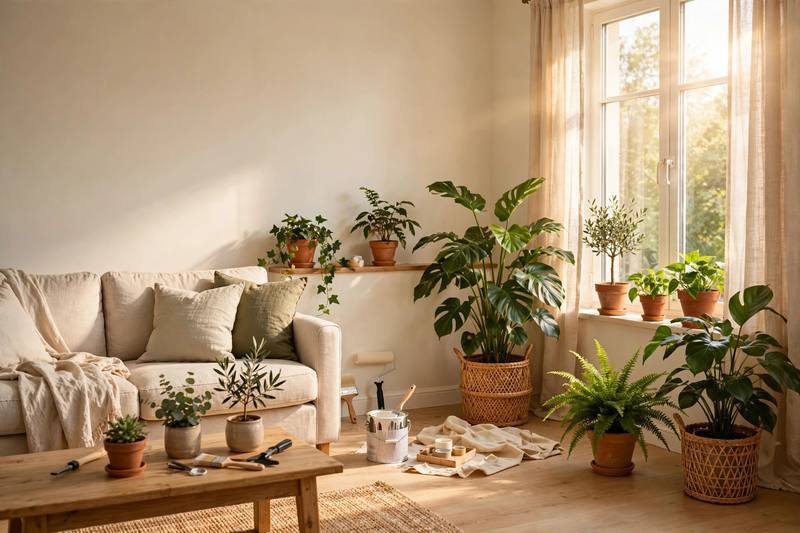
Her friends helped her breathe new life into the dull walls with paint, plants, and warm light.
صحبت کردن را تمرین کنید
در اپ Muse English همهٔ جملهها را شدوئینگ کنید. اپ گوش میدهد و نشان میدهد چند کلمه از جملهتان را تشخیص داده است.
📝گرامر: Noun Modifiers and Compound Nouns
In English, one noun can describe another: a bus stop, a shoe shop, a coffee cup. The first noun works like an adjective, and the second noun is the main one — a high-rise flat is a kind of flat, a coffee cup a kind of cup.
The first noun is usually singular: a toothbrush (never *teethbrush*), a taxi driver, a book club. A few are plural by tradition: a sports car, a clothes shop, a savings account.
When a number + noun comes before another noun, use a hyphen and drop the plural: a ten-minute walk, a five-year-old child, a *
این گرامر را در اپ کامل یاد بگیرید
توضیح کاملتر، مثالهای بیشتر و تمرین تعاملی.
راهنمای کامل و تمرینها: Noun Modifiers and Compound Nouns ←
هر روز ادامه بدهید
هر روز درس، پادکست و آزمون تازه؛ رایگان در اپ Muse English.