

📖 What is Muse English?
Muse English is a free English learning app with daily lessons across all 6 CEFR levels (A1 Beginner to C2 Proficient). Every day brings new vocabulary, a real podcast conversation, shadowing practice, grammar and quizzes — all at museenglishapp.com.
📚 Vocabulary
10 new words Learn new words with real examples and audio.





Podcast: Health & Body
Listen to today’s conversation.
📝 Podcast Transcript
Welcome back to Word Kitchen, everyone. I am Maya.
And I am Lena. Today we are cooking up a fascinating topic, Maya. We are talking about the human body, modern medicine, and how we deal with illness.
That is right. We have ten powerful words for you today, all about health and the body. And we are going to use them so many times that by the end of this episode, they will just be part of your vocabulary.
So let us start with a question. When someone is very sick and doctors cannot cure the illness, what can they do? They can palliate the suffering. Maya, can you explain what palliate means for our listeners?
Of course. To palliate means to ease pain or relieve symptoms without actually curing the disease. For example, strong painkillers are given to palliate the pain of patients with advanced cancer. The medicine does not remove the illness, but it helps palliate the suffering so the patient can rest.
That is such an important idea in medicine. Sometimes the goal is not a cure, it is to palliate. Hospice care is entirely about this. Nurses and doctors work to palliate discomfort, to make the final days as peaceful as possible. And palliative care, which comes from the same root, is now a whole specialty.
Right. When we say a treatment will palliate the symptoms, we are being honest. We admit that we cannot fix the problem, but we can still palliate the pain. It is compassionate medicine.
And this connects to our next word, which is prognosis. When doctors look at a patient's condition, they try to estimate what will happen. That estimate is the prognosis. So what is a prognosis, exactly?
A prognosis is the doctor's prediction about the likely course of a disease. It is not a guarantee, just a professional judgment. For instance, the prognosis for someone with early-stage skin cancer is usually excellent. Caught early, the prognosis is very positive.
But here is the tricky part. A prognosis can change. Twenty years ago, the prognosis for certain heart conditions was grim. Today, because of better medicine, the prognosis for those same conditions is much brighter. So when your doctor gives you a prognosis, remember that a prognosis is based on current knowledge, and knowledge keeps improving.
Exactly. And I think a good doctor explains the prognosis honestly but gently. Hearing a difficult prognosis is one of the hardest moments in life. A kind doctor will discuss the prognosis with care, not just state the prognosis coldly.
Absolutely. Now, let us talk about what illness can feel like. Our third word is debilitating. Maya, tell me about a debilitating condition.
A debilitating illness is one that causes serious weakness and makes normal life extremely difficult. Think of chronic migraines. For some people, migraines are genuinely debilitating. A debilitating headache can keep a person in a dark room for two days. When pain is that debilitating, holding a job becomes nearly impossible.
Yes. Severe depression can also be debilitating. It is not just feeling sad. A debilitating condition like that drains all your energy. People underestimate how debilitating chronic fatigue can be. You look fine on the outside, but the illness is debilitating in a way others cannot see.
And long COVID gave the world a lesson in how debilitating a virus can be. Patients described feeling debilitating exhaustion after even a short walk. If something is debilitating, it weakens you and limits your life.
So we have talked about easing pain, predicting illness, and how illness weakens us. Now for something fascinating: the placebo. Maya, the placebo effect is one of my favorite topics in all of medicine.
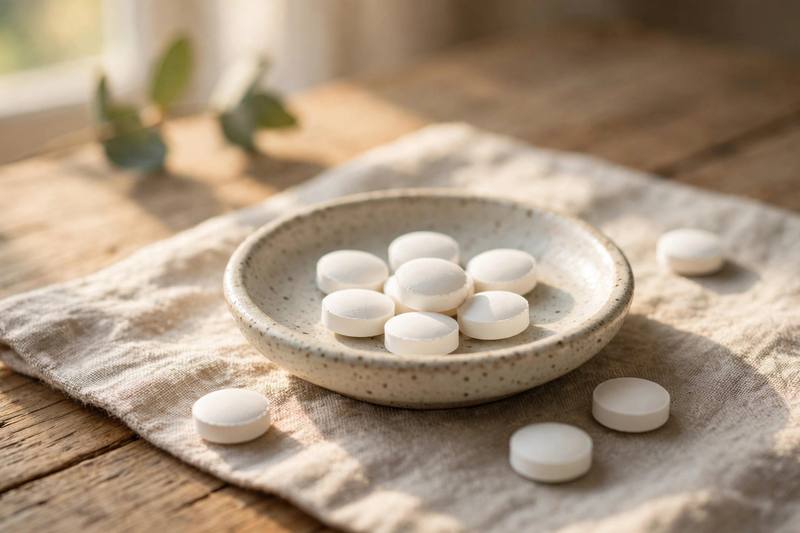
Mine too. A placebo is a harmless substance, like a sugar pill, that is given to a patient instead of real medicine. In drug trials, one group gets the real drug and the other group gets the placebo. And the amazing thing is that the placebo group often gets better anyway.
Right. The patient's belief is so powerful that even a placebo can trigger real healing. Scientists call this the placebo effect. If you give someone a placebo and tell them it is strong medicine, their brain can release natural painkillers. The placebo is not cheating. The placebo shows how much the mind influences the body.
Here is a wild fact. In some trials, the placebo worked almost as well as the real drug for mild pain. That tells us the placebo deserves respect. Of course, a placebo cannot cure a broken bone. But for pain and nausea, the placebo effect is real and measurable.
I love that. Now let us go deeper into the science. Our next word is pathogenesis. This is a more academic word, Maya.
It is. Pathogenesis is the biological process by which a disease develops in the body. When scientists study the pathogenesis of a virus, they trace every step, from the first infection to the full illness. Understanding pathogenesis takes years. For example, researchers spent a decade mapping the pathogenesis of that respiratory virus.
And knowing the pathogenesis matters because it tells doctors where to intervene. If you understand the pathogenesis of a disease, you know which step to block with a drug. The pathogenesis of cancer involves cells multiplying out of control. Once you grasp the pathogenesis, you can design smarter treatments.
Exactly. Medical students spend years learning the pathogenesis of hundreds of diseases. Pathogenesis is basically the biography of an illness, from its birth in the body to its full development. It is a beautiful, complex word.
Let us shift gears to something about modern life. Our next word is sedentary. Maya, I am afraid many of us live a sedentary life.
Sadly, yes. Sedentary means involving sitting and very little physical activity. A sedentary lifestyle, sitting at a desk for ten hours, then sitting on the sofa all evening, is now linked to heart disease. Doctors warn that a sedentary routine is almost as harmful as smoking.
I read that office workers with a sedentary job should stand up every hour. Even small breaks help counter a sedentary pattern. The opposite of sedentary is active. If your days are sedentary, your body pays the price over time.
True. Studies show that sedentary habits raise the risk of obesity and diabetes. But here is the good news. You do not need marathons to fight a sedentary lifestyle. A thirty-minute walk a day turns a sedentary day into a reasonably active one.
Great advice. Now, our next word connects to food and health: malnutrition. Maya, what does malnutrition mean?
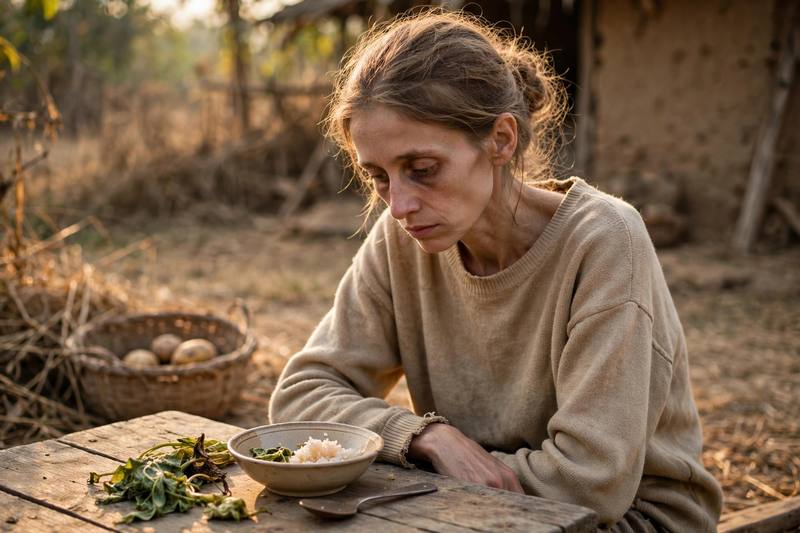
Malnutrition is poor health caused by not getting enough nutritious food. It is not just about eating too little. A person can eat plenty of calories and still suffer malnutrition if the food has no vitamins. Child malnutrition is one of the world's great tragedies. Malnutrition in the first years of life can permanently damage a child's development.
That is heartbreaking. And malnutrition also affects wealthy countries. Elderly people living alone sometimes develop malnutrition because they skip meals. Hospitals screen for malnutrition because a malnourished patient heals much more slowly. So malnutrition is a global problem, not just a distant one.
Exactly right. Fighting malnutrition means fighting poverty and food deserts. When communities solve malnutrition, children's school results improve dramatically. Good nutrition is the foundation that prevents malnutrition.
Now a dramatic word: resuscitate. Maya, this one sounds like a movie scene.
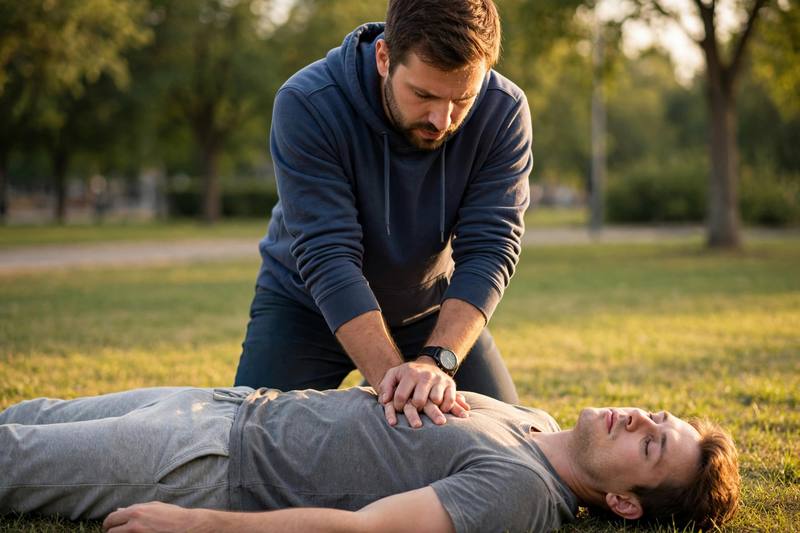
It does. To resuscitate means to bring someone back to life or consciousness, usually with emergency care. When a heart stops, paramedics perform chest compressions to resuscitate the patient. Modern defibrillators help doctors resuscitate people in minutes. The team worked for twenty minutes to resuscitate him, and finally his pulse returned.
What a powerful image. Every second counts when you try to resuscitate someone. Training in C P R teaches ordinary people how to resuscitate a stranger before the ambulance arrives. Being able to resuscitate a person is one of the most valuable skills anyone can learn.
Absolutely. And sometimes doctors must resuscitate patients after surgery goes wrong. The ability to resuscitate quickly saves thousands of lives every year. It is intense, urgent, heroic work.
Our next word is a beautiful one: homeostasis. Maya, explain homeostasis to us.
Homeostasis is the body's ability to keep its internal conditions stable. Your body temperature, your blood sugar, your water balance, the body holds all of them in homeostasis. When you exercise, you sweat. That sweating restores homeostasis by cooling you down. Homeostasis is balance in action.
I love that idea. The body is always working to maintain homeostasis. If you eat something sweet, insulin brings your blood sugar back to homeostasis. Fever disrupts homeostasis, and shivering helps restore homeostasis. It is like the body has an invisible thermostat protecting homeostasis day and night.
Perfectly put. Every breath, every heartbeat serves homeostasis. Without homeostasis, our cells could not survive. It is one of the most elegant ideas in biology.
And now our final word, which is a cautionary one: iatrogenic. Maya, this is an unusual word.
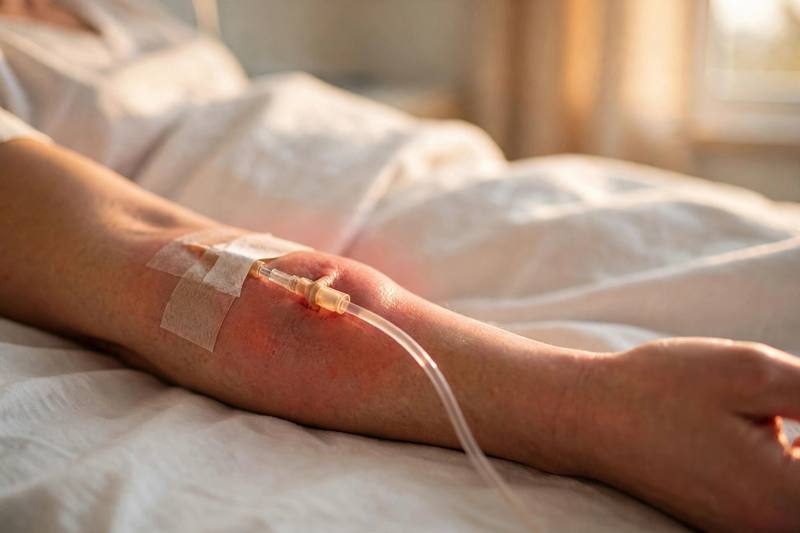
It is unusual and important. Iatrogenic means caused by medical treatment itself. For example, a patient might develop an infection that is iatrogenic, picked up from hospital equipment. When a drug's side effect creates a new illness, doctors call that iatrogenic harm.
So medicine itself can sometimes cause the problem it is trying to fix. An iatrogenic injury is every doctor's nightmare. Hospitals now track iatrogenic infections carefully to prevent them. The goal is to make iatrogenic harm as rare as possible.
Exactly. No treatment is perfectly safe, so iatrogenic effects are studied constantly. Acknowledging iatrogenic risks makes medicine more honest and safer. It reminds us that even healing hands must be careful.
What an episode, Maya. Let us quickly revisit our ten words. To palliate is to ease suffering without curing. A prognosis is a prediction about a disease. Debilitating means seriously weakening. A placebo is a harmless treatment that works through belief. Pathogenesis is how a disease develops. Sedentary means inactive. Malnutrition is poor nutrition harming health. To resuscitate is to bring back to life. Homeostasis is the body's stable balance. And iatrogenic means caused by treatment itself.
Beautifully summarized. Listeners, use these words this week. Tell a friend about the placebo effect. Notice your sedentary habits. Think about homeostasis the next time you sweat. See you next time on Word Kitchen.
See you next time.
🎙 Try Shadowing free sample
Listen and repeat along with the studio audio. Full shadowing practice with pronunciation scoring is in the app.
The Clinic That Never Sleeps
1. Dr. Amara started her day by reviewing each patient's prognosis, hoping the prognosis would be kind.
2. A good prognosis can give a frightened family real hope.
Train your speaking
Shadow every sentence with studio audio and get your pronunciation scored — only in the Muse English app.
📝Grammar: Past and present habits and states (used to)
English draws a sharp line between habits that belong to the past and habits of the present. **used to + infinitive** marks a habit or state that held true for a period in the past but is no longer true. The negative is **didn't use to** (or the more formal **never used to**). Beware the classic trap: **used to** has no present tense. There is no **use to** for present habits. For present habits, pair the **present simple** with an adverb of frequency like *usually* or *normally*. **Used to** and the **past simple** often overlap for repeated actions, but only the **past simple** survives ex
Master this grammar in the app
Get clear explanations, more examples and interactive exercises.
Keep learning every day
New lessons, podcasts and quizzes daily — free in the Muse English app.