

📖 What is Muse English?
Muse English is a free English learning app with daily lessons across all 6 CEFR levels (A1 Beginner to C2 Proficient). Every day brings new vocabulary, a real podcast conversation, shadowing practice, grammar and quizzes — all at museenglishapp.com.
📚 Vocabulary
10 new words Learn new words with real examples and audio.

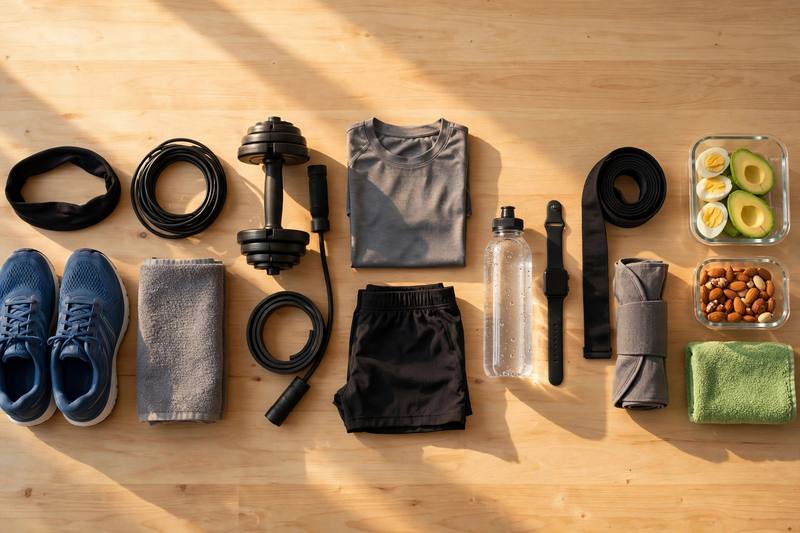





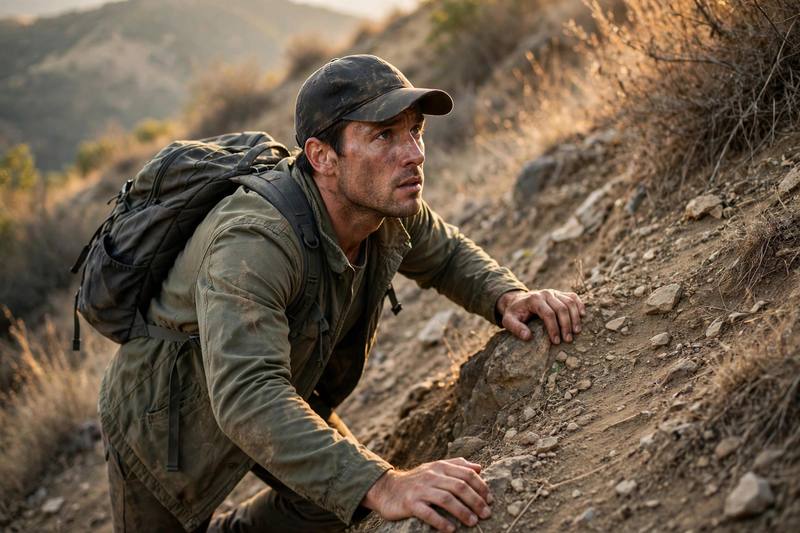

Podcast: Sports & Fitness
Listen to today’s conversation.
📝 Podcast Transcript
Welcome back to Word Kitchen, everyone! I'm Maya.
And I'm Lena. Today we're talking about one of our favorite topics — sports and fitness — but from a whole new angle. We're diving into ten powerful words that describe what really happens when people train, compete, and push past their limits.
And this is not just a list of gym terms, right? Because anyone can learn the word "run." But today's words capture the psychology and the strategy of sport. Let's start with "plateau." A plateau is that frustrating period when you keep training just as hard, but your progress suddenly stops. Your times don't improve, your lifts don't go up, nothing moves.
Oh, I know that feeling too well. I once hit a plateau in my running where I could not break the forty-minute barrier for a ten-kilometer race. For months, every race ended at almost exactly the same time. It was like my body had quietly decided that forty minutes was enough, and no amount of extra mileage would change its mind.
That is such a classic plateau story. Coaches say that almost every athlete hits a plateau at some point, and the way through it is rarely just training harder. Sometimes you have to train differently — change your routine, add intervals, or even rest. The real question during a plateau is whether you have the patience to keep going while nothing seems to be improving.
Exactly. And that is where today's second word comes in — endurance. Endurance is the ability to keep going for a long time, even when your body is telling you to stop. It is physical, but honestly it is mostly mental. Marathon runners talk about endurance as a skill you build, not something you are simply born with.
I love that. I read an interview with an ultramarathon runner who said that endurance is really just a conversation with yourself. Every hour of a hundred-kilometer race, some part of your brain begs you to quit, and endurance is the quiet voice that answers, "Not yet. Keep going."
That reminds me of my swimming days. I used to do open-water swims, and after the first hour your arms feel heavy and cold, and there is no wall to grab onto. The swimmers with the best endurance were not always the fastest ones. They were the ones who could stay calm and steady when everything felt uncomfortable.
So endurance gets you through the hard hours, but it needs a plan behind it. That brings us to our third word — regimen. A regimen is a strict, organized schedule, usually for training or health. It is not just "I exercise sometimes." It is a serious plan that you follow day after day.
Like the regimen of elite cyclists — up at five in the morning, four hours on the bike, precise meals, stretching sessions, sleep tracked every night. Their regimen is so strict it almost looks boring from the outside. But that is the point. Great performances are usually built on a regimen that nobody ever sees.
And honestly, a good regimen is the best defense against a plateau. When you train with structure, you can actually measure what is working. If your times stall and you hit a plateau, your regimen gives you data. You can look back and say, "Maybe I need to change something in the regimen instead of just blaming myself."
That is such a smart way to put it. Now let's talk about a word that sounds like it belongs in a novel — fortitude. Fortitude is deep mental strength. It is the courage to endure pain, fear, or hardship without giving up. It is what athletes need when the plan falls apart.
Yes! Fortitude is the word for the marathoner who sprains an ankle at kilometer thirty and still finishes the race. It is the gymnast who falls off the beam in the first event and comes back to win the second. Fortitude does not mean you feel no pain. It means you keep going anyway.
I think fortitude also shows up off the field. Think of athletes recovering from serious injuries. They spend months in rehabilitation, doing tiny painful exercises, with no guarantee they will ever compete again. That takes more fortitude than any single race. And honestly, that kind of fortitude is something most of us need in regular life too.
Speaking of physical qualities, let's move to agility. Agility is the ability to move quickly and gracefully, changing direction with control. Sprinters have speed, but football players, tennis players, and boxers need agility.
Agility is my favorite to watch. A great basketball player with agility can turn an entire defense around with one quick change of direction. And it is trainable — ladder drills, cone exercises, balance work. I always tell people that agility training is also fantastic for everyday life, because it protects your joints and keeps you light on your feet as you get older.
Absolutely. And agility is one of those things where endurance athletes sometimes struggle. The ultramarathon runner with incredible endurance might not have much agility at all. That is why a balanced regimen usually includes both — long steady work for endurance, and quick sharp movements for agility.
Now let's lighten the mood with a beautiful word — exhilaration. Exhilaration is intense joy and excitement, the rush you feel at an amazing moment. Ask anyone who has crossed a finish line, scored a winning goal, or landed a difficult jump — that flood of exhilaration is what they remember forever.
I felt pure exhilaration once during a hike, not even a race. We reached a mountain summit at sunrise, and the whole valley was glowing. My legs were shaking, I could barely breathe, but I felt this wave of exhilaration that made every painful step worth it. Athletes say the exhilaration after a hard victory is unlike anything else.
And here is the funny thing about exhilaration — it is fleeting. The exhilaration of winning fades in a few days. That is why the greats learn to love the training itself, not just the exhilaration at the end. If you only chase the moment of exhilaration, you will burn out.
Which is a perfect bridge to our next word — recuperate. To recuperate means to recover after effort, injury, or illness. It is what your body does while you rest, and serious athletes treat it as seriously as the training.
Professional football clubs now employ entire teams just to help players recuperate — sleep specialists, nutritionists, physiotherapists. They know that muscles do not grow during the workout. They grow while you recuperate afterward. A tough regimen is useless if you never give your body time to recuperate.
And here is a nuance — to recuperate properly, sometimes you need total rest, but sometimes you need gentle movement. Swimmers often recuperate with a slow, easy session the day after a hard race. The blood keeps flowing, the soreness fades, and the body gets the message that it is safe to recuperate fully.
Let's shift to the drama of competition with the word underdog. An underdog is the competitor everyone expects to lose — the team with the smaller budget, the athlete nobody has heard of. And there is nothing the crowd loves more than an underdog.
The history of sport is basically a history of underdogs. That small national team that enters the world cup as an underdog and knocks out the champions. The tennis qualifier ranked two hundredth in the world who beats the defending champion. When the underdog wins, the exhilaration in the stadium is absolutely electric.
Why do we love the underdog so much? I think it is because an underdog victory proves that the system is not fixed. The favorite has the money, the coaches, the facilities. But the underdog has something money cannot buy — and that brings us to our next word, grit.
Grit is firm determination — the refusal to quit even when everything is difficult. Talent matters, but at the highest levels everyone is talented. What separates champions from the rest is grit. The athlete with grit shows up on the cold mornings, keeps going through the plateau, and trusts the regimen even when results disappear.
There is actually research on grit by a psychologist named Angela Duckworth, and she found that grit predicts success better than talent or IQ. Think about the underdog we just described — the reason the underdog wins is almost always grit. They were underestimated, but they had the grit to keep training when nobody was watching.
And grit connects back to endurance and fortitude, doesn't it? Endurance is the physical side, fortitude is the mental courage in a single hard moment, and grit is the long-term refusal to give up on a goal. You need all three. An athlete with endurance but no grit will quit after the first plateau. An athlete with grit but no regimen will just work hard in the wrong direction.
Beautiful summary. Now our final word — and my favorite — pinnacle. The pinnacle is the very highest point of achievement. For most athletes, the pinnacle is an Olympic gold medal, or a world record, or a championship title. It is the moment everything was building toward.
And what I find fascinating is that the pinnacle looks different for everyone. For the underdog who was never supposed to win, just reaching the final can feel like the pinnacle. And after reaching the pinnacle, many athletes describe a strange emptiness — the exhilaration fades, and they have to find a new mountain to climb.
That is so true. One famous climber said that reaching the pinnacle of his career — the summit of the world's tallest mountain — lasted about fifteen minutes. Fifteen minutes at the top, then the long climb down. The real story was everything it took to get there: the years of the regimen, the long stretches of plateau, the grit to continue.
Let's do a quick tour of all ten before we wrap up. A plateau is that flat stretch where progress stops. Endurance keeps you going for the long hours. A regimen gives your training its structure. Fortitude is the mental steel for the hardest moments. Agility is quick, graceful movement. Exhilaration is the rush of a great moment. To recuperate is to recover and rebuild. An underdog is the one nobody expects to win. Grit is the refusal to quit. And the pinnacle is the highest point you are climbing toward.
And notice how they connect. The athlete follows a strict regimen, builds endurance and agility, and when the inevitable plateau arrives, it is grit and fortitude that carry them through. The body needs time to recuperate, and then one day — maybe as the underdog — they feel that burst of exhilaration at the pinnacle.
What a journey. Now it's your turn, listeners. Pick one of today's words — maybe grit, maybe fortitude, maybe underdog — and use it this week when you talk about a challenge in your own life. Sports vocabulary is really life vocabulary.
And if you are learning English with us, remember the shadowing story in the app. It uses all ten of these words, so you can practice saying plateau, endurance, regimen, fortitude, agility, exhilaration, recuperate, underdog, grit, and pinnacle until they feel completely natural.
That's all for today's Word Kitchen. Keep training, keep learning, and we will see you tomorrow.
Bye, everyone!
🎙 Try Shadowing free sample
Listen and repeat along with the studio audio. Full shadowing practice with pronunciation scoring is in the app.
Every serious athlete knows the frustration of the training plateau.
You keep training, your times refuse to improve, and only endurance carries you through that plateau.
My own plateau lasted nearly three months last spring.
Train your speaking
Shadow every sentence with studio audio and get your pronunciation scored — only in the Muse English app.
📝Grammar: Past tenses - simple, continuous, perfect
Use the **past simple** for finished past actions — things that started and ended in the past. It also describes repeated past habits, like a strict regimen of dawn runs. Use the **past continuous** for an action in progress at a specific past moment. Never use it with non-action verbs such as want, need, or know. When two past actions meet, the **past continuous** gives the background and the **past simple** gives the interrupting event. They are usually linked by when or as. Use while with the **past continuous** for two actions happening at the same time. The **past continuous** also ope
Master this grammar in the app
Get clear explanations, more examples and interactive exercises.
Keep learning every day
New lessons, podcasts and quizzes daily — free in the Muse English app.