
📖 Muse English چیست؟
Muse English یک اپلیکیشن رایگان آموزش زبان انگلیسی است، با درس روزانه برای هر شش سطح، از A1 (مبتدی) تا C2 (تسلط کامل). هر روز لغتهای تازه با معنی فارسی، یک پادکست واقعی، تمرین شدوئینگ، گرامر و آزمون دارید. دربارهٔ اپ
📚 لغتها
۷ لغت تازه لغتهای تازه با معنی فارسی، مثال واقعی و تلفظ.



پادکست: سلامت و بدن
گفتوگوی امروز را گوش کنید.
📝 متن پادکست
Welcome to Muse English! I am Maya, and this is Lena. Today we are talking about something we all live with every single day, our bodies and our health.
That is right, Maya. Our bodies work hard for us from morning to night, and sometimes they send us little messages. Today we are going to listen to those messages and learn seven useful words along the way.
Let us start with a very common message. Have you ever had a day when your whole body just hurts a little? Not a sharp pain, just a dull, steady feeling that will not go away?
Oh yes. After a long day at my desk, my shoulders ache, my neck aches, and sometimes even my head aches a little. It is not terrible, but it is there, quietly, all evening.
That is exactly what the word ache means. To ache is to feel a continuous, dull pain. Not a sudden pain, but a slow, steady one. So we can say, my back aches after a long day. My legs ache after a long walk. My head aches when I am tired.
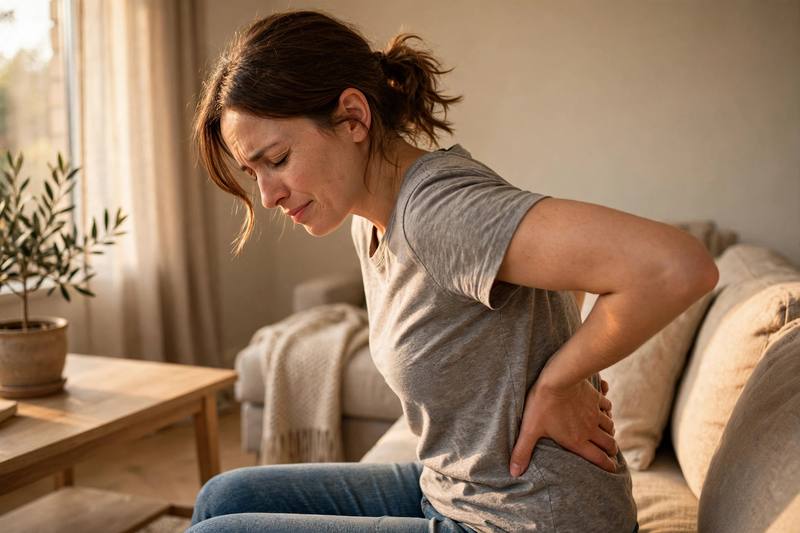
And here is a very useful word that comes from the same idea: backache. A backache is a pain in your back. If you sit all day without moving, you may get a backache. If you lift something heavy in the wrong way, you may get a backache too.
Before we go on, let me tell you about something that can help you learn words like ache and ankle even faster. The Muse English app gives you a new set of words every day, each with a photo, a clear pronunciation, and a short example. You can listen to this podcast, practise with shadowing stories, take quick quizzes, and collect points on the leaderboard. It is free, it takes just a few minutes a day, and it turns small daily habits into real progress. Give it a try today and make English part of your morning routine.
I know that feeling well. Last week I worked at my computer for six hours without a break, and by the evening I had a terrible backache. I could hardly stand up straight.
That is such a common story. A backache can come from sitting too long, from a bad chair, or from sleeping in a strange position. And when you have a backache, everything feels harder, even simple things like cooking dinner or tying your shoes.
So what do we do about an ache or a backache? First, we move. A short walk can help an ache fade away. Gentle stretching can help a backache too. And of course, if an ache does not go away after a few days, it is a good idea to see a doctor.
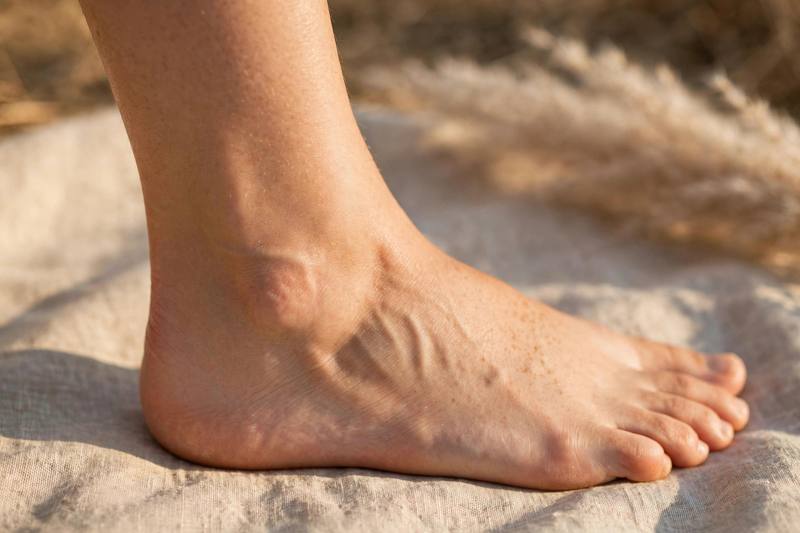
Good advice. And speaking of the body and movement, let us talk about a small but important part of the body: the ankle. Your ankle is the joint connecting your foot and your leg. It is small, but it does a big job every time you walk, run, or jump.
Exactly. Every step you take goes through your ankle. And because it works so hard, it is easy to hurt. I hurt my ankle playing football once, just by landing badly after a jump. It was swollen for a week.
Ouch. A hurt ankle teaches you how much you depend on it. Suddenly walking to the kitchen feels like a big adventure. You really notice your ankle only when it stops working well.
That is true for so much of the body. We notice our ankle when it hurts. We notice an ache when it will not stop. Our bodies are quiet when they are happy, and loud when they need help.
Thanks, Lena. Now, let us look at the bigger picture. Our bodies change over time, and that brings us to our next word: ageing. Ageing means becoming older. It happens to all of us, slowly, year by year.
Ageing is natural, and it is not something to fear. But ageing does change the body. Ageing skin needs special care, for example. It becomes drier, and it needs more moisture and more protection from the sun.
And ageing can change our joints too. As people grow older through ageing, their knees or hips may become stiff or painful. That is where modern medicine comes in, and that brings us to another word: advance.
To advance means to make progress or move forward. And medical science continues to advance rapidly. Every year, doctors advance their knowledge, hospitals advance their treatments, and patients get better care than ever before.
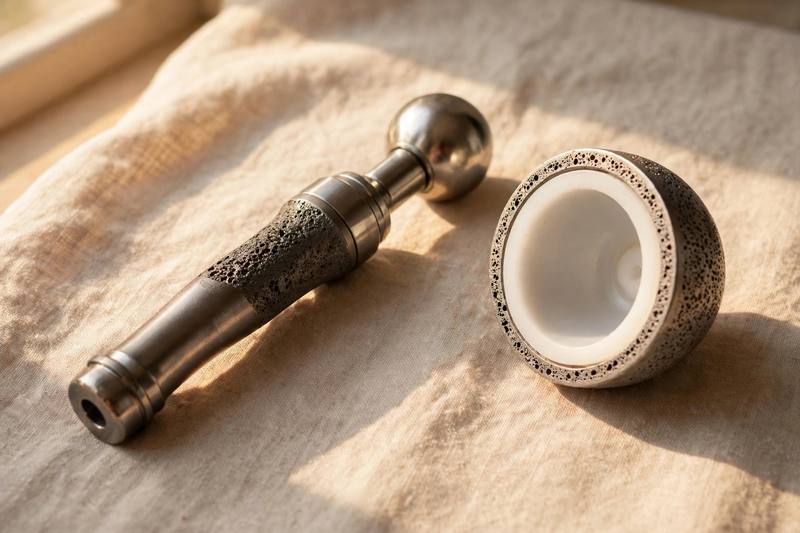
A wonderful example of how medicine can advance is our next word: artificial hip. An artificial hip is a man-made replacement for a damaged hip joint. When someone's own hip is worn out, surgeons can replace it with an artificial hip.
My neighbour had an operation for an artificial hip last year. Before the operation, she could hardly walk to the shop. After the operation, and after some careful exercise, she walks to the park every morning.
Let me pause here for a quick word about learning. The Muse English app is your daily companion for English. Every day you get fresh words with photos and pronunciation, fun shadowing stories to speak along with, grammar lessons that make sense, and quizzes that show your progress. You earn points, climb the leaderboard, and build a habit that truly sticks. It is free to install, so open it today and keep your English growing, one day at a time.
That is amazing. An artificial hip gave her back her freedom. Without that artificial hip, she would still be stuck at home. With it, she is out enjoying life again.
And that is what it means for medicine to advance. It does not just advance in laboratories. It advances in real lives. When science advances, people walk again, people work again, and people enjoy their families again.
Of course, ageing is not only about hospitals and operations. Ageing well is also about daily habits. Good food, good sleep, and regular movement help us age well. When we take care of our bodies, ageing becomes a gentler journey.
I agree completely. And here is something wonderful about the body: so much of it works automatically. That is our next word: automatically. Automatically means without human control or thought.
Think about your breathing. You breathe automatically. You do not have to tell yourself to breathe. Your heart beats automatically too. The door at the supermarket opens automatically when you get close, but your body is even cleverer than that door.
Yes! So many things happen automatically in our bodies. Your eyes blink automatically. Your stomach digests food automatically. When you touch something hot, your hand pulls back automatically, before you even think about it.
That automatic system protects us. If we had to think about every heartbeat, we could never do anything else. Because our bodies work automatically, we are free to talk, to laugh, to learn, and to live.
But automatically does not mean we can ignore our health. Even though our bodies work automatically, we still need to help them. We need to move, because our bodies do not exercise automatically. We need to rest, because good sleep does not always come automatically.
That is a great point. Let us put all of today's words together in a little story. Imagine Sara. Sara works in an office. After a long week, her back aches, and she has a backache from sitting all day.
Sara decides to take better care of herself. She starts walking every morning. One day she twists her ankle on a wet path. Her ankle is sore, and she has to rest it for a few days.
While she rests, Sara reads about ageing and health. She learns that ageing skin needs special care, and that ageing joints need gentle movement. She also reads how medical science continues to advance, and how an artificial hip can help people who can no longer walk without pain.
Sara is amazed. She thinks about her grandmother, who had an operation for an artificial hip. That artificial hip changed her grandmother's life, and it showed Sara how far medicine can advance.
Sara also thinks about how her body works automatically. Her heart beats automatically. Her lungs breathe automatically. But her health does not improve automatically. She has to choose it, day by day.
So Sara makes a plan. She will walk a little every day, stretch her back so her backache fades, and protect her ankle with good shoes. She knows her body will ache sometimes, because an ache is a normal message, not a reason to panic.
And that is a wonderful plan for all of us. When you ache, listen to your body. When you have a backache, move gently and rest well. When your ankle hurts, give it time. Remember that ageing is natural, that medicine continues to advance, and that an artificial hip is just one example of how far we have come.
And remember that so much of your body works automatically, quietly, every second, without you asking. Take care of it, and it will take care of you.
Thank you for listening to Muse English today. We hope the words ache, advance, ageing, ankle, artificial hip, automatically, and backache will stay with you.
Practise them, use them, and listen to your body. See you tomorrow for another episode of Muse English. Goodbye!
Goodbye, everyone, and take good care of yourselves!
🎙 تمرین شدوئینگ نمونهٔ رایگان
گوش کنید و همزمان با صدا بلند تکرار کنید. تمرین کامل شدوئینگ در اپ است: هر جمله را تکرار میکنید و میبینید اپ چند کلمه از آن را تشخیص داده است.
Sara's Healthy Week
Sara works in a busy office in the city.
Every morning, she wakes up early and stretches her arms and legs.
صحبت کردن را تمرین کنید
در اپ Muse English همهٔ جملهها را شدوئینگ کنید. اپ گوش میدهد و نشان میدهد چند کلمه از جملهتان را تشخیص داده است.
📝گرامر: Present Perfect Continuous
We use the present perfect continuous for an activity that started in the past and is still continuing now.
We also use it for an activity that has just stopped when we can see the result now.
Form it with have or has + been + a verb ending in -ing. For example, have been waiting.
Use for for a period of time and since for a starting point. Use how long to ask about time.
Use the continuous form for the activity itself. For a number or a finished result, use the simple form.
Do not use state verbs like know in the continuous form. Say **have kno
این گرامر را در اپ کامل یاد بگیرید
توضیح کاملتر، مثالهای بیشتر و تمرین تعاملی.
هر روز ادامه بدهید
هر روز درس، پادکست و آزمون تازه؛ رایگان در اپ Muse English.