📖 Muse English چیست؟
Muse English یک اپلیکیشن رایگان آموزش زبان انگلیسی است، با درس روزانه برای هر شش سطح، از A1 (مبتدی) تا C2 (تسلط کامل). هر روز لغتهای تازه با معنی فارسی، یک پادکست واقعی، تمرین شدوئینگ، گرامر و آزمون دارید. دربارهٔ اپ
📚 لغتها
۷ لغت تازه لغتهای تازه با معنی فارسی، مثال واقعی و تلفظ.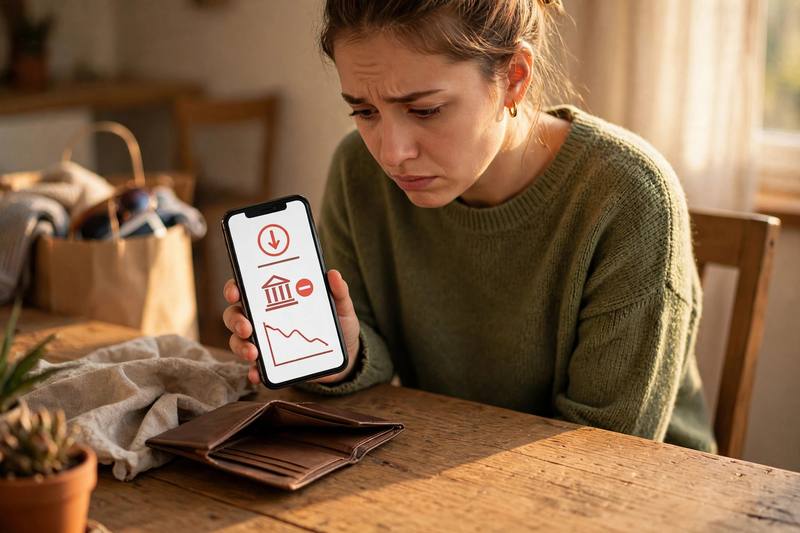

پادکست: پول و خرید
گفتوگوی امروز را گوش کنید.
📝 متن پادکست
Welcome to Muse English! I'm Maya.
And I'm Lena. Today we're talking about something that touches every single part of daily life — money and shopping.
That's right. From bank fees to sneaky price tags, money has its own language. So today we're building your vocabulary with seven money words you'll hear everywhere — in stores, at the bank, and on the news.
Let's start at the bank. Our first word is overdraft. An overdraft happens when you spend more money than you actually have in your account. The bank lets the payment go through, but it charges you a painful fee for the favor.
Oh, I have lived this. When I was a student, my rent payment came out one day before my paycheck arrived. I slipped into overdraft, and the bank charged me a thirty-five dollar fee. On top of an already expensive month, that fee really hurt.
That is exactly how an overdraft works. It saves the payment, but it punishes your wallet. To avoid an overdraft, some people set up a low-balance alert on their banking app. Your phone warns you before your balance hits zero.
Another trick: link your checking account to your savings account. If you go toward an overdraft, the bank pulls from savings automatically. The fee is much smaller — sometimes there is no fee at all.
Good advice. An overdraft is one of those quiet money leaks. A few fees a year can quietly cost you more than a nice dinner out.
Which brings us to our second word, and this one is much happier: cashback. Cashback is money your credit card company gives back to you after you buy something. Spend one hundred dollars, get two dollars back. Simple.
I genuinely love cashback. My card gives me two percent cashback on groceries and three percent on restaurants. Last year my cashback added up to almost three hundred dollars. That is basically free money for buying things I would buy anyway.
It really adds up. Some cards give extra cashback in rotating categories — five percent on travel one quarter, five percent on gas the next. If you plan around it, your cashback grows fast.
But here is the warning, and it is important: cashback only helps if you pay your full bill every month. If you carry a balance and pay interest, the interest wipes out your cashback completely. The banks are counting on exactly that.
Absolutely. Think of cashback as a small reward, not a strategy. Never buy something just to earn cashback — that is how the reward becomes a trap.
Wise words. Now let's go shopping. Our third word is markup. A markup is the extra amount a store adds to the price of a product, above what the store itself paid for it.
The classic example is restaurant wine. A bottle the restaurant bought for ten dollars might be sold to you for thirty dollars. That markup is how the business pays its rent and its staff — but as a customer, it is smart to know it exists.
Clothing has a big markup too. That simple cotton shirt cost very little to make, but the price tag includes design, advertising, and rent for a beautiful store in a busy mall. Understanding markup helps you decide what is actually worth the price.
And knowing about markup gives you power. If you know the markup is huge, you can ask for a discount with real confidence. A polite "Can you do any better on the price?" works surprisingly often on big-ticket items like furniture and electronics.
It really does. Salespeople expect it. A markup is not a crime — it is business — but an informed shopper never pays the first price without thinking.
Quick break! If you're enjoying these words, you'll love the Muse English app. Every day it gives you new words with real photos and clear pronunciation audio, plus this very podcast, fun shadowing stories you can speak along with, quizzes, grammar lessons, and a leaderboard that tracks your points. Thousands of learners are building their English a little every day. Download it free and start your streak today — your future self will thank you.
And now, back to money talk. So far we've covered overdraft, cashback, and markup. Next comes the biggest money word in adult life — mortgage. A mortgage is a large loan from a bank that lets you buy a house, which you then pay back over many years, usually twenty or thirty.
Getting a mortgage is exciting and terrifying at the same time. You finally have your own home, but you also owe the bank hundreds of thousands of dollars. My sister just signed her first mortgage, and she read every single page of the contract before she picked up the pen.
Very smart. A mortgage has serious fine print: the interest rate, penalties for paying early, insurance requirements, property taxes. Never rush a mortgage decision. Compare at least three banks, and ask each one to explain every fee in plain language.
Also learn the two main types. A fixed-rate mortgage keeps the same interest rate for the whole term — predictable and calm. A variable-rate mortgage can go up or down, which is cheaper at first but riskier later. Most first-time buyers sleep better with a fixed mortgage.
And remember the down payment — the chunk of money you pay upfront. A bigger down payment means a smaller mortgage, which means less interest over thirty years. Every extra dollar upfront saves you many dollars later.
A mortgage is a marathon, not a sprint. Respect it, understand it, and it becomes the path to owning your home instead of renting forever.
After the mortgage comes the furniture shopping — and that is where our next word bites. To overcharge someone is to make them pay more than something is really worth.
The classic example is tourists. A taxi driver in a new city might overcharge you for a ten-minute ride if he thinks you do not know the real price. It happens with repairs too — a dishonest mechanic might overcharge you for a simple thirty-minute fix.
How do you fight it? Check prices first. If three shops sell the same phone for the same price, you will know immediately when the fourth one tries to overcharge you. Knowledge is your shield against any overcharge.
Ask for an itemized bill, too. When every part and every hour of labor is listed separately, it is much harder for someone to quietly overcharge you. And never feel embarrassed to question a bill — it is your money.
Exactly. An overcharge survives on silence. The moment you ask questions, it usually disappears.
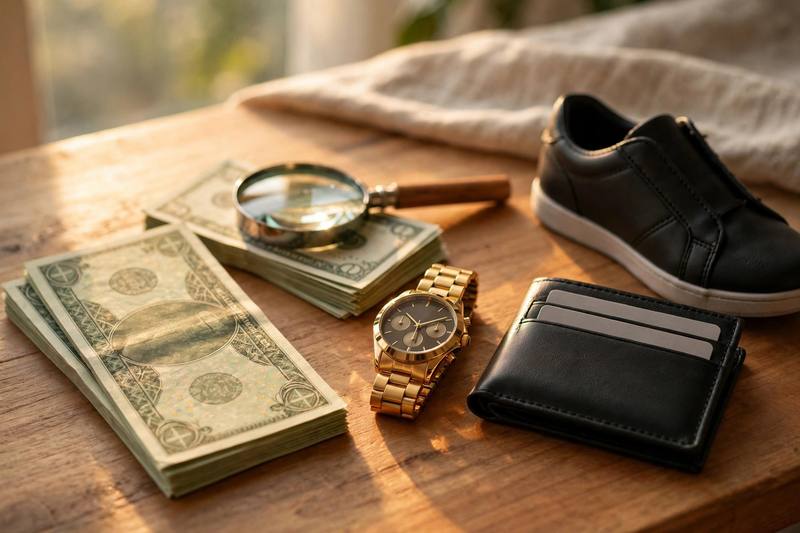
Speaking of traps — our sixth word is counterfeit. Counterfeit means fake: money or products made to look real, but they are not.
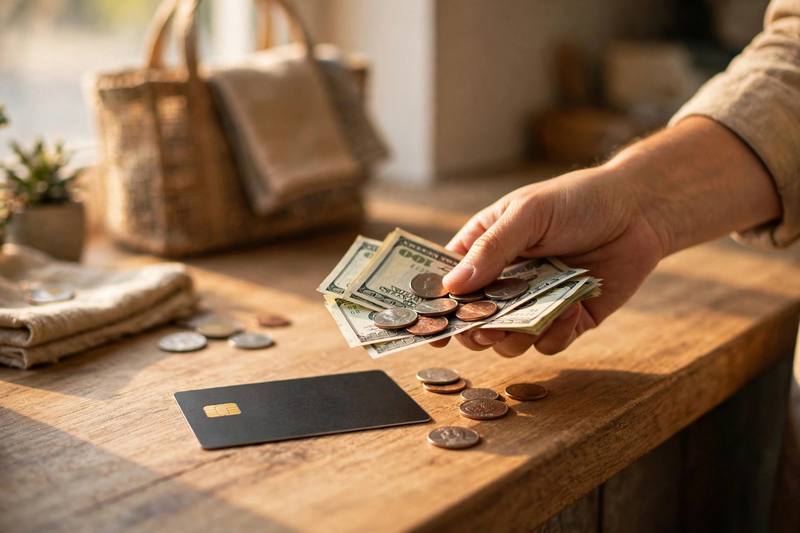
Counterfeit bills are a real problem. A careful cashier holds your fifty-dollar note up to the light, checking for the watermark and the security strip. If the bill is counterfeit, the store loses the money — the police take the fake bill, and nobody pays you back.
Modern bills have clever defenses: raised ink you can feel with your finger, color-shifting numbers, tiny hidden text. Take ten seconds to learn what your country's real money looks and feels like. A counterfeit bill often feels too smooth or too perfect.
And it is not just money. Counterfeit sneakers, counterfeit perfumes, counterfeit phone chargers — online marketplaces are full of them. A charger that costs two dollars might be counterfeit, and a counterfeit charger can overheat and actually start a fire.
That is genuinely scary. Buy electronics from trusted sellers only. If a deal looks impossible — a famous brand at one tenth of the price — it is almost certainly counterfeit. Walk away.
Before we finish — a tip for your English routine. The Muse English app turns everything you just heard into real practice: today's words with photos, pronunciation audio you can replay anytime, a shadowing story to speak along with, and quizzes that lock it all in. Add grammar lessons, points, and a leaderboard, and staying motivated gets easy. It is completely free to start. Grab it today and make English a daily habit, not a chore.
Welcome back for our final word: reimburse. To reimburse someone is to pay them back for money they spent — usually for work.
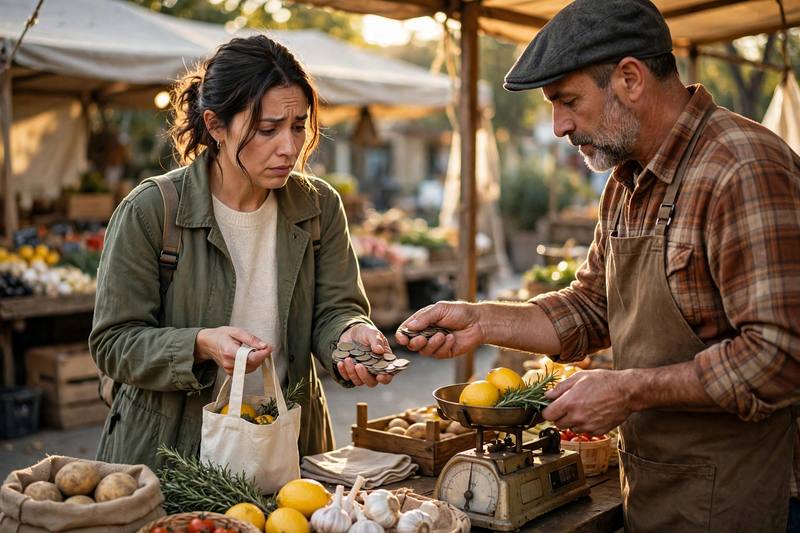
The perfect example is business trips. You pay for the flight, the hotel, the meals — and then the company reimburses you. Keep every single receipt, because no receipt usually means no reimbursement.
My company is good about it — they reimburse travel costs within a week. My friend's company takes two months to reimburse anything. She basically gives them an interest-free loan every single trip, and she hates it.
Two months! Here is a pro tip: photograph your receipts the same day. Paper fades, phones get lost, but a photo in the cloud means the company can always reimburse you on time.
And know your company's policy before you spend. Some companies reimburse business-class flights; others reimburse only economy. Spend first and ask later, and you might pay the difference yourself.
So here is our full set. Overdraft — spending past zero and paying a fee. Cashback — money your card gives back to you. Markup — the store's profit built into the price. Mortgage — the big home loan you pay for decades. Overcharge — being made to pay too much. Counterfeit — dangerously fake. And reimburse — getting paid back for what you spent.
Seven words, one smarter wallet. This week, check your bank app for an overdraft alert, look at your cashback balance, question a markup before you pay it, and never let anyone overcharge you.
If a deal smells counterfeit, walk away. If you spent money for work, make them reimburse you. That is money English in action.
Thanks for learning with us today. Keep practicing, keep listening, and we will see you tomorrow on Muse English!
Bye for now!
🎙 تمرین شدوئینگ نمونهٔ رایگان
گوش کنید و همزمان با صدا بلند تکرار کنید. تمرین کامل شدوئینگ در اپ است: هر جمله را تکرار میکنید و میبینید اپ چند کلمه از آن را تشخیص داده است.
Daniel's Money Lesson
Daniel loved shopping, but he never watched his bank balance carefully.
One Saturday morning, he bought a new jacket, a pair of shoes, and a smart speaker.
صحبت کردن را تمرین کنید
در اپ Muse English همهٔ جملهها را شدوئینگ کنید. اپ گوش میدهد و نشان میدهد چند کلمه از جملهتان را تشخیص داده است.
📝گرامر: Third Conditional
We use the third conditional to imagine a different past. It talks about things that did not happen, and the results that would have followed.
The structure is If + past perfect in the condition, and would have + past participle in the result. Example: If I had known about the markup, I would have asked for a discount.
We often use it for regrets about money and shopping. If she had checked her balance, the bank would not have charged her an overdraft fee.
Both clauses can be negative. If he had not lost his receipts, the company **would not have refused*
این گرامر را در اپ کامل یاد بگیرید
توضیح کاملتر، مثالهای بیشتر و تمرین تعاملی.
هر روز ادامه بدهید
هر روز درس، پادکست و آزمون تازه؛ رایگان در اپ Muse English.