

📖 What is Muse English?
Muse English is a free English learning app with daily lessons across all 6 CEFR levels (A1 Beginner to C2 Proficient). Every day brings new vocabulary, a real podcast conversation, shadowing practice, grammar and quizzes — all at museenglishapp.com.
📚 Vocabulary
10 new words Learn new words with real examples and audio.






Podcast: Sports & Fitness
Listen to today’s conversation.
📝 Podcast Transcript
Welcome back to Word Kitchen. I'm Maya.
And I'm Lena. Today's show is all about sports and fitness, the drama, the training, and the stories that keep us watching.
We picked ten powerful words for you today. You'll hear each one many times, so by the end of the episode they will feel like old friends.
Let's start with a story. My cousin Daniel ran his first marathon last spring, and his journey taught me almost everything on today's list.
A marathon? That's the race where runners cover about forty-two kilometers, right? That takes incredible stamina.
Exactly. A marathon tests your stamina more than almost anything else. Daniel told me that after the first hour, the race becomes a battle with your own body, and your stamina is everything.
I can believe that. Most people think a marathon is about the legs, but it's really about stamina. Stamina is the ability to keep going when your body wants to stop.
Daniel built his stamina slowly. He started with short runs, then added a few kilometers every week. He said stamina grows the same way muscles do, little by little.
That's good advice for any goal. You don't need superhuman stamina on day one. You build stamina one workout at a time.
He also learned about hydration the hard way. On one long training run, he didn't drink enough water, and he felt dizzy by mile fifteen. Proper hydration changed everything for him.
Hydration is so underrated. A lot of beginners ignore hydration completely. They buy expensive shoes, but they forget about hydration, which costs nothing and matters more.
Right. Daniel started carrying a water bottle on every run. He planned his hydration like a professional. He even set a timer on his watch as a hydration reminder.
Smart. In a marathon, hydration can be the difference between finishing strong and collapsing near the end. Coaches say hydration is just as important as training.
And what about the crowd? Daniel said the spectators carried him through the last five kilometers. Thousands of spectators lined the streets, cheering, ringing bells, holding signs.
That's my favorite part of a big race. A stadium full of spectators creates an energy you can feel. When forty thousand spectators scream your name, you find a second wind.
Daniel wasn't famous, but one spectator handed him an orange slice at mile twenty, and he said it felt like a miracle. One kind spectator can change a runner's whole day.
Spectators really are part of the sport. Without spectators, a marathon would just be a long, lonely run. The spectators turn it into a celebration.
Now, let me tell you about my local team. Our soccer club reached the final of a regional tournament this summer, and the whole town went crazy.
A tournament is such a great format. A tournament brings together lots of teams, and every match matters. One bad game in a tournament, and you're out.
Exactly. We won our first three tournament games, and the semifinal was unforgettable. The tournament final sold out in two days. I had never seen our little stadium that packed.
Tournaments create heroes. In a tournament, an unknown player can become a star in one weekend. That is the magic of a tournament.
The final was tense. We were losing by one goal, and then our striker scored twice. It was the comeback of the year. Nobody expected that comeback.
I love a good comeback. A comeback is proof that a game is never over until the final whistle. This team's comeback will be talked about for years.
The fans were singing about the comeback for weeks. After a comeback like that, the whole town felt invincible. A comeback lifts everyone, not just the players.
There is another word hiding in that story. Your town's club and their neighbors, do they have a rivalry?
Oh, a huge rivalry. The rivalry between our club and the city team goes back thirty years. Every year, the rivalry produces at least one crazy match.
Rivalry is healthy when it's respectful. A good rivalry pushes both teams to be better. But a bad rivalry can turn ugly fast, so fans have to keep it friendly.
Our rivalry is friendly. Before the big rivalry game, the two fan groups have a barbecue together. Then during the game, the rivalry takes over and everyone screams.
Now the dramatic part of your story. Tell me about the foul.
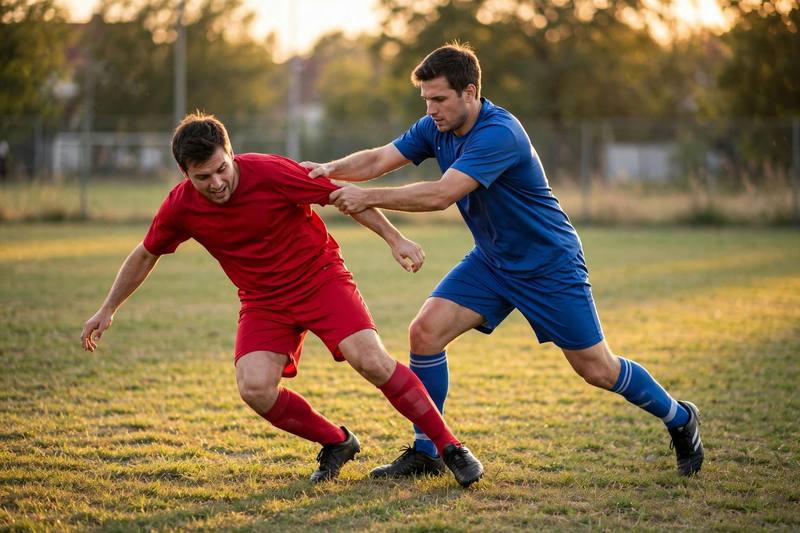
Ah yes. In the final, with ten minutes left, their defender grabbed our striker's shirt in the box. It was a clear foul, and the referee pointed to the spot.
A foul in the box means a penalty, right? A penalty is a free shot at the goal from eleven meters. High drama.
The stadium went silent. Our captain stepped up to take the penalty. He had missed a penalty earlier in the season, so his hands were shaking.
A penalty is all about nerves. The ball is right there, the goal is huge, but a penalty feels like the hardest kick in the world.
He scored. The penalty went straight into the top corner. That penalty sealed the comeback, and the crowd went wild.
But wait, there's a twist in this story, isn't there? Something about the other team?
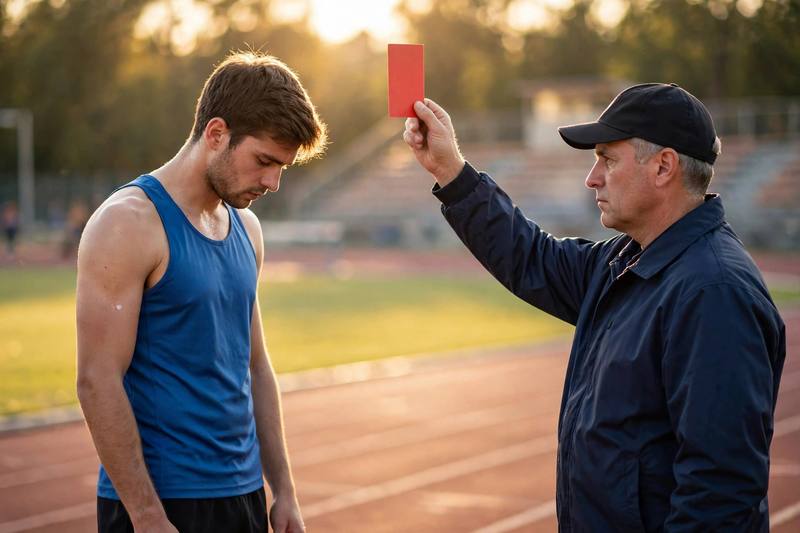
Yes. After the match, the tournament organizers reviewed the footage and found that the other team had fielded an ineligible player in the semifinal. They decided to disqualify them from the tournament.
Wow. To disqualify a team is a big decision. When officials disqualify someone, it means they broke the rules and they're out. Did the team appeal?
They tried, but the evidence was clear. The organizers said that if you cheat, they will disqualify you, no exceptions. It's a harsh rule, but if they never disqualified cheaters, nobody would trust the tournament.
So the lesson is simple. Train your stamina, respect your hydration, love the spectators, enjoy the rivalry, and never commit a foul that costs your team a penalty. And definitely don't do anything that gets you disqualified.
That was a nice summary. Let's go through our words once more in real sentences, so our listeners really lock them in.
Good idea. Stamina first. If you want to run a marathon, start by building your stamina with short runs. Without stamina, even a talented athlete fades early.
Hydration next. Good hydration keeps your body cool and your muscles working. I check my hydration before every workout now, and it makes a real difference.
Spectators. A true spectator cheers for effort, not just for winners. When the last spectator leaves, the stadium feels empty and quiet.
Tournament. Our town's little tournament is my favorite weekend of the year. Every tournament has its own stories and its own heroes.
Comeback. The greatest comeback I ever saw was in that final. Remember, every comeback starts with refusing to give up.
Rivalry. A friendly rivalry makes both teams stronger. Our rivalry with the city team is already legendary.
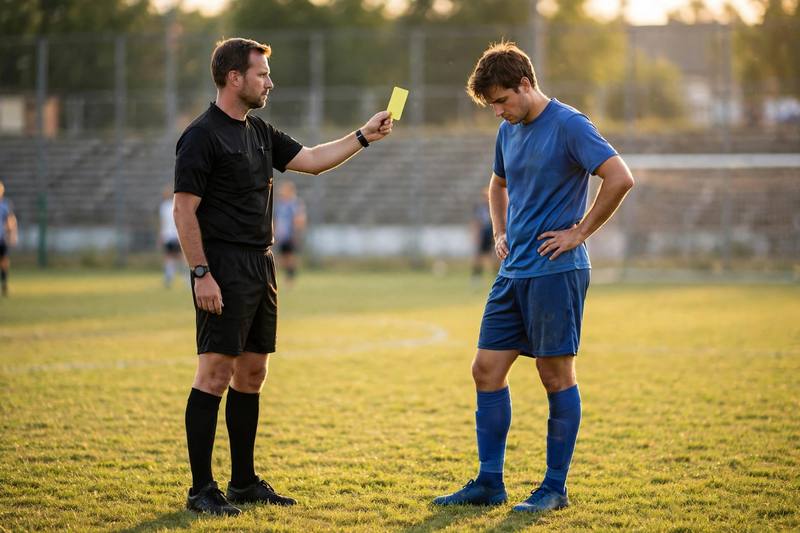
Foul. The referee called a foul, and the crowd booed. One careless foul can change a whole game in seconds.
Penalty. He practiced that penalty a hundred times in training. When the penalty went in, the whole town celebrated together.
Disqualify. The officials had to disqualify the cheaters. If you break the rules, they will disqualify you. Simple as that.
And marathon. Daniel is already training for his second marathon. A marathon teaches you patience like nothing else in life.
Beautiful. And notice, we even used today's grammar theme without trying. If Daniel trained less, he would never finish. If I were a spectator, I would cheer the loudest. That's the second conditional, and it's coming up in the grammar section.
Nice teaser. So, quick recap of the day's ten words. Stamina is the ability to keep going when you're tired. Hydration is keeping enough water in your body.
A spectator is someone who watches a game but doesn't play. A tournament is a competition with many matches and one winner.
A comeback is a return to success after a bad time. A rivalry is a strong competition between two sides.
A foul is an action against the rules. A penalty is the punishment, like a free shot at the goal. And to disqualify is to remove someone from a competition for breaking the rules.
Plus marathon, the very long race. Ten words, one great story. If you listened carefully, you heard each word many times, and that is exactly how vocabulary sticks.
Before we go, let's play a quick game. I'll describe a word, and you guess it.
I'm ready.
It happens when a team was losing, and then they win. The fans sing about it for weeks.
Easy. A comeback.
Your turn. This is a person who watches the game and screams when the home team scores a penalty.
A spectator. And here's mine. Your body needs it during a marathon, and it comes from drinking enough water.
Hydration. Next. Two teams hate losing to each other. They have played for thirty years.
A rivalry. Mine now. The referee calls it when a player breaks the rules in the box.
A foul. And then the captain takes a free shot, which is...
A penalty. What about the ability to keep running when you're exhausted?
Stamina. And the many-match competition with one winner?
A tournament. The very long race itself?
A marathon. And when officials remove cheaters from that race?
They disqualify them. Ten out of ten.
You see how fast that was? When you hear words in real situations, they stick.
That's it for today's Word Kitchen. Keep training, keep learning, and we'll see you tomorrow.
🎙 Try Shadowing free sample
Listen and repeat along with the studio audio. Full shadowing practice with pronunciation scoring is in the app.
The Final Whistle
If I had more stamina, I would join the running club tomorrow.
Building stamina takes time, but anyone can improve their stamina.
Train your speaking
Shadow every sentence with studio audio and get your pronunciation scored — only in the Muse English app.
📝Grammar: Second conditional, choosing between conditionals
We use the **second conditional** to talk about imaginary or hypothetical situations. It describes a different reality, like a dream season with endless stamina. The form is **if + past simple**, **would / wouldn't + infinitive**. The past simple here does not mean past time. After **if**, we can use **was** or **were** with I, he, she, and it. Many speakers prefer **were**, especially when giving advice. We say **If I were you** to give advice. It is a fixed phrase, so we don't normally say *If I was you*. We can also use **could** instead of **would**. It adds the idea of possibility, li
Master this grammar in the app
Get clear explanations, more examples and interactive exercises.
Keep learning every day
New lessons, podcasts and quizzes daily — free in the Muse English app.