

📖 What is Muse English?
Muse English is a free English learning app with daily lessons across all 6 CEFR levels (A1 Beginner to C2 Proficient). Every day brings new vocabulary, a real podcast conversation, shadowing practice, grammar and quizzes — all at museenglishapp.com.
📚 Vocabulary
10 new words Learn new words with real examples and audio.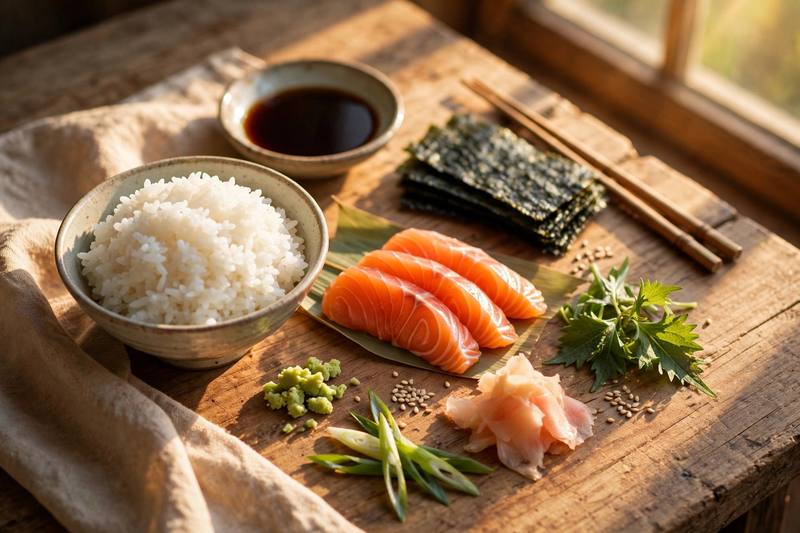
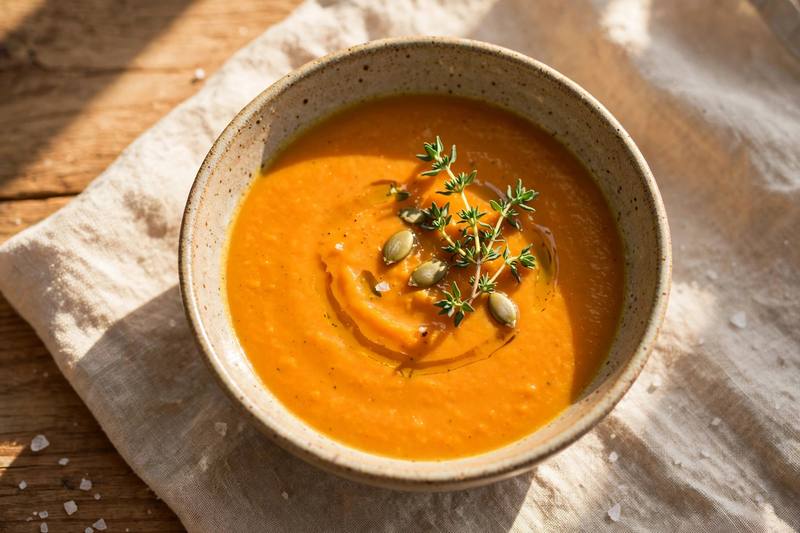



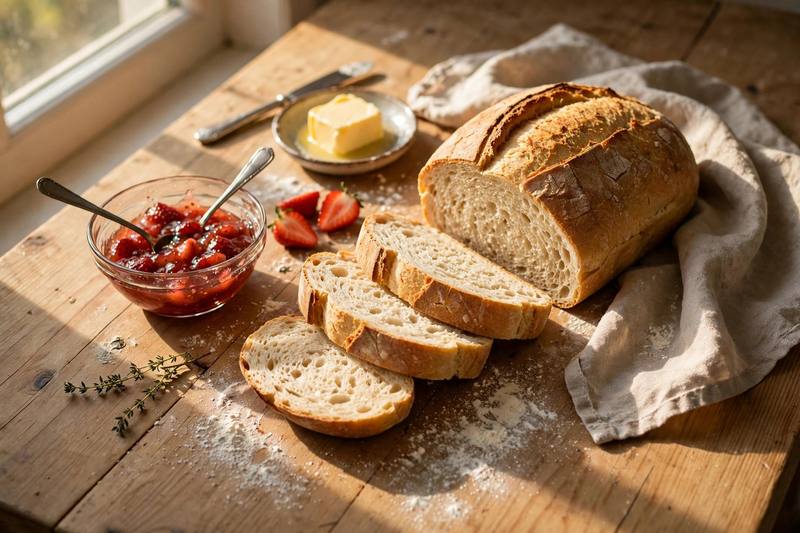
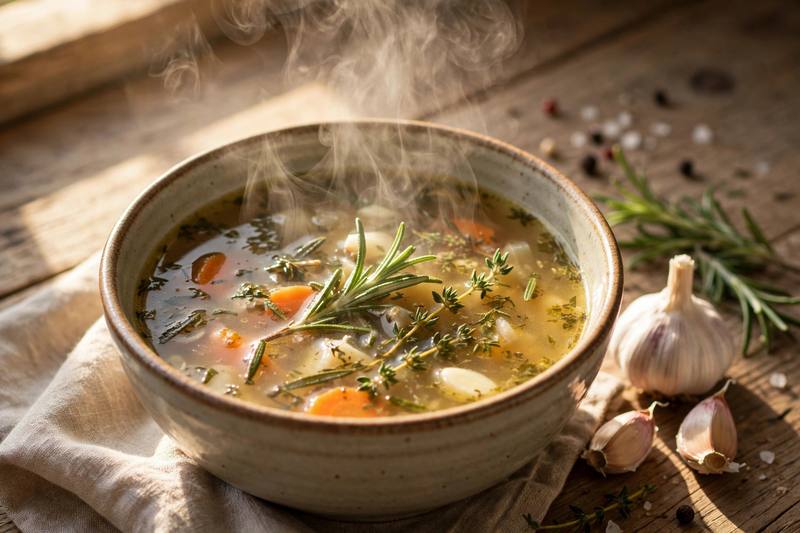
Podcast: Food & Cooking
Listen to today’s conversation.
📝 Podcast Transcript
Hello and welcome back to Word Kitchen, the show where we talk about food, cooking, and the delicious English words that go with them. I am Maya.
And I am Lena. Good morning, everyone. Maya, I have to confess something. I woke up today craving chocolate cake. At seven o'clock in the morning.
Craving cake for breakfast? Listeners, that is our first word of the day. To crave means to strongly want a particular food. When you crave something, your body is practically begging for it.
Exactly. And I do not just crave cake once in a while. When I am tired, I crave sweet things. When I am sad, I crave salty chips. My cravings change with my mood.
Mine too. Last week I worked late every single night, and by midnight I would crave warm soup. Not just any soup. A rich, homemade soup, the kind that tastes like someone cares about you.
Homemade. That is word number two. Homemade means made at home, not bought in a shop or a restaurant. A homemade meal feels special because a real person made it for you with care.
My grandmother only cooked homemade food. Her homemade bread had a thick, dark crust and a soft, warm inside. When she baked, the aroma filled the whole house, and the neighbors would knock on the door.
Aroma, word number three. Aroma means a strong, pleasant smell, usually from food or drink. The aroma of fresh coffee in the morning. The aroma of warm bread. The aroma of spices at the market.
There is a spice shop near my apartment, and every time I walk past it, the aroma pulls me inside. I always tell myself I am only browsing, and then I walk out with five bags of spices I did not plan to buy.
The aroma of food is powerful. It reaches straight into your memory. One breath of cinnamon, and suddenly I am eight years old again, sitting in my grandmother's kitchen, waiting for her homemade apple pie.
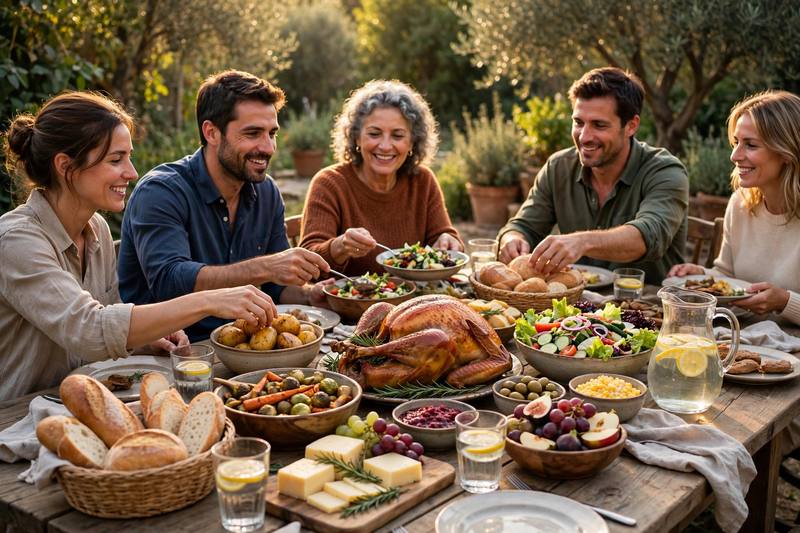
Speaking of big cooking projects, let me tell you about the first feast I ever helped prepare. Feast, word number four, means a large, special meal for many people. Think of a holiday dinner with a table so full you can barely see the tablecloth.
Oh, I love a proper feast. At my house, we have a big feast twice a year, and my mother starts cooking two days in advance. There is always far too much food, and absolutely nobody complains.
For my grandmother's seventieth birthday, we prepared a real feast. Twenty people sat around one long table in the garden, and the dishes just kept coming, one after another.
What was on the menu?
We started with a light soup, then roasted chicken with herbs, then baked fish, then a mountain of roasted vegetables, and finally three different desserts. It was a true feast, and my little cousins nearly devoured the chicken before the main course had even arrived.
Devour, word number five. To devour means to eat quickly and completely, usually because you are very hungry or the food is wonderful. When you devour something, there are no leftovers and no polite small bites.
That is the perfect description. After a long hike last month, I sat down and devoured an entire plate of pasta in about ten minutes. I barely tasted it.
We have all been there. My brother once devoured a whole pizza by himself during a football match, and the moment he finished, he asked what was for dessert.
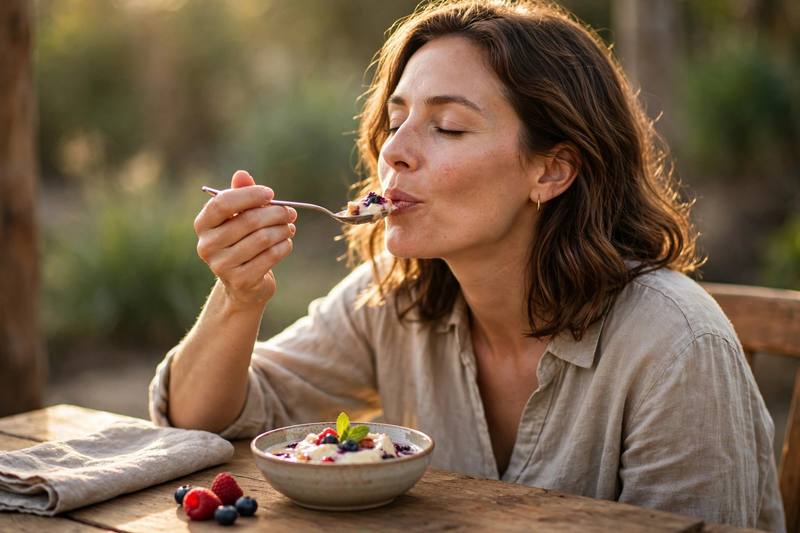
But my grandmother had a firm rule about eating too fast. She always said that good food should be savored, never rushed. To savor, word number six, means to enjoy the taste of food slowly and completely, paying attention to every single bite.
Savor is such a beautiful word. When you savor something, you take a small bite, you close your eyes, and you really taste it. No phone, no television, no rushing. You simply savor the moment.
Last night I baked a small chocolate cake, and I sat down at the table with nothing to distract me. I wanted to savor every single spoonful. It took me twenty minutes to finish a small slice, and honestly, it was one of the best parts of my day.
I do the same thing with my morning coffee. Just one quiet moment to savor the flavor before the busy day begins. It changes the whole morning.
Now let me ask you something, Maya. When you cook for guests, do you care about how the food looks on the plate?
I care a lot. Presentation is half the pleasure. I always finish a dish with a little garnish. Garnish, word number seven, is a small decoration added to a dish to make it look beautiful. A little fresh parsley on the soup. A thin slice of lemon on the fish.
A thoughtful garnish can make a simple homemade dinner look like restaurant food. My friend is a chef, and she always says that the garnish is the first thing your eyes taste. A plate without any garnish looks plain, but one small sprig of herbs changes everything.
I remember a small restaurant where the chef placed a tiny edible flower as the garnish on every dessert. It was almost too beautiful to eat. Almost. I ate it anyway, of course.
Now, restaurants are wonderful, but I have been cooking at home much more this year. There is something about a homemade meal that a restaurant simply cannot copy.
I agree completely. I tried to copy a dish from my favorite cuisine last weekend. I watched three videos, bought all the spices, and spent two hours cooking. It did not taste exactly like the restaurant version, but it was mine, and I was proud of it.
That is the spirit. Exploring a new cuisine at home is a real adventure. Sometimes it works beautifully, and sometimes the smoke alarm works harder than the recipe, but you always learn something new.
Ha. My smoke alarm and I are old friends. Let us talk about snacks now, because snacks are where all my good intentions disappear. When I watch a film in the evening, I nibble. To nibble, word number eight, means to eat with small, gentle bites, a little at a time.
Nibble is the polite opposite of devour. When you nibble, you take tiny bites. You nibble on crackers. You nibble on a piece of cheese. You nibble slowly while you decide what you really want to eat.
My problem is that I begin the evening planning to nibble, and I end the evening having devoured everything. I open a bag of chips planning to nibble during the film, and by the final scene the bag is completely empty.
That is every human being on the planet, Maya. Last night I told myself I would simply nibble on a small handful of almonds. Half an hour later, the entire bowl was empty.
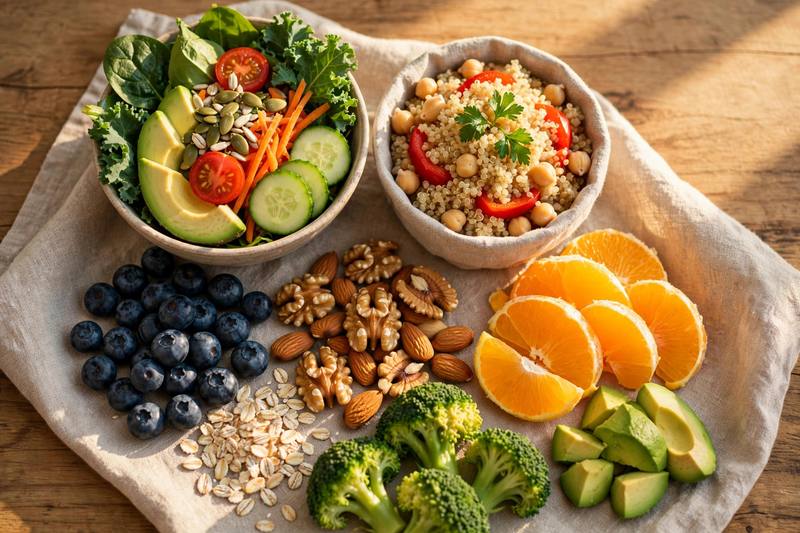
At least almonds are nutritious. Nutritious, word number nine, means good for your health, full of the healthy nutrients your body needs. Fresh fruit is nutritious. Vegetables, beans, eggs, and nuts are all wonderfully nutritious foods.
I try to keep nutritious snacks in the kitchen, because when a craving hits at midnight, I will eat whatever is closest to me. If the closest thing happens to be nutritious, then I win without even trying.
That is a clever strategy. My doctor gave me the same advice. She said that a nutritious breakfast keeps your energy steady all morning, so now I eat eggs and fruit, which is simple and quick.
And a nutritious meal does not have to be boring. Lentils are cheap and very nutritious. A colorful salad with beans and seeds is nutritious and beautiful at the same time. Healthy food can be a pleasure, not a punishment.
Beautifully said. That brings us to our tenth and final word, which might be my personal favorite. Cuisine, word number ten. Cuisine means the style of cooking from a particular country or region. Italian cuisine, Thai cuisine, Ethiopian cuisine. Every cuisine is a whole world of flavors.
Every cuisine tells the story of its people. French cuisine is famous for rich sauces and careful technique. Japanese cuisine celebrates freshness and simplicity. And the cuisine I love cooking most at home is Mexican cuisine, because it is bold, colorful, and fun.
When I travel, exploring the local cuisine is always the best part of the trip. In Vietnam, the local cuisine completely changed how I think about fresh herbs. In Turkey, the cuisine taught me that breakfast itself can be a feast.
I love that idea. And here is something I have noticed. Every cuisine has dishes that are naturally nutritious, and every cuisine has dishes that are pure celebration. A cuisine can be healthy and festive at the same time.
So true. Now, Lena, here is a challenge. If you had to cook one meal that shows off everything we talked about today, what would you make?
Oh, that is easy. I would begin with a homemade soup, nothing too heavy, just enough so that the wonderful aroma draws everyone to the table.
Then a main course inspired by my favorite cuisine, something colorful and fresh, with a bright garnish on top. A dish that invites people to savor it slowly, not to devour it in a hurry.
And while everyone waits, something nutritious to nibble on, so nobody arrives at the table starving and cranky.
Exactly. And to finish, a small feast of desserts, because some days simply deserve a celebration.
I am inviting myself to that dinner.
Ten words, and you have heard every single one of them many times today. That is the Word Kitchen promise.
Cook something delicious this week, and try using these words while you eat it. Your English will taste better, I promise.
Thank you for listening, everyone. We will see you next time on Word Kitchen.
Goodbye, and happy cooking.
🎙 Try Shadowing free sample
Listen and repeat along with the studio audio. Full shadowing practice with pronunciation scoring is in the app.
Last Saturday, our whole family gathered for a big homemade dinner.
My mother had been planning this feast for almost a week.
The aroma of roasted chicken welcomed us at the front door.
Train your speaking
Shadow every sentence with studio audio and get your pronunciation scored — only in the Muse English app.
📝Grammar: Past tenses - simple, continuous, perfect
**Past simple** (worked, went, devoured) is for finished actions in the past. We use it when we say, ask, or know when the action happened. We also use **past simple** for repeated past actions, like the big family **feast** you enjoyed every winter. **Past continuous** (was/were + verb-ing) shows an action in progress at a specific past time. It often pairs with a short **past simple** action that interrupts it. We also use **past continuous** with while for two actions happening together. Never use it with non-action verbs like want, need, or know. **Past perfect** (had + past participle
Master this grammar in the app
Get clear explanations, more examples and interactive exercises.
Keep learning every day
New lessons, podcasts and quizzes daily — free in the Muse English app.