

📖 What is Muse English?
Muse English is a free English learning app with daily lessons across all 6 CEFR levels (A1 Beginner to C2 Proficient). Every day brings new vocabulary, a real podcast conversation, shadowing practice, grammar and quizzes — all at museenglishapp.com.
📚 Vocabulary
10 new words Learn new words with real examples and audio.






Podcast: Travel & Transport
Listen to today’s conversation.
📝 Podcast Transcript
Welcome back to Word Kitchen, where we cook up new English words and serve them with real conversation. I am Maya.
And I am Lena. Today we are taking a trip, Maya. No suitcases needed, just your ears. Our theme is travel and transport, and we have ten delicious new words for our listeners.
Let us start at the very beginning of every trip: the departure. Departure means the moment a plane, train, or bus leaves the station. If your departure is at nine o'clock in the morning, do not arrive at nine o'clock. Arrive early.
Exactly. I once missed a departure because I confused the boarding time with the departure time. Boarding is when passengers get on the plane, and it usually starts forty-five minutes before the actual departure.
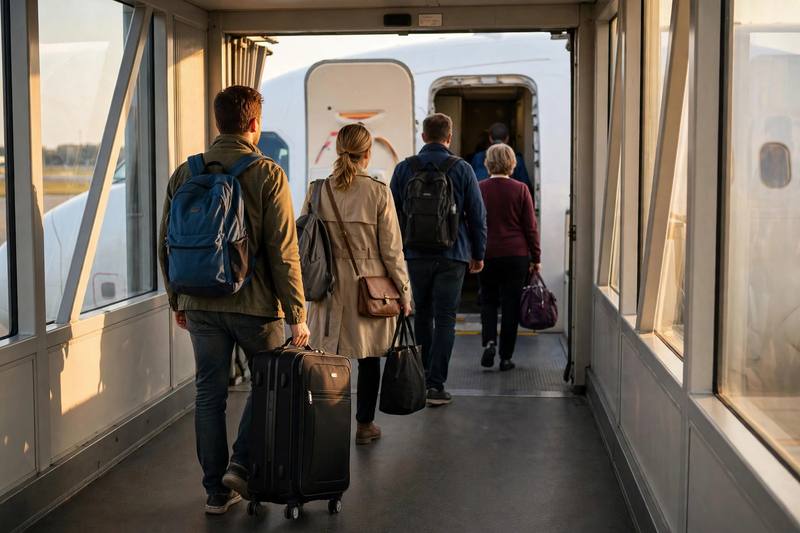
That is such an important difference. Boarding time is not departure time. At boarding, you show your pass, walk down the bridge, and find your seat. If you are late for boarding, you can miss your whole flight even if the departure is still twenty minutes away.
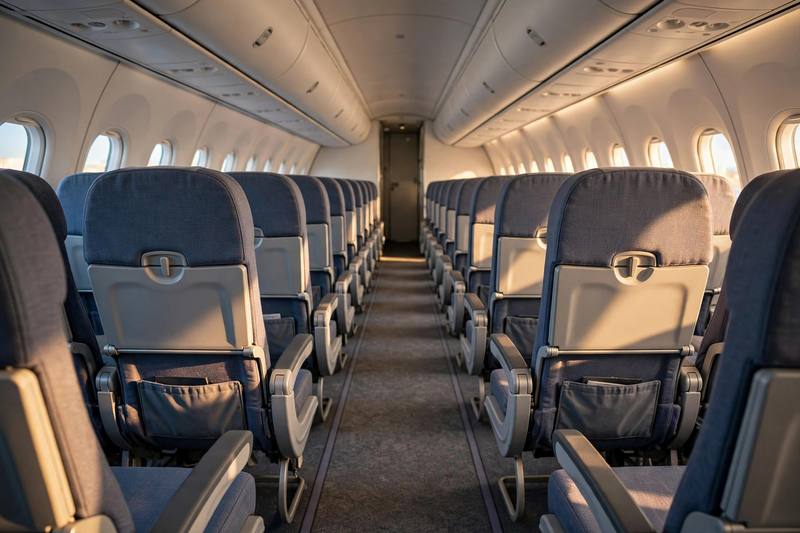
And when you find your seat, you have a big decision: window or aisle. An aisle seat is the seat next to the walkway between the rows. I love the aisle because I can stand up easily and stretch my legs on a long flight.
I am team window, but I admit the aisle has real advantages. On a night flight, the person in the aisle seat can walk to the bathroom without waking anyone. My husband always books the aisle seat, and I take the middle.
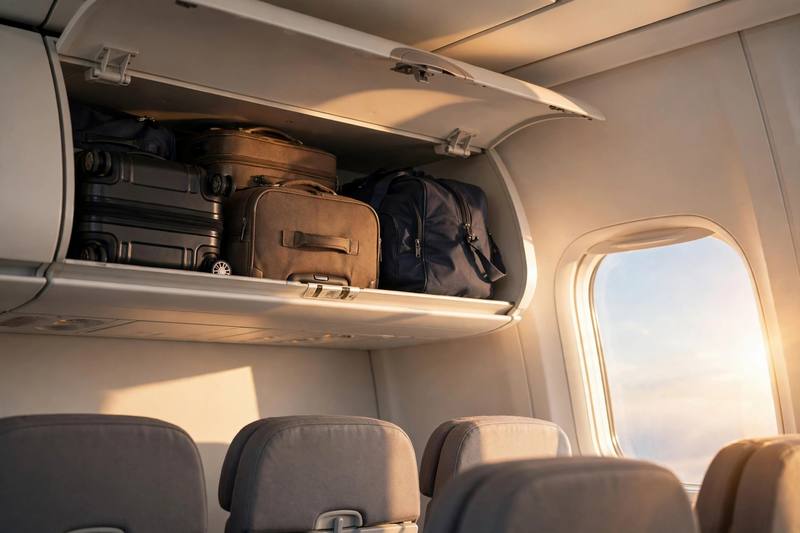
After boarding, everyone puts their small bags in the overhead locker. Overhead just means above your head. The overhead bins run along both sides of the aisle, above every row of seats.
Yes, and there is an art to the overhead locker. Put your bag in wheels first, and do it quickly, because the overhead space fills up fast. If your bag is too big for the overhead locker, the crew will take it away, and that is never fun.
True. Pack light, and the overhead locker becomes your best friend. Now, once the departure happens and you are up in the air, sometimes you feel turbulence. Turbulence is when the plane shakes because the air around it is rough.
Turbulence sounds frightening, but pilots say it is completely normal. The worst turbulence I ever felt was over the mountains, and even then the captain told us we were perfectly safe.
That is comforting to hear. During turbulence, you should stay in your seat and keep your seatbelt fastened. The flight attendants know exactly how to handle turbulence, and it almost always passes in a few minutes.
I have a little trick for turbulence. I watch the flight attendants. If they are calm during the turbulence, I stay calm too. They have felt turbulence a thousand times.
Let us talk about longer journeys now. Sometimes you cannot fly direct. You have a transfer. A transfer is when you change from one plane or train to another in the middle of your trip.
Transfers can be stressful or fun. A short transfer means running through the airport with your bag. A long transfer gives you time to sit down, drink coffee, and watch the departure boards.
I had a transfer in Frankfurt last spring. The board showed my next gate, and I had exactly one hour between flights. It was a tight transfer, but I made it with ten minutes to spare.
Sometimes a transfer turns into something even better: a stopover. A stopover is a planned short stay in the middle of a long journey. Some airlines even give you a free stopover to encourage you to visit their home city.
Oh, I love a stopover. Two years ago my transfer in Dubai turned into a two day stopover, and I saw the whole city. A stopover is like a bonus trip hidden inside your trip.
That sounds wonderful. When you plan a stopover, you can explore a new city without buying another ticket. The airline simply continues your journey after the stopover ends.
Let me tell you my favorite travel disaster story, because it uses so many of our words. Three years ago I booked a trip to visit my sister. My departure was at six in the morning from a small airport.
Six in the morning? That is a painful departure time.
It was. I woke up late, and I arrived just as boarding was finishing. I ran down the aisle of the plane to my seat, threw my bag into the overhead locker, and sat down shaking.
Oh no. Did you make it?
I made it, but the adventure continued. There was terrible turbulence over the sea, and because of the turbulence we landed late. I missed my transfer completely.
So what did you do?
The airline gave me a free stopover in the transfer city instead. They put me in a hotel for one night, and my stopover turned into a lovely evening exploring a new place. My sister laughed when I told her the whole story.
That is a great story, and it shows how travel words connect in real life. One delayed departure can change your boarding, your transfer, and even give you a surprise stopover.
Exactly. Now let us talk about money, because smart travelers save money. A round trip ticket takes you to a place and back again on one booking. A round trip is usually much cheaper than two separate one way tickets.
Very true. My round trip to London cost three hundred and fifty dollars. Two one way tickets would have cost over six hundred dollars. The round trip saved me a fortune.
So always compare prices. If you know your return date, a round trip almost always wins. Even if your plans might change, the round trip is often still the better deal.
Not all travel is by plane, though. Have you ever been on a cruise, Lena?
Yes. A cruise is a holiday spent traveling on a large ship. My family took a cruise in the Mediterranean for seven days, and we woke up in a new port almost every morning.
A cruise is so relaxing. You unpack your suitcase once, and your hotel travels with you. On a cruise you can enjoy the pool, the evening shows, and wonderful food while the ship sails at night.
The best part of our cruise was the excursions. An excursion is a short trip you take for fun, usually organized by the hotel or the ship. Every port on our cruise offered a different excursion.
Exactly. An excursion could be a boat ride, a guided city walk, or a visit to a waterfall. On our last holiday we booked a half day excursion to an old castle, and it was the highlight of the trip.
Excursions make a trip special. On the cruise, one excursion took us to a small island for swimming, and another excursion was a cooking class in a mountain village.
I remember your photos from that excursion. You looked so happy learning to make pasta. A good excursion shows you something you would never find on your own.
Let me share three quick travel tips before our game. Tip one: always check your departure time the night before, because airlines sometimes change the departure by thirty minutes without a loud announcement.
Good tip. Tip two from me: at boarding, let families and people who need extra time go first. Pushing forward at boarding never makes the departure happen any sooner.
Tip three: if you are nervous about turbulence, choose a seat over the wing. The wing area feels the least turbulence, and watching the wing stay steady during turbulence is surprisingly calming.
And one bonus tip: on a long journey with a transfer, pack a small bag with the essentials. If your main bag goes missing during the transfer, you will still be comfortable during your stopover.
Excellent advice. Okay, let us play.
Now the game. I will describe a word, and you try to guess it before Maya answers. Ready?
Always ready.
The moment your plane leaves the gate. What is it?
That is the departure.
Correct. When passengers walk onto the plane?
Boarding.
The seat next to the walkway?
The aisle seat.
The storage space above your head?
The overhead locker.
Rough air that shakes the plane?
Turbulence.
Changing planes in the middle of a journey?
A transfer.
A short planned stay during a long trip?
A stopover.
A ticket that takes you there and back?
A round trip.
A holiday on a big ship?
A cruise.
And a short fun trip organized for tourists?
An excursion. Ten out of ten.
Beautiful. Let us do one final review with full sentences so our listeners can hear each word in context once more. Your departure time is printed on your ticket, so check it carefully.
Arrive before boarding begins, because boarding closes the doors before departure. Choose an aisle seat if you like to move, and slide your bag into the overhead locker.
Do not fear turbulence, because turbulence is a normal part of flying. If you have a transfer, watch the screens, and consider turning a long wait into a stopover.
Book a round trip to save money, try a cruise for a relaxing holiday, and never skip the excursion. An excursion often becomes your favorite memory.
Those were our ten words: departure, boarding, aisle, overhead, turbulence, transfer, stopover, round trip, cruise, and excursion.
Thanks for traveling with us on Word Kitchen. Plan your next departure, enjoy your next excursion, and we will see you next time.
Bye for now, and happy travels.
🎙 Try Shadowing free sample
Listen and repeat along with the studio audio. Full shadowing practice with pronunciation scoring is in the app.
The Trip That Taught Me Everything
1. I love the moment of departure, when the plane leaves the ground and the journey truly begins.
2. Every departure feels like a new chapter in my life.
Train your speaking
Shadow every sentence with studio audio and get your pronunciation scored — only in the Muse English app.
📝Grammar: Ability and possibility - can, could, be able to
**can** is a modal verb for ability and possibility. It has only one form, but we also use it with future meaning. For past ability and possibility, we use **could**. It is the past of **can** and also works in conditional sentences. For every other tense or form — the perfect, the infinitive, the gerund — there is no form of **can**, so we use **be able to** + infinitive. We sometimes use **be able to** in the present and past too, when we want to sound more formal. In the negative past, both **couldn't** and **wasn't able to** are possible.
Master this grammar in the app
Get clear explanations, more examples and interactive exercises.
Keep learning every day
New lessons, podcasts and quizzes daily — free in the Muse English app.