
📖 What is Muse English?
Muse English is a free English learning app with daily lessons across all 6 CEFR levels (A1 Beginner to C2 Proficient). Every day brings new vocabulary, a real podcast conversation, shadowing practice, grammar and quizzes — all at museenglishapp.com.
📚 Vocabulary
10 new words Learn new words with real examples and audio.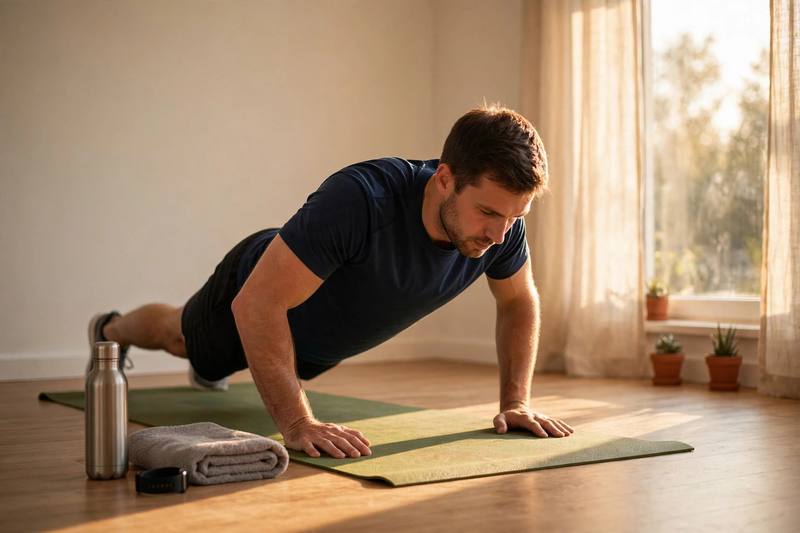



Podcast: Sports & Fitness
Listen to today’s conversation.
📝 Podcast Transcript
Hello everyone, and welcome back to Word Kitchen, the show where we cook up English words and serve them with real conversation. I am Maya.
And I am Lena. Today's menu is all about sports and fitness, Maya. Ten fresh words for our listeners, and we will use every single one again and again, so by the end of the show, you will really know them.
Exactly. And here is our first word: workout. A workout is a period of physical exercise that you do to stay healthy. So Lena, what does your workout look like these days?
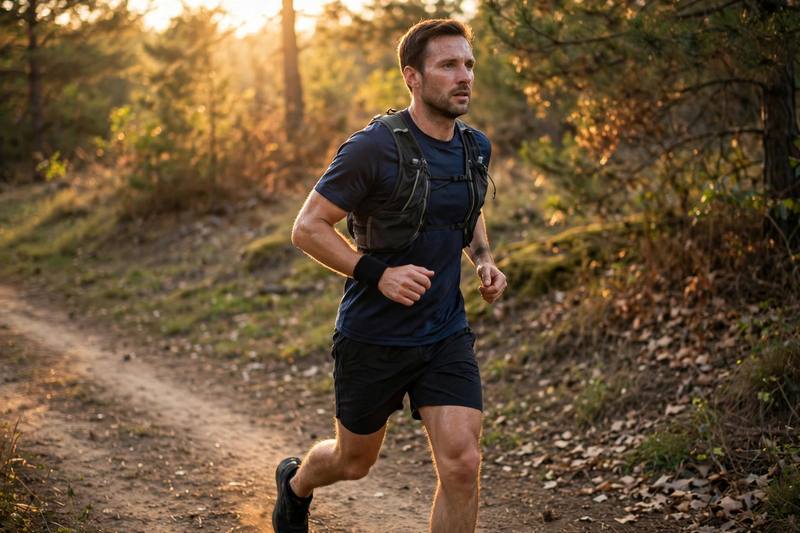
My workout is pretty simple. I do a thirty-minute workout every morning before work. Fifteen minutes of running, then fifteen minutes of weights.
Nice. My workout is in the evening. I finish a long day, and a good workout clears my head. Do you think a short workout is enough, or does a workout need to be long to work?
A short workout counts. Honestly, any workout is better than no workout. The best workout is the one you actually do, right?
True. And before any workout, we need our second word: warm-up. A warm-up is the gentle exercise you do before the hard part. Why is a warm-up so important, Lena?
Because your body needs time to wake up. A ten-minute warm-up gets your blood moving. If you skip the warm-up, you can hurt yourself. My warm-up is always jogging in place and arm circles.
Mine too. A good warm-up tells your muscles, get ready, we are about to work. Some people think a warm-up is boring, but a proper warm-up makes the whole workout better.
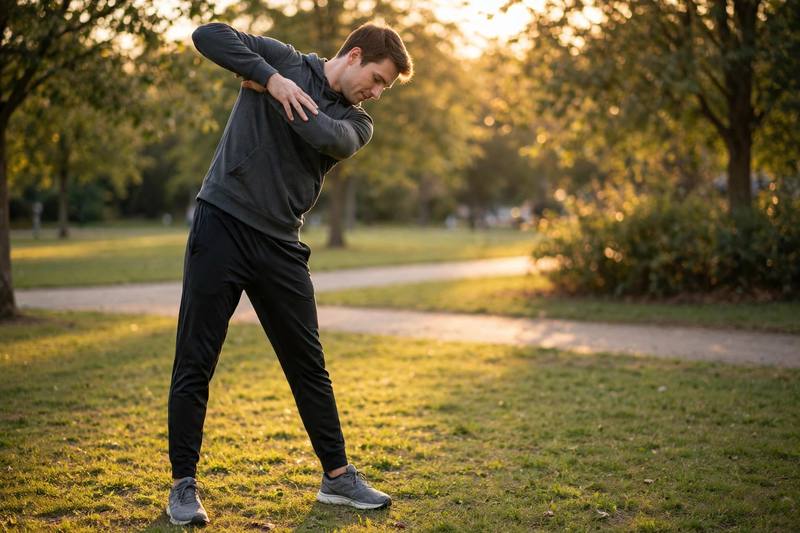
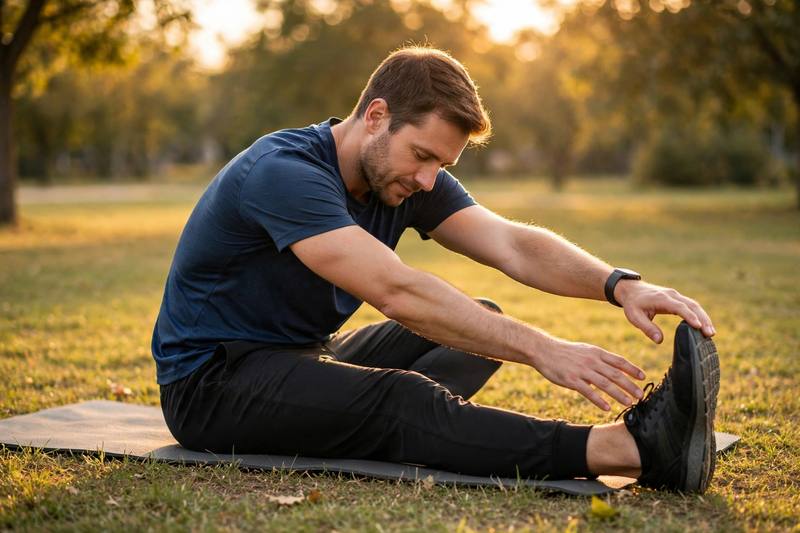
Absolutely. And speaking of muscles, let's talk about our third word: stretching. Stretching means doing slow exercises that make your muscles longer and more relaxed. When do you do stretching, Maya?
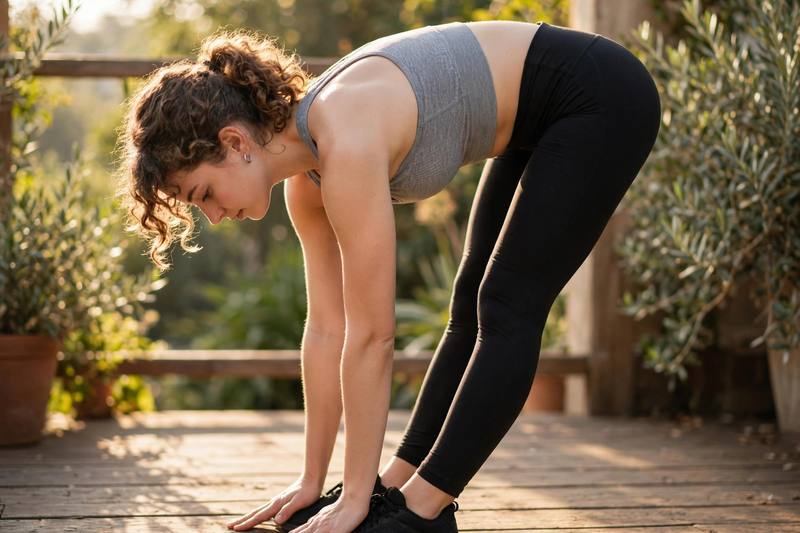
After every workout. Stretching is my favorite part of the day. I do stretching for my legs, my back, my shoulders. Stretching after exercise stops the soreness the next morning.
I agree. Stretching before running helps too. Gentle stretching in the morning wakes me up better than coffee. Do you think people skip stretching too often?
All the time. They finish a hard workout and walk straight home. But five minutes of stretching makes such a difference. Stretching is slow, calm, and your body thanks you.
Now, our fourth word: strength. Strength is the power your muscles have. How do you build strength, Maya?
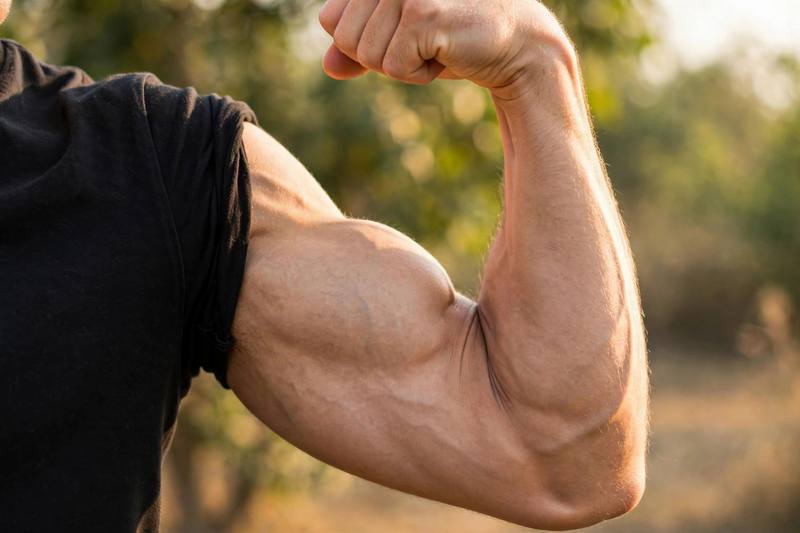
With weights and with time. Strength does not come in one week. You build strength slowly, workout after workout. Lifting, pushing, climbing stairs, all of that builds strength.
Right. And strength is not only for athletes. An older person needs strength to carry groceries. A parent needs strength to lift a child. Strength is useful for everyday life.
That is such a good point. People think strength means big muscles, but real strength is just being able to do what your life asks of you.
Our fifth word is balance. Balance is the ability to stay steady and not fall over. Which sports need the most balance, do you think?
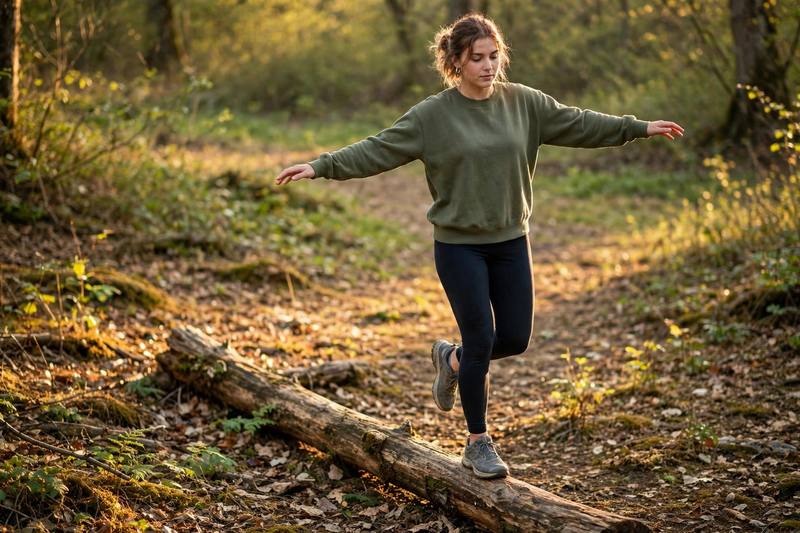
Gymnastics, for sure. And surfing. Yoga too. Yoga improves your balance and your posture. When I started yoga, my balance was terrible. Now my balance is much better.
Balance matters in daily life too. Carrying a baby while opening a door takes balance. Walking on ice in winter takes balance. Good balance keeps you safe.
Exactly. And you can train balance just like strength. Stand on one foot while you brush your teeth. That simple habit builds balance over time.
Word number six: coach. A coach is a person who trains athletes or a sports team. Maya, have you ever had a coach?
Yes. My swimming coach in school changed everything for me. A good coach sees what you cannot see. My coach told me my arms were crossing over, and that one tip from my coach made me twice as fast.
A coach can push you further than you would push yourself. But the best coach also knows when to rest you. A great coach mixes hard work with kindness.
True. Even professional athletes need a coach. A coach plans the workout, checks the warm-up, and watches your stretching. A coach is part teacher, part cheerleader.
Number seven is goal. A goal is something you want to achieve. What is your fitness goal right now, Maya?
My goal is to run ten kilometers without stopping. I set that goal in January. Every workout brings me closer to my goal. Do you have a goal, Lena?
My goal is to do a full pull-up. One clean pull-up. That is my big goal for the year. A goal gives your training a direction. Without a goal, exercise feels random.
And in football, a goal is also the thing you kick the ball into. So the word goal has two meanings, but both are about aiming at something and trying to reach it.
Love that. Now word eight: teamwork. Teamwork is when people work together as a group to reach a shared goal. Why does teamwork matter so much in sports?
Because no one wins alone. Winning a match needs teamwork, not just one star player. Good teamwork means passing the ball, trusting each other, and covering for mistakes.
And teamwork is not only in sports. A good workout class needs teamwork too. People cheer each other on. That teamwork energy makes everyone try harder.
Even your coach will tell you: talent wins games, but teamwork wins championships. Real teamwork is built in training, day after day.
Word nine: flexibility. Flexibility is the ability to bend and move your body easily. How do you improve flexibility, Maya?
Stretching, stretching, stretching. Daily stretching gives you more flexibility than any magic trick. When I was young, my flexibility was great. Then I sat at a desk for years, and my flexibility disappeared.
Same here. Now I do ten minutes of stretching every night for flexibility. Flexibility protects your joints. Good flexibility means fewer injuries when you play sports.
And flexibility is useful as you get older. Bending down to tie your shoes, reaching a high shelf, that is all flexibility. Keep working on flexibility and your body stays young.
Our final word, number ten: endurance. Endurance is the ability to keep doing something difficult for a long time. Marathon runners have amazing endurance.
They do. But endurance is built slowly. Long, slow runs build endurance. You cannot rush endurance. If you try to build endurance too fast, you burn out.
Endurance is mental too. The last kilometer of a race is all endurance of the mind. Your legs want to stop, but your endurance, your will to continue, carries you to the goal.
Beautifully said. So let's do a quick review. We had workout, your exercise session. Warm-up, the gentle start. Stretching, the slow muscle work. Strength, your muscle power. Balance, staying steady. Coach, your trainer. Goal, what you aim for. Teamwork, winning together. Flexibility, bending easily. And endurance, lasting long.
And remember, every workout starts with a warm-up, includes stretching, builds strength and balance, follows your coach's plan, moves you toward your goal, grows with teamwork, improves flexibility, and slowly builds endurance.
That was one sentence with all ten words. We did it. Thanks for cooking with us today on Word Kitchen. Keep practicing, keep moving, and we will see you next time.
Bye everyone.
🎙 Try Shadowing free sample
Listen and repeat along with the studio audio. Full shadowing practice with pronunciation scoring is in the app.
Sara's Big Race
Sara woke up early because she had a workout planned.
Every workout made her a little stronger and a little faster.
Train your speaking
Shadow every sentence with studio audio and get your pronunciation scored — only in the Muse English app.
📝Grammar: Obligation and prohibition - have to, must, should
We use **have to** and **must** to talk about obligation. Obligation means something you need to do. Use **have to** for general rules that come from the outside. These are rules at work, at school, or in a gym. Use **must** for a personal decision or a strong feeling inside you. It is your own choice, not a rule. **mustn't** is a prohibition. It means something is NOT allowed. Be careful: it is very different from **don't have to**. **don't have to** means something is NOT necessary. You can do it if you want, but nobody says you need to. Use **should** and **shouldn't** for advice or an
Master this grammar in the app
Get clear explanations, more examples and interactive exercises.
Keep learning every day
New lessons, podcasts and quizzes daily — free in the Muse English app.