
📖 What is Muse English?
Muse English is a free English learning app with daily lessons across all 6 CEFR levels (A1 Beginner to C2 Proficient). Every day brings new vocabulary, a real podcast conversation, shadowing practice, grammar and quizzes — all at museenglishapp.com.
📚 Vocabulary
5 new words Learn new words with real examples and audio.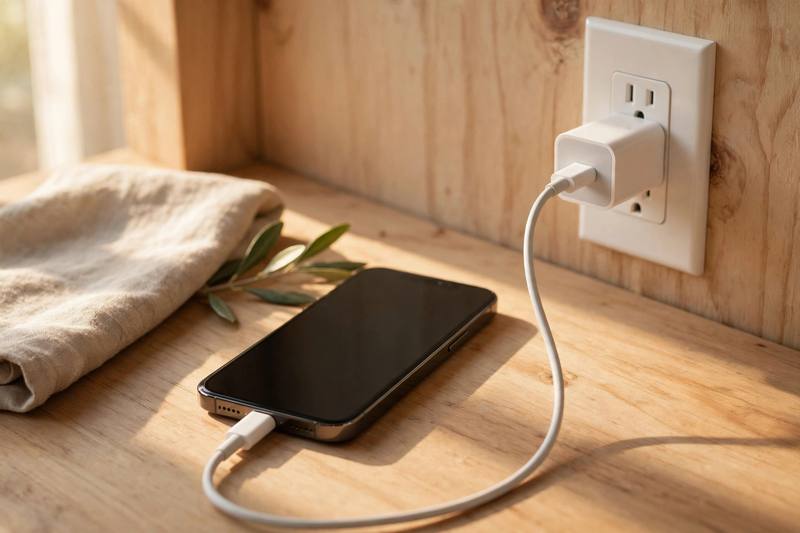
Podcast: Technology
Listen to today’s conversation.
📝 Podcast Transcript
Welcome back to Word Kitchen. I am Maya.
And I am Lena. Today we talk about technology. Our phones are part of every day.
Yes. My day starts with my phone. Every night I charge my phone next to my bed.
Same here. If I do not charge my phone at night, the battery is dead in the morning.
A dead phone is a bad start to the day. So I always charge my phone, and then I check the screen.
The screen is the first thing we see in the morning. Is your phone screen too bright at night?
Yes, a bright screen hurts my eyes. So I make the screen darker before I sleep.
Good idea. My screen is always too bright. I need to change that.
After breakfast, I open my favorite app. It is a weather app. I check the weather on the app every day.
I love that app too. Every morning I open the same weather app. The app tells me if I need an umbrella.
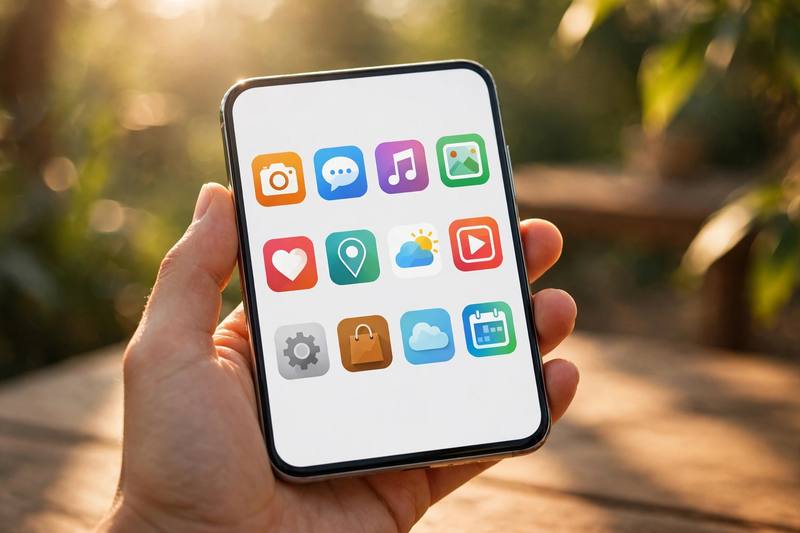
Apps are so helpful. I have an app for money, an app for maps, and an app for music. What is your favorite app, Lena?
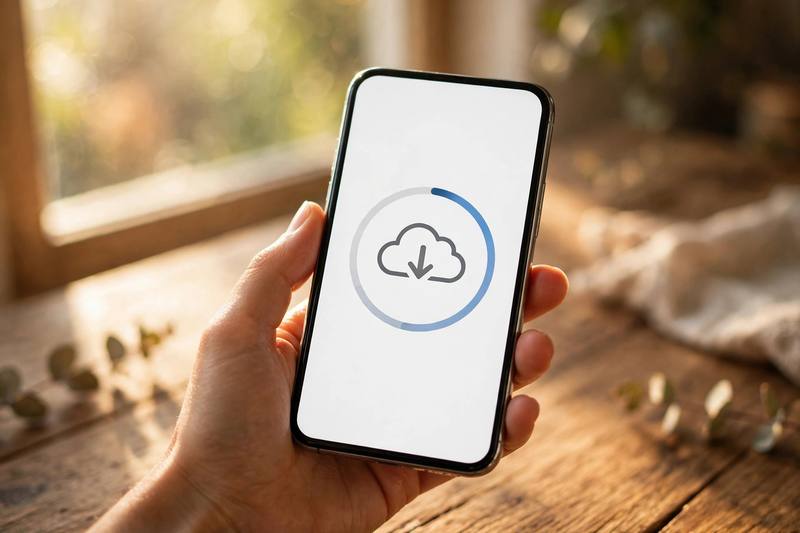
My favorite app is a cooking app. I download new recipes from the app every week.
You download recipes? That is great. I download music and movies. Last week I downloaded three new songs.
When you download a movie, do you watch it on your phone screen?
Yes, I do. The big screen in the living room is nice, but the small screen is fine for a short trip.
Speaking of trips, I always charge my phone before I travel. And I download a movie for the train.
That is smart. I also charge my phone at the office. I have a cable at my desk.
Do you remember all your passwords? I always forget my password.
Oh, passwords are hard. I have one password for my email and one password for my bank app.
Every app needs a password. That is too many passwords. I write my password in a small secret book.
Be careful with that book. Never tell anyone your password. A good password is long and secret.
You are right. My password keeps my photos safe. I change my password every month.
My grandmother just got her first phone. I teach her how to charge it every day.
That is so sweet. Does she know how to download an app?
Not yet. Last week I helped her download a photo app. Now she can see pictures of the family on her screen.
A photo app is perfect for her. The screen shows big happy faces.
Yes. But she is scared of the password. She says, why does every app need a password?
Many older people feel the same. I told my uncle to charge his phone in the car, because the car has a charger.
My uncle forgets to charge his phone too. Then his screen goes black in the middle of a call.
That is the worst. A black screen and no sound. You cannot call, you cannot download anything, and you cannot open any app.
So the first lesson is simple. Charge your phone. Look at your screen. Learn one app at a time.
And write your password somewhere safe, but never share your password with strangers.
Exactly. When my grandmother wanted to download a game, I downloaded it for her. The game app is on her screen now.
She will love it. Let me tell you my daily routine. I charge my phone at night. In the morning I look at the screen. Then I open my weather app. And then I download the news.
My routine is the same. First I charge my phone. Then I check the screen for messages. Then I open my cooking app.
Technology is part of life now. We charge our phones, we download new things, we look at the screen, we open an app, and we type our password.
And every day we learn new English words. Today our five words were charge, download, screen, app, and password.
Perfect. Thanks for listening. See you tomorrow in the Word Kitchen.
See you tomorrow.
🎙 Try Shadowing free sample
Listen and repeat along with the studio audio. Full shadowing practice with pronunciation scoring is in the app.
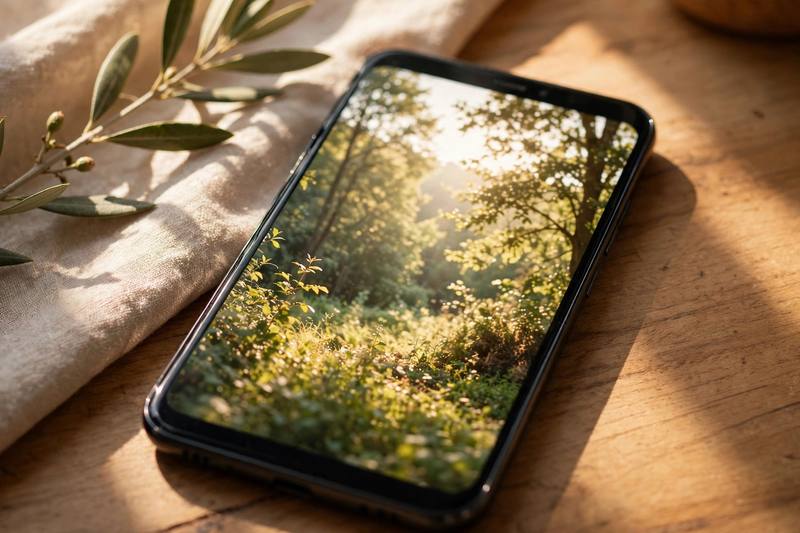
Every morning I look at my phone screen
The screen is bright and clear
First, I charge my phone for one hour
Train your speaking
Shadow every sentence with studio audio and get your pronunciation scored — only in the Muse English app.
📝Grammar: First conditional and future time clauses
Use the **first conditional** to talk about a real result in the future. The rule is simple: **if + present simple**, then **will + verb**. **Will** shows the result. It always goes in the second part. Never put **will** after **if**. Say **if you charge your phone**, not if you will charge your phone. **Unless** means **if not**. It is a short way to say the same idea. After **when**, **as soon as**, **until**, **before**, and **after**, use the **present simple** for the future. Never use **will** there.
Master this grammar in the app
Get clear explanations, more examples and interactive exercises.
Keep learning every day
New lessons, podcasts and quizzes daily — free in the Muse English app.