

📖 Muse English چیست؟
Muse English یک اپلیکیشن رایگان آموزش زبان انگلیسی است، با درس روزانه برای هر شش سطح، از A1 (مبتدی) تا C2 (تسلط کامل). هر روز لغتهای تازه با معنی فارسی، یک پادکست واقعی، تمرین شدوئینگ، گرامر و آزمون دارید. دربارهٔ اپ
📚 لغتها
۷ لغت تازه لغتهای تازه با معنی فارسی، مثال واقعی و تلفظ.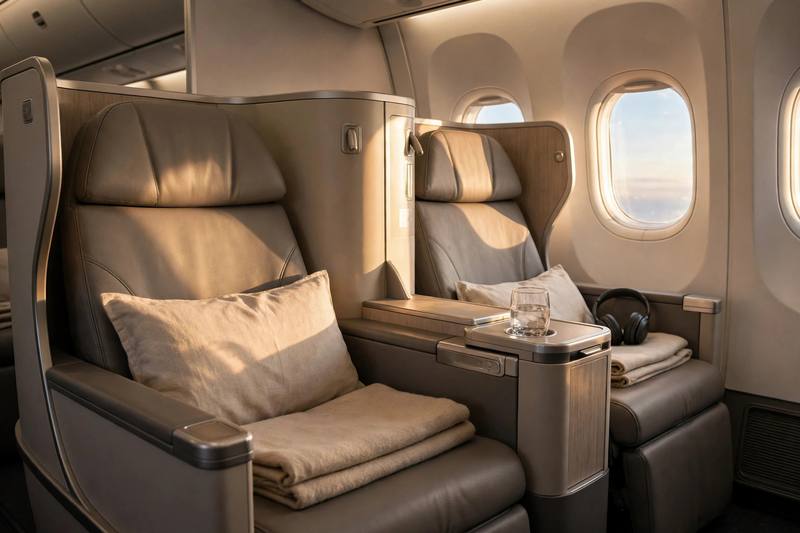
پادکست: سفر و حملونقل
گفتوگوی امروز را گوش کنید.
📝 متن پادکست
Welcome to Muse English! I am Maya, and today Lena and I are talking about travel at the highest level, the small words and phrases that separate a good traveller from a truly fluent one.
Hello everyone. I love this topic, because travel English sounds simple until you are standing in an airport, tired and confused. Today we have seven advanced words, and every single one of them comes from real journeys.
Let us start with a story. Last spring, my cousin flew to Geneva for a conference. She had booked business class for the first time in her life, and she could not stop talking about it.
Business class will do that to a person. Wider seats, better food, and you actually sleep. But tell me, was the business class ticket worth the money for her?
She said yes, completely. In business class she arrived rested, and she went straight into her meeting. She told me, once you try business class on a long flight, ordinary seats feel like a punishment. Business class is not just luxury, it is energy management.
I agree, although I only travel business class when someone else is paying. Now, on that same trip, did she stay in a hotel?
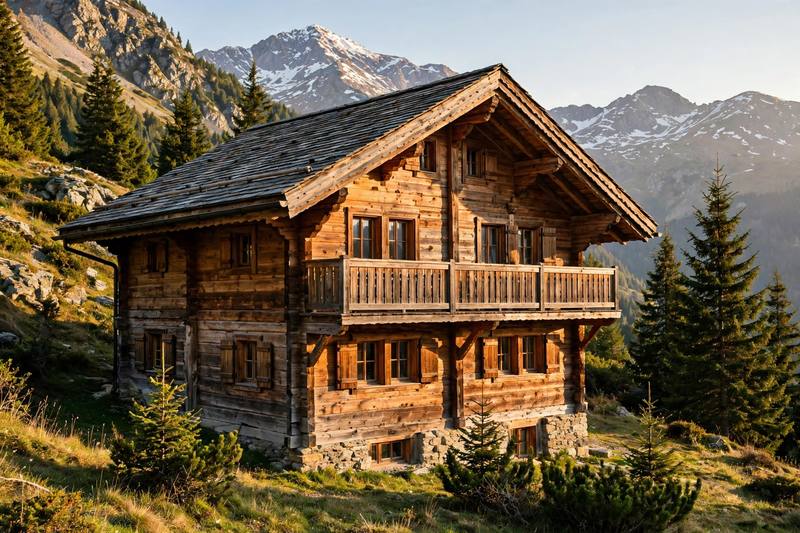
No, and this is the lovely part. After the conference, she took a train into the mountains and rented a small chalet for three nights. A chalet is a wooden house, usually in the mountains, with a steep roof and a warm fire inside.
A chalet sounds perfect. I stayed in a chalet in Austria once, and the silence was incredible. Did her chalet have a view?
Her chalet looked straight at the lake. She said the chalet was tiny, but every window was a painting. Honestly, a good chalet beats a five star hotel for me, because a chalet feels like a home, not a product.
You know what, this is a good moment to pause. If you are enjoying these stories, the Muse English app gives you this podcast every day, together with the words, the photos, and the pronunciation practice. You can listen, read the transcript, and then shadow the story until the words feel natural. It is free, and it takes only a few minutes a day. Shall we continue?
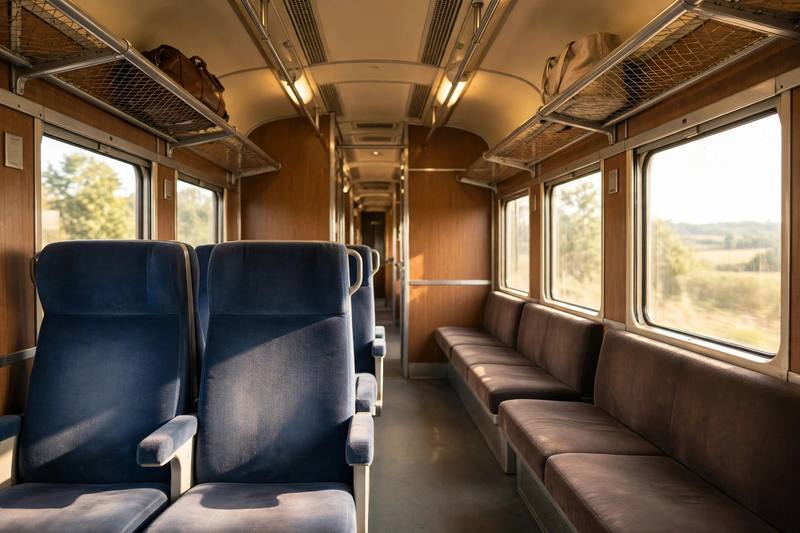
Yes, let us talk about trains, because my favourite word today is carriage. In British English, a carriage is one section of a train. You might sit in the third carriage, or walk through the carriage looking for your seat.
Carriage is such an elegant word. An American would say car, but carriage sounds almost historical. I once slept through my stop because our carriage was so quiet and comfortable.
That happened to me too. The carriage was warm, the rhythm of the train is hypnotic, and suddenly you are three towns past your station. A quiet carriage should come with a warning, honestly. Every carriage on that line was quiet, so nobody woke me up.
And each carriage had those little tables by the window. I love a train carriage with a table, a coffee, and a book. For me, the carriage is where the holiday actually begins.
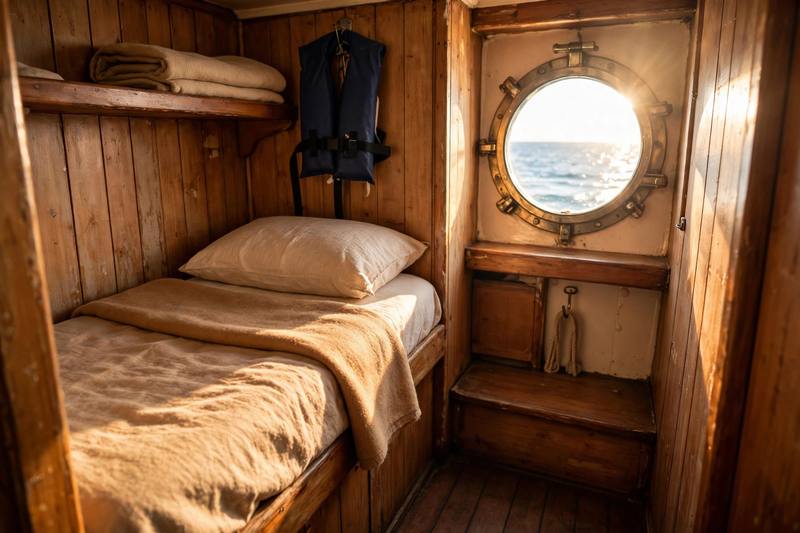
Trains are gentle. Planes, however, bring us to our next word: cabin. The cabin is the inside space of a plane where passengers sit, and also a small room on a ship. Pilots talk about the cabin crew, and announcements begin with, welcome to the cabin.
Cabin is a busy little word. On a ferry last summer, our cabin was so small that I could touch both walls at the same time. Still, that cabin was ours, and we slept like children.
My grandfather worked on ships, and he always said a good cabin is a quiet cabin. He would check his cabin first, before the restaurant, before anything. If the cabin was calm, the whole voyage was calm.
And in a plane, cabin pressure, cabin bag, cabin crew, the word cabin is everywhere. You cannot fly without meeting the word cabin at least five times.
Exactly. Now, Lena, tell everyone about your famous charter flight disaster, because our listeners deserve the full story.
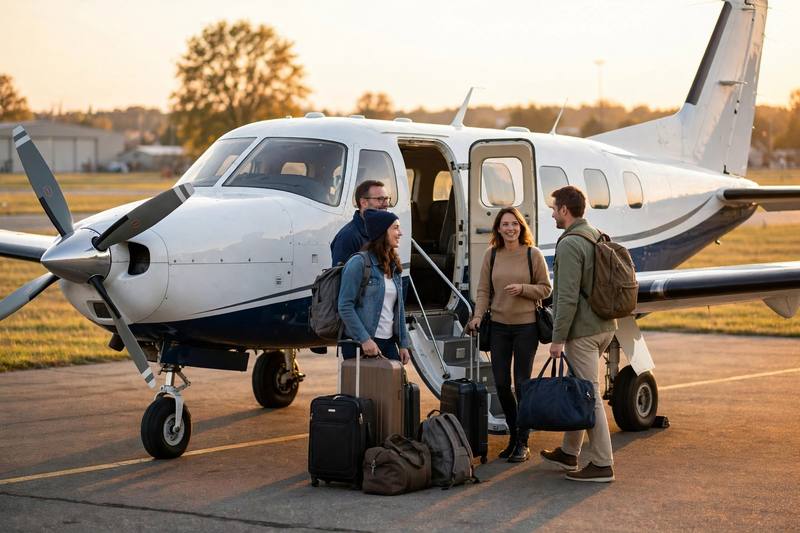
Oh, the charter flight. A charter flight is not a regular scheduled flight. A company or a travel group hires the whole plane for one specific journey. Our charter flight was supposed to leave at seven in the morning.
Supposed to. I remember this. The charter flight left nine hours late, did it not?
Nine hours. Nine hours in a small airport with one cafe. And here is the painful part: with a charter flight, the rules are different. When we asked about compensation, the company smiled and pointed at the small print. A charter flight can be wonderful when it works, direct and cheap, but a charter flight gives you less protection when it fails.
That is an important lesson. A charter flight is a tool: brilliant for a group going to one resort, risky if your plans are tight. I would still take a charter flight for a ski trip with twenty friends, because the whole group travels together.
True. And when that charter flight finally landed, we were too happy to be angry. Almost.
Almost is honest. Now let me give you the opposite story, a cancellation fee story, because this word saves people real money. My brother booked a hotel, then his plans changed, and the hotel charged him a cancellation fee of almost half the price.
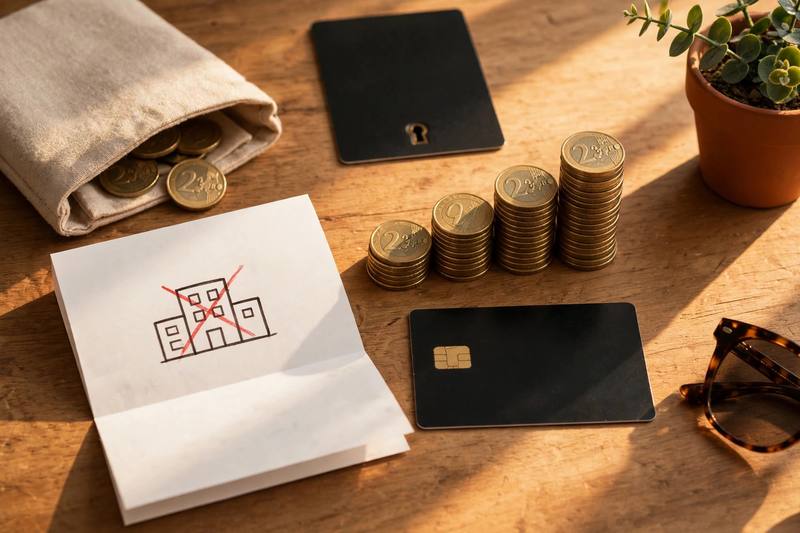
A cancellation fee is the money you pay when you cancel a booking. Hotels charge a cancellation fee, airlines charge a cancellation fee, even train companies quietly add a cancellation fee in the conditions.
The trick is timing. Cancel early, and the cancellation fee is often zero. Cancel at the last minute, and the cancellation fee can be the full price. My brother now reads the cancellation fee rules before he books anything.
I learned that lesson with a flight to Lisbon. I changed my dates, and the cancellation fee was bigger than the discount I was celebrating. Since then, I always ask one question before I pay: what is the cancellation fee, and when does it start?
That one question is pure C2 wisdom. Shall we take our second short break? Friends, if these travel words are useful, the Muse English app turns them into a complete daily lesson: vocabulary with clear photos, a pronunciation recording, this podcast, a shadowing story you can practise aloud, quizzes, and a grammar lesson, all in one place. Install it free, open today's C2 lesson, and travel with us every day. Back to the show.
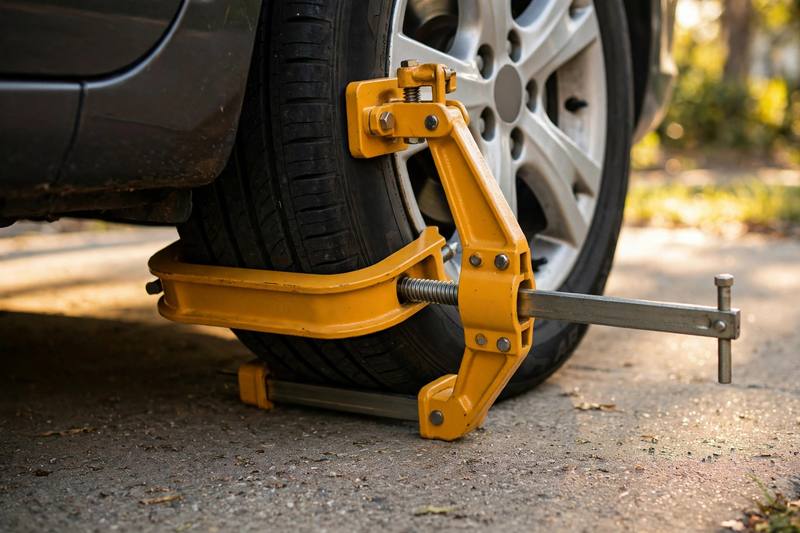
Back to the show, and back to my favourite disaster category: parking. Our last word is clamp, and as a verb it means to fix a metal device to a car wheel so the car cannot move. Authorities clamp a car when it is parked illegally.
Nothing ruins a holiday like returning to your car and finding a clamp on the wheel. My uncle once said, they will clamp your car in London faster than you can buy a coffee.
He was right. In some streets, if you park on the wrong line, they clamp the car within the hour. And removing a clamp is expensive and slow, so one clamp can destroy a whole afternoon.
I always check the signs now, because I never want to pay to free my own car from a clamp. A clamp is small, heavy, and impossible to ignore, which is exactly the point of a clamp.
And notice the grammar: clamp is a verb here, they clamp your car, but in the sentence, a clamp on the wheel, it is a noun. Flexible words like clamp are everywhere in advanced English.
Let us pull the whole journey together. Imagine one perfect trip. You book business class because the flight is long, and business class lets you arrive human. On the plane, the cabin crew look after you, and your little corner of the cabin feels calm.
Then you land, take a train, and find your carriage. The carriage rolls through green valleys, and at the end of the line, a wooden chalet is waiting for you in the mountains.
Your friends arrive later on a charter flight, laughing about their adventure. Nobody paid a cancellation fee, because everybody read the rules, and nobody found a clamp on their car, because everybody parked legally.
That is the dream trip: business class comfort, a peaceful cabin, a quiet carriage, a warm chalet, a reliable charter flight, no cancellation fee, and definitely no clamp.
And if you can tell that story in English, with all seven words in the right places, your English is genuinely advanced. Say the words once more with us: business class, cabin, cancellation fee, carriage, chalet, charter flight, and clamp.
Before we finish, one quick game. I will describe a situation, and you name the word. You are on a train, sitting in a long section with rows of seats and a corridor. What is it?
That is a carriage, of course. My turn. You cancel a hotel room one hour before arrival, and the hotel takes money from your card. What did you pay?
A cancellation fee, sadly. Next one: a small wooden house under snowy mountains, with smoke rising from the chimney.
A chalet, my favourite answer today. And the last one: your plane section has wide leather seats, champagne, and space to lie completely flat.
Business class, the dream. You see, listeners, when the words live inside little stories like this, they stop being vocabulary and start being memories.
Thank you for travelling with Muse English today. Practise a little every day, and the words will follow you everywhere. See you tomorrow!
🎙 تمرین شدوئینگ نمونهٔ رایگان
گوش کنید و همزمان با صدا بلند تکرار کنید. تمرین کامل شدوئینگ در اپ است: هر جمله را تکرار میکنید و میبینید اپ چند کلمه از آن را تشخیص داده است.
The Perfect Mountain Journey
For the long flight to the mountains, Sara booked business class.
In business class, she could sleep flat and arrive full of energy.
صحبت کردن را تمرین کنید
در اپ Muse English همهٔ جملهها را شدوئینگ کنید. اپ گوش میدهد و نشان میدهد چند کلمه از جملهتان را تشخیص داده است.
📝گرامر: Advanced Cohesion and Discourse Markers
Cohesion is what makes a text flow: the words that link sentences and show how ideas relate.
Discourse markers like moreover, consequently and admittedly tell the reader what kind of idea comes next.
At C2, the challenge is choosing the exact marker for the relationship. For adding, use moreover or furthermore; for a result, use consequently or as a result; for contrast, use however, nevertheless or on the other hand.
Some markers give examples or name one specific case: for instance, such as before a noun, and namely when you
این گرامر را در اپ کامل یاد بگیرید
توضیح کاملتر، مثالهای بیشتر و تمرین تعاملی.
راهنمای کامل و تمرینها: Advanced Cohesion and Discourse Markers ←
هر روز ادامه بدهید
هر روز درس، پادکست و آزمون تازه؛ رایگان در اپ Muse English.