📖 Muse English چیست؟
Muse English یک اپلیکیشن رایگان آموزش زبان انگلیسی است، با درس روزانه برای هر شش سطح، از A1 (مبتدی) تا C2 (تسلط کامل). هر روز لغتهای تازه با معنی فارسی، یک پادکست واقعی، تمرین شدوئینگ، گرامر و آزمون دارید. دربارهٔ اپ
📚 لغتها
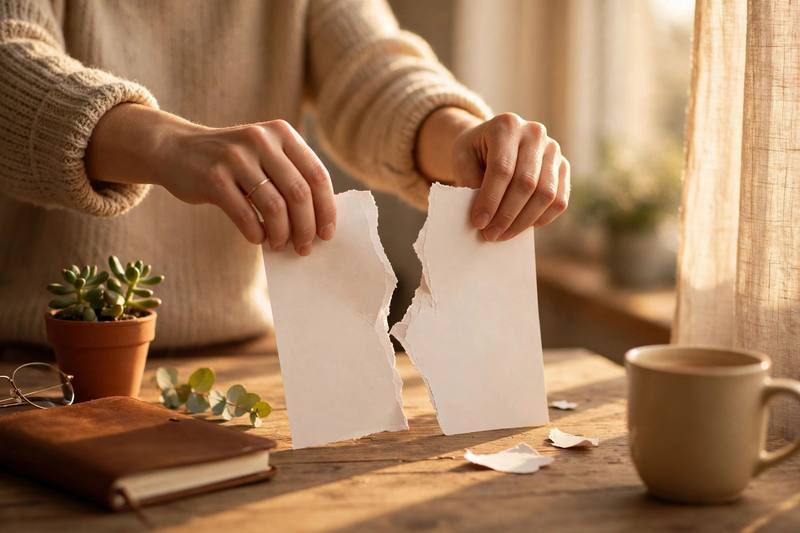
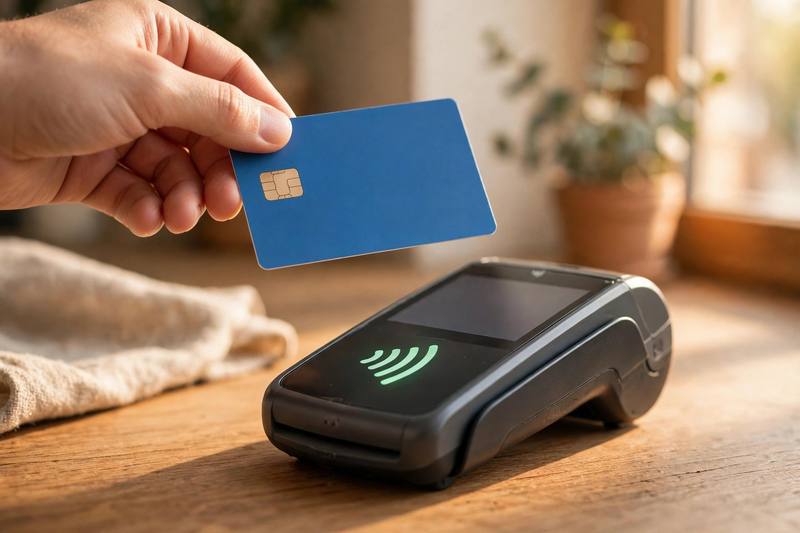
۷ لغت تازه لغتهای تازه با معنی فارسی، مثال واقعی و تلفظ.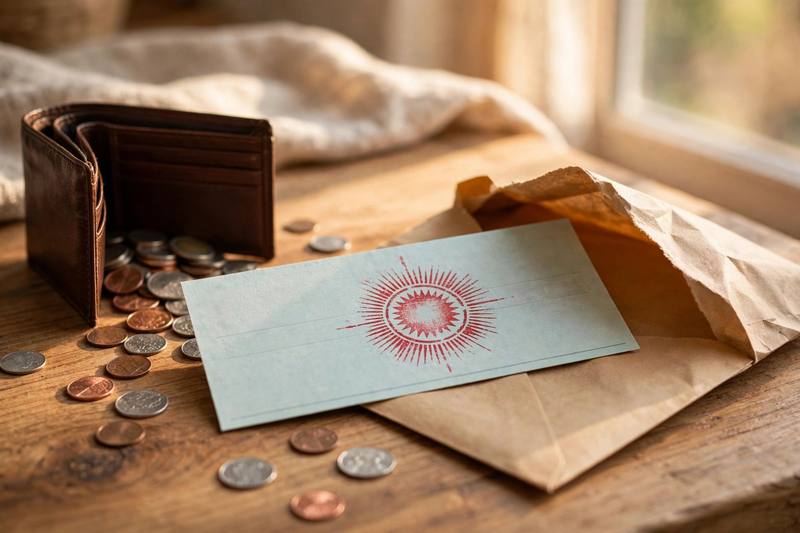
.jpg)

.jpg)
پادکست: پول و خرید
گفتوگوی امروز را گوش کنید.
📝 متن پادکست
Welcome to Muse English! I'm Maya.
And I'm Lena. Today we are talking about money, and not the glamorous kind. We are talking about the everyday money moments that every adult knows too well.
Exactly. The empty wallet, the surprise bill, the payment that does not go through. If you have ever checked your bank balance and felt your stomach drop, this episode is for you.
Let's start with a word that sounds funny but feels awful: bounce. When a cheque bounces, the bank returns it unpaid because there is not enough money in the account.
I learned that word the hard way. In my first year at university, I wrote a cheque for my rent, and the cheque bounced. I had forgotten to deposit my paycheck, so my cheque bounced, and my landlord was not amused.
Oh no. And a bounced cheque is not just embarrassing. The bank charges a fee, the landlord gets annoyed, and suddenly you are in a worse position than before.
Right. A cheque can bounce for a simple reason, like forgetting a deposit, or for a serious reason, like spending more than you earn. Either way, when a cheque bounces, it is a loud warning that your money needs attention.
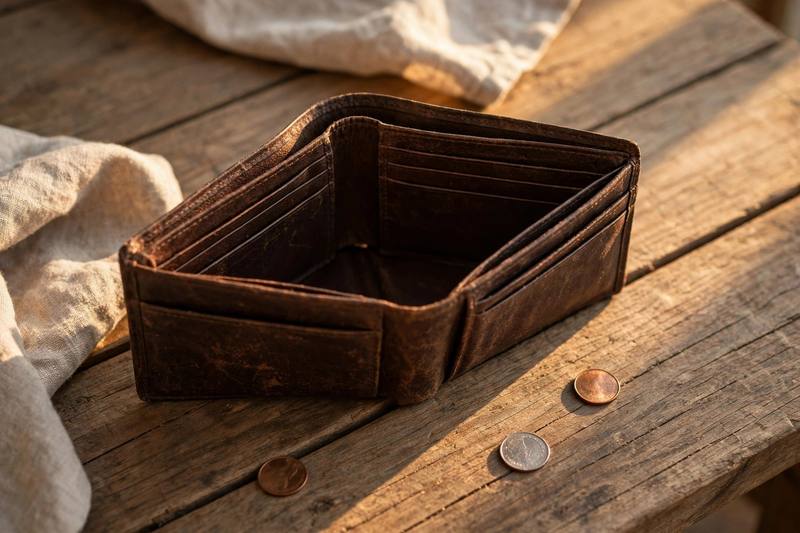
That brings us to our second word: broke. Broke means having no money at all. Not poor in a poetic sense, just flat-out broke.
I was completely broke through most of university. Broke on Monday, broke on Friday, broke every day in between. Being broke meant cooking pasta five nights a week and pretending it was a choice.
I think almost every student knows that feeling. You check your account, you see a tiny number, and you think, okay, I am broke again. But being broke is usually temporary, and it teaches you to plan.
It does. And here is a small thing before we go deeper. If you are enjoying this podcast, you will love the Muse English app. Every day you get fresh words with real photos and pronunciation audio, this podcast, shadowing stories to practice speaking, quick quizzes, grammar lessons, and a leaderboard with points to keep your streak alive. It is free to install, and it puts your whole English routine in one place. Now, back to money.
Welcome back. Our third phrase today is cancel debt. To cancel debt means to officially stop the requirement to repay money that is owed.
That is a big idea. Sometimes governments decide to cancel debt for developing nations, because those countries simply cannot pay and still feed their people. When a government moves to cancel debt, it is saying that the old loan will not strangle the future.
It happens to ordinary people too, in smaller ways. After a natural disaster, a bank might cancel debt for affected families, or a charity might buy up medical bills and cancel debt for strangers. Imagine waking up and learning that someone chose to cancel debt you owed. That is life-changing.
It is. And notice the grammar: we say cancel debt, not cancel a debt, when we talk about the general idea. A country can cancel debt. A bank can cancel debt. It is a powerful phrase for news and politics.
Our fourth phrase is one you will use at every checkout: charge to a credit card. To charge something to a credit card means to pay for it using the card instead of cash.
You can charge the purchase to your credit card, and the money comes out later, when the bill arrives. Shops love it when you charge to a credit card, because it is fast and simple.
But here is the trap. When you charge to a credit card every day, the small amounts add up. You charge a coffee to a credit card, you charge a jacket to a credit card, and at the end of the month the bill is a shock.
So the rule is simple. Only charge to a credit card what you can pay back. A credit card is a tool, not free money. If you charge to a credit card wisely, it builds your credit history. If you charge to a credit card carelessly, it builds debt.
Which brings us to a happier word: contactless. Contactless payment means paying without touching the card reader. You just tap your card or your phone, and it is done.
I paid for my coffee this morning using a contactless card, and I barely broke stride. Contactless payment is everywhere now: buses, cafes, supermarkets. A contactless card saves time, and it feels almost like magic.
It does, but it has a sneaky side too. Because contactless payment is so easy, you can spend without thinking. You tap, you tap, you tap, and the money quietly leaves. So enjoy your contactless card, but check your balance often.
Our sixth phrase is come out of recession. A recession is a period when the economy shrinks, jobs disappear, and people spend less. To come out of recession means to recover from that difficult period.
The country is slowly coming out of recession, the news said last week. Shops are reopening, hiring is picking up, and people feel a little more hopeful. When an economy starts to come out of recession, the change is gradual, not instant.
Exactly. A country does not come out of recession in one day. It comes out of recession step by step: more jobs, more spending, more confidence. And the phrase works for people too. After a tough year, a family can come out of recession in their own finances, slowly rebuilding savings.
I like that. Economies recover, and so do people. Now, before our final word, a quick word about something that helps you keep learning. The Muse English app is not just this podcast. It gives you daily word sets with real photos, pronunciation you can replay anytime, a shadowing section to practice out loud, quick quizzes, grammar lessons for every level, and points with a leaderboard to keep you motivated. Install it free and make every episode twice as useful. Okay, Lena, what is next?
Our final word today is cover, as a verb. To cover something means to provide enough money to pay for it.
Does your insurance cover dental treatment? That is the classic example. If your insurance will cover the treatment, you pay little or nothing. If it will not cover it, the bill is yours.
Cover is everywhere in money talk. Does your salary cover your rent? Will your savings cover an emergency? A good budget should cover the basics first: rent, food, transport, and then the fun stuff.
And here is a useful pattern. You can say your income covers your costs, or your grant covers your tuition. If the money is enough, it covers the expense. If it is not enough, it does not cover it, and you need a plan.
Before we wrap up, let's do a quick recap, because these words love to appear together in real life. Suppose your cheque bounces. What happens next?
First, you are probably broke, or close to it, because the money was not there. Then the bank charges you a fee, which makes things worse. If you keep charging essentials to a credit card while you are broke, the debt grows, and nobody is going to cancel debt just because you ask nicely.
True, but there are smarter moves. Switch to contactless payments with a daily limit so you can see every tap. Check whether your insurance will cover the unexpected bill, because a policy that covers dental treatment or a broken phone can save you hundreds.
And zoom out. When millions of people are in the same situation, the whole country feels it. But economies recover. A nation can come out of recession, and when it does, jobs return, wages rise, and fewer cheques bounce. That is the cycle: hard times, careful choices, slow recovery.
I love that summary. One more listener question, Maya. Someone wrote in asking: is it safe to use a contactless card everywhere?
Mostly, yes. A contactless card has a limit per tap, and your bank watches for unusual activity. But keep the card in a safe place, check your statements, and if a payment looks wrong, call the bank at once. A contactless card is convenient, not careless.
And what about insurance? How do you know if a policy will cover you?
Read the small print before you need it. Ask directly: does this cover dental treatment, does it cover theft, does it cover travel? If the answer is yes, keep the document. If the answer is no, shop around. The word cover is your friend here. Use it in every question.
Let's tie it all together with a little story. Imagine Sara. Sara was broke after university, and her first rent cheque bounced. She felt embarrassed, but she made a plan. She stopped charging everything to a credit card, she switched to a contactless card with a strict weekly limit, and she picked up extra work.
And slowly, Sara's own finances began to come out of recession. Her savings started to cover her rent and her bills. She even learned that a local charity had helped cancel debt for students in her town, which gave her hope, even though her own debt stayed.
Sara's story is not magic. It is budgeting, patience, and learning the words to describe what is happening. When you can name a bounced cheque, when you know what it means to be broke, when you understand cancel debt and come out of recession, you can read the news and manage your money with confidence.
So here is your homework, listeners. Use one of today's words this week. Tell a friend about contactless payment, or ask whether your insurance will cover something. Say it out loud. That is how words stick.
And remember, every word from today is waiting for you in the Muse English app, with photos, pronunciation, and a quiz. Keep listening, keep practicing, and we will see you tomorrow.
See you tomorrow, everyone. And may your cheques never bounce.
🎙 تمرین شدوئینگ نمونهٔ رایگان
گوش کنید و همزمان با صدا بلند تکرار کنید. تمرین کامل شدوئینگ در اپ است: هر جمله را تکرار میکنید و میبینید اپ چند کلمه از آن را تشخیص داده است.
Sara was broke in her first year at university.
She had no money, and she felt broke every single day.
One morning, her rent cheque bounced at the bank.
صحبت کردن را تمرین کنید
در اپ Muse English همهٔ جملهها را شدوئینگ کنید. اپ گوش میدهد و نشان میدهد چند کلمه از جملهتان را تشخیص داده است.
📝گرامر: Ellipsis and Substitution
Natural English avoids repeating words. We either replace them with a short word (substitution) or leave them out (ellipsis).
For substitution, one / ones replace a countable noun, do / does / did replace a verb phrase, and do so does the same job in formal style.
So replaces a positive clause and not a negative one, especially after think, hope, expect, suppose, guess, and be afraid.
For ellipsis, we drop repeated words after an auxiliary or modal, after to, or when and, but, or or join clauses with the same subject or verb.
این گرامر را در اپ کامل یاد بگیرید
توضیح کاملتر، مثالهای بیشتر و تمرین تعاملی.
هر روز ادامه بدهید
هر روز درس، پادکست و آزمون تازه؛ رایگان در اپ Muse English.