
📖 Muse English چیست؟
Muse English یک اپلیکیشن رایگان آموزش زبان انگلیسی است، با درس روزانه برای هر شش سطح، از A1 (مبتدی) تا C2 (تسلط کامل). هر روز لغتهای تازه با معنی فارسی، یک پادکست واقعی، تمرین شدوئینگ، گرامر و آزمون دارید. دربارهٔ اپ
📚 لغتها
۷ لغت تازه لغتهای تازه با معنی فارسی، مثال واقعی و تلفظ.


پادکست: فناوری
گفتوگوی امروز را گوش کنید.
📝 متن پادکست
Welcome to Muse English! Today Lena and I are talking about technology, because yesterday we visited a science museum, and we left with more questions than answers.
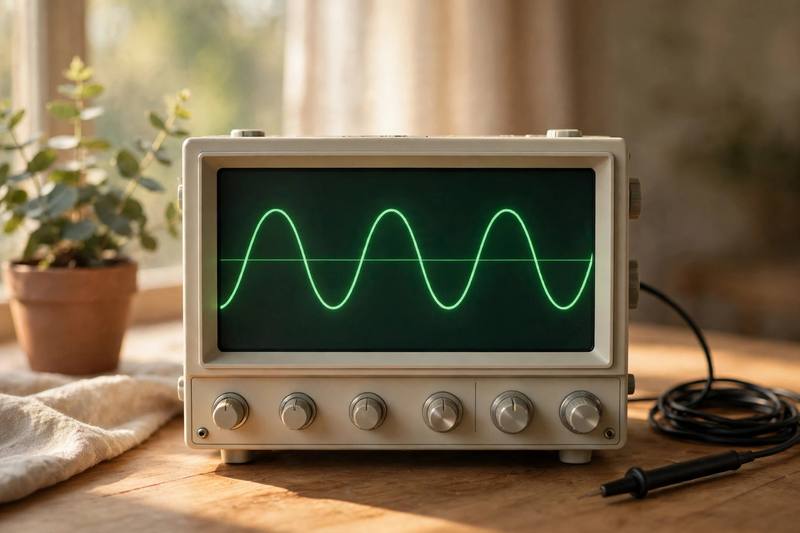
That museum was wonderful. The first hall showed old and new side by side. On one side there was an analogue radio, and on the other side a smart speaker that answers you in a human voice.
I loved that analogue radio. An analogue device uses a signal that is continuous, not broken into digital pieces. The sound from an analogue radio feels warm, and the dial moves smoothly instead of jumping from number to number.
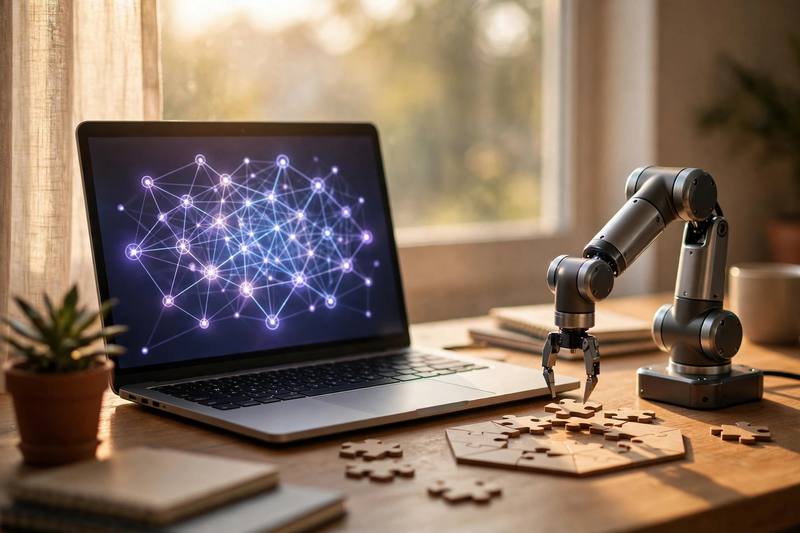
True, but I was drawn to the new hall. A guide showed us how AI helps doctors read scans faster. AI can spot tiny details in a scan that a tired human eye might miss, and AI never gets tired.
That is the promise of AI, and also the worry. AI is powerful, but AI only knows what it learned from data. If the data is biased, AI can repeat the bias, so humans must stay in charge of AI.
Before we go on, a quick word about learning English. The Muse English app gives you fresh words every day with photos and clear pronunciation, plus this podcast, shadowing stories, quizzes, grammar lessons, and points on a leaderboard. It is free to install, it takes just a few minutes a day, and it turns small daily habits into real progress. Try it today and feel your English grow stronger week by week.
Thanks, Lena. Now, the guide made a useful distinction. She said AI is the short name, but the full field is artificial intelligence. Artificial intelligence means computer systems that perform tasks that normally need human intelligence, like understanding speech, recognising faces, or making decisions.
And artificial intelligence is already everywhere in daily life. Artificial intelligence suggests your next song when you open a music app. Artificial intelligence filters spam from your inbox before you even see it. Artificial intelligence also helps farmers predict the weather and plan their harvest.
That is a lot of artificial intelligence for one morning. It made me think about my own habits. I use artificial intelligence to plan my route to work, and I talk to a voice assistant while I cook. Sometimes I forget how much artificial intelligence quietly shapes my day.
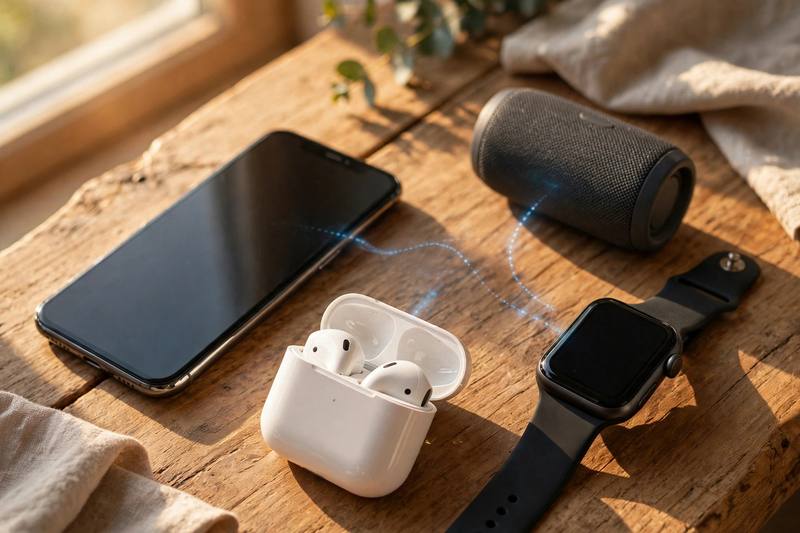
Speaking of daily habits, let us talk about sound. At the museum shop I bought wireless headphones, and they connect to my phone with Bluetooth. Bluetooth is wireless technology for short range communication between devices, so there are no cables to untangle.
Bluetooth changed my mornings too. I press one button, and Bluetooth links my phone to the car speakers. When Bluetooth works well, you forget it exists, and that is the mark of good technology. But when Bluetooth fails, suddenly you are stuck in silence, pressing buttons and hoping.
Exactly. The guide said the first Bluetooth devices were slow and unreliable, but modern Bluetooth is fast and stable. She also warned that Bluetooth has a short range, so if you walk too far from your phone, the music stops. That is a small price for freedom from cables, and Bluetooth is now built into almost every phone, laptop, and car.
From sound, we moved to the life sciences hall, and that is where things got serious. The exhibition on biotechnology showed how scientists use living organisms to develop products and processes. Biotechnology offers solutions for medicine and agriculture, from new medicines to crops that survive drought.
Biotechnology fascinated me and worried me at the same time. One display explained how biotechnology helps doctors grow skin for burn patients. Another showed how biotechnology helps farmers grow rice that needs less water. When biotechnology works well, it saves lives and feeds people.
But the next room asked the hard questions. A film about cloning showed scientists discussing the process of creating an exact genetic copy of an organism. Cloning already helps farmers copy their best animals, and cloning helps researchers study disease in the laboratory.
The ethics of cloning are widely debated, and I understand why. If cloning can copy an animal, people ask whether cloning should ever copy a human. The museum guide said most countries ban human cloning, because cloning a person raises questions about identity, consent, and safety that science cannot answer alone.
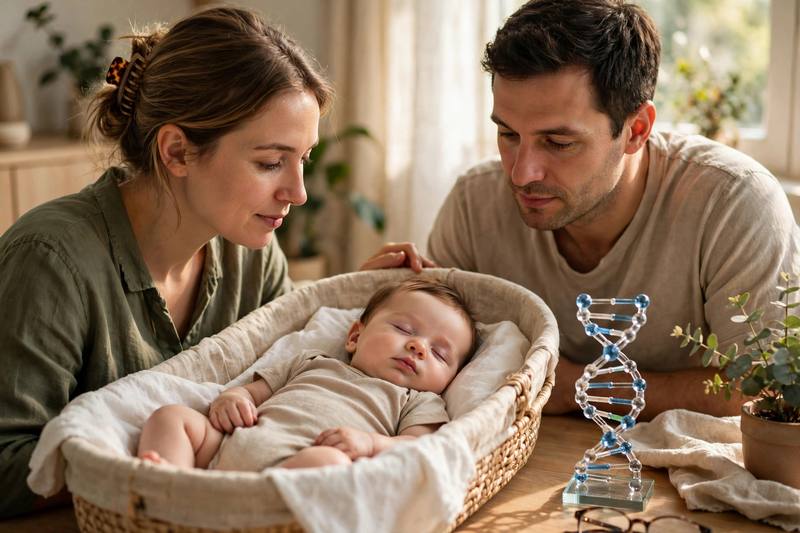
That debate led us to the most sensitive display of all, about a designer baby. A designer baby is a baby whose genetic makeup is chosen by parents, for example to avoid a serious inherited disease. Some people argue that preventing disease is a kindness, while others fear that a designer baby could become a product chosen from a catalogue.
The ethics of creating a designer baby are widely debated, just like cloning. If a designer baby is chosen for health, where do we stop? A designer baby chosen for eye colour or height feels very different from one chosen to avoid suffering. The museum did not give answers, and I think that was honest.
Before we leave the museum in our story, I want to mention one small display that made me smile. It showed an analogue telephone next to a modern phone, and visitors could try both. The analogue telephone had a rotary dial, and dialling a number took patience, while the modern phone connected with one touch through Bluetooth and wireless networks.
I tried both too, and the contrast surprised me. The analogue telephone felt solid and slow, and every call felt deliberate. The modern phone felt instant, and Bluetooth made it hands free, but I missed the ritual of the dial. Progress gives us speed, and sometimes it quietly takes away a small pleasure.
Quick pause for something useful. If you enjoy learning with us, the Muse English app is where everything lives: daily words with photos and pronunciation, this podcast, shadowing stories, quizzes, grammar lessons, and a leaderboard where you collect points for every lesson. It is free, it fits into a busy day, and it keeps your streak alive. Open it today and keep learning with us.
Welcome back. Let us connect the old and the new. That analogue radio reminded me that technology does not have to be digital to be beautiful. An analogue camera, an analogue watch, and an analogue record player all have fans who love their simplicity.
I agree, and the contrast is useful. An analogue signal is continuous, while a digital signal is made of separate pieces. When you listen to an analogue recording, you hear every small change in the sound. When you listen to a digital file, the sound is rebuilt from tiny samples, and most ears cannot tell the difference.
That is the engineer in you talking. For me, the bigger question is control. With artificial intelligence, with biotechnology, with cloning, and even with a designer baby, we keep asking the same question: just because we can do something, should we?
A good question, and the museum suggested an answer: talk about it in public, not only in laboratories. When scientists explain biotechnology in plain language, ordinary people can join the debate. When doctors explain cloning honestly, patients can make informed choices.
And when teachers explain artificial intelligence clearly, students stop fearing it and start using it well. AI is a tool, and like any tool, AI is only as good as the person using it. A hammer can build a house or break a window, and AI is no different.
Let me give you a small challenge this week. Notice how often you use Bluetooth without thinking. Count the times Bluetooth connects your phone to headphones, a speaker, or a car. Then notice how often artificial intelligence quietly helps you, from maps to messages to music.
And here is my challenge. Read one short article about biotechnology and one about cloning, and ask yourself where you stand. Would you support a designer baby if it prevented a painful disease? Would you accept cloning to save an endangered animal? There are no easy answers, and thinking it through is the point.
That is the heart of today's episode. Technology is not only about gadgets. It is about choices, and language helps us make those choices clearly. When you can explain analogue and digital, when you can discuss artificial intelligence, biotechnology, cloning, and a designer baby in English, you can join conversations that matter.
So here is our recap. AI and artificial intelligence are changing medicine, farming, and daily life. An analogue device uses a continuous signal, while Bluetooth links your devices without cables. Biotechnology uses living organisms to solve real problems, cloning creates an exact genetic copy, and a designer baby raises deep ethical questions.
Beautifully said. Try using these words this week. Tell a friend why you still love an analogue radio, or explain how Bluetooth connects your headphones. Language sticks when you use it in real life, and these words open doors to big conversations.
One last thought before we go. The museum ended with a simple message, which is that every new technology asks us to be more thoughtful, not less. The future will bring more AI, more biotechnology, and more debates about cloning and a designer baby, and thoughtful people will shape how they are used.
That is a good place to stop. Keep asking questions, keep learning new words, and keep discussing the future in English.
And we will be back tomorrow with another story, more words, and more English you can actually use. Until then, keep listening, keep shadowing, and keep learning.
See you tomorrow on Muse English!
🎙 تمرین شدوئینگ نمونهٔ رایگان
گوش کنید و همزمان با صدا بلند تکرار کنید. تمرین کامل شدوئینگ در اپ است: هر جمله را تکرار میکنید و میبینید اپ چند کلمه از آن را تشخیص داده است.
The museum had a hall of old machines, and Sara loved the analogue radio best.
An analogue signal moves smoothly, like a river, without breaking into pieces.
Sara turned the analogue dial slowly, and the music faded in like a sunrise.
صحبت کردن را تمرین کنید
در اپ Muse English همهٔ جملهها را شدوئینگ کنید. اپ گوش میدهد و نشان میدهد چند کلمه از جملهتان را تشخیص داده است.
📝گرامر: Cleft Sentences (It was... that, What I need is...)
A cleft sentence splits one idea into two parts to emphasise one of them. For example, Tom broke the window becomes It was Tom who broke the window.
An it-cleft puts the emphasised part after It is or It was, then adds that or who. Use who for people and that for things, places, or times.
The verb stays singular even with a plural focus: It was my parents who paid. We often use it-clefts to correct someone.
A wh-cleft starts with a what clause, then is or was, then the focus. What I need is a holiday is a typical example.
For
این گرامر را در اپ کامل یاد بگیرید
توضیح کاملتر، مثالهای بیشتر و تمرین تعاملی.
راهنمای کامل و تمرینها: Cleft Sentences (It was... that, What I need is...) ←
هر روز ادامه بدهید
هر روز درس، پادکست و آزمون تازه؛ رایگان در اپ Muse English.