

📖 Muse English چیست؟
Muse English یک اپلیکیشن رایگان آموزش زبان انگلیسی است، با درس روزانه برای هر شش سطح، از A1 (مبتدی) تا C2 (تسلط کامل). هر روز لغتهای تازه با معنی فارسی، یک پادکست واقعی، تمرین شدوئینگ، گرامر و آزمون دارید. دربارهٔ اپ
📚 لغتها
۱۰ لغت تازه لغتهای تازه با معنی فارسی، مثال واقعی و تلفظ.








پادکست: روز مرور
گفتوگوی امروز را گوش کنید.
📝 متن پادکست
Welcome to Muse English! I'm Maya, and today we have a special episode for you.
And I'm Lena. If you've been listening to us this week, you know we've been learning three big sets of advanced words: the science of how we learn, the words of technology and power, and the words of nature on a changing planet.
And today is review day. We're not teaching any new words at all. Instead, we're going to take all twenty one words from the last three days and see how they connect to each other.
That's right. Learning, technology, nature. They might sound like three separate lessons, but they are really one story about how humans learn, build, and live on this planet. And some of these words are wonderfully long and fancy, so let's start with a joke between friends: today's episode might get a little sesquipedalian.
Ha! Sesquipedalian, meaning fond of very long words. Perfect for an advanced review. Okay, Lena, let's start with learning science. What did we actually cover?
We talked about lucubration, which means laborious late-night study, the kind of quiet, intense work you do after midnight when the house is silent.
A good point. Let's talk about the practical side of learning.
My heuristic was simple: never read a chapter twice before summarizing it from memory. It was imperfect, but it saved me hours, and I still use that heuristic today.
That's so true. Now, these words about learning reminded me of something. We also learned andragogy, the methods and principles used in teaching adults rather than children.
Yes! Andragogy is a great example of why context matters. You wouldn't teach a forty-year-old engineer the way you teach a seven-year-old. Adults bring experience, and good teaching builds on that.
So if you're studying at midnight, doing your lucubration, what helps you most is metacognition.
Metacognition, awareness of your own thinking and learning processes. I think metacognition is the master skill. If you notice you're just rereading without understanding, you can change tactics.
I like to think of metacognition as the voice in your head that says, wait, did I actually get that? And when a teacher helps you build that voice, that support is called scaffolding.
Scaffolding: temporary support that helps a learner do something new, removed once they can do it alone. Like training wheels. The teacher gives you sentence starters, and later you write on your own.
And a good museum docent does the same thing, right? A docent is a teacher or guide, especially one who lectures at a museum. The best docents ask questions that make you think instead of just telling you facts.
Before we go further, a quick word about the app behind all this. The Muse English app gives you daily words with real photos and clear pronunciation, and this podcast is part of it. You also get shadowing stories for speaking practice, fun quizzes, grammar lessons, and a leaderboard where you collect daily points. It is completely free, so if you are enjoying this episode, install Muse English and keep learning with us.
Welcome back. Let's move to the second theme of the week: technology and power. This is where things get spicy, because these words are about how technology changes society.
The biggest one was accelerationism, the idea that technological and economic change should be accelerated rather than slowed down.
Right. The accelerationism debate is everywhere in Silicon Valley. Some people argue we should push AI and automation as fast as possible, and that every regulation is just an obstacle.
But others push back, hard. That backlash is exactly what we called the techlash, the strong public anger against powerful technology companies.
The techlash of the last decade changed the conversation. People started asking: who benefits when we accelerate? And that question leads us straight to technosolutionism.
Technosolutionism, the belief that every social or political problem has a technological solution.
Yes. Technosolutionism is the reflex to build an app for everything. Bad schools? There's an app. Loneliness? There's an app. But technosolutionism forgets that some problems are human, not technical.
And when solutions are designed by experts without asking ordinary people, we get the adjective technocratic: decided by experts rather than by the public.
The perfect example of power in technology is the dark pattern.
A dark pattern is a deceptive design trick in an app or website that manipulates users. The classic dark pattern is the cancel button hidden in pale grey text so you give up and keep paying.
That experience fuels the techlash.
Named after the nineteenth-century workers who smashed new machines. But luddism today is more subtle.
Right. Modern luddism might just mean deleting social media to protect your attention. It is not always about smashing machines; sometimes it is a thoughtful refusal.
So how do we steer technology wisely instead of just accelerating or refusing? That brings us to cybernetics.
Cybernetics, the science of communication and automatic control in machines and living things. It treats your brain, a thermostat, and a corporation as the same kind of feedback system.
And a wise society would use cybernetics the same way: sense what is happening, adjust policy, sense again. That is the opposite of blind accelerationism.
Beautiful. Now the third theme: nature on a changing planet. This one starts with a word that frames everything: the anthropocene.
The anthropocene, the proposed geological age in which humans are the dominant force shaping Earth's systems. It is the era of human impact on the planet, from the climate to the oceans.
Living in the anthropocene means our choices write the geological record. That is heavy, but also empowering, because if we shaped it, we can reshape it.
Exactly. And one hopeful response is bioremediation, the use of living organisms to clean pollution.
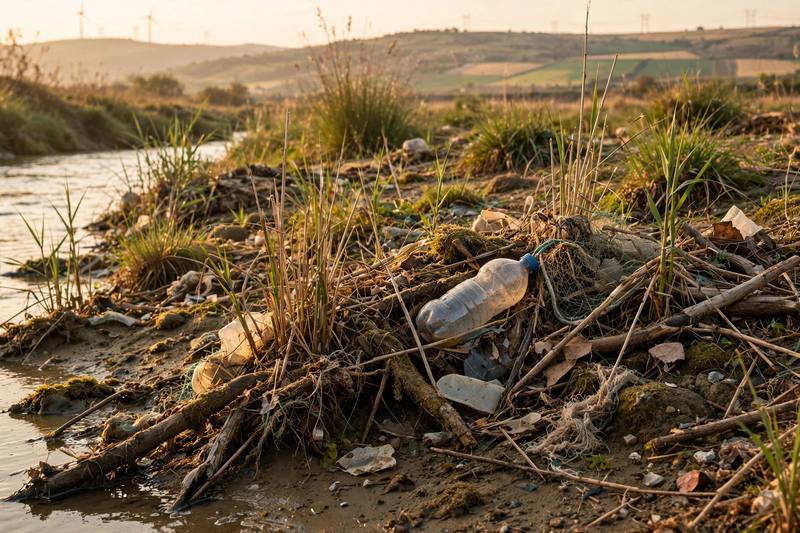
Bioremediation sounds like science fiction, but it's real. Reeds and microbes in a wetland can absorb toxins from river water. That's bioremediation at work.
Exactly. And one hopeful response is bioremediation, the use of living organisms to clean pollution.
Defaunation is one of the saddest words we covered. Forests that look green and healthy can be silently empty because the large animals are gone, and defaunation changes everything below them.
But nature heals, and the word for that healing is succession, the natural sequence of changes by which an ecosystem develops over time.
Abandoned farmland becomes meadow, then shrubs, then forest. That slow march is succession, and in the anthropocene it reminds us that given time and space, life returns.
Where does it return first? Often in riparian zones. Riparian means relating to the banks of rivers and streams.
Riparian woodlands are nurseries of life: otters, kingfishers, ancient willows. Protecting riparian corridors is one of the cheapest ways to fight defaunation, because rivers connect everything.
And why do we care so much? Because of biophilia, our deep love of living things and nature.
Biophilia explains why a walk in the woods calms you down. We evolved among trees and birds, and biophilia is that pull back toward them, even in the middle of a busy city.
There's one more nature word, and it's my favorite of the week: vernal.
Vernal, relating to spring or the beginning of a season. Every year the garden wakes with vernal energy: crocuses, daffodils, the first bees.
One more word about how you can keep this going. On the Muse English app, every word comes with a photo that makes the meaning stick and pronunciation you can copy. You can replay episodes like this one, try shadowing stories, test yourself with quizzes, work through grammar lessons, and climb the leaderboard with daily points. It is free to install, so make Muse English your daily habit and watch your English grow.
And we're back for the final stretch. Lena, let's connect the three themes. How does learning science link to technology and power?
Think about it this way. A technocratic system fails when it ignores feedback, and good learners use metacognition to notice feedback. So the skill of metacognition scales up: societies need it too.
Like bioremediation wetlands that are monitored by sensors, with microbes doing the cleaning and data doing the watching. That is cybernetics healing the anthropocene.
And nature connects back to learning. When you walk through a riparian forest and feel that biophilia, your brain learns differently. Even lucubration feels lighter the morning after a walk in the woods.
Let's do a lightning round to lock in the review words. I'll say a quick clue, you give the word. Laborious late-night study?
Lucubration.
A practical quick rule?
Heuristic.
Deceptive design trick?
Dark pattern.
Communication and control in machines and living things?
Cybernetics.
Belief every problem has a tech solution?
Technosolutionism.
Decided by experts?
Technocratic.
Era of human impact on Earth?
The anthropocene.
Living organisms cleaning pollution?
Bioremediation.
Spring-related?
Vernal.
Change should be accelerated?
Accelerationism.
Ten for ten! You did that from memory, no scaffolding needed.
Ha! Although honestly, a little metacognition helped: I checked each answer in my head before saying it.
That's it for our review episode. Twenty one words, three themes, one connected story. Keep practicing them this week, and they will be yours forever.
Thanks for listening to Muse English. We'll see you tomorrow with a brand new set of words.
🎙 تمرین شدوئینگ نمونهٔ رایگان
گوش کنید و همزمان با صدا بلند تکرار کنید. تمرین کامل شدوئینگ در اپ است: هر جمله را تکرار میکنید و میبینید اپ چند کلمه از آن را تشخیص داده است.
Every March, a small institute by the river announced its vernal research season with quiet pride.
This year the director, Dr. Lena Marsh, proposed something bold: a year-long experiment in bioremediation.
The river was choked with industrial runoff, and she argued that only bioremediation could clean it without poison.
صحبت کردن را تمرین کنید
در اپ Muse English همهٔ جملهها را شدوئینگ کنید. اپ گوش میدهد و نشان میدهد چند کلمه از جملهتان را تشخیص داده است.
📝گرامر: Hedging and Distancing (it would appear that...)
Hedging makes a claim less direct or less certain, so you never assert more than the evidence supports: *It accelerates growth. → It would appear that it accelerates growth.* At C2, hedging is reflexive in academic, professional, and diplomatic English.
The classic hedges cluster around a few tools: seem / appear to (*There seems to be a pattern*), the softest of all, it would seem / appear that (*This would seem to be the best heuristic*), and modals like may / might / could (*This may be due to a technocratic committee overreaching*).
Cautious ve
این گرامر را در اپ کامل یاد بگیرید
توضیح کاملتر، مثالهای بیشتر و تمرین تعاملی.
راهنمای کامل و تمرینها: Hedging and Distancing (it would appear that...) ←
هر روز ادامه بدهید
هر روز درس، پادکست و آزمون تازه؛ رایگان در اپ Muse English.