
📖 What is Muse English?
Muse English is a free English learning app with daily lessons across all 6 CEFR levels (A1 Beginner to C2 Proficient). Every day brings new vocabulary, a real podcast conversation, shadowing practice, grammar and quizzes — all at museenglishapp.com.
📚 Vocabulary
20 new words Learn new words with real examples and audio.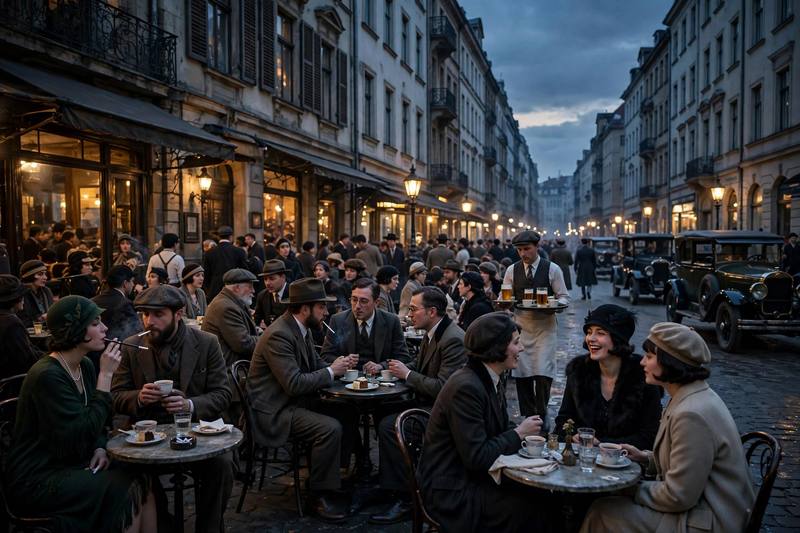

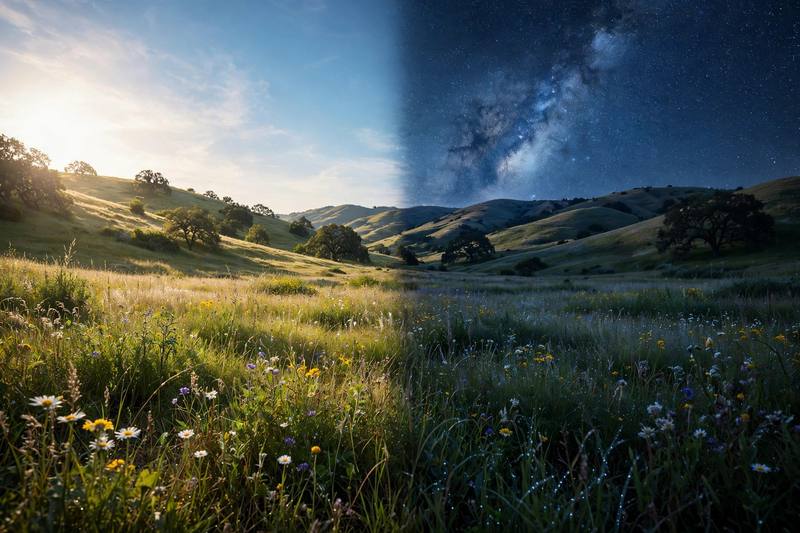






Podcast: Culture & Ideas
Listen to today’s conversation.
📝 Podcast Transcript
Welcome back to Word Kitchen. I'm Maya and with me as always is Lena.
Today, we're serving up 20 sophisticated words about culture and ideas
from art and philosophy to the tug of war between tradition and innovation.
Ready? These are the words that separate competent English
from genuinely impressive English. Our first word is sightgeist, spelled
Z-E-I-T-G-E-I-S-T. It's a German loan word, meaning the defining
spirit, the mood, the shared ideas of a particular period in history.
It captures something we all feel but struggle to name.
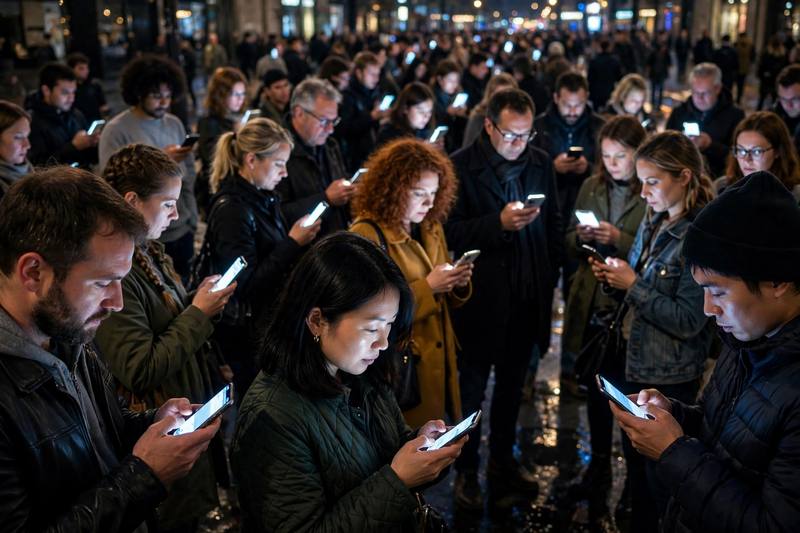
Think about the early 2020s. Remote work, short form video, collective anxiety
about artificial intelligence, that bundle of attitudes, that shared
atmosphere, that was the zeitgeist of the moment.
And it's always tied to a specific era, from the optimism of the 1960s
to the neon excess of the 1980s. It's the whole intellectual and emotional
weather of an age, from the spirit of an age to the patterns that shape how
people think within it. Like the shift from believing the sun orbits
the earth to knowing the reverse. That wasn't just a new fact.
It was a new paradigm, a whole new framework.
Streaming brought the same kind of shift to culture.
We stopped waiting for weekly episodes and started binging whole seasons in a weekend.
And paradigms can be comforting but they can also be cages.
That brings us to dichotomy. A dichotomy is a division, a sharp contrast between
two things presented as separate or opposed.
Mind and body, nature and nurture, art and commerce.
Public debate is built on dichotomies, tradition versus innovation,
high culture versus pop culture. But these dichotomies are often false.
Reality is messier than the neat division suggests.
Exactly. And artists love playing with that neat division, which leads to
juxtaposition. Juxtaposition means placing two things
side by side, specifically to highlight their contrast.
A director might juxtapose a lavish banquet with footage of famine.
A photographer might juxtapose an ancient temple against a glass skyscraper.
The meaning lives in the gap between the two images.
Riders do it too, pairing a lyrical sentence with a blunt one
so the contrast hits harder. Speaking of things that don't last,
let's talk about ephemeral. Ephemeral means lasting a very short time,
quickly disappearing. A sunset is ephemeral, and some of the most
powerful art of our century is deliberately ephemeral,
like street art that gets painted over within days.
The cherry blossom festivals in Japan are built on this idea.
Millions gather for blossoms that fall within a week.
The ephemerality is the point. Impermanence can be part of what makes something
precious. And yet, some things feel anything but ephemeral.
Ubiquitous means present or found everywhere at the same time.
Smartphones are ubiquitous. Advertising is so ubiquitous,
we've trained ourselves not to see it.
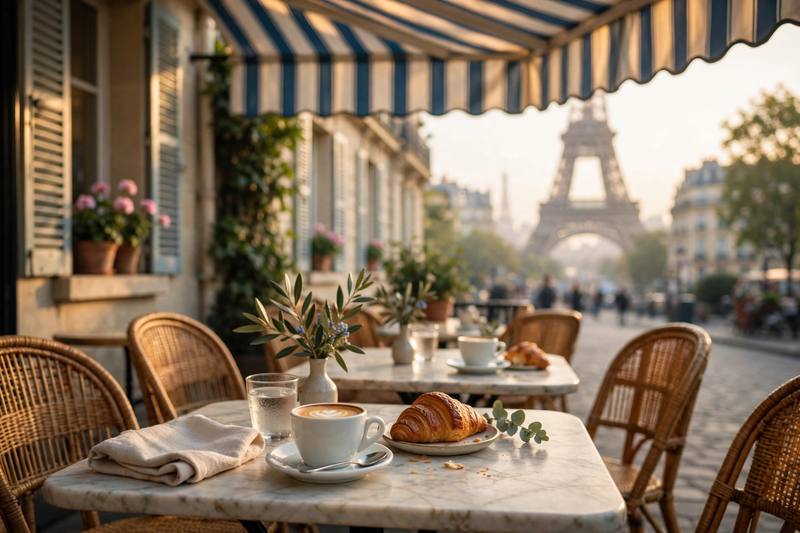
Social media is ubiquitous. The modern cafe look
all wood and plants is ubiquitous too.
Our next word is quintessential. Quintessential means representing the most
perfect or typical example of something. The quintessential film noir
might be the Maltees Falcon from 1941. It has everything the genre is supposed to have.
When you call something quintessential, you're saying it's the thing
all others are measured against. The quintessential small town diner,
the purest specimen of its kind. Now a smaller, more delicate word.
Nuance. A nuance is a very slight subtle difference in meaning or expression.
A culture that values nuance, values careful listening.
It refuses to flatten complicated things into slogans.
Two words can both mean happy, but one carries a nuance of relief
and the other a nuance of triumph. Miss that and you've changed the emotional
temperature of a sentence. Our next word pairs interestingly with ubiquitous.
Provasive means spreading widely through every part of something,
with more of a sense of seeping in. A pervasive mood of nostalgia
and a novel. Pervasive surveillance in a dystopian film.
Ubiquitous is being everywhere. Pervasive is soaking through everything.
A pervasive sense of dread. You feel it in the walls.
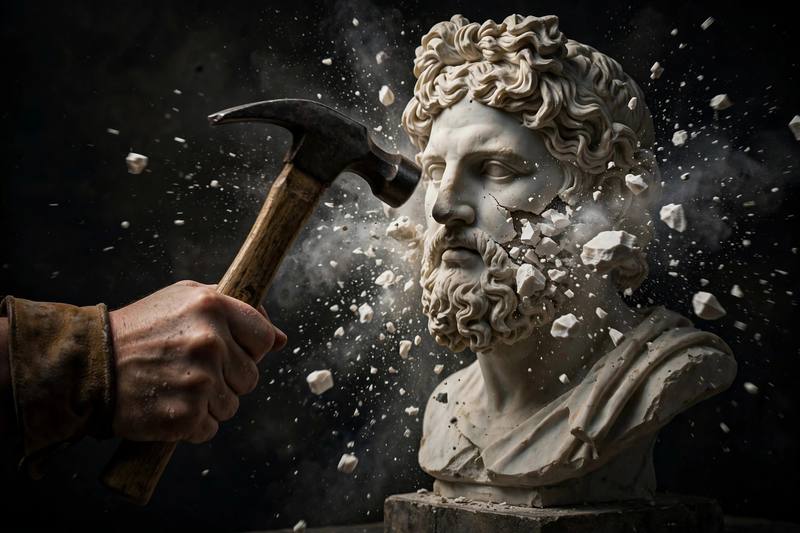
Let's meet a person now. An iconoclast. An iconoclast is someone who attacks or rejects
cherished beliefs or traditions. The word comes from the Greek for image breaker.
Today, we use it for anyone who gleefully demolishes the sacred cows of their field.
The punk musicians of the 1970s shredded the idea that rock stars needed virtuoso technique.
Culture needs its iconoclasts or tradition calcifies.
And when the iconoclasts clear the ground, sometimes something blooms again.
Renaissance. With a capital R it means the historical period, but lower case it means a revival,
a renewed surge of interest in art, culture, or ideas.
Vinyl records had a renaissance. Poetry slams sparked a renaissance in spoken word.
It says nothing is ever truly dead. A genre can sleep for decades and wake up,
blending old with new. It's never pure nostalgia. It's the past reimagined by the present.
A perfect bridge to avant-garde. Avant-garde describes art that is radically innovative
and experimental ahead of its time. It was originally a French military term for the advanced
guard, the troops who go in first. Avant-garde artists take the hits so the rest of culture
can follow. Today's shocking experiment is tomorrow's museum piece. The impressionists
were avant-garde once, and people laughed. Weird is often just early.
Now let's turn inward, melancholy, a deep, quiet, reflective sadness. Not quite depression,
more like watching rain on a window and thinking about everything that has passed.
Melancholy has dignity. It's sadness with thoughtfulness, and it runs through culture
from symphonies to films that linger on an empty room. And art doesn't just depict melancholy.
It can relieve it. That's catharsis. Catharsis is the emotional release you feel after experiencing art
or intense feeling. Aristotle wrote about it in ancient Greece, arguing that tragedy purges
pity and fear from the audience. You cry at the film and you walk out lighter.
Beyond the theater, a long, honest conversation can be cathartic. Any time strong feeling finds a
form and leaves you emptier in a good way, that's catharsis at work. Culture doesn't only heal though.
Sometimes it bites. Satire is humor, irony, and exaggeration used to criticize folly or corruption.
The great satirists are cultural surgeons. Jonathan Swift, with his famous modest proposal,
political cartoons that say in one image what an editorial can't say in a thousand words.
Satire is risky. If people take it literally, you've become the thing you are mocking.
The best satire is precise and aims at real targets. From the direct hit of satire to the hidden
depths of allegory, an allegory is a story whose characters and events symbolize deeper meanings.
George Orwell's Animal Farm is an allegory of revolution and betrayal. On the surface,
it's about pigs. Underneath, it's about power. Fables, fairy tales, half the animated films ever made.
The surface story entertains while the deeper meaning waits until you're ready to see it.
Allegory teaches without lecturing. Now, aesthetic. As a noun, it means the principles of beauty
and artistic taste or a particular style. Every subculture has an aesthetic, the minimalist aesthetic,
the brutalist aesthetic of raw concrete. On social media, aesthetic has become a lifestyle
category. People curate their homes and feeds around a single aesthetic. Beauty used to be something
you encountered. Now it's something you perform. Let's talk about the walls around ideas. Dogma.
Dogma means rigid beliefs laid down by authority, accepted without questioning. Every institution
develops dogma if it's not careful. The moment a living idea hardens into dogma, it stops growing.
Dogma demands obedience, not understanding, which makes it the natural enemy of the iconoclast.
Closely related is orthodoxy. Orthodoxy is the traditionally accepted beliefs of a group,
the established way of thinking. If dogma is the rulebook, orthodoxy is the clubhouse consensus.
The economic orthodoxy of an era. The literary orthodoxy about which books count as classics.
Challenging orthodoxy is how fields advance. The avant-garde breaks it. A renaissance begins
when it loosens its grip, which brings us to our final word, pastiche. A pastiche is an artistic
work that lovingly imitates the style of other works or genres, not mockery like satire and not
theft. Omash. A film that lovingly recreates the look of 1970s thrillers is a pastiche. We don't
just consume the past, we play with it. Every renaissance is built on pastiche, on falling in
love with older forms and making them new. Time for a lightning recap, zeitgeist, the defining
spirit of an era, paradigm, the model that shapes how we think, dichotomy, a sharp contrast between
opposites, juxtaposition, two things side-by-side to highlight contrast, a femoral lasting a very
short time. Ubiquitous found everywhere at once, quintessential, the most perfect example of its
kind, nuance, a subtle difference in meaning, pervasive, spreading through every part of something,
iconoclast, someone who smashes cherished traditions. And the second ten renaissance,
a revival of art and ideas, avant-garde, radically experimental and ahead of its time.
Melancholy, deep reflective sadness, catharsis, emotional release through art, satire,
humor used to criticize folly, allegory, a story symbolizing deeper meanings,
aesthetic, principles of beauty and style. These aren't just vocabulary words,
they're tools for thinking. Name the zeitgeist, spot a false dichotomy,
feel the catharsis in a song, and you're seeing the world more clearly.
Try using one of these words in conversation this week. Describe the aesthetic of your favorite
cafe. Call out a piece of satire you enjoyed. Language sticks when you live it.
Thanks for cooking with us today on Word Kitchen, I'm Maya. And I'm Lena, see you next time.
🎙 Try Shadowing free sample
Listen and repeat along with the studio audio. Full shadowing practice with pronunciation scoring is in the app.
Every era has a zeitgeist, an invisible mood that shapes what people create.
Every era has a zeitgeist, an invisible mood that shapes what people create.
For centuries, the dominant paradigm held that culture flowed only from the elite down to the masses.
Train your speaking
Shadow every sentence with studio audio and get your pronunciation scored — only in the Muse English app.
📝Grammar: Inversion for emphasis (Never have I..., Not only...)
In a normal English sentence the subject comes before the verb: 'I have never felt such catharsis.' But for drama and emphasis, formal English can flip this order and move a negative or restrictive expression to the very front of the sentence, followed by the auxiliary verb and then the subject. This flipped order is called INVERSION: 'Never have I felt such catharsis.' INVERSION follows negative adverbs and phrases such as NEVER, RARELY, SELDOM, HARDLY, SCARCELY, BARELY, LITTLE, and ONLY. The pattern is fixed: negative expression + auxiliary + subject + main verb. 'Rarely do we encounter suc
Master this grammar in the app
Get clear explanations, more examples and interactive exercises.
Keep learning every day
New lessons, podcasts and quizzes daily — free in the Muse English app.