
📖 Muse English چیست؟
Muse English یک اپلیکیشن رایگان آموزش زبان انگلیسی است، با درس روزانه برای هر شش سطح، از A1 (مبتدی) تا C2 (تسلط کامل). هر روز لغتهای تازه با معنی فارسی، یک پادکست واقعی، تمرین شدوئینگ، گرامر و آزمون دارید. دربارهٔ اپ
📚 لغتها
۷ لغت تازه لغتهای تازه با معنی فارسی، مثال واقعی و تلفظ.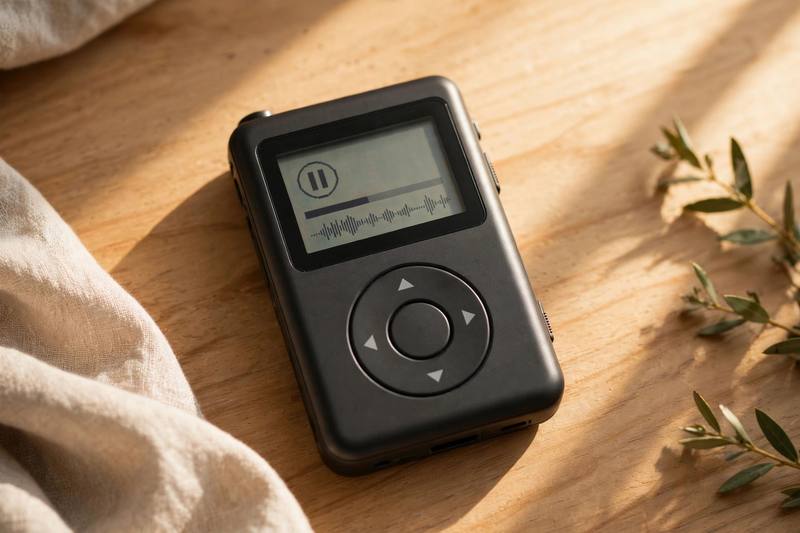



پادکست: فناوری
گفتوگوی امروز را گوش کنید.
📝 متن پادکست
Welcome to Muse English! I am Maya, and today Lena and I are talking about technology, and how small devices and huge ideas change how we live, work, and raise our families.
Hello, everyone. I am Lena. I love this topic, because technology sounds abstract until you notice it sitting on your kitchen table. This morning, my router stopped working, and suddenly my whole home felt strangely silent and disconnected.
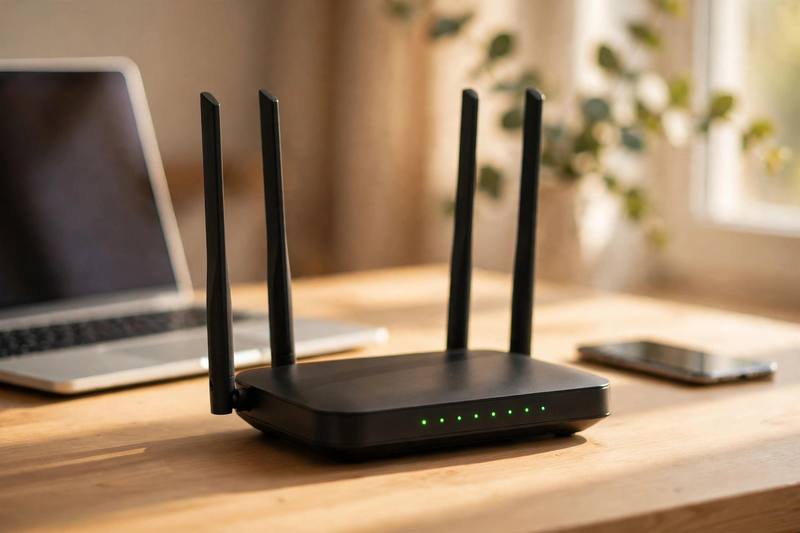
That is so true. A router is such a humble little box, usually blinking in a corner, yet the router decides whether your laptop, your phone, and even your television can talk to the internet at all.
Exactly. When my router failed, I could not send emails, I could not stream music, and my smart building, because I live in a smart building, would not even let me adjust the heating from my phone.
Wait, explain that for our listeners. A smart building is a building that uses technology to manage its systems efficiently, so a smart building might control its lights, its lifts, and its climate automatically.
Yes, and my smart building sends me a message when a package arrives, and the smart building even books the shared laundry room. Living in a smart building feels convenient, although sometimes I miss a simple key and a normal lock.
I understand that feeling. Technology gives us convenience, but it also creates new kinds of dependence.
Oh, the MP3 player! I found my old MP3 player in a drawer last weekend. That little MP3 player carried my entire music collection when I was a teenager, and holding that MP3 player again made me feel sixteen.
My first MP3 player was bright blue, and I guarded that MP3 player everywhere I went. An MP3 player seems almost ancient now, because our phones do everything, but the MP3 player changed music forever by making thousands of songs portable.
And that is a pattern with technology. A device like the MP3 player arrives, everyone adapts, and then a newer device absorbs it. The router may go the same way one day, although for now every home still needs a router.
Speaking of homes, let us talk about families, because technology and the modern nuclear family are closely linked. A nuclear family, meaning parents and their children living together, often relies on shared calendars, video calls, and group chats to stay organised.
Right. In a nuclear family, both parents often work, so the nuclear family uses technology to divide tasks and save time. My sister says her nuclear family could not survive without a shopping app and a family calendar.
And grandparents far away can still read a bedtime story over a video call, so the nuclear family stays close even when work moves people to different countries.
That movement is connected to another big idea, the population explosion. The population explosion means a sudden, rapid increase in the number of people, and the population explosion puts enormous pressure on housing, transport, and resources.
Yes, when we discuss the population explosion, we are really discussing how cities cope. A population explosion creates demand for new homes, and that is one reason developers keep designing each new smart building to use energy and space more carefully.
And technology has to grow with the population explosion, because millions of new people need connections. Every new neighbourhood needs a router in every flat, reliable satellite communications above it, and networks that do not collapse under the pressure.
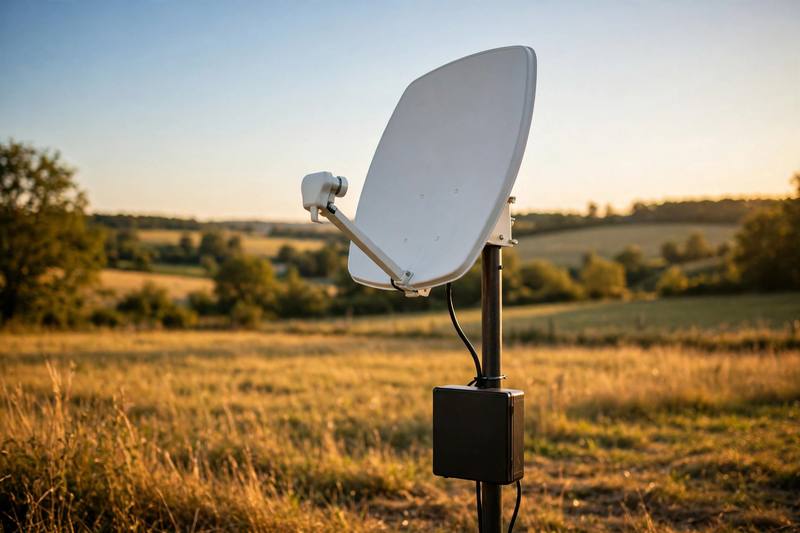
Satellite communications is a wonderful phrase. Satellite communications means communication using artificial satellites to transmit signals, and without satellite communications, ships, planes, and remote villages would be almost completely cut off.
I think satellite communications sounds like science fiction, but satellite communications already guides ambulances, broadcasts weather warnings, and connects research stations in Antarctica. When storms destroy local cables, satellite communications keeps rescuing the conversation.
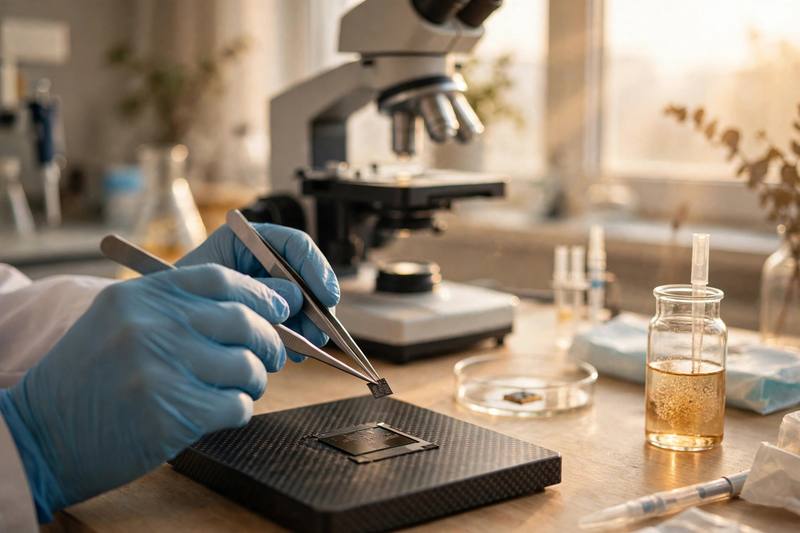
Absolutely. And underpinning so much of this is nanotechnology. Nanotechnology works at the scale of nanometers, which is almost unimaginably small, and nanotechnology is already improving medicines, fabrics, and computer chips.
Nanotechnology fascinates me. Doctors use nanotechnology to deliver medicine exactly where the body needs it. Engineers use nanotechnology to make stronger, lighter materials. Even the tiny heart inside a modern router probably owes something to nanotechnology.
And nanotechnology may soon live inside every smart building too, in self-cleaning glass and in paint that repairs its own scratches. Nanotechnology is tiny, but its ambitions are enormous.
Maya, before we go further, I think this is a good moment to tell our listeners how they can practise all of these words properly, because hearing them once is never enough.
Great idea. That is exactly why we built the Muse English app. Every day you learn fresh words with clear photos and careful pronunciation, hear this podcast, and train your speaking with shadowing stories. Quizzes check your understanding, grammar lessons build your confidence, and points and the leaderboard keep you motivated. It is completely free to install, so download Muse English today and turn quiet minutes into real progress.
I love that, because listening is only the beginning. Let us return to daily life. This morning, after my router recovered, I reset the router password, and I realised a good router is like a good manager: invisible when things work, and blamed when they do not.
Ha! And notice how one broken router can disturb an entire nuclear family. In my house, if the router stops, homework stops, films stop, and dinner conversation, strangely, improves.
That is the funniest truth about the nuclear family and technology. A nuclear family shares one router, one calendar, and one hundred small negotiations. Technology helps the nuclear family cooperate, but families still need patience.
Very true. Now, the population explosion also changes what families expect from homes. Because of the population explosion, flats are smaller, so a smart building must be clever: a smart building folds space, shares facilities, and saves energy for hundreds of residents at once.
And a smart building in a crowded district can reduce waste dramatically. When the population explosion fills a city, a smart building that manages water and power efficiently is not a luxury; it is a responsibility.
Let us not forget connection beyond the city. Satellite communications serves the countryside as much as the city. Farmers use satellite communications to check weather and soil, and doctors in remote clinics use satellite communications to consult specialists hundreds of miles away.
And when an earthquake damages the ground networks, satellite communications is often the first link restored. Journalists, rescue teams, and families all depend on satellite communications in a crisis.
Meanwhile, nanotechnology is helping there too. Nanotechnology makes satellite parts lighter, and lighter parts make satellite communications cheaper to launch. Nanotechnology also improves the batteries that keep a router running during a power cut.
Everything connects, does it not? Nanotechnology shrinks the components, the router shares the signal, satellite communications carries it across oceans, and the smart building receives it and adjusts the lights. It is one long chain from the tiny to the enormous.
Beautifully said. And at the end of that chain sits a person, perhaps listening on an MP3 player. Even today, some runners prefer a simple MP3 player because an MP3 player has no messages, no news, and no distractions. The humble MP3 player reminds us that technology should serve our attention, not steal it.
I still use my MP3 player on trains, actually. My MP3 player works when the signal dies, and unlike my phone, my MP3 player never asks me to update anything. There is a calm in that.
Lena, it is time for our second short break, and for a message that could genuinely change how our listeners learn English.
Yes, friends, if these words feel difficult, that is normal, and the Muse English app was designed for exactly that moment. Every day it gives you new words with photos and pronunciation, this podcast, shadowing stories to speak along with, quizzes, and grammar lessons that explain one clear point at a time. You earn points, climb the leaderboard, and watch your English grow. Install Muse English free today and practise a little every day.
Welcome back. Let us think about the future. As the population explosion continues in some regions, will the smart building become the normal home? I think yes. The smart building will manage energy, security, and deliveries, and each smart building will talk to the city around it.
I agree, and the nuclear family will change with it. The nuclear family of the future may live in two countries at once, connected by satellite communications and daily video calls. What defines a nuclear family then: one roof, or one network?
That is a deep question. Perhaps one router, shared by everyone, wherever they are. A future router might follow the family, a personal router in every bag, connecting automatically to satellite communications when the ground network disappears.
And nanotechnology will be inside everything by then. Nanotechnology in our clothes will monitor health, nanotechnology in our food packaging will warn us about freshness, and, honestly, nanotechnology may even repair the tiny circuits inside a future MP3 player.
I would love a self-repairing MP3 player. But let us also keep a critical eye. A smart building collects data, satellite communications can be tracked, and a population explosion managed badly can strain every system. Technology is powerful, so our choices about it matter.
Exactly. The population explosion is not just a number; it is people needing schools and hospitals. Good technology, from nanotechnology in medicine to a reliable router in a classroom, helps societies answer that challenge with dignity.
So, to review our words: the router connects your home, satellite communications connects the planet, nanotechnology builds the future at the smallest scale, and the smart building organises modern living.
And the MP3 player started a portable revolution, the nuclear family shows us who technology serves, and the population explosion shows us why we must build wisely and share resources fairly.
Perfect. Thank you for listening to Muse English. Practise these words in the app, try the shadowing story, and tell us: which of these technologies changed your life the most?
Goodbye for now, everyone. Keep listening, keep speaking, and we will see you tomorrow with fresh words and a brand new conversation.
🎙 تمرین شدوئینگ نمونهٔ رایگان
گوش کنید و همزمان با صدا بلند تکرار کنید. تمرین کامل شدوئینگ در اپ است: هر جمله را تکرار میکنید و میبینید اپ چند کلمه از آن را تشخیص داده است.
The router in our smart building stopped working on Monday morning.
Every nuclear family in the smart building complained about the router.
My MP3 player still played music while the router was broken.
صحبت کردن را تمرین کنید
در اپ Muse English همهٔ جملهها را شدوئینگ کنید. اپ گوش میدهد و نشان میدهد چند کلمه از جملهتان را تشخیص داده است.
📝گرامر: Mixed Conditionals
Mixed conditionals combine two different times. Both the condition and the result are imagined, but one is in the past and the other is in the present.
For a past condition with a present result, use if + past perfect, would + base verb, often with *now*. If the engineers had used better nanotechnology, the router would be faster now.
For a present condition with a past result, use if + past simple, would have + past participle. The present condition is usually a general fact, like living far from a smart building or relying on satellite communications.
Compare t
این گرامر را در اپ کامل یاد بگیرید
توضیح کاملتر، مثالهای بیشتر و تمرین تعاملی.
هر روز ادامه بدهید
هر روز درس، پادکست و آزمون تازه؛ رایگان در اپ Muse English.