
📖 Muse English چیست؟
Muse English یک اپلیکیشن رایگان آموزش زبان انگلیسی است، با درس روزانه برای هر شش سطح، از A1 (مبتدی) تا C2 (تسلط کامل). هر روز لغتهای تازه با معنی فارسی، یک پادکست واقعی، تمرین شدوئینگ، گرامر و آزمون دارید. دربارهٔ اپ
📚 لغتها
۷ لغت تازه لغتهای تازه با معنی فارسی، مثال واقعی و تلفظ.




پادکست: فناوری
گفتوگوی امروز را گوش کنید.
📝 متن پادکست
Welcome to Muse English! I am Maya, and I am delighted you are joining us for an advanced conversation today.
And I am Lena. Hello, everyone. Today we are exploring technology, cities, and the ideas that connect our whole planet, and we will meet seven powerful words along the way.
Our guide today is a story about Nadia, a science journalist who lives in a mega-city. A mega-city is a very large city, usually with more than ten million people, full of towers, trains, and endless energy.
Nadia loves her mega-city, but she also complains about it every single morning. Can you guess why, Maya?
Let me think. The noise? The rent? Or perhaps the traffic, because in a mega-city the traffic can stop completely.
Exactly. Nadia calls it gridlock. Gridlock is a situation where traffic cannot move in any direction at all. Cars, buses, and bikes all freeze, and nobody can go forward or turn back.
I know that feeling. Last winter I sat in gridlock for two hours, and I watched the snow fall on a street that did not move at all.
Nadia had the same experience last Tuesday. Gridlock filled every avenue downtown, so she left her taxi, opened her laptop computer, and started working from a small cafe instead.
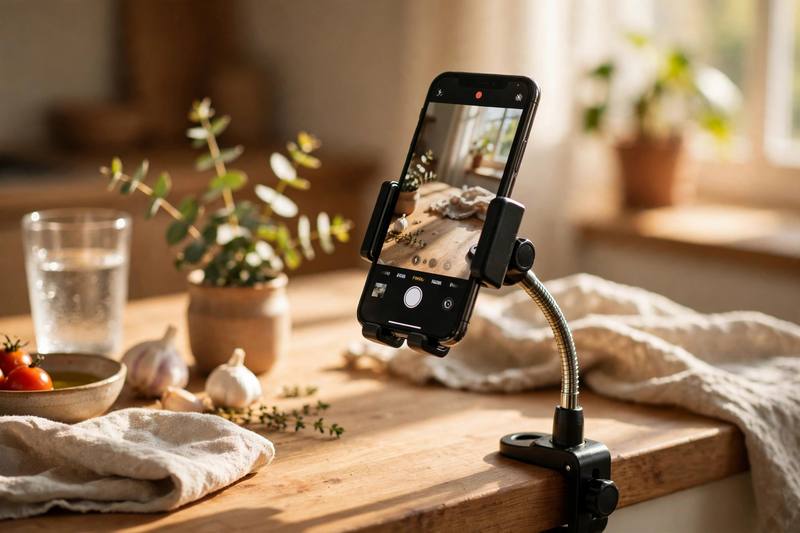
That is the modern solution, is it not? Her laptop is a portable computer she can use anywhere, on her lap, on a train, or at a kitchen table. Nadia takes her laptop everywhere.
She does. And because the internet connects everyone, Nadia often says we now live in a global village. A global village means the world connected by electronic communication, where news travels in seconds.
I love that image. In a global village, a farmer in one country can watch the weather in another, and a student in Toronto can talk to a teacher in Tokyo before breakfast.
Nadia writes about the global village every week. She says the global village makes a mega-city feel smaller, because your neighbours are no longer only the people on your street.
Before we follow Nadia to her office, let me share something that can transform your English routine. The Muse English app gives you a fresh lesson every morning, with new words, clear photos, and pronunciation you can hear and repeat. You also get this podcast, shadowing stories for speaking practice, smart quizzes, and short grammar lessons, plus points and a leaderboard to keep you motivated. It is free to install, so open the app today and make English a daily habit.
Thank you, Maya. I practise on the train, and those five quiet minutes really add up. Now, Nadia finally reached her office, but the gridlock had followed her in a different way.
What do you mean? Did the streets outside her office stay blocked all day?
The streets cleared by noon, but Nadia had three video calls, two deadlines, and a mountain of messages. She put on her hands-free headset so she could talk and type at the same time.
Hands-free means operating without needing to be held, right? A hands-free phone system lets you drive, cook, or type while you talk.
Precisely. Nadia uses a hands-free system in her car, a hands-free headset at her desk, and even a hands-free speaker at home while she cooks dinner for her family.
That sounds efficient, but also a little exhausting. Does Nadia ever disconnect from the global village and rest?
She tries. On Sundays she closes her laptop computer, leaves her phone in another room, and walks in the park. She says even citizens of the global village need silence.
I completely agree. Now, Nadia's big assignment this month sounds fascinating. She is writing about the human genome, is that right?
Yes. The human genome is the complete set of genetic instructions for a human, the full code that helps build and run our bodies. Scientists spent years mapping the human genome.
And mapping the human genome was described as a scientific breakthrough, because it changed medicine. Doctors can now understand some illnesses much earlier than before.
Nadia interviewed a researcher who studies the human genome every day. The researcher told her that the human genome still holds many secrets, and each discovery raises new ethical questions.
That is such an important point for advanced learners. A word like human genome is not only vocabulary. It opens a door to science, ethics, and the future of medicine.
Nadia also asked the researcher a playful question. She asked whether studying the human genome could one day help humans live on other planets.
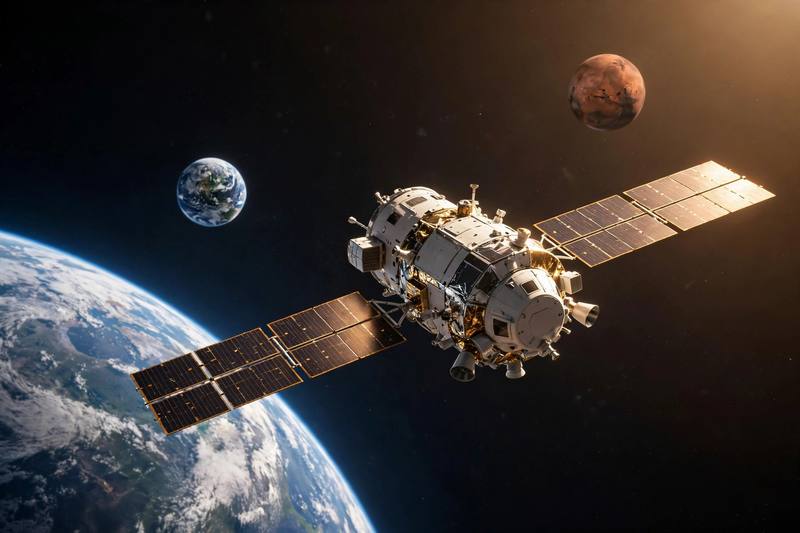
Which brings us beautifully to our next idea, interplanetary travel. Interplanetary travel means travel between planets within our solar system, for example a journey from Earth to Mars.
Nadia is secretly obsessed with interplanetary travel. She has a poster of Mars above her desk, and she follows every rocket launch on her laptop.
Many experts say interplanetary travel remains a distant dream for humanity, because space is dangerous, expensive, and unforgiving. But every successful test makes interplanetary travel feel a little closer.
Nadia wrote that interplanetary travel will first change science, then trade, and perhaps one day holidays. Imagine a travel guide that begins with the words, what to pack for Mars.
I would pack warm socks and a very good book. But let us return to Earth for a moment, because Nadia still had to cross her mega-city that evening.
And of course, the evening brought fresh gridlock. A concert and a football match ended at the same time, and gridlock locked the whole centre of the mega-city for hours.
So Nadia chose the metro instead. On the train she opened her laptop computer again and finished her article about the global village and the mega-city.
I want to pause our story here for a second friendly reminder. If you enjoy learning through stories like this one, the Muse English app is made for you. Inside the app you will find daily words with photos and pronunciation, this podcast to train your listening, shadowing stories to build fluent speaking, quizzes that check your memory, and clear grammar lessons for every level. You earn points, climb the leaderboard, and see your progress every day. Install Muse English for free, choose your level, and start today.
Thank you, Lena. Now, late that night, Nadia received an exciting message. A space agency had invited her to watch a rocket test linked to interplanetary travel.
She was thrilled. She answered with a hands-free call while she packed her bag, because her hands were full of notebooks, cables, and her trusty laptop.
Notice how naturally technology surrounds her. A hands-free call, a laptop computer in her bag, and instant messages from the other side of the global village, all before midnight.
The next morning, Nadia stood in a quiet field far from the mega-city and watched the rocket rise. For a moment, there was no gridlock, no noise, and no hurry at all.
Just sky, fire, and hope. Did she write about the human genome in that article too?
She did. She explained that future interplanetary travel may depend on understanding the human genome, because long journeys in space will test the human body in new ways.
That is a brilliant connection. The smallest code inside us, the human genome, may decide how far interplanetary travel can really take us.
When Nadia returned home, her mega-city welcomed her with lights, music, and, I am sorry to say, a little more gridlock near the station.
Some things never change. But Nadia smiled, put on her hands-free headset, called her editor, and dictated the first line of her story while she walked.
Her first line was simple and perfect. She wrote that technology does not shrink the world by magic. People shrink it, message by message, until the whole planet becomes a global village.
Nadia also told me something thoughtful on that walk home. She said a mega-city teaches you patience, because millions of strangers must share the same streets, the same trains, and the same rainy mornings without losing their kindness.
That is beautifully said. And she is right that technology can either divide us or connect us. A laptop computer can isolate a person for hours, or it can bring a family on three continents into one warm conversation.
Nadia chooses connection every time. She teaches her grandmother to make hands-free video calls, she helps her neighbours understand the news, and she explains difficult science in clear, honest language that anyone can follow.
That is the real spirit of advanced English, is it not? Not showing off with difficult words, but using precise words with care, so that ideas about science, cities, and space become clear to everyone.
Exactly. When Nadia writes that gridlock wastes time and energy, every reader understands her. When she writes that interplanetary travel inspires children to study science, every reader feels that hope with her.
What a wonderful line to finish on. Listeners, let us quickly revisit our seven words before we say goodbye.
A mega-city is a huge city. Gridlock is traffic that cannot move. Hands-free means you do not need to hold the device. A laptop is the portable computer Nadia carries everywhere.
A global village is our connected world. The human genome is our complete genetic code. And interplanetary travel is travel between planets, the dream Nadia follows with such joy.
Practise these words out loud today. Use one in a message, one in a conversation, and one in your notebook, and your English will grow stronger.
Thank you for listening to Muse English. Keep learning, stay curious, and we will see you tomorrow for another story and seven new words.
🎙 تمرین شدوئینگ نمونهٔ رایگان
گوش کنید و همزمان با صدا بلند تکرار کنید. تمرین کامل شدوئینگ در اپ است: هر جمله را تکرار میکنید و میبینید اپ چند کلمه از آن را تشخیص داده است.
Maya woke up early in the busy mega-city.
She opened her laptop computer and checked the news.
The news said the global village was awake and talking.
صحبت کردن را تمرین کنید
در اپ Muse English همهٔ جملهها را شدوئینگ کنید. اپ گوش میدهد و نشان میدهد چند کلمه از جملهتان را تشخیص داده است.
📝گرامر: Cleft Sentences (It was... that, What I need is...)
A cleft sentence splits one idea into two parts to emphasise one of them. *Tom broke the window* becomes It was Tom who broke the window.
There are two main types: it-clefts and wh-clefts.
Use an it-cleft for emphasis: It is or It was + the focus + that, or who for people. It was in 2015 that we moved to the mega-city.
It + singular be stays the same with a plural focus: It was my parents who paid. We often use it to correct someone: It's not the gridlock I hate, it's the noise.
Use a wh-cleft starting with a what clau
این گرامر را در اپ کامل یاد بگیرید
توضیح کاملتر، مثالهای بیشتر و تمرین تعاملی.
راهنمای کامل و تمرینها: Cleft Sentences (It was... that, What I need is...) ←
هر روز ادامه بدهید
هر روز درس، پادکست و آزمون تازه؛ رایگان در اپ Muse English.