

📖 Muse English چیست؟
Muse English یک اپلیکیشن رایگان آموزش زبان انگلیسی است، با درس روزانه برای هر شش سطح، از A1 (مبتدی) تا C2 (تسلط کامل). هر روز لغتهای تازه با معنی فارسی، یک پادکست واقعی، تمرین شدوئینگ، گرامر و آزمون دارید. دربارهٔ اپ
📚 لغتها
۷ لغت تازه لغتهای تازه با معنی فارسی، مثال واقعی و تلفظ.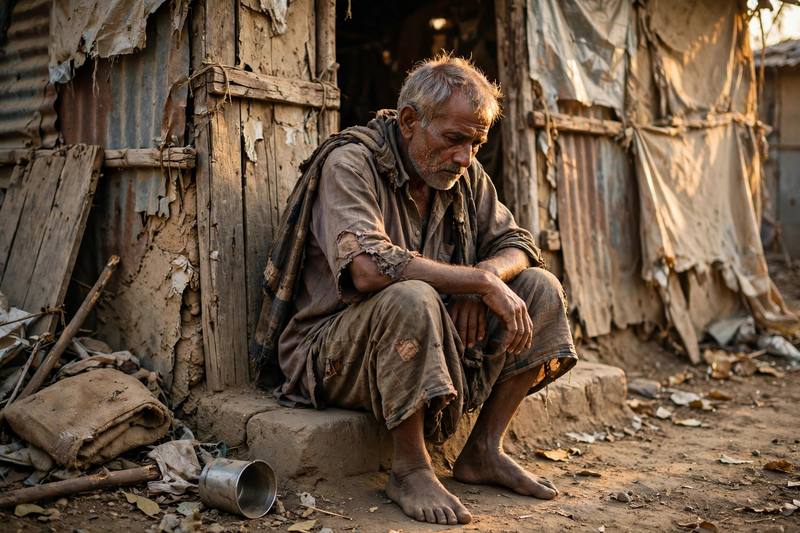






پادکست: پول و خرید
گفتوگوی امروز را گوش کنید.
📝 متن پادکست
Welcome to Muse English! I am Maya, and this is Lena. Today we are talking about money, jobs, and the economy, because the news has been full of big economic words lately.
That is right, Maya. And some of those words sound difficult, but they are really about everyday life. When people talk about the economy, they are talking about jobs, prices, shops, and how families pay their bills.
Exactly. Let us start with a worrying phrase. In many parts of the world, millions of people still live in abject poverty. That means they are extremely poor, with almost no money, no safe home, and very little hope of a better life.
Abject poverty is a strong phrase, and it should make us stop and think. When a family lives in abject poverty, even buying food or medicine can be a daily struggle. It is not just being short of money for a week. It is a much deeper problem.
And here is where governments come in. One of their biggest jobs is to boost the economy, to make the economic situation better for everyone. When leaders try to boost the economy, they want more jobs, more spending in shops, and more confidence.
Thanks, Lena. Now, how does a country actually boost the economy? One answer is spending. When a government wants to boost the economy, it might build roads, schools, and hospitals. That creates jobs, and workers spend their pay in local shops.
Another way to boost the economy is to support small businesses. If a small bakery or a repair shop can hire one more worker, that is real progress. Many small steps together can really boost the economy over time.
A related goal is to achieve economic growth. To achieve economic growth means to increase a country's wealth and prosperity. It is not only about big numbers. It is about families having steadier incomes and better services.
Before we go further, let me tell you about something that helps me every single day. The Muse English app gives you fresh words with photos and pronunciation, plus this podcast, shadowing stories, quizzes, grammar lessons, and a leaderboard where you earn points. It is free to install, and it turns a few quiet minutes into real progress, so open the app today and keep your streak alive.
That is a good point. When a country manages to achieve economic growth, there is more money for schools and hospitals. But growth has to reach ordinary people. If only a few rich people benefit, most families will not feel that the country did achieve economic growth at all.
And sometimes the news describes an ailing economy. An ailing economy is one that is in poor condition, like a sick patient. An ailing economy might have rising prices, closing shops, and people losing jobs.
I like that image, Maya. Just as a sick person needs care, an ailing economy needs urgent attention. When reporters say an ailing economy needs help, they mean leaders must act quickly before more businesses close.
But an ailing economy is not hopeless. With the right decisions, even an ailing economy can recover. New investment, training for workers, and support for families can slowly turn an ailing economy around.
Let us talk about debt now, because so many people worry about it. Debt is money that you owe, and it can feel very heavy. Governments sometimes change the rules to alleviate debt, which means to make debt less severe and less of a burden.
Yes. A new policy might aim to alleviate debt for students, for example. If a student loan is smaller, or the payments are spread over more years, that can alleviate debt and give young people a fairer start.
Families also need help to alleviate debt. Imagine a family with a large credit card bill. If the interest rate falls, or part of the debt is forgiven, that can alleviate debt and let the family breathe again.
That brings us to a useful abbreviation: APR. APR stands for Annual Percentage Rate, and it is the yearly cost of borrowing money. Whenever you take out a loan, you should always check the APR first.
The APR is so important, Maya. Two loans can look the same, but a higher APR means you pay much more over time. A careful borrower always compares the APR before signing anything.
Exactly. If you borrow money to buy a car, ask about the APR. If you use a credit card, check the APR. Understanding the APR can save you hundreds, or even thousands, over the years.
Now, another key phrase is allocate funds. To allocate funds means to distribute money for a particular purpose. A government might allocate funds for education, for example, to build new schools and train teachers.
Right. When leaders allocate funds, they are making choices. If they allocate funds for health care, hospitals get new equipment. If they allocate funds for transport, buses and trains improve.
And ordinary people allocate funds too, in a smaller way. Every month, a family must allocate funds for rent, food, and bills. To allocate funds wisely means to plan carefully and not spend everything at once.
That is a lovely connection. Whether it is a country or a household, we all have to allocate funds. A budget is simply a plan for how to allocate funds across the things that matter most.
That is worth repeating, Lena. When a family must allocate funds for rent and food, every small saving matters, and a clear plan can really help.
And when a government wants to boost the economy, it should listen to those families first, because they know exactly where help is needed most.
Let us pause here for a moment. If you are enjoying this conversation, remember that the Muse English app is waiting for you with new words every day, clear pronunciation practice, fun shadowing stories, quick quizzes, and grammar that actually makes sense. You earn points as you learn, and you can climb the leaderboard with learners all over the world, so install it free and make English part of your daily routine.
Welcome back. We have talked about how leaders try to boost the economy, and how they hope to achieve economic growth. But what happens when growth does not reach everyone?
That is the sad part, Maya. Even in a rich country, some people still live in abject poverty. A country can report growth while families in abject poverty still struggle to eat. That is why we must look beyond the headlines.
Absolutely. Real success means fewer people in abject poverty. If a plan to boost the economy leaves the poorest people behind, then it has not truly worked. A fair economy lifts everyone, not just the wealthy.
And remember the ailing economy we described earlier. An ailing economy often hits the poorest hardest. When an ailing economy loses jobs, families who were already struggling fall deeper into trouble.
So what can help? One idea is to allocate funds directly to the people who need them most. If a government decides to allocate funds for affordable housing and free school meals, that can change lives quickly.
Another idea is to alleviate debt for struggling families. Programs that alleviate debt can stop people from losing their homes. To alleviate debt is not about giving up. It is about giving people a chance to recover.
And we must not forget the APR. When families in difficulty borrow money, a high APR can trap them. Teaching people to check the APR is a small lesson that protects them from bigger problems.
That is so true. A low APR loan is very different from a high APR loan, even if the monthly payment looks similar at first. Always compare the APR, and ask questions before you borrow.
Let us bring all of today's words together in one picture. Imagine a country with an ailing economy. Shops are quiet, and some families live in abject poverty. The government wants to boost the economy and achieve economic growth.
To do that, it decides to allocate funds for new jobs and training. It also creates a plan to alleviate debt for students and small businesses. And it reminds every borrower to check the APR before taking a loan.
Step by step, those choices can boost the economy. New jobs mean more spending, and more spending helps shops survive. Slowly, the country can begin to achieve economic growth again.
And the most important test is simple. Are fewer people living in abject poverty? Is the ailing economy getting stronger? If the answers are yes, then the plan is working.
Before we finish, let us review our seven words once more in real sentences. Millions of people still live in abject poverty, and that is a challenge for every country.
Governments aim to achieve economic growth, but growth must help ordinary families, not only the rich.
When reporters describe an ailing economy, they mean an economy in poor condition that needs care.
A fair policy can alleviate debt for students and families, making their burden lighter.
Leaders must allocate funds wisely, choosing schools, hospitals, and transport.
Always check the APR before you borrow, because the APR shows the true yearly cost.
And when jobs return and shops fill again, we can say the country did boost the economy.
What a useful set of words, Maya. Money and the economy affect all of us, and now our listeners can talk about them with confidence.
Thank you for listening to Muse English. Keep practising, keep learning, and we will see you tomorrow with another fresh lesson. Goodbye!
Goodbye, everyone, and good luck with your English!
🎙 تمرین شدوئینگ نمونهٔ رایگان
گوش کنید و همزمان با صدا بلند تکرار کنید. تمرین کامل شدوئینگ در اپ است: هر جمله را تکرار میکنید و میبینید اپ چند کلمه از آن را تشخیص داده است.
In the small town of Riverbend, the shops were quiet and the streets felt empty.
Reporters said Riverbend had an ailing economy, and many families, some already in abject poverty, were worried about jobs.
For years, some families in Riverbend had lived in abject poverty, with very little money for food or heating.
صحبت کردن را تمرین کنید
در اپ Muse English همهٔ جملهها را شدوئینگ کنید. اپ گوش میدهد و نشان میدهد چند کلمه از جملهتان را تشخیص داده است.
📝گرامر: Cleft Sentences (It was... that, What I need is...)
A cleft sentence splits one idea into two parts to emphasise one of them. It tells the listener exactly which part matters most.
It-clefts use It is or It was, then the focus, then that or who. Use who for people and that for things, places, or times.
Wh-clefts start with a what clause, then is or was, then the focus. For an action, use do: What I did was (to) + verb.
Keep the verb singular after It and after a what clause, even when the focus itself is plural.
Cleft sentences are also a polite way to correct someone. You
این گرامر را در اپ کامل یاد بگیرید
توضیح کاملتر، مثالهای بیشتر و تمرین تعاملی.
راهنمای کامل و تمرینها: Cleft Sentences (It was... that, What I need is...) ←
هر روز ادامه بدهید
هر روز درس، پادکست و آزمون تازه؛ رایگان در اپ Muse English.