

📖 What is Muse English?
Muse English is a free English learning app with daily lessons across all 6 CEFR levels (A1 Beginner to C2 Proficient). Every day brings new vocabulary, a real podcast conversation, shadowing practice, grammar and quizzes — all at museenglishapp.com.
📚 Vocabulary
10 new words Learn new words with real examples and audio.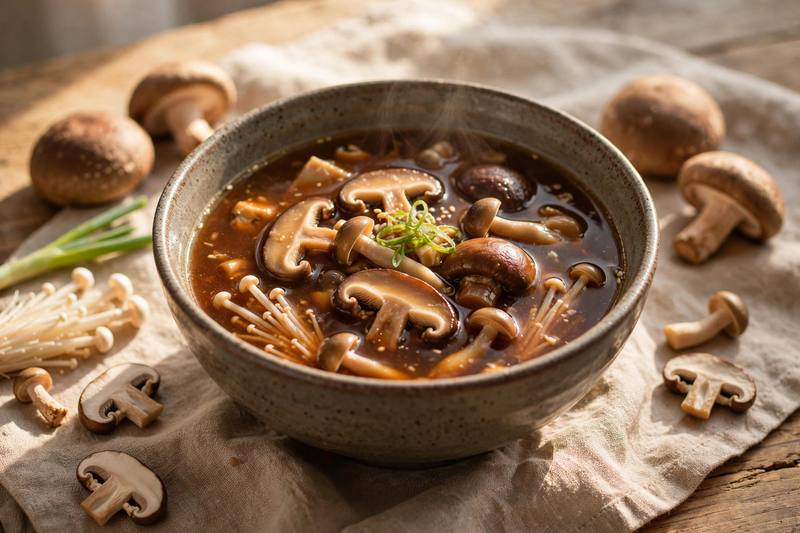

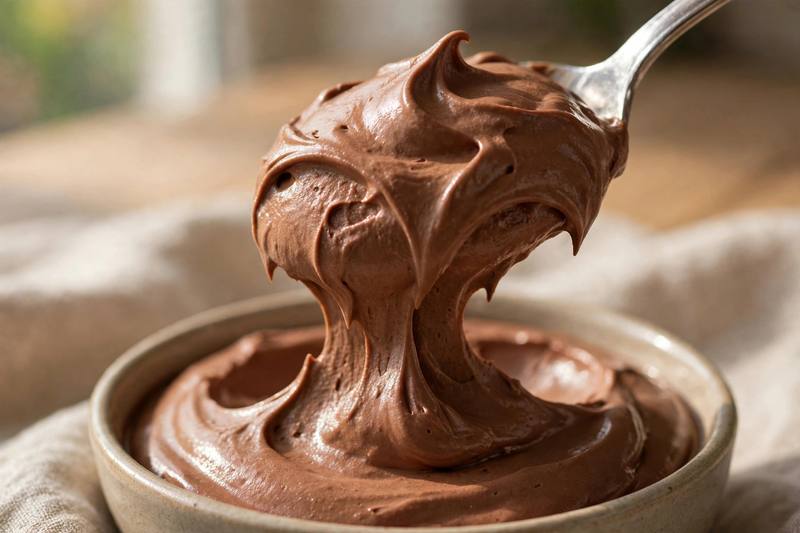
Podcast: Food & Cooking
Listen to today’s conversation.
📝 Podcast Transcript
Welcome back to Word Kitchen, everyone. I'm Maya.
And I'm Lena. Today we are diving into the art of flavor, and honestly, I think this is going to be one of our most delicious episodes ever.
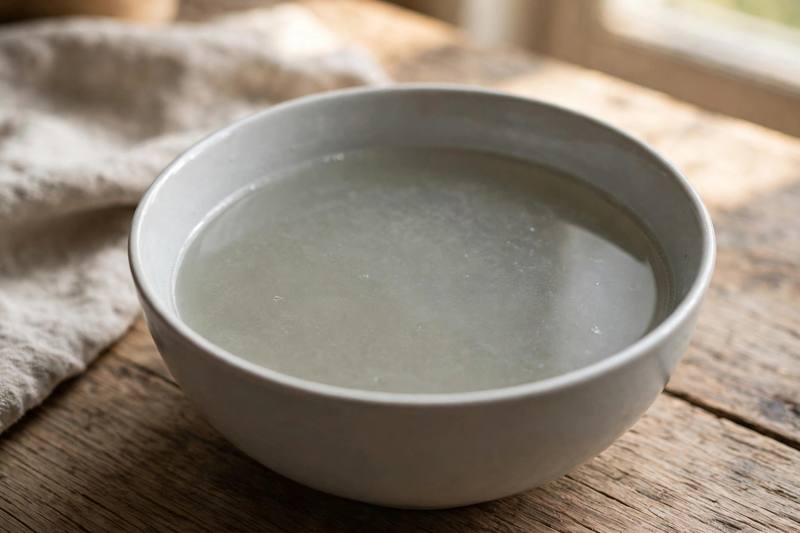
It really is. We are talking about food words today, ten of them, and I promise you will want to run to your kitchen after this. Let me start with a story. Last weekend I went to this tiny restaurant downtown, and the chef there was incredible. The first thing that hit me was the umami. You know that deep savory taste, the fifth taste alongside sweet and salty? It was in a mushroom soup, and the umami was so rich that I almost asked for the recipe.
Oh, I know exactly what you mean. Umami is that quality in aged cheese and soy sauce and mushrooms that makes food taste deeply satisfying. I read that the word umami comes from Japanese, and chefs everywhere chase that umami punch in their dishes now. Whenever I taste real umami, like in a bowl of miso soup, I feel like my whole mouth wakes up.
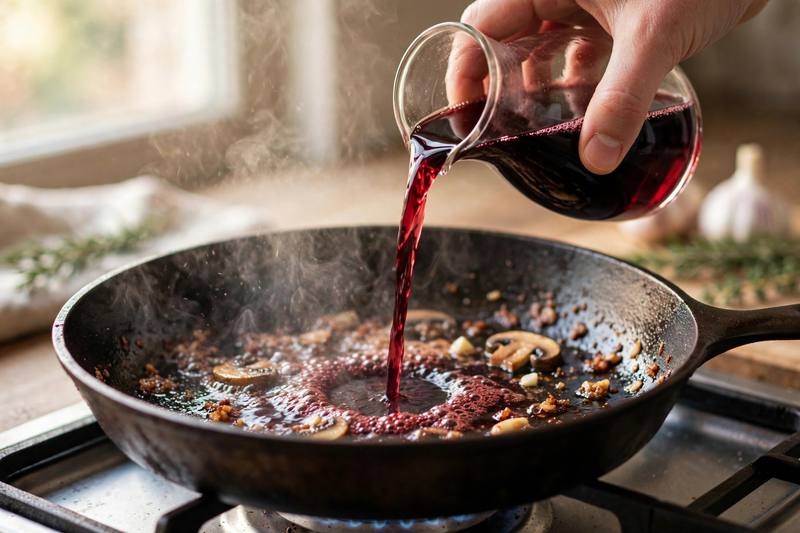
Yes! And it made me think about how little I knew about cooking techniques. My friend who was with me used to work in a kitchen, and she explained what happens in the pan. After searing meat, you deglaze the pan. You pour in a little wine or stock, and you deglaze the pan to lift all those browned bits. Honestly, I had never heard anyone say deglaze before, but the idea is simple. You deglaze the pan, scrape up the flavor, and suddenly you have the start of a sauce.
That is such a great trick. I learned to deglaze from a cooking show. The host said, if you want a restaurant-quality sauce, you must deglaze. It takes thirty seconds to deglaze a hot pan with broth, and the difference is enormous. I tried it with chicken stock last week, and I will deglaze my pan every single time now.
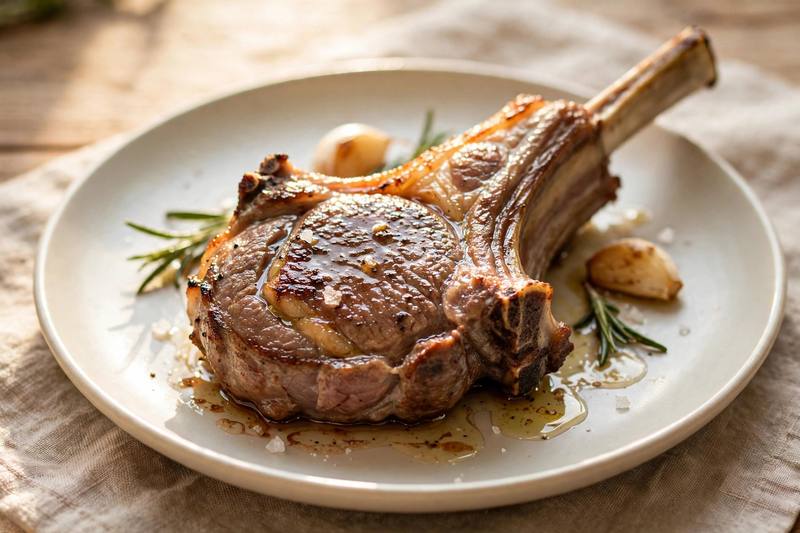
It is one of those little techniques that changes everything. Speaking of the meat itself, the lamb they served was the most succulent thing I have ever eaten. I mean truly succulent, juicy and tender, the kind of succulent where you barely need a knife. The chef told us the secret to keeping meat succulent is resting it after cooking. If you want succulent results at home, do not slice the meat too early, because all that succulent juice just runs out onto the board.
I love that. Succulent is such a perfect word. There is nothing sadder than dry chicken, and nothing better than a succulent piece of fish. I think a succulent roast is the centerpiece of any great dinner party. The mouthfeel of something succulent, that juicy texture, is what makes people close their eyes and smile.
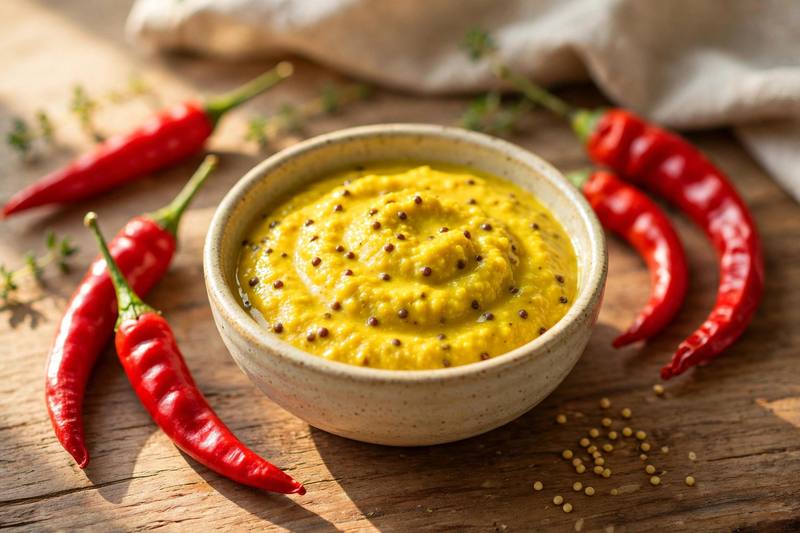
Exactly. Now, the chef also made a grain salad with a dressing that was piquant. Piquant means pleasantly sharp or spicy, not aggressively hot, just piquant enough to wake you up. I asked him what made it so piquant, and he said it was the Dijon mustard and a little lime. A piquant dressing can rescue a boring salad. I think piquant is the right word for anything with that lively little kick.
Piquant is a word I need to use more. A piquant salsa, a piquant chutney, that piquant edge from vinegar in a pickle. I made a potato salad last month that was totally flat, and now I realize it needed something piquant. Even a piquant lemon wedge over grilled fish does the job.
Flat is the opposite of the next problem we ran into at that same restaurant. My dessert was fine, but my friend's dessert was a little insipid. Insipid means lacking flavor or interest, kind of dull and bland. The mousse was insipid, honestly, it tasted like sweet air. I think insipid is the perfect word for food that tries too hard to look fancy but delivers nothing. Nobody wants an insipid dish at a nice restaurant.
I have had those insipid experiences too. An insipid hotel breakfast, an insipid sandwich on a plane. When food is insipid, it is not bad, it is just empty. That is why I always carry a little chili oil now, because I refuse to eat an insipid meal without fighting back.
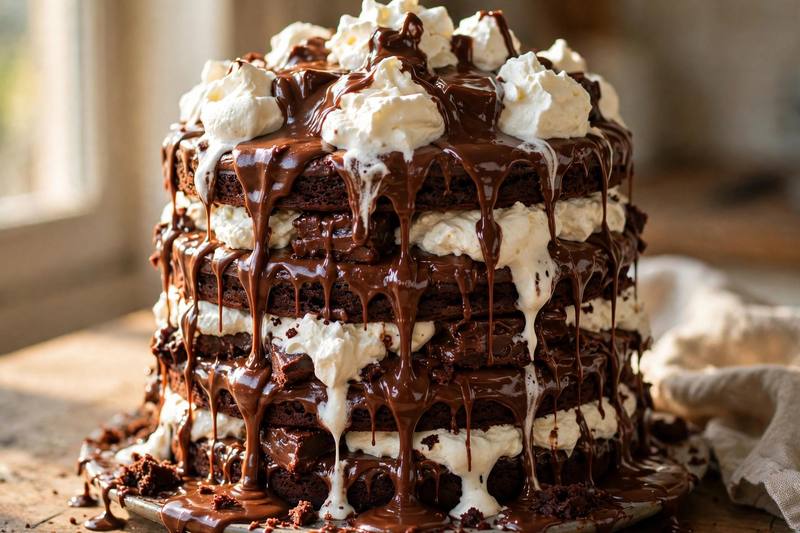
That is one solution. But you know what is worse than insipid? The opposite extreme. The waiter talked us into trying the special dessert, and it was cloying. Cloying means excessively sweet or rich, sickeningly so. One bite of that cloying chocolate tower and we were done. It was cloying in the worst way, layer after layer of sugar with no balance. A dessert should be indulgent, but cloying is where indulgence turns into a headache.
Cloying desserts are everywhere, though. Those giant milkshakes with a whole cake on top? Completely cloying. I think cloying food is a good lesson in restraint. A little sweetness is wonderful, but once it gets cloying, nobody enjoys it. My grandmother always said a cloying dish shows a cook who does not trust their ingredients.
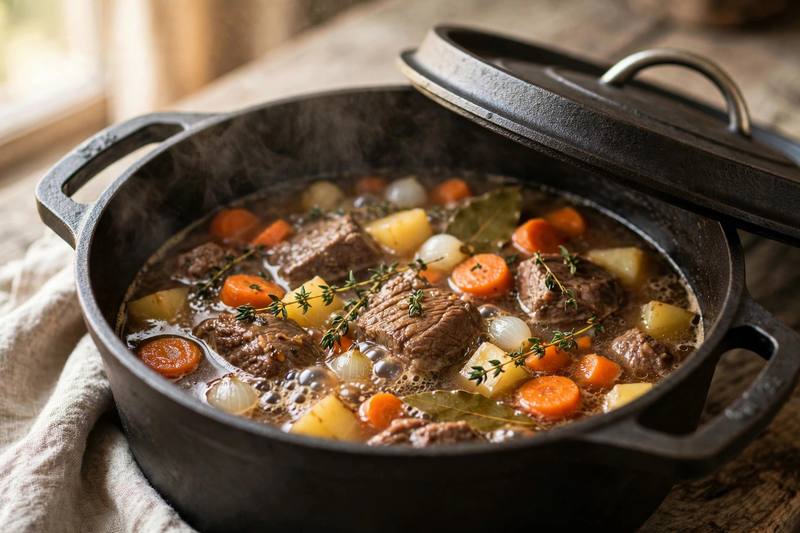
Your grandmother sounds wise. Let us talk about the main course technique for a minute, because the chef came out and explained it. He said he likes to braise tough cuts of meat. To braise means to cook food slowly in a little liquid with the lid on. You braise beef in red wine for hours until it turns tender. I asked him why he prefers to braise instead of roast, and he said when you braise, the liquid keeps everything moist and the flavors melt together. Honestly, I am going to braise short ribs this weekend.
Braising is magic. If you braise lamb shanks low and slow, they fall off the bone. I think the word braise sounds as gentle as the technique itself. You braise, you wait, you come back to something transformed. Every home cook should learn to braise at least one dish.
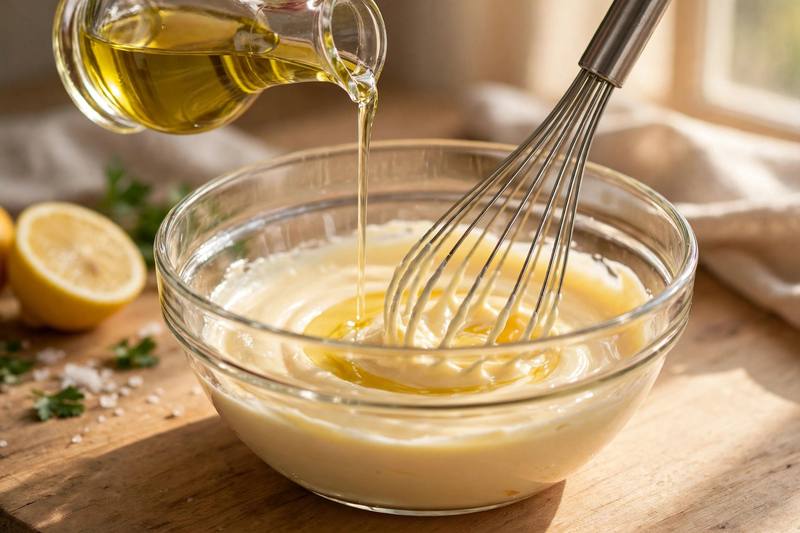
I could not agree more. Now, that grain salad dressing, the piquant one, had another secret. The chef told me the trick is to emulsify the oil and the lemon juice. To emulsify means to blend oil and water-based liquids into a smooth, stable mixture. If you just stir, they separate, but if you whisk hard, you emulsify them into a creamy dressing. He said most people fail to emulsify properly because they add the oil too fast. Once you emulsify the dressing, it coats every grain instead of sliding off.
That is such useful knowledge. I never knew you had to emulsify a vinaigrette slowly. No wonder mine always split. I will try to emulsify mine with a blender next time. When you emulsify well, the texture is completely different, silky instead of oily. I am adding emulsify to my cooking vocabulary forever.
Me too. And speaking of vocabulary, at the next table there was a man who was clearly a connoisseur. A connoisseur is an expert judge of taste, especially in food and drink. This connoisseur was tasting wine with total focus, swirling and sniffing like a professional. I love watching a real connoisseur at work. He asked the sommelier questions that only a true connoisseur would ask. By dessert, I was half tempted to ask the connoisseur for his opinion on my cloying dessert.
That is funny. A connoisseur can be intimidating, but the good ones love to share. I once met a chocolate connoisseur who could name the country of origin of every sample. A real connoisseur notices things the rest of us miss. I aspire to be a cheese connoisseur someday, but I have a long way to go.
I will join you in that dream. Now, one more word, and it ties everything together: mouthfeel. Mouthfeel is the texture and physical sensation of food in your mouth. The creamy mouthfeel of that avocado in my salad was luxurious. A great dish is not just about taste, it is about mouthfeel too. Think about the difference in mouthfeel between a velvety soup and a chunky one. Chefs obsess over mouthfeel, because mouthfeel is half the pleasure of eating. When the succulent lamb, the piquant dressing, and that deep umami all came together, the overall mouthfeel was unforgettable.
Mouthfeel is such a great concept. I think about mouthfeel every time I eat something with a surprising crunch. The mouthfeel of crispy skin on duck is half the reason people love it. Once you notice mouthfeel, you cannot stop noticing it. I bet that connoisseur at the next table was judging the mouthfeel of everything.
He absolutely was. Okay, a quick recap for our listeners. Today we explored ten words from the kitchen. Umami, that deep savory fifth taste. Deglaze, to lift the browned bits with liquid. Succulent, juicy and tender. Piquant, pleasantly sharp. Insipid, dull and bland. Cloying, sickeningly sweet. Braise, slow cooking in a little liquid. Emulsify, blending oil and liquids into a stable mix. Connoisseur, an expert taster. And mouthfeel, the texture of food in your mouth.
And remember, the best way to learn them is to cook. Go deglaze a pan this week. Braise something low and slow. Taste for umami, notice the mouthfeel, and avoid anything cloying. And if you find a truly succulent dish, savor it like a connoisseur.
Beautifully said. That is all for today's Word Kitchen. We will be back tomorrow with ten brand new words. Until then, happy cooking, everyone.
🎙 Try Shadowing free sample
Listen and repeat along with the studio audio. Full shadowing practice with pronunciation scoring is in the app.
The Chef's Grand Opening
Daniel had dreamed of opening his own restaurant for years.
On opening night, he planned a menu full of umami, because he loved that deep savory taste.
Train your speaking
Shadow every sentence with studio audio and get your pronunciation scored — only in the Muse English app.
📝Grammar: Reported Speech: Sentences and Questions
Reported speech reports what someone said. **He said** and **She told me** are the classic reporting verbs, but advanced speakers use a much wider set. When the reporting verb is in the past, the tense usually **shifts back**. Present simple becomes past simple (I like → **she liked**), present continuous becomes past continuous, **will → would**, and **can → could**. The soup has umami → she said the soup **had** umami. Time and place words change too: tomorrow → **the next day**, here → **there**, now → **then**. The connoisseur said he was **returning the next day**. **No backshift** is
Master this grammar in the app
Get clear explanations, more examples and interactive exercises.
Keep learning every day
New lessons, podcasts and quizzes daily — free in the Muse English app.