

📖 What is Muse English?
Muse English is a free English learning app with daily lessons across all 6 CEFR levels (A1 Beginner to C2 Proficient). Every day brings new vocabulary, a real podcast conversation, shadowing practice, grammar and quizzes — all at museenglishapp.com.
📚 Vocabulary
10 new words Learn new words with real examples and audio.




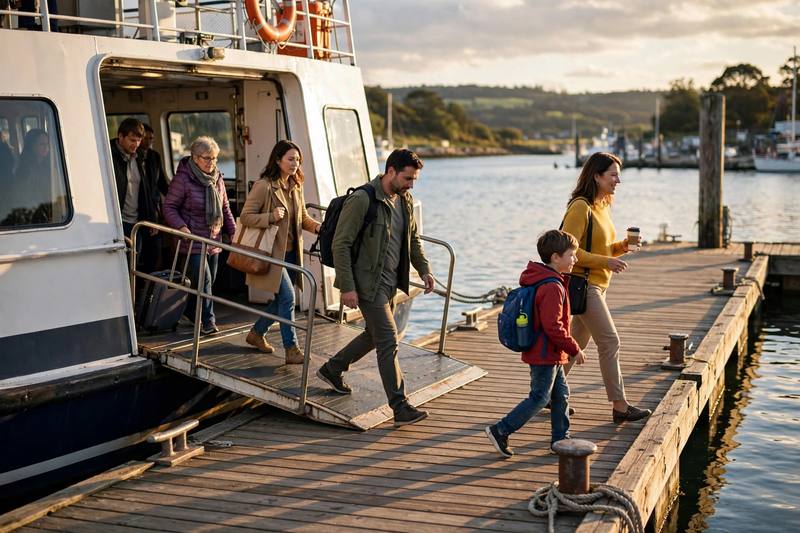
Podcast: Travel & Transport
Listen to today’s conversation.
📝 Podcast Transcript
Welcome back to Word Kitchen, the show where we cook up English vocabulary one delicious conversation at a time. I am Maya.
And I am Lena. And Maya, today we are doing something a little different. We are going on a journey.
A journey! I love that. Not just a quick flight somewhere, but a real adventure. What do you call the biggest, most life changing kind of journey, Lena?
An odyssey. An odyssey is a long journey full of adventures, surprises, and stories. Every odyssey changes the person who takes it.
That is the perfect word to start with. I think everyone deserves one great odyssey in their life. My cousin's odyssey across South America lasted almost eleven months. She came back a completely different person.
An odyssey like that stays with you forever. Every letter she sent home was another chapter of that odyssey. I still get goosebumps thinking about it.
But here is the thing, Lena. Even the wildest odyssey needs some kind of plan. You cannot cross a continent with zero preparation.
True. You need an itinerary. An itinerary is a detailed plan of your journey. It tells you where you will sleep, what train you will take, and what you will see each day.
My last itinerary was a spreadsheet with twelve tabs. Honestly, writing that itinerary took longer than packing.
That might be too much itinerary. An itinerary should guide you, not control you. The best travelers write a loose itinerary and leave space for magic.
Exactly. My friend's itinerary fell apart on day two of her trip, and she says that broken itinerary gave her the best week of her life. So respect the itinerary, but do not worship it.
Good advice. Now, what happens when the plan breaks? That is when you meet our next word.
Let me guess. A detour?
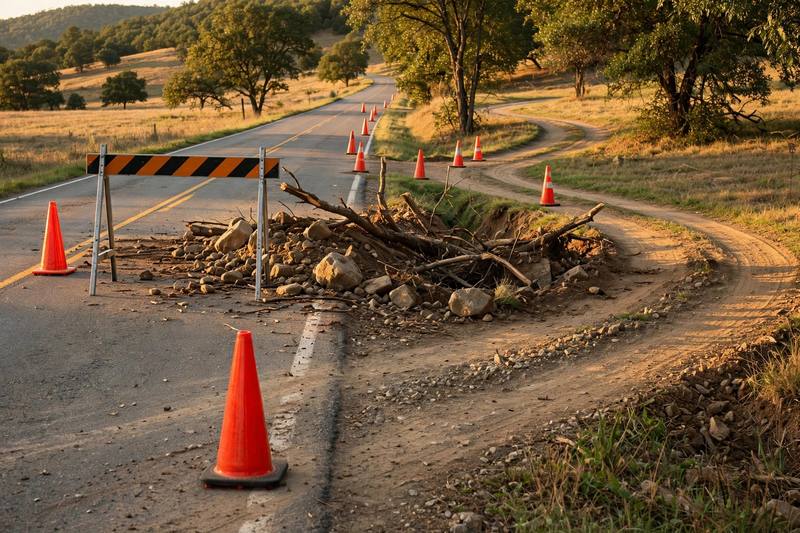
Exactly. A detour is a longer way around something, usually because the direct road is blocked. And a detour is secretly a gift.
I agree. On my mountain road trip, a landslide forced us onto a detour that added three hours. That detour became the most beautiful drive of the entire trip.
See? The detour always delivers. A detour feels like a problem at first, but later it becomes your favorite story. Never be afraid of a detour.
I tell my students the same thing about life. When life gives you a detour, take it with curiosity.
Now let us go bigger. What about a journey with a real mission? That is an expedition.
An expedition is an organized journey with a purpose. Not a vacation, an expedition. Scientists, filmmakers, explorers.
Did you see that documentary about the expedition to Antarctica? That expedition spent two years preparing. Every person on that expedition had to learn survival skills.
Incredible. An expedition like that tests everything you have. I could never join a polar expedition, but a desert expedition? Maybe.
Speaking of deserts, long before airplanes, traders crossed deserts in a caravan.
A caravan! A group of travelers moving together. Picture a caravan of camels carrying silk and spices. That image is pure romance.
It was practical too. One traveler alone could get lost or robbed, but a caravan protected everyone. Safety in numbers.
And at night the whole caravan would stop and make camp. I can see the fires, smell the cooking, hear the stories. The caravan was a moving village.
The great silk road was crossed by caravan for centuries. Every caravan carried not just goods, but ideas, languages, and recipes.
But not everyone traveled in a group. Some walked alone. And the old word for a lonely traveler is wayfarer.
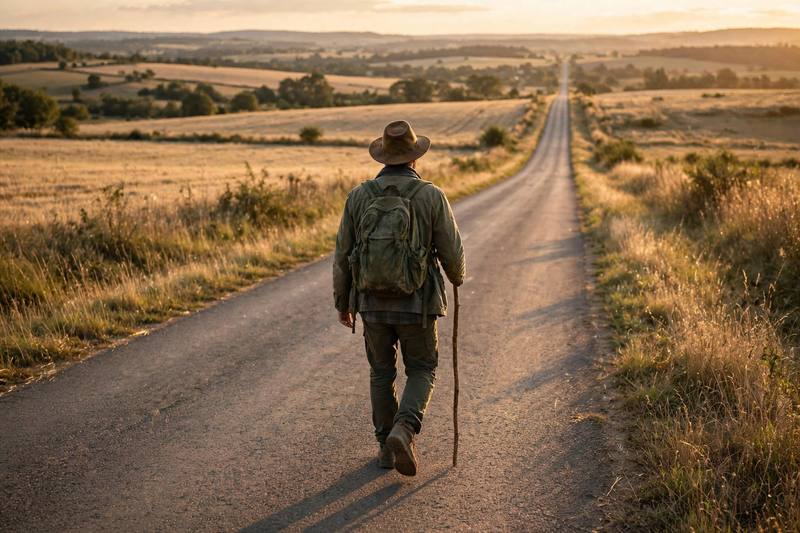
Wayfarer. Such a beautiful, old fashioned word. A wayfarer is a traveler, often on foot, walking from place to place.
Picture a tired wayfarer arriving at a small inn at sunset. That wayfarer has seen things no tourist ever sees.
I am a little jealous of the wayfarer. No schedule, no itinerary, just walking. The wayfarer's journey is the slowest kind of odyssey.
And the deepest. When you walk, you notice everything. A wayfarer might spend a whole month just crossing one valley.
Every wayfarer has a story worth hearing. If you ever meet a wayfarer, buy them dinner and listen.
Now, what if you stop walking for a while? That is a sojourn.
A sojourn is a temporary stay in one place during your travels. My friend's sojourn in Kyoto lasted two months.
And during that sojourn, she learned the tea ceremony, made local friends, and basically became a different person. A sojourn lets a place change you.
My dream is a sojourn in a small Italian village. One long, delicious sojourn learning to cook from a grandmother who speaks no English.
A sojourn is the opposite of rushing. If an odyssey is the whole book, a sojourn is your favorite chapter.
Now for something smaller. What about a short trip, just for fun? That is an excursion.
An excursion is a short trip, usually for pleasure. The hotel offered a free excursion to the coast, so we joined the morning excursion.
Excursions are perfect for tasting a place. I took an excursion to the old town last spring, and that little excursion convinced me to return for a full sojourn.
See the connection? An excursion can lead to a sojourn, and a sojourn can become part of a lifelong odyssey.
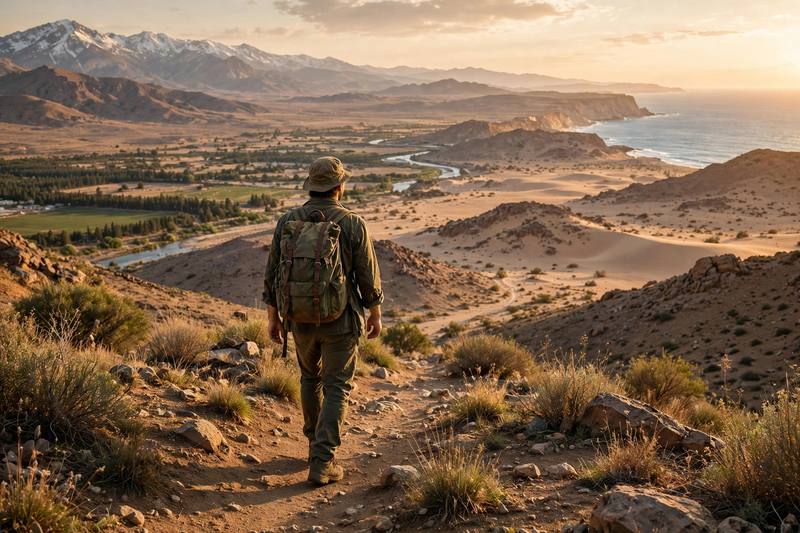
Let us talk about the hard part of travel. Sometimes you must traverse difficult land to reach your goal.
Traverse means to travel across or through something. Explorers had to traverse a mountain pass in a snowstorm.
To traverse that pass took four days. Every step to traverse the ice was dangerous. But once you traverse something hard, the pride lasts forever.
I once helped traverse a desert in an old jeep with friends. We did not walk it, but to traverse all that emptiness still felt like a real achievement.
And then, after every sea journey, comes the moment when you disembark.
Disembark means to leave a ship, an airplane, or a train. After three days at sea, we finally got to disembark.
The passengers began to disembark at dawn. When you disembark in a new country, even the air smells different. To disembark is to begin a new chapter.
I love that moment. You disembark, you step onto the dock, and your odyssey officially begins.
Or ends. We got a letter from a listener, Sara, whose grandmother's odyssey ended when she had to disembark in a port she had never heard of.
And that forced disembark became a sojourn that lasted forty years. She built a whole life there. What a story.
Sara says her grandmother always told her, the itinerary is just paper, but the detour is where life happens.
I want to try a little game with these words, Lena. I will describe a trip, and you tell me which words fit.
I love games. Go.
Okay. You plan a month in Portugal. You write down every hotel and train.
That is an itinerary, obviously. A very organized itinerary.
Halfway through, the railway workers go on strike, so you rent a car and drive along the coast instead.
A detour! The classic forced detour that becomes the highlight.
You fall in love with a fishing village and stay for three weeks, renting a room above a bakery.
That is a sojourn. A perfect, unplanned sojourn.
From there you join a group of hikers walking the old pilgrim road to the border.
Now you are part of a caravan. Or are you a wayfarer? Hmm.
Both, in a way. A wayfarer at heart, but walking with a caravan for safety. And the whole month together?
An odyssey. A small, personal odyssey. I win.
You do. And that is the point, really. These words are not just vocabulary. They are ten different ways to travel, from the careful itinerary to the brave traverse of unknown land.
And every traveler will disembark somewhere new one day, and take an excursion they will never forget.
That is beautiful. Let us do a quick recap of our ten words. Number one: itinerary.
An itinerary is a detailed plan of a journey. Write your itinerary, but keep it flexible.
Sojourn. A temporary stay in one place. Take a sojourn somewhere and let it change you.
Detour. A longer way around. Embrace the detour.
Expedition. An organized journey with a purpose. Maybe one day we will join an expedition.
Caravan. A group traveling together. The old trade routes were crossed by caravan.
Wayfarer. A traveler, often on foot and alone. Every wayfarer carries a story.
Odyssey. A long adventurous journey. Go find your own odyssey.
Excursion. A short trip for fun. Take an excursion this weekend.
Traverse. To travel across something difficult. Dare to traverse the hard road.
And disembark. To leave a ship, plane, or train. One day, disembark somewhere brand new.
Ten words, ten doors into the world of travel. Which one is your favorite, listeners? Tell us in the comments.
Thanks for wandering with us on Word Kitchen. I am Maya.
And I am Lena. Until next time, keep your itinerary loose, love your detours, and never stop moving.
🎙 Try Shadowing free sample
Listen and repeat along with the studio audio. Full shadowing practice with pronunciation scoring is in the app.
The Wayfarer's Map
Long ago, a young wayfarer left her village with nothing but a map and a dream.
Her itinerary listed twelve towns, but she secretly hoped to ignore it.
Train your speaking
Shadow every sentence with studio audio and get your pronunciation scored — only in the Muse English app.
📝Grammar: Choosing between gerunds and infinitives
A gerund is a verb ending in **-ing** that acts like a noun. An infinitive is **to** plus the base verb, as in **to disembark** or **to traverse**. Use the **gerund after prepositions** and after verbs like **enjoy, avoid, suggest, finish**. She suggested **extending** her sojourn; they finished **planning** the expedition. Use the **infinitive after adjectives** and to express **purpose**. It is also required after verbs like **want, decide, hope, learn**. He decided **to traverse** the valley on foot. Some verbs change meaning with each form. **Remember to disembark** means do not forget;
Master this grammar in the app
Get clear explanations, more examples and interactive exercises.
Keep learning every day
New lessons, podcasts and quizzes daily — free in the Muse English app.