

📖 What is Muse English?
Muse English is a free English learning app with daily lessons across all 6 CEFR levels (A1 Beginner to C2 Proficient). Every day brings new vocabulary, a real podcast conversation, shadowing practice, grammar and quizzes — all at museenglishapp.com.
📚 Vocabulary
10 new words Learn new words with real examples and audio.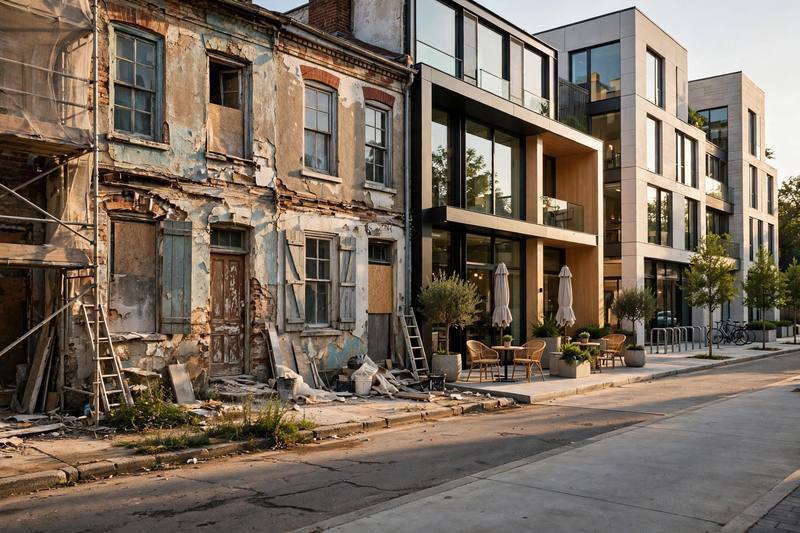
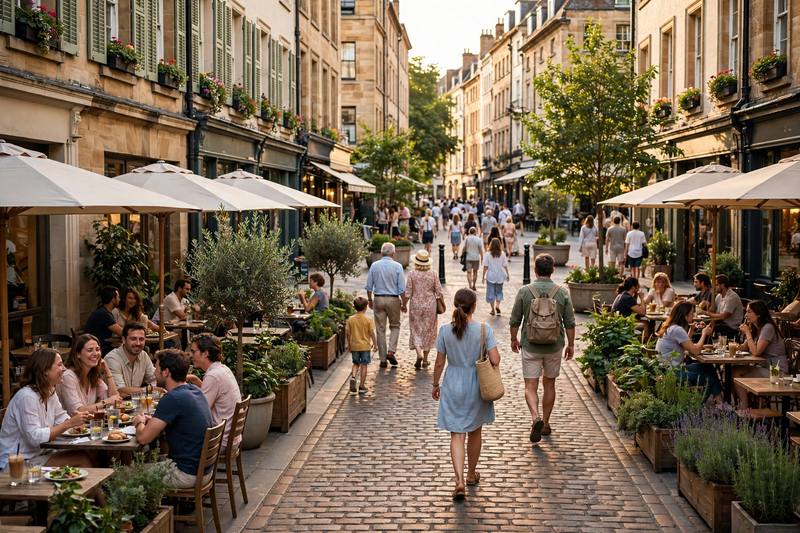
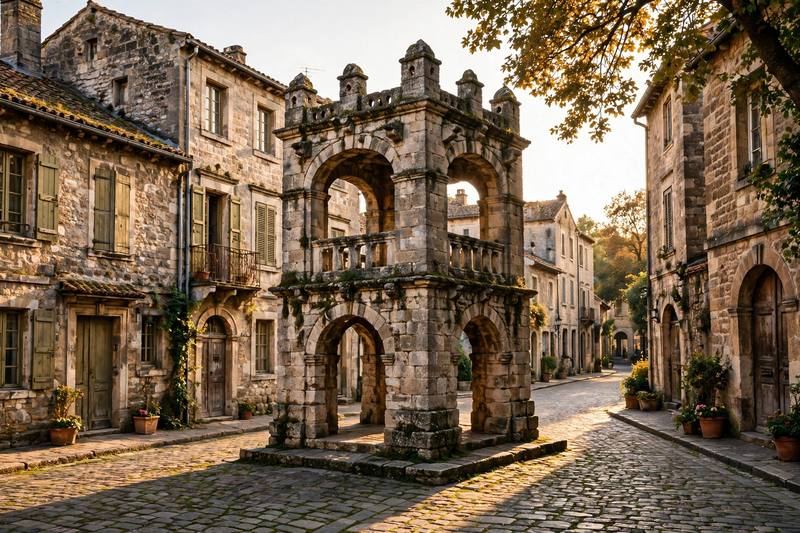
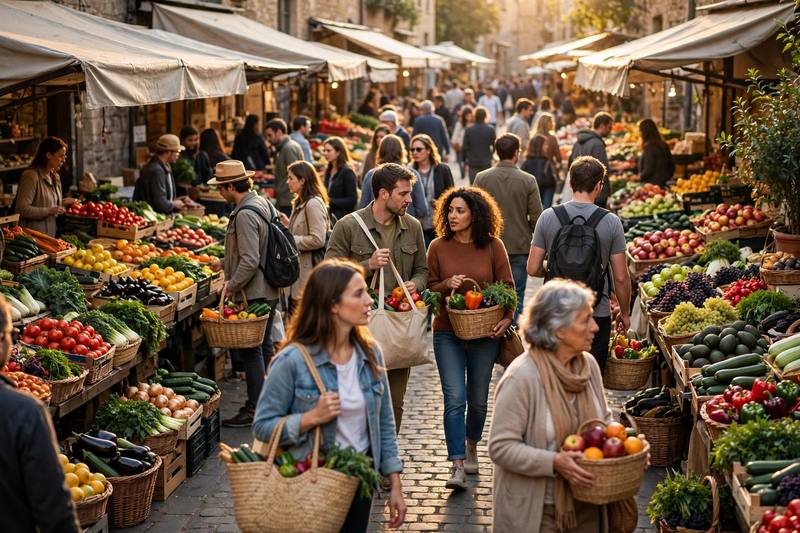
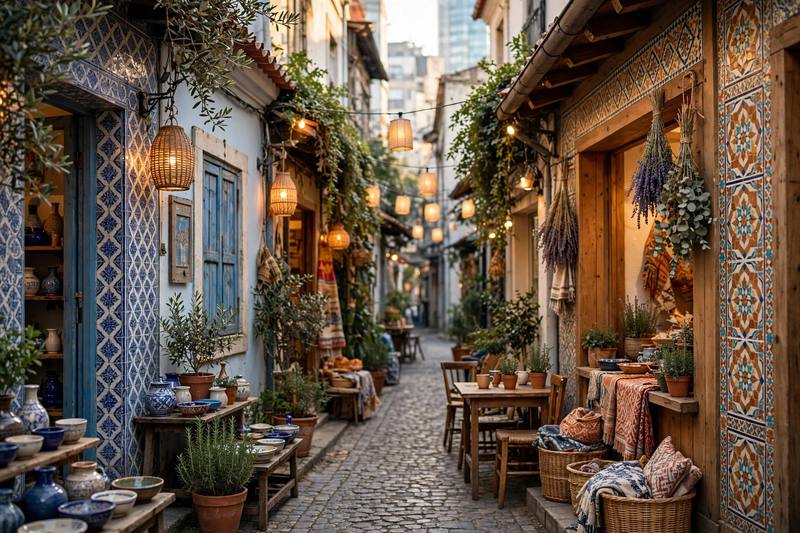
Podcast: Cities & Daily Life
Listen to today’s conversation.
📝 Podcast Transcript
Welcome back to Word Kitchen, where we cook up fresh English vocabulary together. I am Maya.
And I am Lena. Today's episode is all about cities, because both of us live in a big metropolis, and honestly, city life is the best teacher of English there is.
I love that idea. A metropolis really does throw every kind of word at you, from rent prices to road works to rush hour.
Exactly. I grew up in a small town, so when I moved to the metropolis I was completely overwhelmed. Everywhere I looked there was something I did not have a word for.
Oh, same here. So today we are giving you ten advanced words about city life, and we will use every one of them again and again until they feel like old friends.
Let us start with one of my favorites. Gentrification. Say it slowly: gentrification.
Gentrification. It is when an old, run-down neighborhood gets renovated, rents go up, fancy coffee shops move in, and the people who lived there for years can no longer afford it.
Right. In our neighborhood, gentrification happened almost overnight. One year it was quiet streets and old workshops. The next year it was artisanal bakeries everywhere.
And that is the tension, is it not? Gentrification can bring new life and safer streets, but it also pushes out the original residents. My old street is going through gentrification right now, and half of my neighbors have already moved away.
It is such a loaded word. When you hear gentrification, do you think of progress or of loss?
Honestly, both. Every metropolis struggles with this. The mayor says the city needs investment. The residents say the city is losing its soul to gentrification.
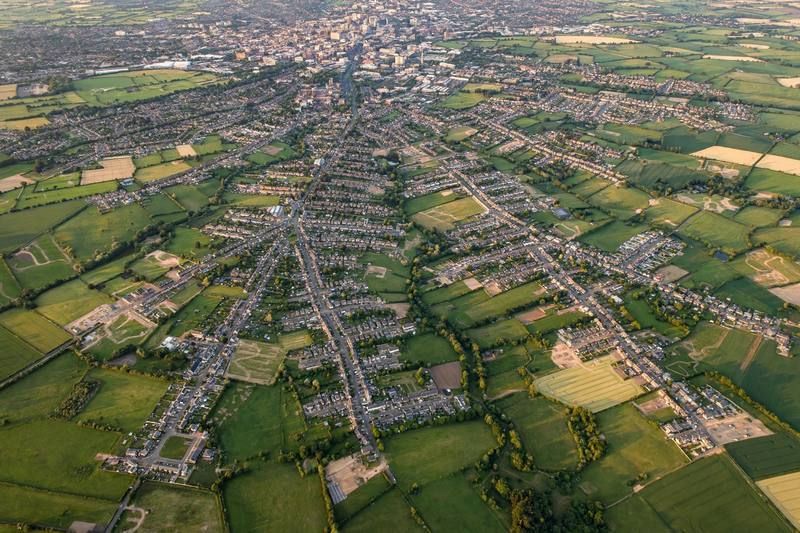
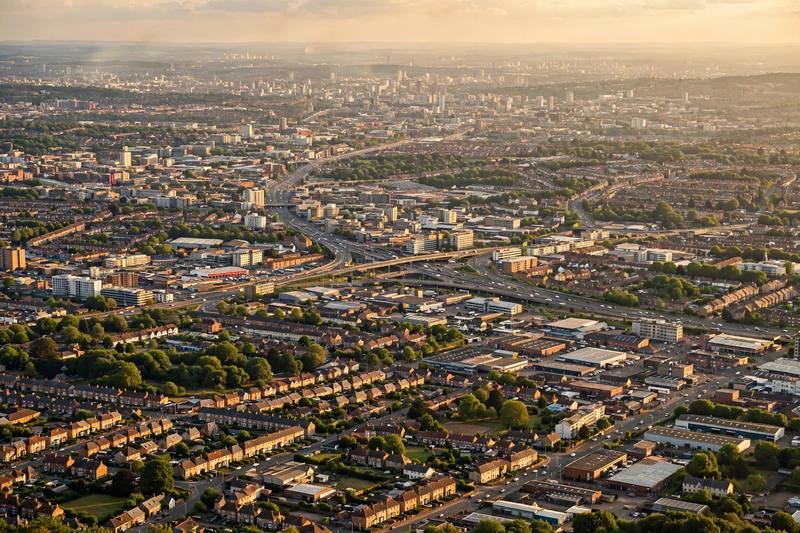
Speaking of cities growing, let us talk about sprawl. Urban sprawl is when a city keeps spreading outward into the countryside, mile after mile of new suburbs.
Sprawl is such a vivid image, like the city is a living thing reaching out its arms. But sprawl has a cost: longer travel times, more traffic, and the loss of farmland.
Absolutely. Where I grew up, the sprawl of the capital swallowed entire villages. Places that used to be farms are now shopping malls.
And sprawl never really stops, does it? Every year the edge of the city moves a little further out, and the sprawl just continues.
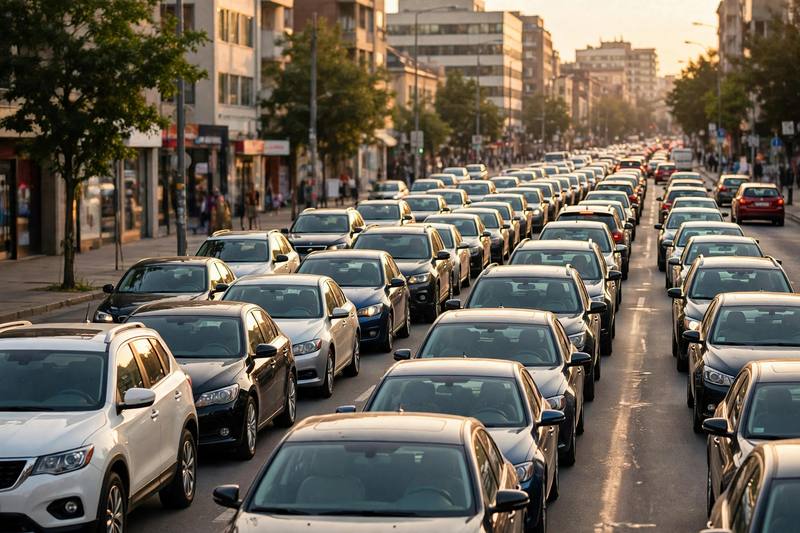
Which brings us to our next word: congestion. When all those new suburbs feed cars into the same highways, you get congestion. Roads so crowded that nothing moves.
Congestion is the word every city worker knows too well. I once sat in congestion so bad that my twenty-minute drive took an hour and a half.
Oh, that is painful. Some cities try a congestion charge, a fee for drivers entering the center during rush hour.
Does it work? A congestion charge helps a little, but honestly the real cure for congestion is better public transport.
True. Less congestion, happier citizens. But as long as the sprawl continues, the congestion problem keeps growing.
Let us pause on a nicer word: heritage. Heritage is everything a city inherits from its past. The old buildings, the traditions, the stories.
Heritage is what gives a metropolis its character. Without heritage, every city would look the same. Glass towers and chain stores, nothing more.
I love cities that protect their heritage. In my city, they list historic buildings so developers cannot just knock them down, and that heritage makes walking downtown feel like time travel.
My grandmother's street has beautiful old houses, and the council marked the whole street as a heritage area. That heritage status saved it from a highway project.
Beautiful. And heritage can fight back against gentrification too. When a neighborhood's heritage is protected, developers cannot simply erase it.
That is a great point. Heritage gives residents something to defend.
Now a street word: pedestrianize. To pedestrianize a street means to close it to cars so only people can walk there.
I wish more cities would pedestrianize their centers. They decided to pedestrianize our market square last spring, and it completely changed the area.
What changed?
Cafes put tables outside, kids played safely, and the air was cleaner. When you pedestrianize a road, you give it back to people.
That is the dream. A pedestrianized old town is one of my favorite things in any metropolis. They should pedestrianize far more streets than they do.
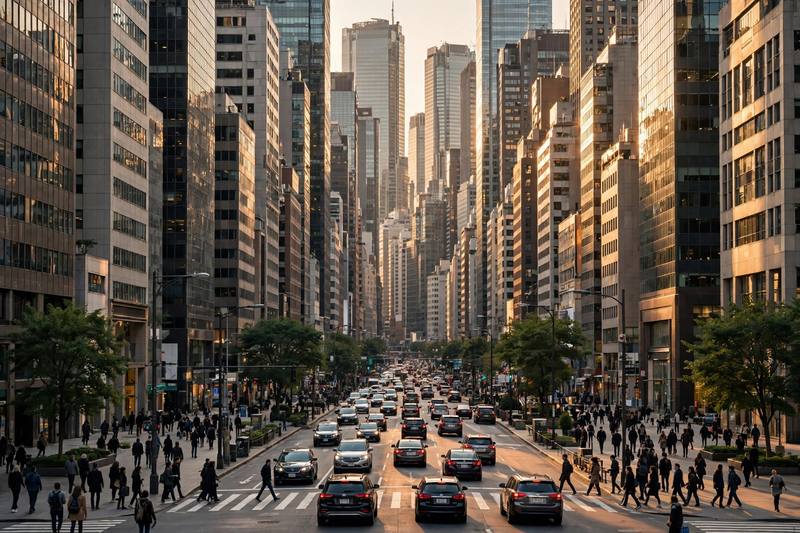
Agreed. And here is a lively one: bustle. The bustle of a city is its busy, energetic hum. Crowds, traffic, vendors shouting, life everywhere.
I miss the bustle when I leave the city. The bustle of the night market, the bustle of the morning rush. It is like the city's heartbeat.
My friend moved to the suburbs and said she could not sleep because it was too quiet. She missed the bustle. Can you imagine?
Totally. But the bustle can exhaust you too. Sometimes I escape the bustle for a weekend, then come back missing it all over again.
Cities are contradictions like that. The bustle wears you down and lifts you up at the same time.
Now here is a word with flavor: enclave. An enclave is a small area with its own distinct culture tucked inside a bigger one.
Like a little world inside the city. The Portuguese enclave in our east end has the best bakeries, and during their street festival the whole enclave smells amazing.
Every metropolis has enclaves. My favorite enclave is the artists' quarter, full of galleries and murals.
Enclaves are proof that a big city can hold many small cities inside it. I once lived next to an enclave of musicians, and I fell asleep to violin music every night.
That is wonderful. And sometimes gentrification threatens an enclave, when rents rise and the community that made the enclave special has to leave.
Sadly true. Protecting an enclave is like protecting heritage. It is about keeping the city's soul alive.
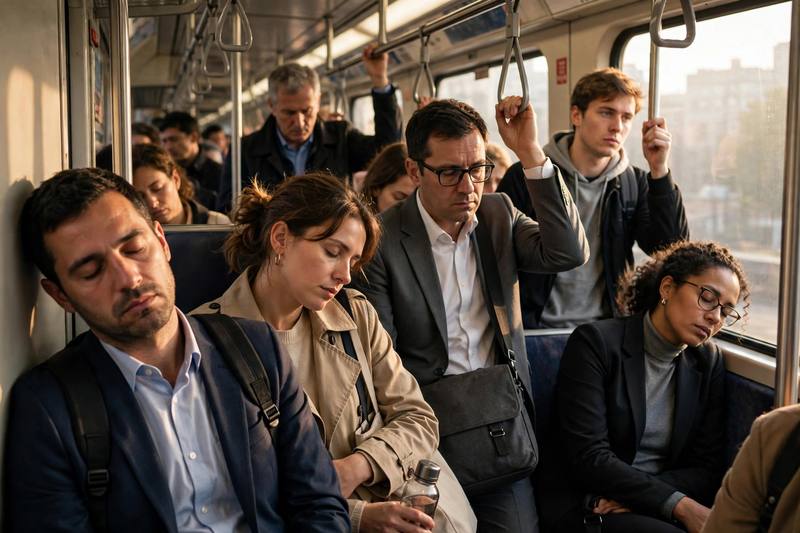
Okay, a word we all live every day: commute. Your commute is your regular trip between home and work.
Ugh, the commute. My commute is only thirty minutes, but my brother's commute is two hours each way. That commute is eating his life.
A long commute is one of the hidden costs of sprawl. People move far out to escape the congestion, then spend their mornings in a commute back into the city.
The trick is to make the commute pleasant. Podcasts, audiobooks, a good playlist. My commute is my Word Kitchen time.
Mine too. And if your commute is on a train, you can read. If it is in a car stuck in congestion, at least the radio keeps you company.
Here is our last word, a big one: conurbation. A conurbation is what you get when several cities grow so much that they merge into one giant urban area.
A conurbation is basically a metropolis that ate its neighbors. The conurbation along our coast has no green space left between the towns.
When does a metropolis become a conurbation? I think when you cannot tell where one city ends and the next begins, that is a conurbation.
Exactly. And conurbations bring the biggest challenges: massive congestion, endless sprawl, and commute times that just keep growing.
But a conurbation also means millions of people, endless enclaves, incredible bustle, and heritage from a dozen old towns.
Let us do a quick review of all ten words, so they really stick. Gentrification: the renovation of old neighborhoods that prices out the original residents.
Sprawl: the uncontrolled spread of a city into the countryside.
Congestion: overcrowded roads where traffic barely moves.
Metropolis: a very large, important city, like the metropolis we live in.
Pedestrianize: to close a street to cars so only people can walk. Every city should pedestrianize at least one beautiful street.
Heritage: the historic buildings and traditions a city inherits. Heritage is a city's memory.
Bustle: busy, energetic activity. The bustle is what I fell in love with first.
Enclave: a small, distinct cultural area inside a bigger one. Find your favorite enclave and explore it.
Commute: the daily trip between home and work. May your commute be short and your podcast long.
And conurbation: several cities merged into one giant urban area. The ultimate metropolis.
Quick question for you, Maya. If you had to describe our city in three of these words, which would you pick?
Oh, easy. Metropolis, because of its size. Congestion, because of the traffic. And enclave, because of all the little neighborhoods I love.
Mine would be bustle, gentrification, and heritage. The bustle keeps me energized, the gentrification worries me, and the heritage makes me proud.
I like that. Listeners, what are your three words? Think about it on your next commute.
Now here is our challenge for you this week. Pick one of these words and use it in a real conversation. Tell a friend about the gentrification in your area, or complain about the congestion on your commute.
Or take a walk through a new enclave, and notice the bustle around you. Language lives in the street, not just in books.
And if your city has protected its heritage well, go thank it with a walk down a pedestrianized street.
The sprawl will still be there when you get back. But now you have the words to talk about it.
That is all for today's Word Kitchen. Ten new city words, cooked fresh and served hot.
Gentrification, sprawl, congestion, metropolis, pedestrianize, heritage, bustle, enclave, commute, and conurbation. Use them well, and we will see you tomorrow.
Bye everyone.
Bye.
🎙 Try Shadowing free sample
Listen and repeat along with the studio audio. Full shadowing practice with pronunciation scoring is in the app.
A Walk Through the Metropolis
I live in a busy metropolis where the streets never sleep.
Every morning my commute takes me past old factories and new cafes.
Train your speaking
Shadow every sentence with studio audio and get your pronunciation scored — only in the Muse English app.
📝Grammar: Modals of Deduction — might, can't, must
Modals of deduction turn the evidence you see into a logical guess about what is true. **Might** means you think something is possibly true, but you are not certain. Use **must** when you are almost sure your guess is right. The whole street is silent at noon, so the office **must** be empty. Use **can't** when you are almost sure something is impossible or untrue. Remember: the opposite of **must** is **can't** — never mustn't. We often follow these modals with be + -ing for actions happening right now. That **bustle** in the square **must** be the evening market starting up. In positive
Master this grammar in the app
Get clear explanations, more examples and interactive exercises.
Keep learning every day
New lessons, podcasts and quizzes daily — free in the Muse English app.