

📖 What is Muse English?
Muse English is a free English learning app with daily lessons across all 6 CEFR levels (A1 Beginner to C2 Proficient). Every day brings new vocabulary, a real podcast conversation, shadowing practice, grammar and quizzes — all at museenglishapp.com.
📚 Vocabulary
20 new words Learn new words with real examples and audio.


















Podcast: Economics & Finance
Listen to today’s conversation.
📝 Podcast Transcript
Welcome back to Word Kitchen, everyone. I'm Maya.
And I'm Lena. Today we're doing something listeners have been asking for: a full episode on the language of money, markets, and macroeconomics. Twenty words that will make you sound like you actually read the financial pages.
And more importantly, understand them. Economic vocabulary is everywhere, from news headlines to your retirement account. Let's start with a word you hear constantly: leverage. To leverage something means to use borrowed money, or borrowed influence, to increase the scale of what you can do. Imagine you have a hundred dollars, you borrow nine hundred more, and you buy a thousand dollars of stock. That is leverage.
Powerful and dangerous, right? Because leverage magnifies gains, but it also magnifies losses. It's like a crowbar: a small force moves a huge weight, but if that weight falls back, it falls on you.
Perfect image. Now a word that sounds like a drink but is really about freedom: liquidity. Liquidity is how quickly and easily you can turn an asset into cash without losing value. Cash itself is perfectly liquid. A house? Not very liquid. Selling one can take months.
And in a crisis, liquidity is everything. When banks panic, they hoard cash, liquidity dries up, and suddenly even healthy companies cannot borrow. It happened in 2008, and markets still have nightmares about it.
Which brings us to volatility: the degree of rapid, unpredictable price swings. Tech stocks show high volatility; government bonds show low volatility. For traders, volatility is both the risk and the opportunity.
Governments live in fear of two opposite words: deficit and surplus. A deficit is what you get when you spend more than you earn, the gap you must borrow to fill. A surplus is the opposite, money left over after all the bills are paid.
Countries argue endlessly about this. Some say deficits are fine if the money funds productive growth; others say chronic deficits end in tears. Meanwhile Norway sits on a giant surplus from oil, patiently saving for the future.
Okay, here is a fun one: arbitrage. Arbitrage is the elegant trick of buying something cheap in one market and instantly selling it higher in another, pocketing the difference with almost no risk. Say a stock trades at ninety-nine dollars in London and a hundred in New York; computers exploit that arbitrage in milliseconds.
Its wild cousin is speculation. Speculation means betting on risky assets in the hope of a huge profit, driven more by hope and momentum than by fundamentals. Speculation built fortunes in the dot-com era and destroyed just as many.
To borrow safely, lenders want collateral: an asset you pledge as security for a loan. Your house is the collateral for your mortgage. If you cannot pay, the bank takes the collateral.
If you own shares, you hope for a dividend: a payment companies make to shareholders out of their profits. A dividend is literally the company sharing the pie. Many retirees live on dividend income.
And the pie itself is equity: the ownership value in a company or an asset after all debts are subtracted. When you buy stock, you buy equity. When your house price rises faster than your mortgage, your equity grows.
Now, bubbles. Not champagne: a bubble is when prices soar far beyond any realistic value, driven by excitement and speculation. The housing bubble, the dot-com bubble, the tulip bubble of the 1600s. Every bubble pops eventually.
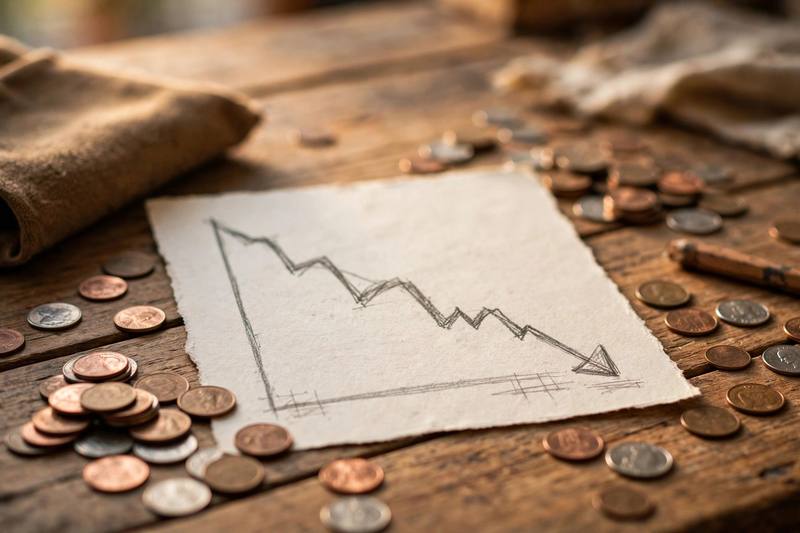
And when the party ends, you get a downturn: a decline in economic activity. Sales drop, companies freeze hiring, confidence fades. A downturn is the economy catching its breath, or catching a cold.
Governments hate downturns, so they reach for stimulus: spending or tax cuts designed to restart growth. A stimulus package is like a defibrillator for the economy, a jolt of money meant to get the heart beating again.
But if the downturn is deep and long, economists call it a recession: technically two consecutive quarters of shrinking output. Recessions cost jobs, and the word alone can frighten markets.
The opposite medicine from stimulus is austerity: strict government spending cuts aimed at shrinking a deficit. After 2008, several European countries tried austerity. Critics argued that cutting spending during a recession just deepens the recession.
A gentler tool is to subsidize: to financially support an industry so its prices fall. Governments subsidize farming, solar panels, electric cars. To subsidize is to give someone a boost with public money.
And when a giant company is about to collapse and take the economy down with it, governments sometimes pay for a bailout: an emergency financial rescue. Banks received bailouts in 2008. The public hated it, but officials argued the alternative was worse.
Smart investors protect themselves with diversification: spreading money across many different assets so that one disaster cannot wipe them out. Do not put all your eggs in one basket; that is diversification in one sentence.
Watch out for inflationary policies, though. Inflationary means tending to cause inflation, a general rise in prices. Printing enormous amounts of money to fund stimulus can be inflationary, and then your savings buy less.
So how do professionals sleep at night? They hedge. To hedge means to make investments that offset the risk of losses. A farmer hedges by locking in a future price for wheat; a fund hedges currency risk with options. A hedge is financial insurance.
Let us pull it all together with a little story. Picture a young investor. She starts with savings and no leverage, just cash, maximum liquidity. She builds equity slowly in index funds and collects small dividends.
Then she grows ambitious. She uses leverage to buy property, pledging it as collateral. For a while it works: a surplus of income, rising prices. But speculation creeps in, and she buys into a bubble.
The bubble bursts. A downturn begins, volatility explodes, and her lender panics about liquidity. Her property slides into a deficit of value against the loan. She stares into the abyss of a recession.
The government answers with stimulus, cuts interest rates, maybe even arranges a targeted bailout for banks. It debates austerity versus spending, chooses to subsidize key industries, and warns against inflationary excess.
Our investor survives because she learned diversification and how to hedge. She rides out the storm, and slowly the economy heals. That is the whole cycle, and now you have the vocabulary to describe it.
Before the recap, let us test these words against real headlines, because that is where C1 learners meet them in the wild. Imagine the news says: "Central bank warns stimulus may turn inflationary."
Translation: the central bank is saying its own emergency spending could cause rising prices. Notice the grammar there: inflationary is an adjective describing the stimulus itself, not the result. A policy can be inflationary; an economy experiences inflation.
Here is another: "Hedge funds increased leverage as volatility returned." A hedge fund, despite the name, does not always hedge; many use heavy leverage, borrowing big to chase returns, precisely when volatility, those wild swings, makes borrowing most dangerous.
I love that irony. And how about: "The bailout came with austerity strings attached." That means the rescue money was conditional on harsh spending cuts. A bailout saves you, but austerity is the price.
One more, and this one separates intermediate from advanced: "Arbitrageurs profited while speculation punished latecomers." Arbitrageurs, the people who do arbitrage, exploit tiny price gaps with almost no risk. Speculators take big risks on momentum. Same market, opposite skill sets.
And a classic exam-style sentence: "Unlike a downturn, a recession requires two quarters of contraction." Precise vocabulary matters. A downturn is any decline; a recession is a technical term with a definition. Examiners love that distinction.
Let us also untangle a pair people mix up: deficit and debt. A deficit is the gap in a single year, spending minus revenue. Debt is the accumulation of all past deficits. A country can run a deficit every year and watch its debt climb, or run a surplus and slowly pay debt down.
Similarly, people confuse dividend with profit. Profit belongs to the company; a dividend is the slice actually paid out to shareholders. A company can be profitable and still pay no dividend, choosing to reinvest instead.
And collateral versus equity. Collateral is what the lender can seize; equity is what you actually own. If your house is worth three hundred thousand and you owe two hundred thousand, your equity is one hundred thousand, and the house is the collateral securing the loan.
Finally, subsidize versus bailout. To subsidize is routine support, like farm payments every year. A bailout is a one-time emergency rescue when collapse is imminent. Subsidies prevent pain; bailouts respond to it.
Beautiful. These are exactly the distinctions that move a learner from B2 to C1: not just knowing the words, but feeling their boundaries.
Time for a lightning recap. Leverage: using borrowed money to amplify results. Liquidity: how fast you can turn assets into cash. Volatility: wild price swings. Deficit: spending more than you earn. Surplus: money left over.
Arbitrage: profiting from price differences between markets. Speculation: risky bets on big wins. Collateral: assets pledged for a loan. Dividend: profit shared with shareholders. Equity: ownership value after debts.
Bubble: prices far above real value. Downturn: economic decline. Stimulus: spending to restart growth. Recession: prolonged contraction. Austerity: harsh spending cuts. Subsidize: support with public money. Bailout: emergency rescue. Diversification: spreading risk. Inflationary: causing inflation. Hedge: protecting against losses.
Twenty words, one economy. This week, try describing a headline with three of them, or explain leverage to a friend. That is how vocabulary sticks.
Thanks for listening to Word Kitchen. I'm Lena.
And I'm Maya. See you next time.
🎙 Try Shadowing free sample
Listen and repeat along with the studio audio. Full shadowing practice with pronunciation scoring is in the app.
Shadowing practice: economics and finance. Listen carefully, then repeat each sentence twice after me.
Shadowing practice: economics and finance. Listen carefully, then repeat each sentence twice after me.
Last year, a young trader named Sara decided to learn how money really moves.
Train your speaking
Shadow every sentence with studio audio and get your pronunciation scored — only in the Muse English app.
📝Grammar: Obligation and prohibition: have to, must, should
At C1 level you know the basics. The real skill is choosing the right modal for the right shade of meaning. Use **have to** for external, general rules: banks **have to** hold enough liquidity by law. Use **must** for obligation the speaker feels personally: I **must** hedge this position before the weekend. The classic exam trap: **mustn't** = prohibition (you **mustn't** trade on insider information). **Don't have to** = no obligation, free to choose (you **don't have to** buy equities). **Needn't** is the formal British **don't have to**. With a perfect infinitive it reaches the past: yo
Master this grammar in the app
Get clear explanations, more examples and interactive exercises.
Keep learning every day
New lessons, podcasts and quizzes daily — free in the Muse English app.