

📖 What is Muse English?
Muse English is a free English learning app with daily lessons across all 6 CEFR levels (A1 Beginner to C2 Proficient). Every day brings new vocabulary, a real podcast conversation, shadowing practice, grammar and quizzes — all at museenglishapp.com.
📚 Vocabulary
10 new words Learn new words with real examples and audio.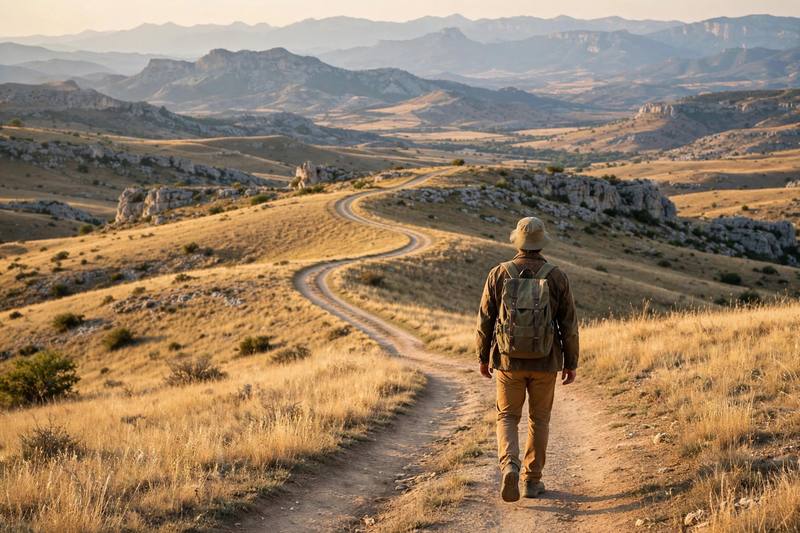



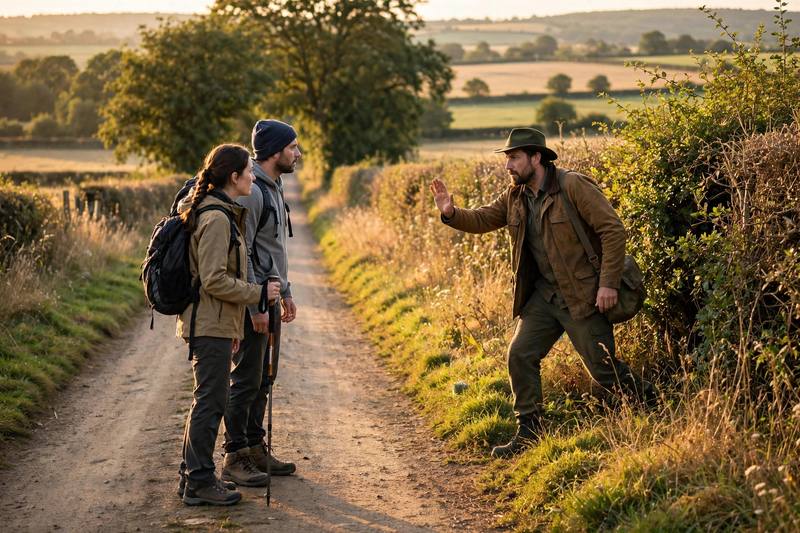

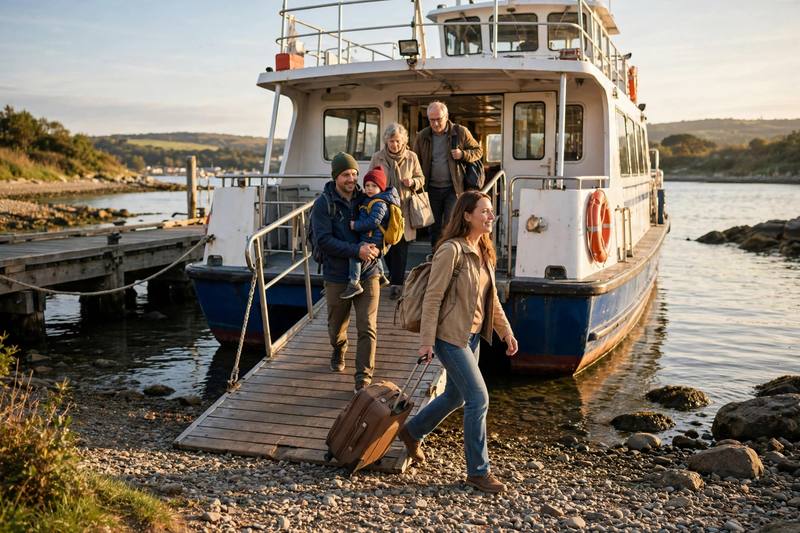
Podcast: Travel & Transport
Listen to today’s conversation.
📝 Podcast Transcript
Welcome back to Word Kitchen, everyone. I'm Maya.
And I'm Lena. Today we're talking about journeys, Maya, and I have to say, your family story is the perfect place to start.
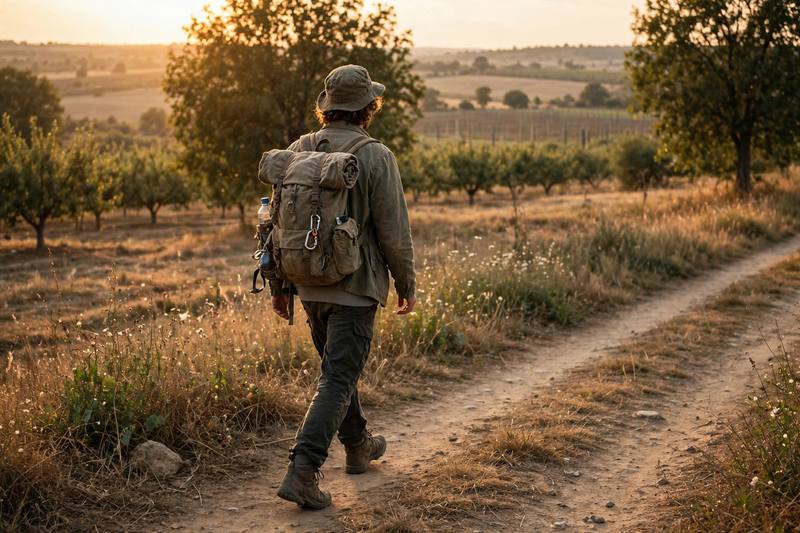
Oh, my uncle's peregrination? He always laughs when I call it that. He says it was just a long holiday, but honestly, it was a proper peregrination, six months on the road through Central Asia with nothing but a backpack and a paper map.
A paper map? In this century? That already tells me everything about him. Where did this peregrination actually take him?
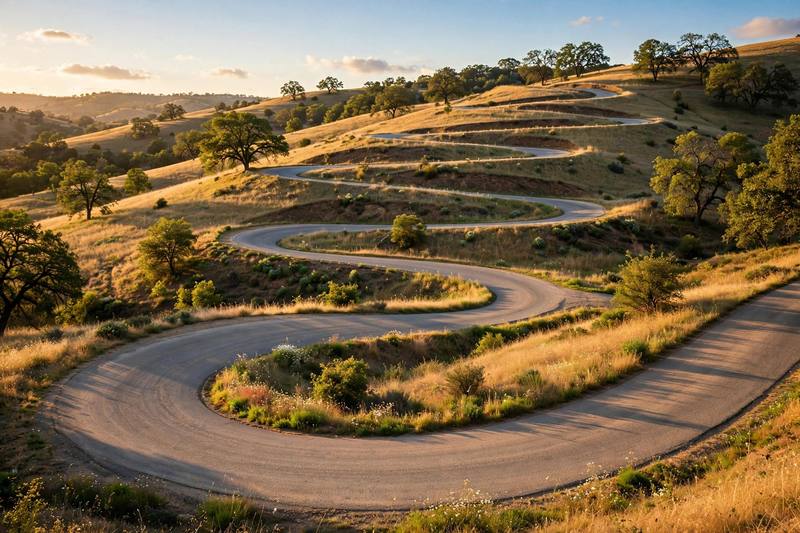
He started in Istanbul, crossed through Georgia and Armenia, then took this wonderfully circuitous route across the steppe. I mean, it was a circuitous route on purpose, because he wanted to avoid the tourist trail. He said the circuitous route always shows you the real country.
That's brave. Or stubborn. Probably both. Did his peregrination have a plan at all, or was he just drifting?
There was a loose plan, but he kept changing it. That's the thing about a real peregrination, you have to let the road decide. He told me the peregrination changed how he thinks about home, which sounds dramatic, but I believe him.
I do too. My own big trip was smaller, but my sojourn in Lisbon really rearranged my brain. Three months, a tiny rented room, and I swear that sojourn taught me more than four years of university.
Three months! That's a real sojourn, not a vacation. What did a typical day look like during your sojourn?
Coffee with the same old man at the same cafe, Portuguese lessons I was terrible at, and long walks. Halfway through my sojourn I stopped counting the days. That's when I knew the sojourn was working, when time stopped mattering.
That's beautiful. And now you're fully peripatetic, aren't you? I mean, you've been peripatetic for two years now, never in one city more than a couple of months.
Guilty. I am thoroughly peripatetic. Some people need roots, but this peripatetic life suits me. My mother says my peripatetic habits worry her, but I tell her wandering is just in my blood now.
I get it. There's something addictive about being peripatetic, always arriving, always leaving. Though I couldn't be peripatetic forever. I'd miss my books.
Speaking of roots, my grandmother's story is pure diaspora. She left her village as a teenager, and our whole family is now scattered across four countries. The diaspora experience shaped everything, the food we eat, the languages we mix.
The diaspora story is so common and so powerful. Every diaspora has its own flavor of homesickness. Do you think the diaspora bond gets weaker with each generation?
Actually no. I think the modern diaspora is stronger than ever, because of video calls and cheap flights. Our diaspora group chat has forty people in it. The diaspora keeps reinventing itself.
That's lovely. My neighbor is an émigré from Poland, and she has this fascinating double perspective. As an émigré, she sees her new country with completely fresh eyes.
Émigrés always notice things locals miss. I met an émigré writer in Berlin who said being an émigré gave her two homes and no home at the same time. Every émigré I know says something like that.
It's a strange, rich identity. She told me the hardest part of being an émigré wasn't the language, it was the small talk at parties. An émigré never quite knows which jokes will land.
Let me tell you about the most circuitous journey I've ever taken. I was trying to get from Marrakech to a tiny desert town, and the bus took the most circuitous path imaginable, through villages that weren't on any map.
A circuitous bus ride through the desert sounds like a nightmare and a dream at once. Did you mind the circuitous detour?
Not at all. Sometimes a circuitous journey is the whole point. If I'd taken the direct road, I'd have missed the wedding we got invited to in some village. That circuitous route gave me the best story of the trip.
That reminds me of what people call an odyssey. Not just a trip, but an odyssey, something that tests you and changes you. My uncle calls his Central Asia trip his odyssey, half joking, half serious.
Every real traveller has one odyssey in them. My odyssey was a cargo ship from Lisbon to Brazil, eleven days at sea. An odyssey like that strips everything down to essentials.
Eleven days on a cargo ship! That's a genuine odyssey. Did the odyssey feel long, or did you settle into the rhythm?
Both. The first days of the odyssey dragged, and then suddenly it was over and I missed it. An odyssey rewires your sense of time, I think.
Now, a warning for travellers. In some places, you can get waylaid, literally. Pickpockets and scammers try to waylay tourists near every major station in Europe. They waylay you with a friendly question, and while you're distracted, your bag is gone.
Oh, that's so true. They tried to waylay me in Naples, a man with a map asking for directions. Classic. You have to stay sharp or they'll waylay you before you even notice.
My uncle said the only time he felt unsafe on his whole peregrination was when two men tried to waylay him outside a night market. He just kept walking and talking loudly, and they gave up. Never let anyone waylay you into a quiet side street, that's his rule.
Good rule. Now let's talk about ships, because embarkation day is my favorite part of any voyage. There's something electric about embarkation, that moment when the gangway goes up.
Embarkation is pure excitement. I love watching the embarkation process, the families waving, the crew calling out. A smooth embarkation sets the tone for the whole trip.
And a chaotic embarkation ruins it! I once had an embarkation delayed by six hours in the rain. But even that embarkation is a memory now. Embarkation day always delivers drama.
The best part of a long voyage, though, is the disembark. After days at sea, to disembark onto solid ground feels like a small miracle. I'll never forget the morning we got to disembark in Alexandria.
That first step when you disembark, your legs still remember the waves. Ports make you disembark in the strangest order, too. I watched three hundred people disembark one by one in the heat.
And then the journey continues. My uncle always says the real journey starts after you disembark, when the postcards stop and real life resumes. To disembark is easy, to arrive is the hard part.
That's profound. You know, thinking about it, every word we've used today describes a different relationship with movement. A peregrination is chosen wandering. A sojourn is a pause. Being peripatetic is a lifestyle.
And the diaspora is movement that becomes identity. An émigré carries two worlds. A circuitous route teaches patience. An odyssey transforms you.
Getting waylaid teaches caution. Embarkation is hope, and to disembark is to begin again. I love how these words fit together like a map.
Me too. So here's my challenge to our listeners. Pick one of these words and use it this week. Tell someone about your own sojourn, however small. Or admit that your commute feels like an odyssey some mornings.
Or confess that you're a little peripatetic at heart. Even a weekend trip can be a tiny peregrination if you let it. And if anyone tries to waylay your plans, literal or otherwise, keep walking and talking loudly, like Maya's uncle.
Words to live by. Actually, Lena, before the recap, let's do something fun. Lightning round. I'll throw out a situation, you match the word. Ready?
Always ready. Hit me.
You spend a month in a mountain cabin, writing, cooking, watching the snow. What is that?
That's a sojourn, a perfect little sojourn. Next.
A friend quits her job, sells everything, and now teaches yoga in a different country every season.
Classic peripatetic life. She is proudly peripatetic. Next.
Your cousin's grandparents left their homeland decades ago, and now the family reunion needs a stadium.
That's the diaspora at work, one big joyful diaspora. Next.
You board a ferry at dawn, the horn sounds, the ropes come off.
Embarkation, my favorite word of the day. And yours?
Mine is odyssey. Because every hard, wonderful journey deserves to be called an odyssey at least once. And listeners, that little game is yours to steal. Play it on your next long drive or your next circuitous train ride.
I love that. Okay, now the real recap.
Before we go, let's do a quick recap. A peregrination is a long wandering journey. A sojourn is a temporary stay. Peripatetic describes someone always on the move.
Diaspora is a scattered community far from its homeland. An émigré is someone who has left their country to live elsewhere. Circuitous means indirect, taking the long way round.
An odyssey is an epic, transformative journey. To waylay is to intercept or ambush someone on their way. Embarkation is boarding a ship or plane, and to disembark is to step off at the end.
Beautiful. That's our show for today. Travel far, travel safe, and keep those words moving.
See you next time on Word Kitchen. Bye, everyone.
Bye.
🎙 Try Shadowing free sample
Listen and repeat along with the studio audio. Full shadowing practice with pronunciation scoring is in the app.
The Cartographer's Daughter
1. When Elena was twelve, her father began a peregrination across three continents, and he never really came home again.
2. A peregrination, he wrote in his letters, is not an escape but a way of paying attention to the world.
Train your speaking
Shadow every sentence with studio audio and get your pronunciation scored — only in the Muse English app.
📝Grammar: Obligation and prohibition - have to, must, should
Both **have to** and **must** express obligation, but they point to different sources of pressure. Use **have to** when the obligation comes from outside you — a law, a regulation, or plain circumstance. A traveller on a tight connection simply **has to** run for the gate. Use **must** when the obligation feels personal — your own decision, your own standards, your own urgency. An émigré renewing a visa might feel she **must** keep every document in perfect order. For prohibition — something forbidden — use **mustn't**. And watch the classic trap: **don't have to** means the opposite, no ob
Master this grammar in the app
Get clear explanations, more examples and interactive exercises.
Keep learning every day
New lessons, podcasts and quizzes daily — free in the Muse English app.