
📖 What is Muse English?
Muse English is a free English learning app with daily lessons across all 6 CEFR levels (A1 Beginner to C2 Proficient). Every day brings new vocabulary, a real podcast conversation, shadowing practice, grammar and quizzes — all at museenglishapp.com.
📚 Vocabulary
10 new words Learn new words with real examples and audio.




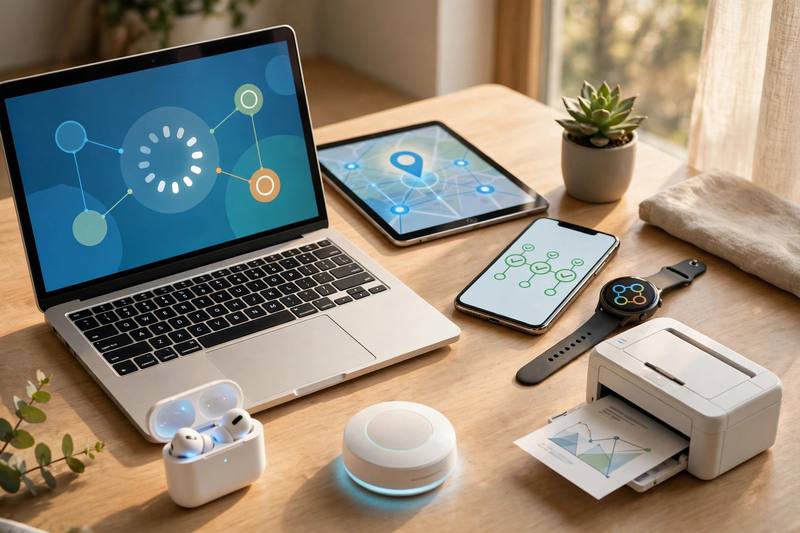

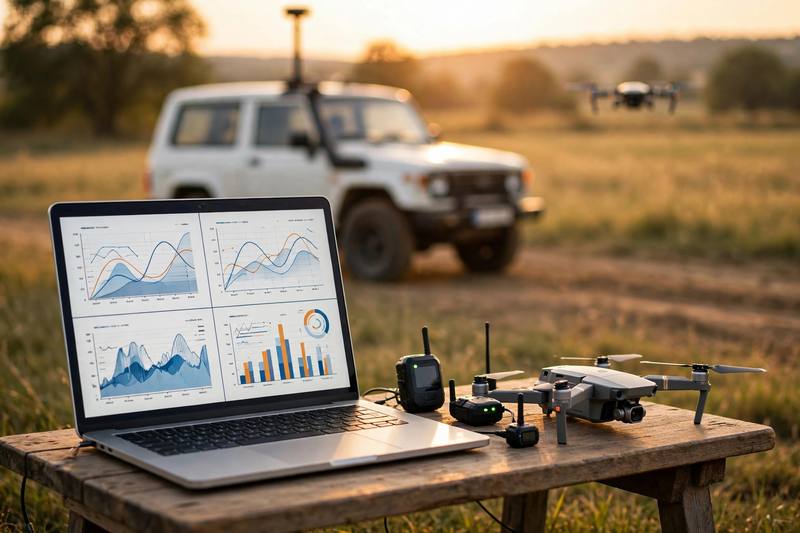
Podcast: Technology
Listen to today’s conversation.
📝 Podcast Transcript
Welcome to Word Kitchen, the show where we cook up ten powerful words and serve them in real conversation. I'm Maya.
And I'm Lena. Today we're diving into technology, Maya. Not the gadgets on your desk, but the bigger forces behind them.
Exactly. Because to really understand modern tech, you need more than vocabulary about phones and apps. You need the ideas that describe how the whole landscape shifts.
And the first of those ideas is paradigm. So, Maya, when someone says a paradigm has shifted, what do they actually mean?
Great question. A paradigm is the dominant model, the shared way of thinking that everyone in a field accepts without questioning. For decades, the paradigm in computing was owning your own servers.
Right, and then the cloud came along and shattered that paradigm. Suddenly the new paradigm was renting computing power by the hour.
That's a perfect example. And once a paradigm takes hold, it shapes everything: how companies hire, how they spend money, even what skills are valuable.
You know, I think we're watching a new paradigm form right now with artificial intelligence. The old paradigm was humans adapting to software. The new paradigm is software adapting to humans.
Well said. So our first word, paradigm, is about those big invisible models of thinking. And when a paradigm changes, the result is usually our second word: disruption.
Disruption. I love this word because it sounds violent, and honestly, sometimes it is. Disruption is what happens when a new technology completely upends an existing market.
Netflix is the classic case. Its disruption of video rental didn't just hurt Blockbuster. It was a total disruption of how we consume entertainment.
And the fascinating thing is that disruption rarely comes from the market leaders. The people who cause disruption are usually outsiders with nothing to lose.
True. Kodak invented the digital camera and still got crushed by the disruption it helped create. That's the brutal irony of disruption.
It makes you wonder which industries are quietly experiencing disruption right now without even realizing it.
Education, maybe. Or healthcare. The disruption is already underway. Okay, word three. This one hits close to home for anyone who's ever bought a phone: obsolescence.
Obsolescence. The slow death of a product. When a technology reaches obsolescence, it's not necessarily broken, it's just been left behind.
Planned obsolescence is the controversial version, where companies deliberately design products to age quickly so you'll buy the next one.
My old laptop is a textbook case of obsolescence. It still works, but the software moved on, and that gap is what obsolescence really means.
And here's the tension: companies fight obsolescence in their own products while trying to accelerate the obsolescence of their competitors.
That's business for you. Now, word four takes us into darker territory: encryption.
Encryption. It sounds technical, but the idea is ancient. Encryption is just scrambling information so only the intended recipient can read it.
Every time you see that little lock icon in your browser, encryption is working silently in the background. Without encryption, online banking would be impossible.
End-to-end encryption goes further. It means even the company running the service can't read your messages. That's why governments keep fighting over encryption.
And that fight over encryption is really a fight about power. Who gets privacy, and who gets access. Encryption sits right at the center of that debate.
Absolutely. Now for something more optimistic: crowdsourcing. Word five.
Crowdsourcing might be my favorite word on today's list. Crowdsourcing is when you hand a problem to the crowd instead of solving it yourself.
Wikipedia is the ultimate crowdsourcing success story. Millions of volunteers built the world's largest encyclopedia through pure crowdsourcing.
And it works for science too. Crowdsourcing has helped astronomers classify galaxies and helped researchers track disease outbreaks.
The magic of crowdsourcing is that no single expert is as smart as a well-organized crowd. Crowdsourcing turns bystanders into contributors.
Though it has limits. Crowdsourcing can't replace deep expertise, it just directs it better. Okay, word six is a mouthful: interoperability.
Interoperability. Say it three times fast. Interoperability is the ability of different systems to work together, and it's quietly one of the most important ideas in tech.
Think about it: you can email someone on a completely different email provider because of interoperability. Your message doesn't care which company you use.
But social media companies hate interoperability. They'd rather lock you in. Real interoperability would let you message friends across rival apps.
Regulators are pushing for more interoperability now, forcing big platforms to open up. Without interoperability, we're stuck in digital walled gardens.
And that lack of interoperability is by design, not by accident. Word seven: scalability.
Scalability. Every startup founder's favorite word. Scalability is the ability of a system to grow, to handle ten users or ten million without falling over.
The test of scalability usually comes at the worst moment, like when a product goes viral overnight. If your scalability is poor, success can literally kill you.
Cloud computing solved scalability for most companies. You used to buy servers for your busiest day of the year. Now scalability is basically rented.
But true scalability isn't just about servers. It's about whether your team, your processes, your whole organization have scalability built in.
Good point. A company can have technical scalability and still collapse under its own growth. Word eight: ransomware.
Ransomware is the word nobody wants to hear in their IT department. Ransomware is malicious software that locks your files and demands payment to free them.
Hospitals have been hit by ransomware. Schools, city governments. A ransomware attack can paralyze an entire organization in hours.
The business of ransomware has become terrifyingly professional. There are ransomware gangs with customer support, believe it or not.
And paying the ransom doesn't guarantee you'll get your data back. The best defense against ransomware is boring: backups, updates, and training.
Boring but effective. Word nine: telemetry.
Telemetry. This is the word for all the data your devices are quietly sending home. Telemetry is the automatic collection of information from remote devices.
Your car uses telemetry to report engine problems to the dealer before you even notice them. Fitness trackers live on telemetry.
Space agencies depend on telemetry. When a spacecraft is millions of miles away, telemetry is the only way to know what's happening.
But telemetry is also a privacy question. How much telemetry should your phone be allowed to collect about you without asking?
Exactly. Telemetry is useful and invasive at the same time, which makes it a perfect word for advanced learners. And our final word: automation.
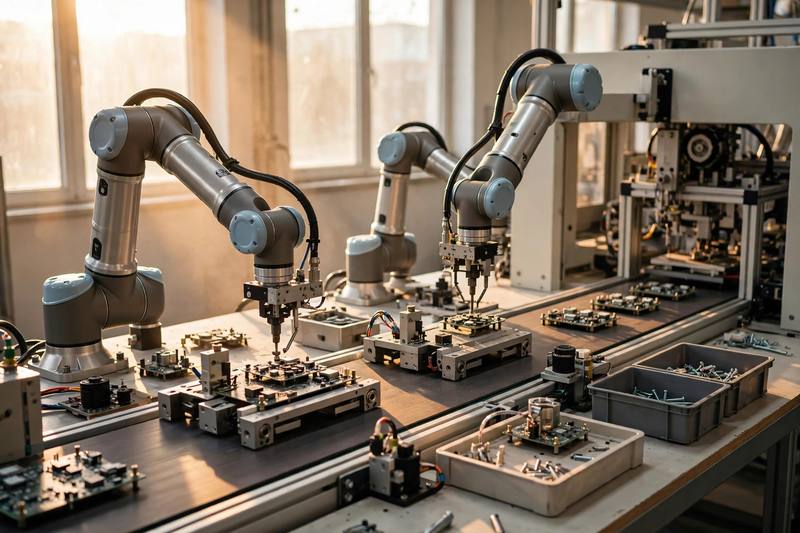
Automation. The use of technology to do work without people. Automation has been reshaping factories for decades, and now it's coming for offices.
The promise of automation is that it frees humans from boring, repetitive tasks. The fear of automation is that it frees humans from jobs altogether.
Both things are true at once. Automation eliminated thousands of warehouse jobs, but it also created entirely new roles nobody had imagined.
The next wave of automation is different, though. It's not just muscles being replaced, it's judgment. And that makes automation the defining challenge of our generation.
You know, Lena, all these ideas connect. The disruption we've been talking about usually starts when someone sees a paradigm nobody else questions.
And the winners of that disruption are the ones whose scalability lets them grow fast, while the losers slide into obsolescence.
Meanwhile behind the scenes, telemetry is feeding companies the data they need, and automation is quietly replacing the jobs that disruption destroys.
It's a whole ecosystem. Even crowdsourcing plays a role, because the crowd spots the next disruption before the experts do.
And encryption? Encryption is what lets all of this happen without everything collapsing into chaos. Without encryption, none of these digital businesses could be trusted.
What about interoperability, though? It feels like the odd one out, the one the industry still hasn't figured out.
It is the battleground. Whoever controls interoperability controls the connections between everything else.
And ransomware is the shadow side of the whole picture. Every new technology creates a new surface for ransomware to attack.
Depressing but true. The same networks that give us scalability and telemetry give criminals their playground.
What a list. Let's do a lightning round. Lena, give me one sentence for each word.
Okay. A paradigm is the dominant model everyone accepts. Disruption upends entire industries. Obsolescence is how products quietly die. Encryption keeps your data readable only by you. Crowdsourcing hands problems to the crowd. Interoperability lets rival systems cooperate. Scalability means growing without breaking. Ransomware holds your files hostage. Telemetry is devices reporting home. Automation does the work without the workers.
Beautiful. Ten words, one kitchen. Before we wrap up, which word surprised you most today, Lena?
Honestly? Obsolescence. We usually think of obsolescence as something that happens to gadgets, but it's really about ideas expiring too.
For me it's telemetry. I'd never thought about how much telemetry my own devices produce every single day.
And that, listeners, is the point of Word Kitchen. Ten words in, ten sharper ways to see the world.
Thanks for cooking with us today, and we'll see you tomorrow with ten more.
See you tomorrow.
🎙 Try Shadowing free sample
Listen and repeat along with the studio audio. Full shadowing practice with pronunciation scoring is in the app.
The Startup That Changed Everything
1. The old paradigm of owning servers collapsed almost overnight.
2. A true paradigm shift rewrites the rules for everyone at once.
Train your speaking
Shadow every sentence with studio audio and get your pronunciation scored — only in the Muse English app.
📝Grammar: Present simple and continuous, action and non-action verbs
Use the **present simple** for things that are always true or happen regularly. Automation reshapes whole industries, and disruption rarely arrives from the market leaders. With **he / she / it**, remember the third-person spelling: he lives, she studies, it encrypts. The old paradigm shifts, and the whole company adapts. For questions, use **ASI** order (Auxiliary, Subject, Infinitive): Do you trust encryption? With a question word, use **QuASI**: How does telemetry actually work? Adverbs of frequency go **before the main verb** and **after be**. Our engineers rarely trust a single backup.
Master this grammar in the app
Get clear explanations, more examples and interactive exercises.
Keep learning every day
New lessons, podcasts and quizzes daily — free in the Muse English app.