

📖 Muse English چیست؟
Muse English یک اپلیکیشن رایگان آموزش زبان انگلیسی است، با درس روزانه برای هر شش سطح، از A1 (مبتدی) تا C2 (تسلط کامل). هر روز لغتهای تازه با معنی فارسی، یک پادکست واقعی، تمرین شدوئینگ، گرامر و آزمون دارید. دربارهٔ اپ
📚 لغتها
۷ لغت تازه لغتهای تازه با معنی فارسی، مثال واقعی و تلفظ.





پادکست: کار و حرفه
گفتوگوی امروز را گوش کنید.
📝 متن پادکست
Welcome to Muse English! I am Maya, and I am so happy you are here with us today.
And I am Lena. Hello, everyone. Today we are talking about work, careers, and building something of your own, step by step.
Our story today follows two friends, Sara and Tom. Sara works for a small building company, and Tom is a carpenter. By the end of the episode, you will hear seven useful work words again and again, in real conversation.
Let us start at the beginning. Sara started her job five years ago, carrying boxes and answering the phone. Last month, everything changed. She was about to be promoted, and she could feel it.
Wait, to be promoted means to get a higher position in your job, right? More responsibility, and usually a better salary too.
Exactly. When you be promoted, your company is saying, we trust you with more. Sara told me, I never dreamed I would be promoted so soon. She worked hard, she learned fast, and finally she did be promoted. Well, she was promoted to office manager.
I love that. And Tom, the carpenter in our story, what does a carpenter actually do all day?
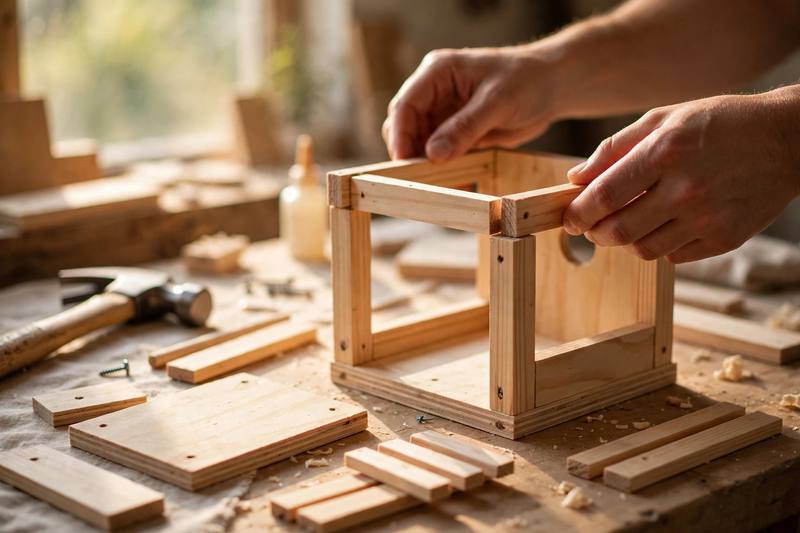
A carpenter builds and repairs things made of wood. Tom the carpenter makes beautiful furniture, fixes doors, and builds wooden stairs. Every carpenter needs patience, because wood does not forgive a quick, careless hand.
My grandfather was a carpenter too. He always said a good carpenter measures twice and cuts once. I still remember the smell of fresh wood in his little workshop.
Beautiful. Now, Sara's company does not only repair wooden things. The company uses brick and stone as well. A brick is a hard block used for building walls, and their houses are famous for their strong red brick walls.
So the company can build a house from the ground up. They build wooden floors with a carpenter, brick walls with builders, and a warm kitchen where a family can cook together.
Yes, and to build well, you need more than strong hands. You need a plan. In fact, Sara's first big job as manager was to write a business plan for the whole company.
A business plan is a detailed plan for a business, is that right? It explains what you will sell, who will buy it, and how you will earn money.
Perfect. A good business plan also shows the money you need to start. Without a business plan, a bank will not give you funding. Sara spent three weeks on that business plan, checking every number twice.
And who reads a business plan first? Usually the boss of the company, the CEO. The CEO is the highest manager in a company, the person who makes the final decisions.
Right. In Sara's company, the CEO is a calm woman named Mrs. Carter. The CEO read Sara's plan slowly, asked ten difficult questions, and then smiled. She said, this is the strongest plan I have seen this year.
That must have felt amazing. But every work story has a difficult day, and our story has one too. What happened on the way to their biggest job?
Oh, that morning was a disaster. Their truck decided to break down on the highway. When a machine or a vehicle stops working, we say it will break down, or it broke down. The engine made a strange noise, and the truck would not move at all.
So to break down is not about a person crying. In this work story, break down means the machine stops working.
Exactly. A car can break down, a washing machine can break down, and even an old computer can break down at the worst possible moment. Tom laughed and said, well, at least our tools cannot break down, because a hammer has no engine.
Before we continue with the story, let me tell you about something that can help your English every single day. The Muse English app gives you fresh words every morning, each one with a photo, a clear meaning, and real pronunciation you can listen to and repeat. You also get this podcast, shadowing stories to practise speaking, fun quizzes, grammar lessons, and points on a leaderboard. It is completely free to install, so join us in the app and learn a little every day.
I use the app on the bus every morning. Five minutes a day really works. Now, back to Sara and Tom. The truck sat on the highway, and the team had a house to build that day.
What did they do? Did the CEO get angry when she heard the news?
Not at all. The CEO called a second truck, and she told Sara, problems happen, but a good manager solves them. That is exactly why Sara was going to be promoted. A manager who stays calm is worth gold.
And Tom? While they waited, the carpenter did not waste a minute. The carpenter repaired a wooden gate for a house near the highway, and the owner was so happy that he offered the company more work.
That is the secret of a good carpenter. A carpenter always carries his tools, and his hands are always ready. By noon, the second truck arrived, and the team finally reached the building site.
The site was empty land with a beautiful view of the river. Their job was to build a small family house there before winter. The first walls would be brick, strong and warm.
Sara opened her business plan on a wooden table and showed everyone the drawing. The business plan said the house needed ten thousand bricks, forty wooden doors, and a kitchen that a carpenter would build by hand.
Wait, every single brick matters in a wall. If one brick is broken, you replace it. If the wall is straight and every brick sits in the right place, the house can stand for a hundred years.
So true. The builders laid brick after brick, row after row, while Tom the carpenter built the wooden frame of the roof. To build is to make something by putting parts together, and that week, everyone could see the house grow.
What a lovely thought. And Sara trusted her team. She told Tom, when this house is finished, I want you to be promoted too. Our company needs a head carpenter, and nobody deserves it more than you.
So Tom could be promoted from carpenter to head carpenter. That means more pay, more respect, and new workers to teach. To be promoted changes your whole working life.
It does. And do you know what Tom said? He said, if I be promoted, I will teach every young carpenter in this town. Well, in natural English he said, if I am promoted, I will teach everyone. Dreams sound good in any grammar.
Ha, that is very Tom. Now, listeners, let us pause the story for a moment, because I want to remind you how much easier learning becomes with a daily habit.
Here is a friendly idea for your English. In the Muse English app, you can shadow real stories out loud, record your voice, answer quizzes, and watch your points grow day after day on the leaderboard. The grammar lessons are short and clear, the podcast feels like a conversation with friends, and every word comes with a photo and pronunciation. Install Muse English for free today, open your level, and start with just one lesson. Your future self will thank you.
Thank you, Lena. Now, winter was coming, and the house was almost ready. But one cold morning, the heating machine decided to break down inside the new house.
Oh no, another break down moment. The family was moving in that weekend, and a cold house would be a terrible start. Sara called the engineer at six in the morning.
Did the engineer fix it, or did the machine break down again the next day?
He fixed it the same day. He explained that a new machine can break down when one small part is wrong. He replaced the part, tested the heating twice, and the house became warm and comfortable.
Good. And the CEO visited the finished house, right? What did the CEO say when she walked through the door?
The CEO walked from room to room, touched the smooth brick wall, opened the wooden kitchen doors that the carpenter had made, and said, this house is proof that our business plan works. The CEO was so pleased that she decided to build ten more houses next year.
Ten more houses. That means more work for every carpenter, more brick walls to build, and maybe a bigger office for Sara.
Exactly. And at the small party that evening, the CEO stood up and announced two pieces of news. First, Sara would officially be promoted to operations manager. The room cheered, because everyone knew she deserved to be promoted.
And the second piece of news?
Tom would be promoted as well. The head carpenter job was his. The CEO said, a company grows when good people grow. Tom smiled and said, tomorrow we build again, and we build even better.
What a perfect ending. Let us look back at our seven words one more time, in short, clear sentences.
To be promoted means to get a higher job. A carpenter works with wood. A brick is a hard building block. To build means to make something from parts. A business plan is a detailed plan for a company. A CEO is the highest manager. And when a machine stops working, it can break down.
Say them with us one time. Be promoted. Break down. Brick. Build. Business plan. Carpenter. CEO. If you can use those words in your own sentences today, your work English is already stronger.
Try this tonight. Write three sentences about your own job or your dream job. Use be promoted in one, business plan in another, and build in the third. Small steps, every day, build a big future.
Thank you for listening to Muse English. We will be back tomorrow with a fresh lesson, new words, and another story. Keep learning, keep smiling, and see you in the app.
Goodbye for now, everyone. Practise your words out loud today, and remember, you are building something great.
🎙 تمرین شدوئینگ نمونهٔ رایگان
گوش کنید و همزمان با صدا بلند تکرار کنید. تمرین کامل شدوئینگ در اپ است: هر جمله را تکرار میکنید و میبینید اپ چند کلمه از آن را تشخیص داده است.
The carpenter arrived early to build a new wooden door.
Sara hoped to be promoted after five years of hard work.
The builders used every strong brick to build the first wall.
صحبت کردن را تمرین کنید
در اپ Muse English همهٔ جملهها را شدوئینگ کنید. اپ گوش میدهد و نشان میدهد چند کلمه از جملهتان را تشخیص داده است.
📝گرامر: Present Perfect vs Past Simple
Use the past simple for a time that is finished. The action ended, and we often say when it happened: yesterday, last week, or in 2019.
Use the present perfect when the past connects to now. The time is not finished, or the exact time is not important.
The past simple form is the second form of the verb: went, had, broke. For questions and negatives, use did: Did you work?
The present perfect form is have or has plus the past participle: I have worked, she has gone.
Use the present perfect for life experience with no time given. *
این گرامر را در اپ کامل یاد بگیرید
توضیح کاملتر، مثالهای بیشتر و تمرین تعاملی.
هر روز ادامه بدهید
هر روز درس، پادکست و آزمون تازه؛ رایگان در اپ Muse English.