

📖 What is Muse English?
Muse English is a free English learning app with daily lessons across all 6 CEFR levels (A1 Beginner to C2 Proficient). Every day brings new vocabulary, a real podcast conversation, shadowing practice, grammar and quizzes — all at museenglishapp.com.
📚 Vocabulary
10 new words Learn new words with real examples and audio.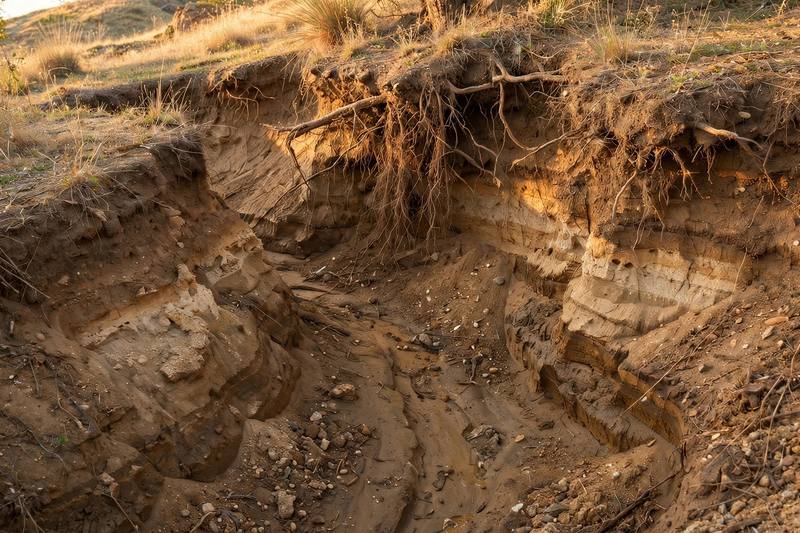
Podcast: Nature & Environment
Listen to today’s conversation.
📝 Podcast Transcript
Welcome back to Word Kitchen, everyone. I am Maya, and with me as always is Lena.
Hello, Maya. Hello to everyone listening. Today we are talking about nature and the environment, and we have ten excellent words that will help you describe the natural world around us.
That is right. Our theme today is nature and the environment. We will explore these ten words through real situations, because that is how you really learn a word, by hearing it again and again in natural conversation.
Let us start with our first word, erosion. Erosion is the gradual wearing away of soil or rock by wind or water.
I first saw real erosion on a trip to the coast. The waves had been hitting the cliffs for hundreds of years, and the erosion had carved deep caves into the rock. It was beautiful, but also a little sad to think the cliffs were slowly disappearing.
Erosion is a natural process, but people can make it much worse. When forests are cut down, nothing holds the soil in place, and then heavy rain causes fast erosion that washes the soil into the rivers.
Exactly. And scientists say that in some coastal towns, erosion is moving the shoreline inland by a few meters every single year. That kind of erosion threatens houses, roads, and whole communities.
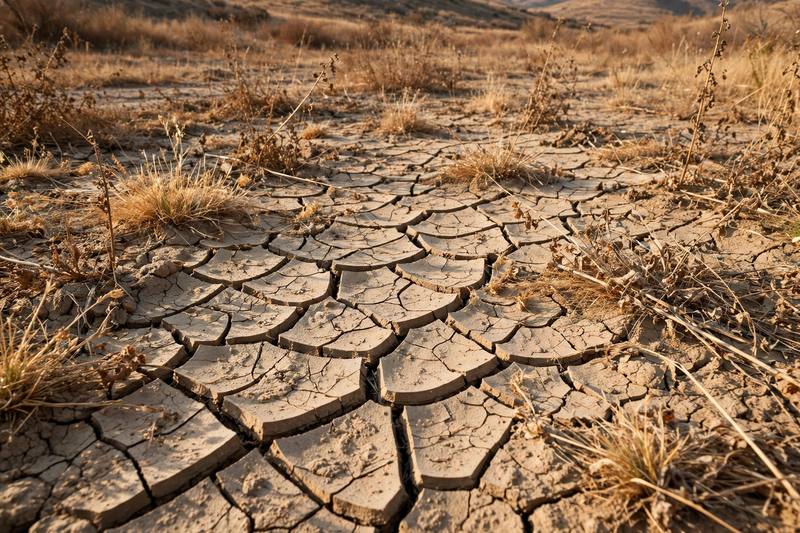
So erosion is a slow but powerful force. Our second word is drought. A drought is a long period of time with very little or no rain.
A few years ago I visited a farming region during a terrible drought. The fields were completely brown, and the farmers told me the drought had destroyed most of their crops. It was shocking to see.
Drought is one of the most serious natural disasters in the world. During a long drought, rivers shrink, lakes dry up, and people may not have enough drinking water.
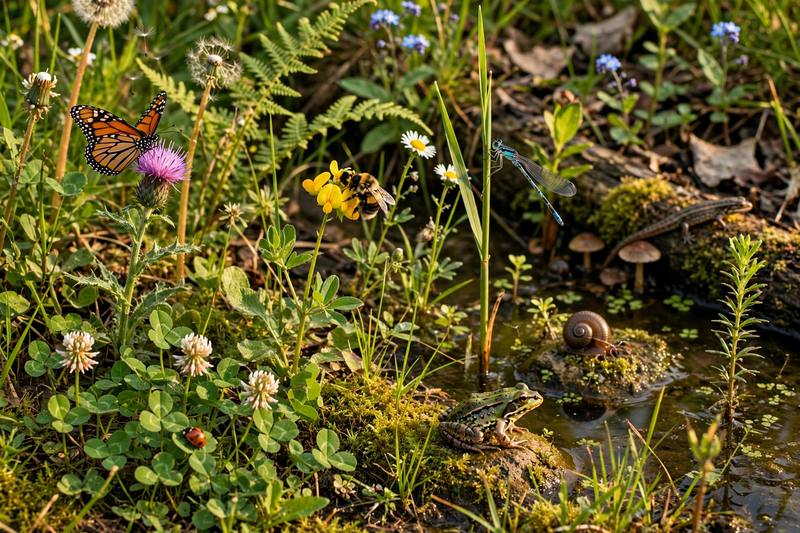
And drought is connected to our third word, biodiversity. Biodiversity means the variety of plants and animals in an area.
The rainforest is the best example of biodiversity on Earth. The biodiversity there is incredible, with thousands of insects, birds, and trees living together in one forest.
But when a drought hits a forest, the biodiversity suffers. Trees die, animals leave, and the rich biodiversity that took centuries to grow can disappear in just a few seasons.
That is why scientists work hard to protect biodiversity everywhere. High biodiversity keeps nature healthy, because every plant and animal has a job to do. If we lose biodiversity, the whole system becomes weak.
Our fourth word is conserve. To conserve means to protect and save something from being wasted or lost.
I try to conserve water at home. Short showers, a full washing machine, and watering the plants only in the evening, that is how I conserve water every day.
That is a great habit. Cities also try to conserve water during a drought, because when it does not rain for months, people must conserve every drop.
And we should conserve more than just water. National parks help us conserve forests, wildlife, and clean air. If we do not conserve these natural treasures now, our children may never see them.
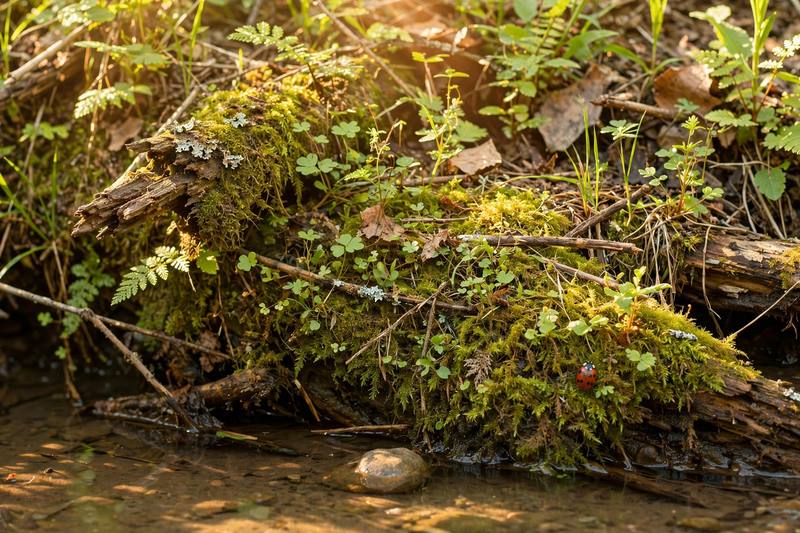
Our fifth word is habitat. A habitat is the natural home where a plant or an animal lives.
I love that word. The Arctic is the natural habitat of the polar bear, and the coral reef is the habitat of thousands of colorful fish.
But habitats are in danger. When a long drought dries up a wetland, that habitat disappears, and the birds that lived there have nowhere to go.
True. And remember our first word, erosion. Coastal erosion can destroy a habitat too, washing away the beaches where sea turtles lay their eggs. Protecting each habitat is part of protecting biodiversity.
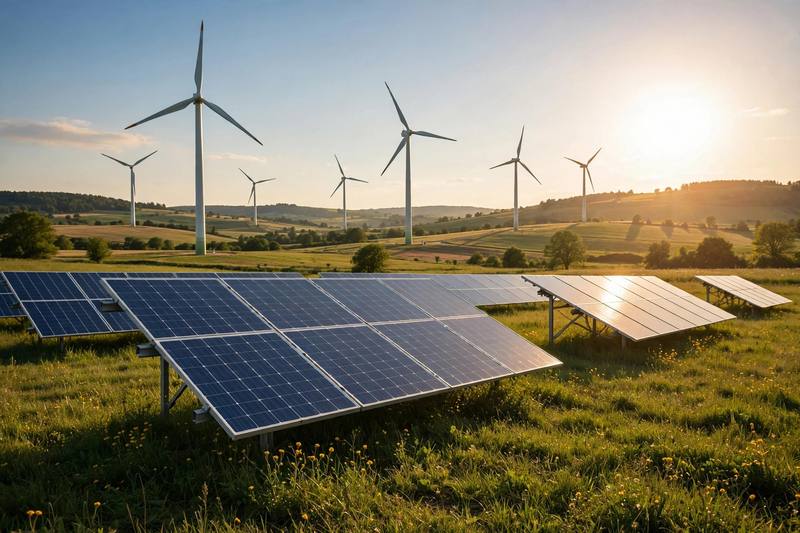
Speaking of protecting nature, our sixth word is renewable. Renewable means coming from a source that never runs out, like the sun or the wind.
Renewable energy is one of the most hopeful stories in the news. Solar panels and wind turbines turn sunlight and wind into electricity, and since the sun and wind never run out, this energy is truly renewable.
More and more countries are investing in renewable power. The cost of renewable energy has fallen so much that in some places it is now cheaper than coal or gas.
And renewable energy helps fight climate change, which is important because climate change makes both drought and erosion worse. So going renewable is a smart way to protect every habitat we talked about.
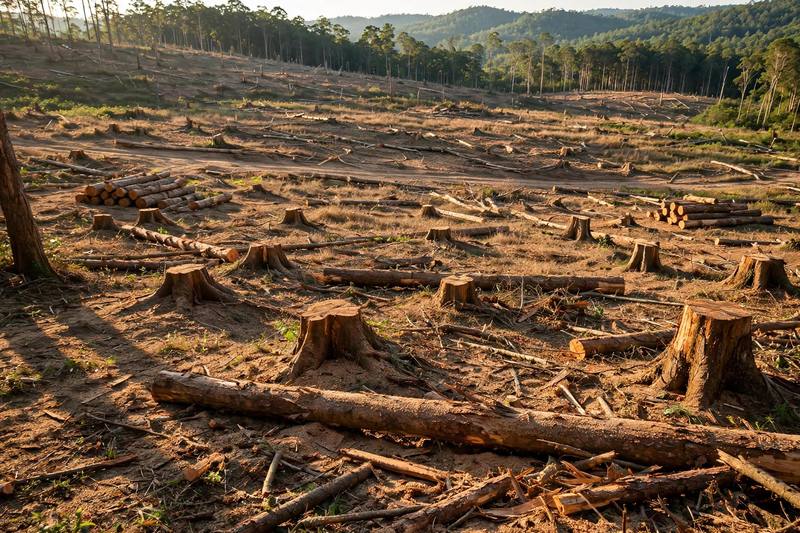
Our seventh word is deforestation. Deforestation is the cutting down of forests over a large area.
Deforestation is heartbreaking. Every year, huge areas of rainforest are lost to deforestation, and with them we lose the incredible biodiversity that lived in those trees.
Deforestation also makes erosion worse. The roots of trees hold the soil together, so when deforestation clears the hills, the next heavy rain washes the soil straight into the rivers.
And deforestation adds to climate change, because trees absorb carbon dioxide. When we stop deforestation, we also slow down the warming that causes more frequent drought.
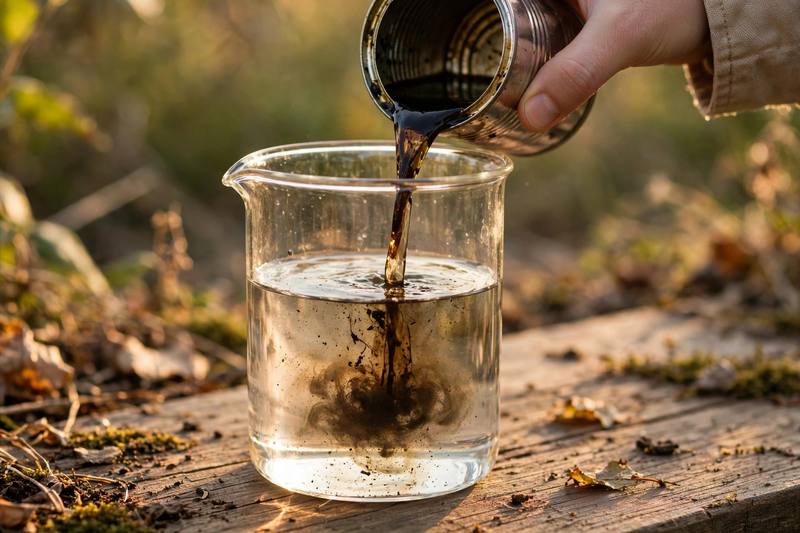
Our eighth word is contaminate. To contaminate means to make something dirty or poisonous.
Last year there was a story about a factory that continued to contaminate the local river. The chemicals would contaminate the water for miles downstream, and fishermen had to stop fishing there.
That is awful. When a river is contaminated, the pollution does not just stay in one place. One spill can contaminate drinking water, kill fish, and damage the whole habitat for years.
It really shows why we must not contaminate our rivers and soil. Once chemicals contaminate the land, cleaning it up can take decades and cost millions of dollars.
Our ninth word is sustainable. Sustainable means able to continue without harming the environment.
Sustainable farming is a great example. Sustainable methods protect the soil and use less water, so the farm can stay productive for generations.
I like that. A sustainable lifestyle is also about small choices, like buying less plastic and choosing renewable energy. If millions of people live in a more sustainable way, the impact is enormous.
And sustainable tourism is growing fast. Travelers visit natural parks in a sustainable way, enjoying the biodiversity without damaging the habitat they came to see.
Our tenth and final word is migrate. To migrate means to move from one region to another with the seasons.
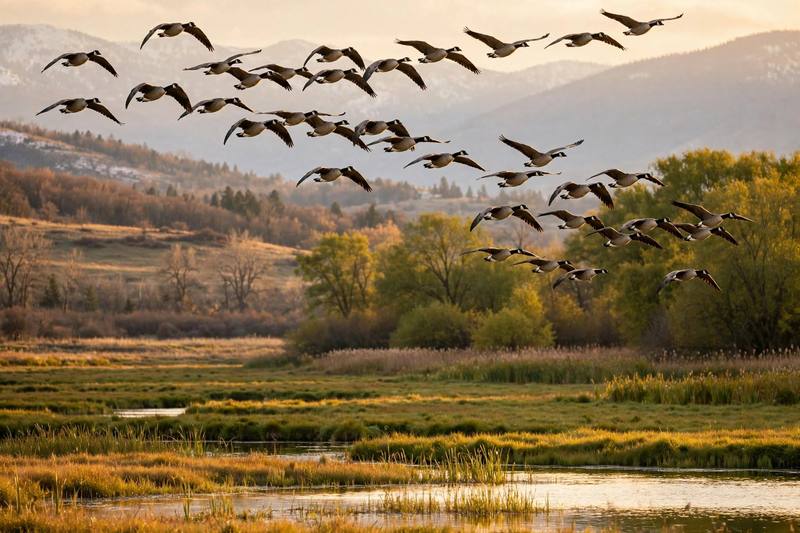
Birds are the most famous example. Every autumn, millions of birds migrate south to warmer places, and every spring they migrate back north to raise their babies.
It is an amazing journey. Some birds migrate thousands of kilometers, crossing deserts and oceans without a map. They just know the way.
But migration is changing. When a drought dries up the lakes where birds stop to rest, or when a damaged habitat no longer offers food, the birds that migrate through that area suffer.
That is the connection between all our words today. Let us review them one more time. Erosion wears away the land. A drought brings long months without rain. Biodiversity is the rich variety of life. We must conserve water and wild places. Every animal needs its habitat. Renewable energy comes from sources that never run out. Deforestation destroys forests. We must never contaminate our rivers. A sustainable future protects nature. And animals migrate across the world to survive.
What a great summary. Let us quickly practice using the words together, like we always do.
Good idea. I will start. Last summer, a severe drought hit our region, and because the soil was so dry, erosion got much worse on the farms.
And the drought forced some animals to leave their natural habitat and migrate to places with more water.
That is exactly how these problems connect. Deforestation near my town made the erosion even worse, and the rivers started to carry the soil away.
It makes me want to do something real. I will conserve more water, support renewable energy, and choose a more sustainable lifestyle.
Me too. And I will teach my friends that we must never contaminate our rivers, because clean water protects biodiversity for everyone.
And maybe one day we will travel to see the birds migrate, in a habitat full of life and biodiversity.
I would love that. Remember, erosion, drought, biodiversity, conserve, habitat, renewable, deforestation, contaminate, sustainable, and migrate, these ten words are now yours.
Use them, say them out loud, and make them part of your English. Thank you for joining us on Word Kitchen today.
See you next time, and take care of the beautiful world around you.
Before we finish, Maya, tell me about that river clean-up you joined last month. Did it really help?
It really did. For years, old waste would contaminate the riverbanks, but our group removed truckloads of plastic, and now the water is cleaner than it has been in a decade.
That is wonderful. When people stop polluting a place and start to conserve it, nature recovers faster than you would expect.
True. We even saw fish return to the river, and a local farmer told us he wants to keep his fields sustainable so the river stays clean.
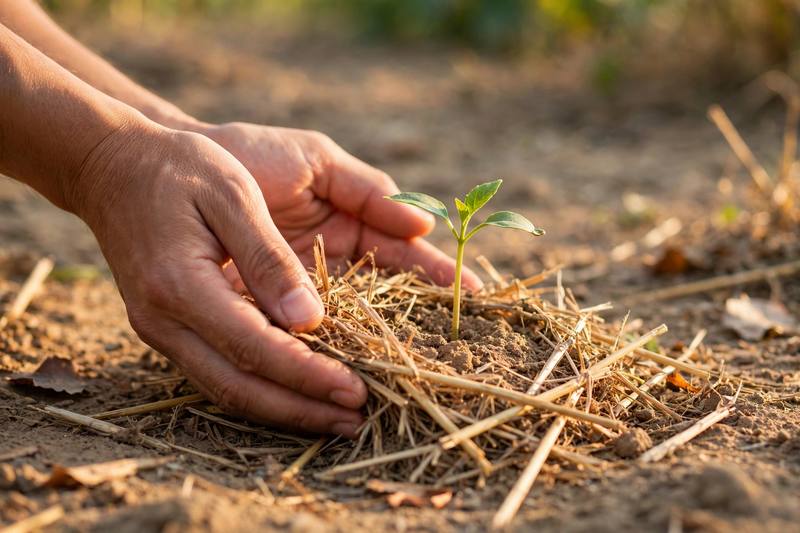
Small actions matter. My neighborhood started a garden on an empty lot to conserve rainwater, and the kids there planted trees to fight erosion on the slope behind the houses.
I love hearing that. Trees in a city also create a new habitat for birds, and on hot days they give shade, which helps everyone survive the heat.
Maybe our listeners can start something similar. Choose one habit, like using renewable power at home or buying less plastic, and keep it sustainable for the whole year.
And share what you learn. When we talk about deforestation or drought with our friends, we spread the ideas that protect biodiversity everywhere.
Exactly. Ten words, one planet, and endless ways to use your English. Thanks for listening, everyone.
🎙 Try Shadowing free sample
Listen and repeat along with the studio audio. Full shadowing practice with pronunciation scoring is in the app.
Strong winds and heavy rain had caused serious erosion along the riverbank.
The erosion washed the soil away year after year.
Engineers said the erosion could be stopped by planting trees.
Train your speaking
Shadow every sentence with studio audio and get your pronunciation scored — only in the Muse English app.
📝Grammar: Present perfect + for / since, present perfect continuous
We use **present perfect + for / since** for things that started in the past and are still true now. Scientists **have studied** the river's biodiversity **for** twenty years. Use **for** + a period of time: two hours, three days, a long time. Use **since** + a point in time: April, 2010, or **since** 2019, when the factory last **contaminated** the river. The town **has tried** to conserve water **since** the great drought of 2019, and it **has worked** **for** five years. Ask about unfinished time with **How long + present perfect**. **How long have** the birds **migrated** through this v
Master this grammar in the app
Get clear explanations, more examples and interactive exercises.
Keep learning every day
New lessons, podcasts and quizzes daily — free in the Muse English app.