

📖 What is Muse English?
Muse English is a free English learning app with daily lessons across all 6 CEFR levels (A1 Beginner to C2 Proficient). Every day brings new vocabulary, a real podcast conversation, shadowing practice, grammar and quizzes — all at museenglishapp.com.
📚 Vocabulary
10 new words Learn new words with real examples and audio.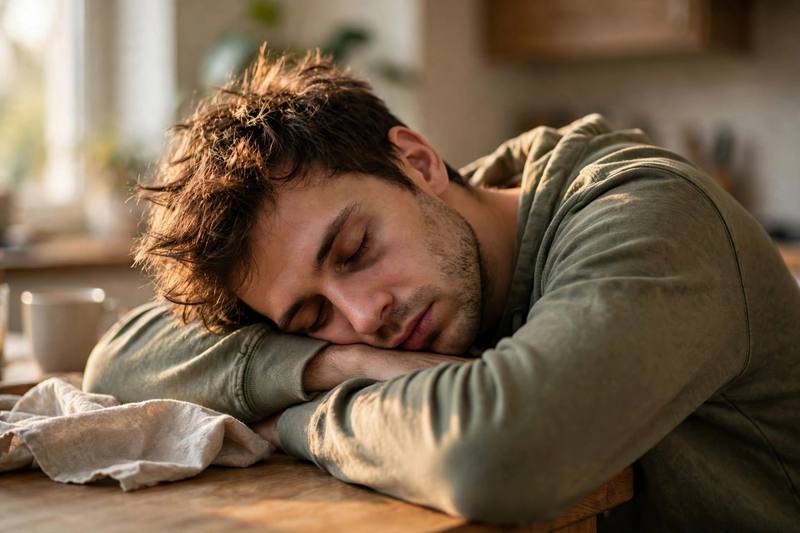

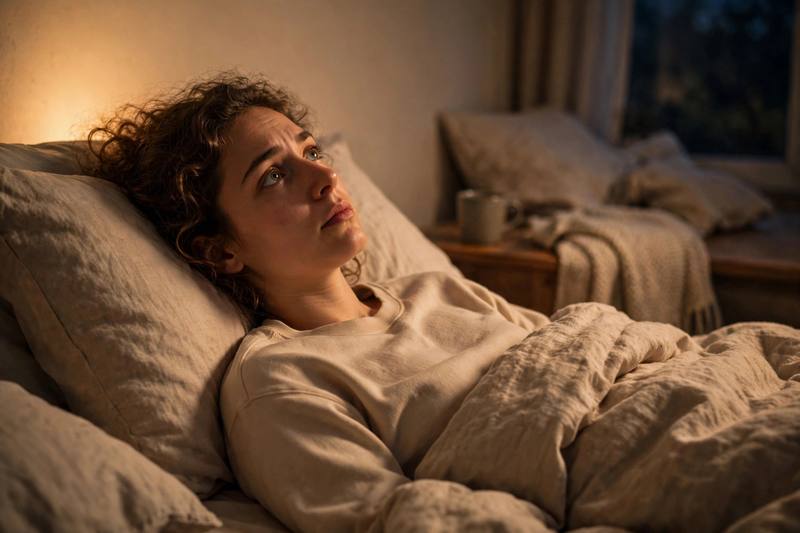
Podcast: Body Signals
Listen to today’s conversation.
📝 Podcast Transcript
Welcome back to Word Kitchen, everyone. I am Maya.
And I am Lena. Today we are talking about something we all have but rarely think about until it complains: our bodies.
Exactly. We are going to learn ten useful words about health and the body, and we will do it the Word Kitchen way, through real stories and real conversation.
I love this topic because my body has been sending me signals all week. For starters, I have been feeling this deep fatigue that no amount of coffee fixes.
Oh no, the afternoon slump? Tell me more.
It started last week. I sleep seven hours, I eat well, but by three in the afternoon, the fatigue just washes over me. Have you ever had fatigue that made even climbing stairs feel like a marathon?
Yes, actually. The thing about fatigue is that rest alone does not always cure it. Sometimes fatigue is your body's way of saying something else is wrong, like stress or a poor diet.
That is what my doctor said too. My doctor says chronic fatigue can come from not sleeping well, even if you think you slept enough.
Once you understand your fatigue, you can actually do something about it. But fatigue is just one signal. Let us talk about another one: nausea. Last summer I felt real nausea on a boat trip.
Oh, seasickness is the worst. What happened?
We were on a small ferry, the waves were huge, and when the nausea hit, I had to sit down and breathe slowly. My friend kept chatting like nothing was wrong.
Nausea is your stomach's way of saying something is off. Even watching the horizon helps some people.
It does. Strong smells can trigger nausea for a lot of people too. The ferry kitchen was frying something, and that made it so much worse.
That sounds awful. But remember, if nausea keeps coming back, it is worth checking with a doctor. One boat trip is normal; every week is not.
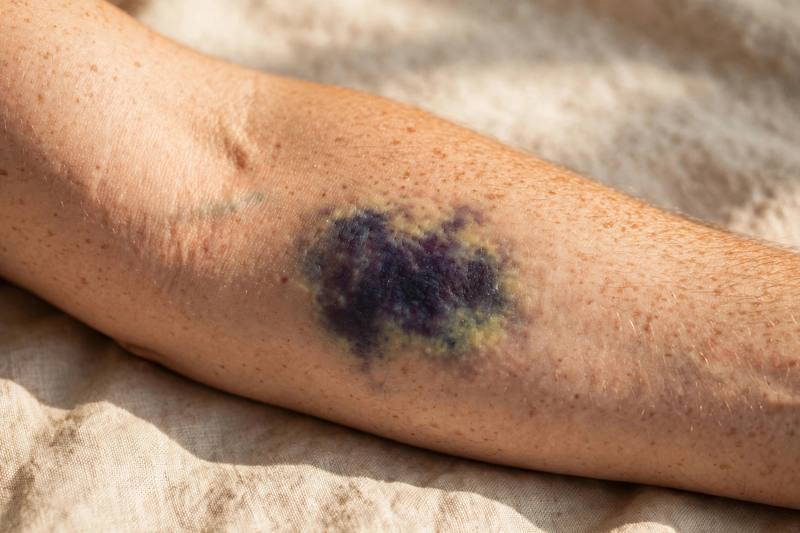
Good advice. Now, a completely different kind of body signal: I woke up this morning with a mysterious bruise on my knee.
A mystery bruise? Let me guess, you have no idea how you got it.
None at all. A bruise is just blood collecting under the skin, and you can get a bruise without even noticing the bump.
That happens to me all the time. The bruise turned from red to purple to yellow. I actually like watching the colors change, it is like a little science experiment on your own leg.
Ha, that is one way to look at it. My bruise from soccer practice took two weeks to fade, but it never hurt much.
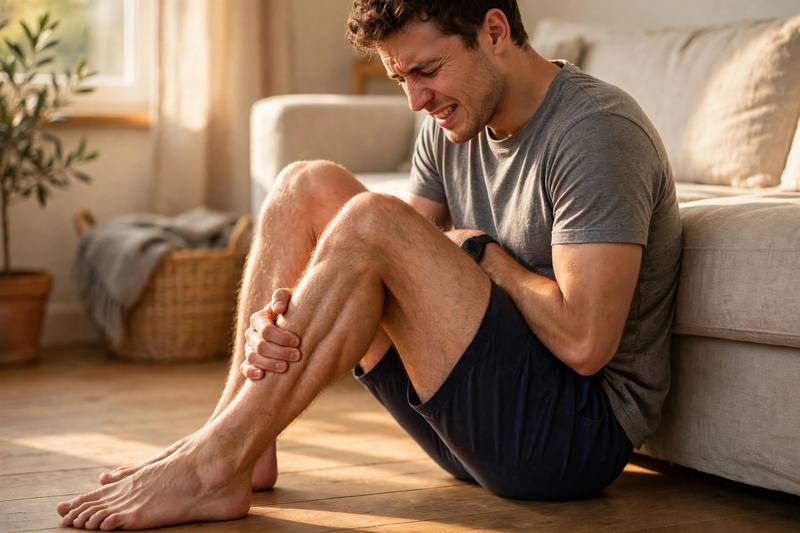
Speaking of soccer, I got a terrible cramp in my leg during my morning run yesterday.
A calf cramp? Those are brutal.
Brutal is the right word. A cramp feels like your muscle suddenly ties itself in a knot. The cramp lasted maybe thirty seconds but it felt like forever.
Stretching gently can ease a cramp in your calf. I always stretch my legs after running now because of exactly this.
I will start doing that. And drinking water helps prevent cramp during exercise. I definitely did not drink enough water before that run.
Water, stretching, and a banana for potassium. That is my anti-cramp routine.
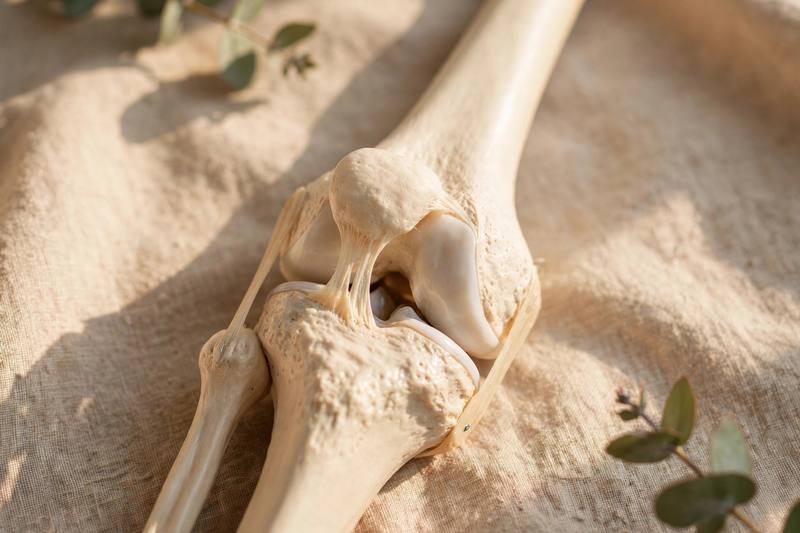
Noted. Now let me tell you about my knee. My knee joint clicks every time I stand up.
Clicking joints. A joint is where two bones meet, like your elbow or wrist. Does the clicking hurt?
Not really, it is just noisy. But cold weather seems to make my joints ache a little more than usual.
Keeping the joint moving actually helps it stay healthy. When you sit all day, everything stiffens up.
True. Doctors say each joint in your body needs some daily movement, even if it is just a walk around the block.
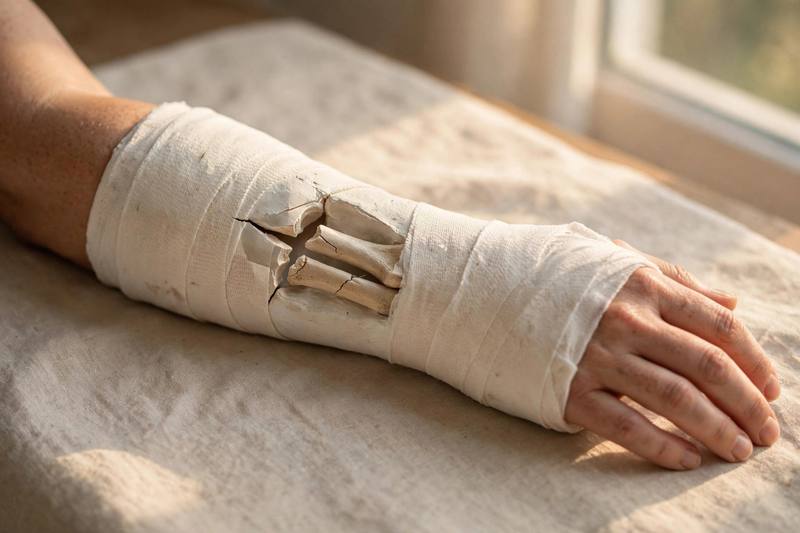
That is solid advice. You know what is much scarier than a clicking joint, though? A fracture. My cousin got a small fracture in her wrist last year.
Oh no, how did that happen?
She slipped on an icy sidewalk. A fracture means the bone is broken, even a tiny crack, and the fracture showed up clearly on the X-ray.
With a fracture, you usually need a cast for a few weeks. Did she get one of those bright colored casts?
Bright pink. She had to be careful for two months while the fracture healed. No typing with that hand, no carrying bags.
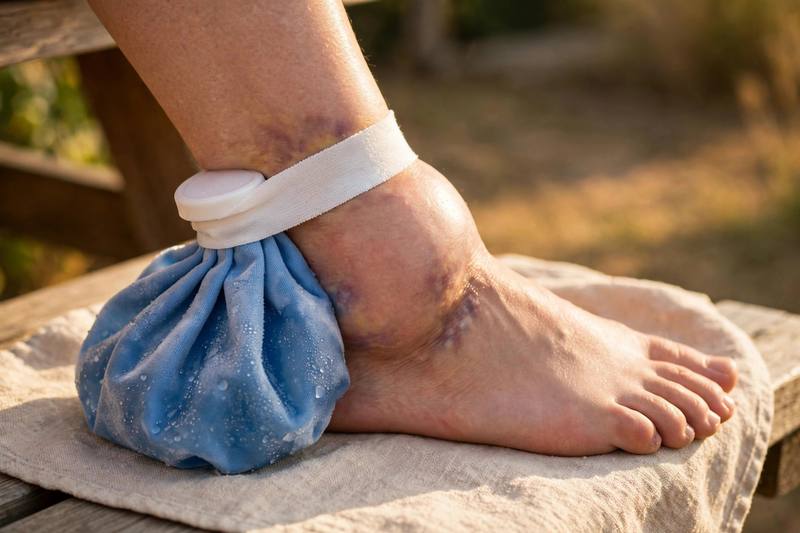
That teaches you to respect icy sidewalks. And speaking of injuries, my friend twisted her ankle last month and her ankle started to swell almost immediately.
That is the classic response. When tissue is injured, the area can swell quickly. Did she ice it?
Yes. The rule is: put ice on it if your knee or ankle begins to swell. It did not swell much, which was a good sign.
Interesting how our bodies react. Even an insect bite can make your whole hand swell if you are sensitive.
So true. But here is the hopeful part of all these injury stories: our bodies know how to heal most small injuries on their own.
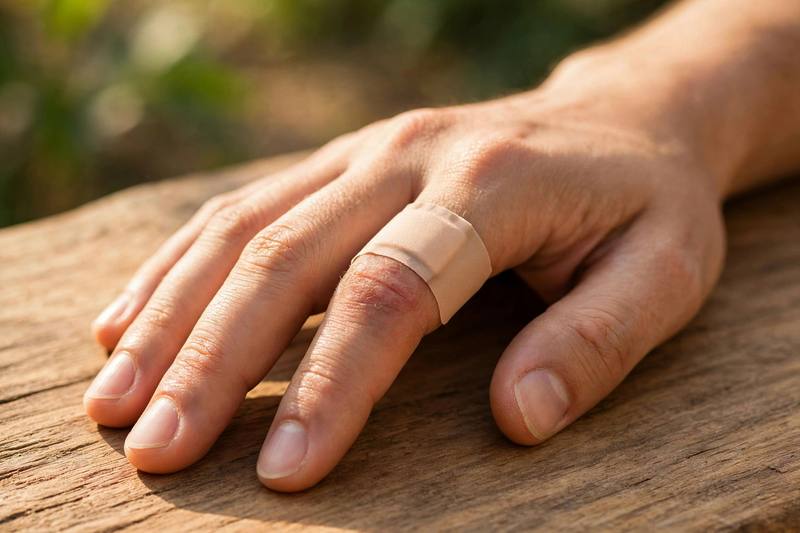
They really do. The cut will heal faster if you keep it clean, and it took three weeks for the scratch to heal completely.
Sleep helps your body heal after a hard workout too. That is why rest days matter so much.
Absolutely. But the key is patience: let the sprain heal before you run on it again, or you will be back to square one.
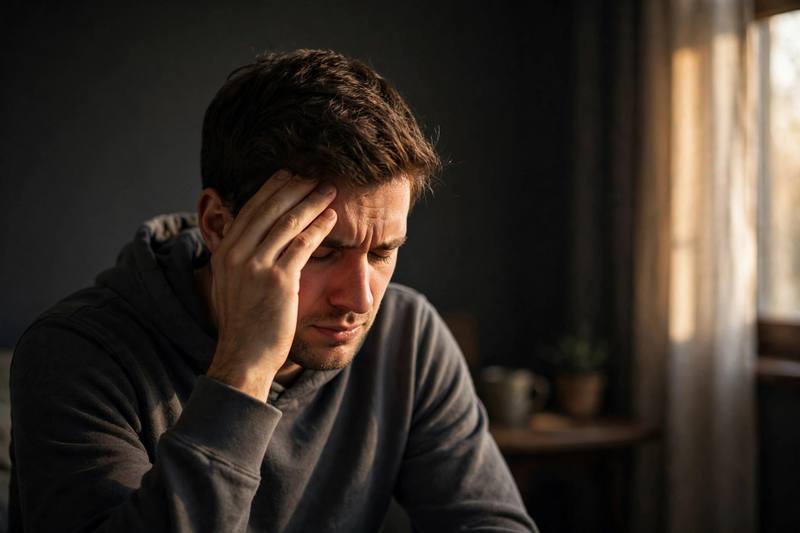
Patience is hard when you love running. Okay, let us switch from injuries to something many people deal with daily: headaches. She gets a migraine when she does not sleep enough. I am talking about my sister.
Poor thing. A migraine is much stronger than an ordinary headache. It can knock you out for a whole day.
Exactly. Bright lights can trigger a migraine, so she wears sunglasses even on cloudy days.
Some people see strange flashes of light before a migraine. That is called an aura, and it is actually a warning sign.
She gets that. He had to lie down in a dark room until the migraine passed. Sorry, I mean she had to lie down in a dark room until the migraine passed.
No worries, I understood. Migraines and sleep are deeply connected, which brings us to our final word: insomnia. Stress is a common cause of insomnia.
Insomnia means you have trouble falling or staying asleep. I had a rough patch with it during exam season in college.
What helped?
Looking at your phone late at night can feed insomnia, so I started leaving my phone in the kitchen. My brother fought insomnia for months before seeing a doctor.
That was smart of him. Gentle exercise during the day often helps with insomnia too. Tired body, calm mind.
Before we wrap up, let us answer a few questions our listeners sent us. Lena, first one: my ankle still has some swelling two weeks after a sprain. Is that normal?
Great question. If the area continues to swell after two weeks, or if the pain gets worse, you should see a doctor. A little swelling early on is normal, but it should go down.
Next: I get a cramp in my foot every night. What can I do?
A foot cramp at night is very common. Try gentle stretching before bed, drink enough water during the day, and keep your feet warm. If the cramp keeps returning every single night, mention it to your doctor.
Here is one I relate to: I always feel fatigue on Monday mornings even after sleeping in on Sunday. Why?
Monday morning fatigue often comes from an irregular sleep schedule. Going to bed at midnight on Friday and then waking at six on Monday confuses your body. Try to keep your bedtime steady, even on weekends.
Good tip. Last one: my mother has insomnia and refuses to take medicine. Any natural ideas?
Plenty. No screens an hour before bed, a warm shower, and a consistent wake-up time. If insomnia continues for more than a few weeks, a doctor can suggest safe options. And remember, gentle exercise helps too.
Excellent answers. One more from me: how do you know if a headache is a migraine?
If the pain is on one side, if light hurts your eyes, or if you feel nausea along with it, it might be a migraine. A regular headache usually feels dull and general, while a migraine feels intense and specific.
And how do you help a wound heal faster?
Keep it clean, cover it lightly, and do not pick at it. Most small cuts heal on their own within a week or two. And eat well, your body needs nutrients to heal.
What about a bruise that will not fade?
A normal bruise fades within two or three weeks. If a bruise stays dark and painful for much longer, get it checked.
So let us recap what our bodies told us today. Fatigue warned us about poor sleep, nausea warned us about the boat, and that mystery bruise reminded us that we bump into things without noticing.
Then the cramp taught us to drink water, the clicking joint told us to keep moving, and the fracture reminded us that ice is not always the answer, sometimes you need a doctor.
When things swell, ice helps. When things break, casts help. And when we give them time and rest, our bodies heal.
We learned that a migraine is more than a headache and that insomnia is more than a bad night. Both deserve real attention.
Ten words, ten body signals. Listen to your body, it is usually telling you something useful.
Thanks for cooking with us today on Word Kitchen. I am Maya.
And I am Lena. See you next time.
🎙 Try Shadowing free sample
Listen and repeat along with the studio audio. Full shadowing practice with pronunciation scoring is in the app.
After the marathon, my legs were heavy with fatigue.
I tried to hide my fatigue from my coach, but the nausea gave me away.
The doctor warned me that ignoring fatigue can lead to injury.
Train your speaking
Shadow every sentence with studio audio and get your pronunciation scored — only in the Muse English app.
📝Grammar: Present simple and continuous, action and non-action verbs
We use the **present simple** (I live, she works) for things that are always true or happen regularly. My neighbor gets a migraine every month when she works too hard. With he, she and it, add -s or -es: **lives**, **studies**. Our joints need daily movement — that is always true. For questions, use **ASI** (Auxiliary, Subject, Infinitive) or **QuASI** (Question word + ASI): Do you know David? What time does the film start? Adverbs of frequency like **usually** and **never** go before the main verb, but after **be**. She usually gets a bruise or two after soccer. He is never late for work.
Master this grammar in the app
Get clear explanations, more examples and interactive exercises.
Keep learning every day
New lessons, podcasts and quizzes daily — free in the Muse English app.