
📖 What is Muse English?
Muse English is a free English learning app with daily lessons across all 6 CEFR levels (A1 Beginner to C2 Proficient). Every day brings new vocabulary, a real podcast conversation, shadowing practice, grammar and quizzes — all at museenglishapp.com.
📚 Vocabulary
10 new words Learn new words with real examples and audio.



Podcast: Family & Relationships
Listen to today’s conversation.
📝 Podcast Transcript
Welcome to Word Kitchen, the show where we cook up new English words and serve them fresh. I am Maya.
And I am Lena. Today we are talking about family and home life, and we have ten great words on the menu.
Ten words, all about family and relationships. Let us start with a happy one: wedding.
A wedding is such a wonderful topic. I went to a beautiful wedding last spring. My cousin's wedding was in a garden, with flowers everywhere.
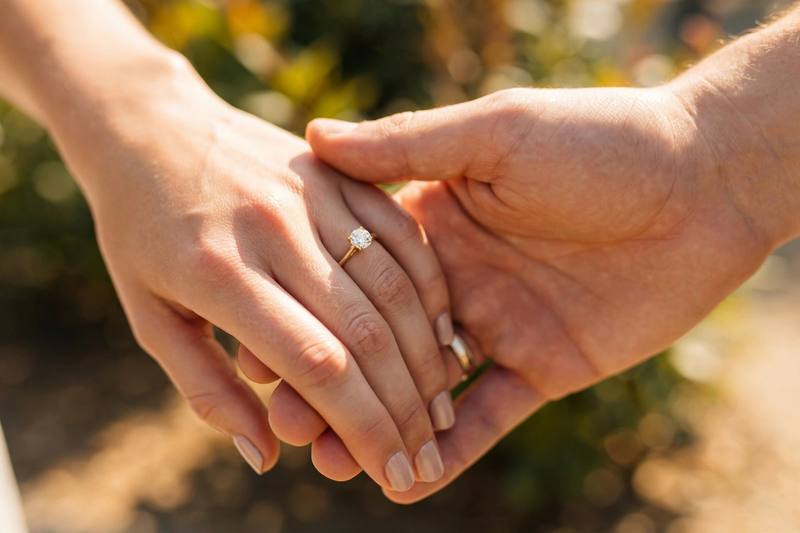
That sounds lovely. A wedding is a marriage ceremony, the day two people get married. Did you cry at the wedding?
I did. Every wedding makes me emotional. And you know what happens before a wedding? An engagement.
Right, when two people are engaged, they have promised to marry each other. So first they get engaged, then they plan the wedding.
Exactly. My brother got engaged last winter. When he told us he was engaged, the whole family was so happy. They got engaged after three years together, and now they are planning a small wedding.
A small wedding sounds perfect. Not every wedding needs to be huge. A wedding can be just close family and good friends.
True. Now, at every wedding you meet a relative you have not seen in years. A relative is a family member, like an uncle, an aunt, or a cousin.
Yes. At my sister's wedding, a distant relative came all the way from Canada. That relative told the funniest stories about my sister's childhood.
Childhood memories are the best. Childhood is the time when you are a child. My childhood was full of summer trips to my grandparents' house.
Mine too. In my childhood, every holiday meant visiting a relative. One relative would cook, another relative would play music. Those childhood days felt endless.
And now that relative time is precious. I love how a wedding or a family dinner brings every relative together.
Speaking of family, let us talk about the word raise. To raise a child means to care for the child until the child grows up.
It is not easy to raise children today. My parents worked hard to raise me and my brother. To raise a family takes time, patience, and a lot of love.
Absolutely. Parents who raise three kids while working full time deserve a medal. How did your parents raise you? What rules did they have?
They taught us to share and to forgive. Ah, forgive, another word on our list. To forgive means to stop being angry with someone who hurt you.
Forgiveness is so important in a family. Brothers and sisters argue, but then they forgive each other. If you cannot forgive, the anger stays with you.
Right. I remember I had to forgive my brother after he broke my favorite toy. It was hard to forgive him, but my mom said forgive and forget.
Good advice. When you forgive someone, you feel lighter. Every family needs people who can forgive quickly.
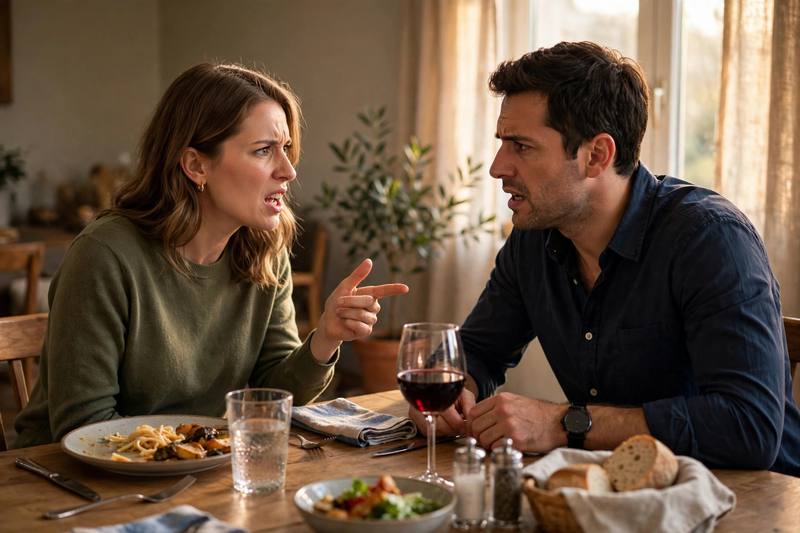
Which brings us to argue. To argue means to disagree angrily with someone. My husband and I sometimes argue about small things.
Every couple will argue now and then. My parents would argue about money, then they would forgive each other and laugh. To argue is normal. What matters is how you fix it.
So true. Couples who argue but always forgive stay strong. If you argue too much without making peace, the house feels heavy.
Let us move to divorce. A divorce is the legal end of a marriage. Nobody plans for a divorce, but sometimes it happens.
My uncle went through a divorce, and it was a hard time for the whole family. After the divorce, he and his former wife stayed friendly for the kids.
That is the best outcome after a divorce. A divorce changes the family, but love for the children can continue. Even after a divorce, a parent can raise happy kids.
And every relative should support the family through a divorce. A kind relative makes a divorce less painful.
Now, household. A household means all the people who live together in one home. In my household, there are four of us.
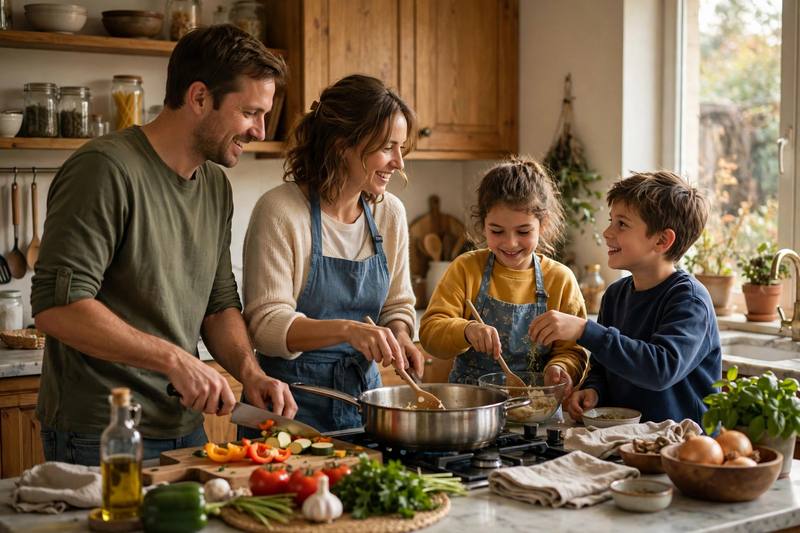
In our household, everyone has a job. My household rule is simple. If you live in this household, you help with cooking and cleaning.
I like that. A busy household needs teamwork. In a big household, you learn to share everything, from the bathroom to the last piece of cake.
And in my household, grandparents visit every Sunday. A household feels warm when a relative drops by for dinner.
Last word: babysit. To babysit means to take care of a child while the parents are away. I used to babysit my neighbor's kids.
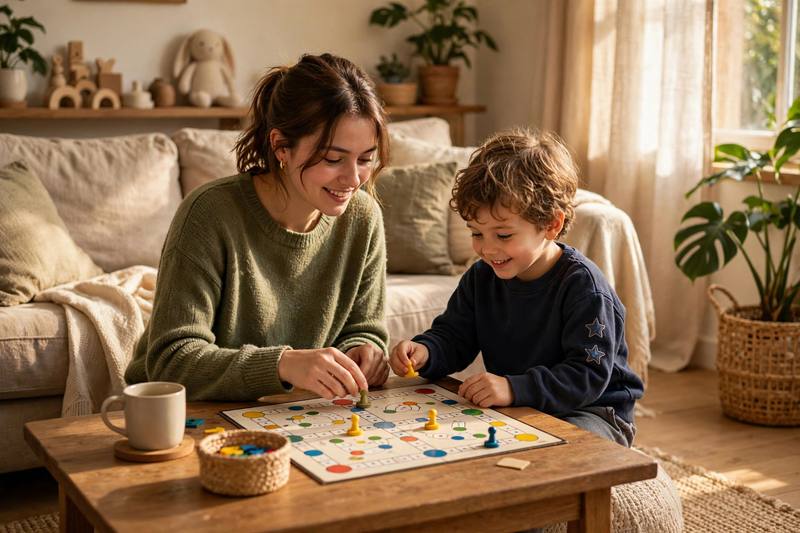
Babysitting is great practice before you raise your own kids. When I babysit my niece, we bake cookies and read stories. Do you still babysit?
Sometimes. A friend asked me to babysit last Friday. To babysit a toddler is exhausting but fun. If you babysit well, parents will call you again.
Let us do a quick recap of all ten words. Wedding: a marriage ceremony. A wedding brings the whole family together.
Engaged: promised to marry. When you get engaged, the wedding planning begins.
Relative: a family member. Every relative adds something special to the family.
Childhood: the time when you are a child. Childhood memories stay with you forever.
Raise: to care for a child until grown up. It takes a whole village to raise a child.
Argue: to disagree angrily. Couples argue, but love wins in the end.
Forgive: to stop being angry. Always forgive the people you love.
Divorce: the legal end of a marriage. A divorce is hard, but life goes on.
Household: everyone living in one home. A happy household shares the work.
Babysit: to care for a child while parents are away. Babysit with a smile.
That is our show. Practice these words, use them in your own family stories, and join us next time on Word Kitchen.
See you soon.
🎙 Try Shadowing free sample
Listen and repeat along with the studio audio. Full shadowing practice with pronunciation scoring is in the app.
The Big Family Weekend
Last weekend my whole family gathered at my parents' house.
My cousin Anna is engaged, and we all wanted to celebrate.
Train your speaking
Shadow every sentence with studio audio and get your pronunciation scored — only in the Muse English app.
📝Grammar: Reported speech - sentences and questions
We use **reported speech** when we tell a **relative** what someone said. We report the idea, not the exact words. When the verb is past, like **said** or **told**, the tense moves back one step. "I am **engaged**" becomes **he said he was engaged**. **will** becomes **would** and **can** becomes **could**. "I will **babysit**" becomes **she said she would babysit**. Use **say** with no person and **tell** with a person. "I love the **wedding** photos" becomes: she **said** she loved the wedding photos. She **told me** she loved the wedding photos. The word **that** is optional. Time and p
Master this grammar in the app
Get clear explanations, more examples and interactive exercises.
Keep learning every day
New lessons, podcasts and quizzes daily — free in the Muse English app.