
📖 What is Muse English?
Muse English is a free English learning app with daily lessons across all 6 CEFR levels (A1 Beginner to C2 Proficient). Every day brings new vocabulary, a real podcast conversation, shadowing practice, grammar and quizzes — all at museenglishapp.com.
📚 Vocabulary
10 new words Learn new words with real examples and audio.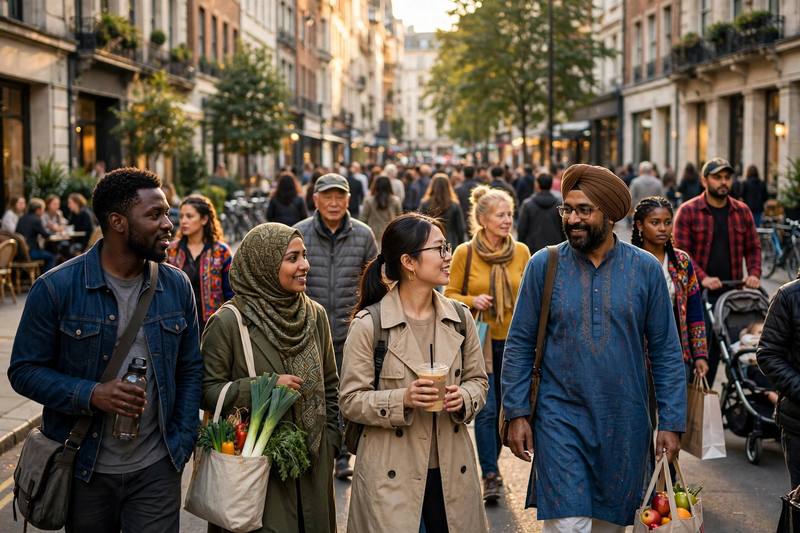
Podcast: Cities & Daily Life
Listen to today’s conversation.
📝 Podcast Transcript
Welcome to Muse English! I'm Maya.
And I'm Lena. Today we're taking you on a walking tour of the modern city, and we've packed ten gorgeous words for the journey. Ten words about how cities grow, change, and feel.
Some of my favorite episodes start with a walk, because language sticks better when it's attached to a place. So lace up your shoes. Let's start downtown.
Great reminder. Okay, word number one: cosmopolitan. Koz-muh-POL-ih-tun. It describes a city that feels at home with many cultures, open and international in character.
London is the classic example. One of the most cosmopolitan capitals in the world, with more than three hundred languages spoken on the subway alone. You can eat dumplings, falafel, and fish and chips on the same block.
And a person can be cosmopolitan too. Someone comfortable anywhere, at ease in any crowd. The most cosmopolitan people I know collect cities the way others collect stamps.
Funny you say that. The word comes from the idea of being a citizen of the world, and honestly, that feels like the dream of every cosmopolitan city: a place where nobody is truly a stranger.
Before we hit the street properly, a quick word about your English journey. If you love this show, you will love the Muse English app. Every day it gives you fresh words with real photos and crystal-clear pronunciation, plus this podcast, shadowing stories, quizzes, grammar lessons, and a leaderboard where you earn points. It's free, it's fun, and it takes about ten minutes a day. Grab it today and keep learning with us.
Great reminder. Okay, Maya, keep the tour moving.
Word two: conurbation. Kon-ur-BAY-shun. A vast urban area formed when several towns grow and merge into one continuous city.
The textbook example is Tokyo and Yokohama. What used to be separate towns is now the Tokyo-Yokohama conurbation, home to nearly forty million people. Forty million! You can drive for hours and never leave the city.
The same thing happened around my hometown. Three little towns I grew up visiting became one big conurbation, and I honestly can't tell you where one ends and the next begins anymore.
That's the thing about a conurbation. It grows so smoothly that the old boundaries disappear, and suddenly the whole region is one giant conurbation with one commute and one traffic report.
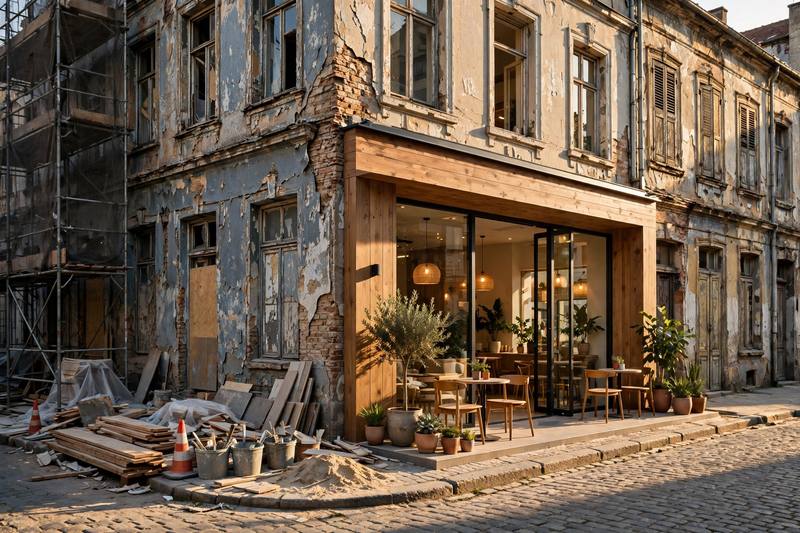
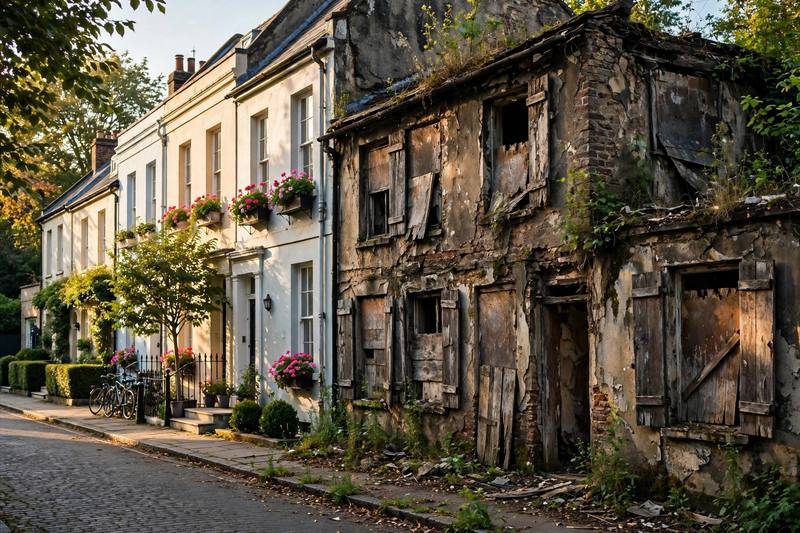
Which brings us to a word with a sharper edge: gentrification. Jen-truh-fuh-KAY-shun. The process where a run-down area is renovated and becomes expensive, often forcing out its original residents.
Gentrification transformed the old docklands, but the artists who once lived there could no longer afford the rents. That sentence tells the whole story: new cafes, old heartbreak.
It is complicated, though. Nobody loves crumbling buildings, but gentrification can erase the very culture that made a neighborhood attractive. The street art gets painted over by a coffee chain.
And residents feel it personally. When gentrification doubles your rent in three years, the neighborhood isn't being improved for you. It's being improved around you.
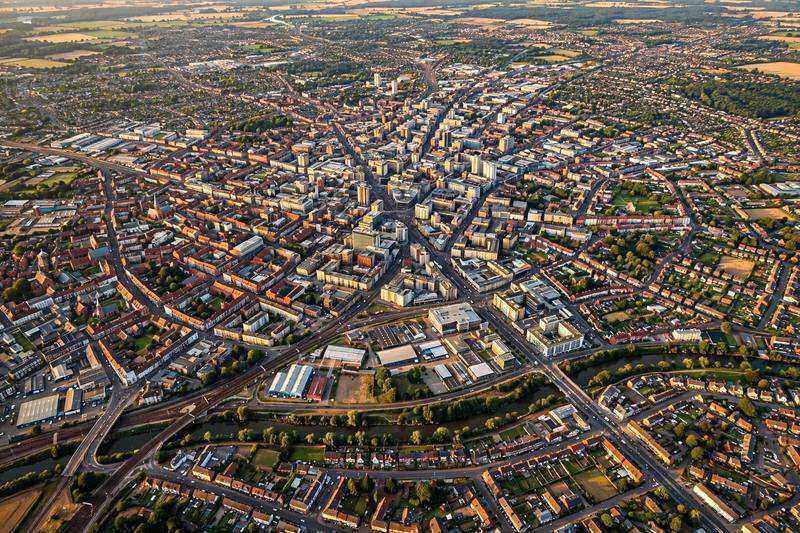
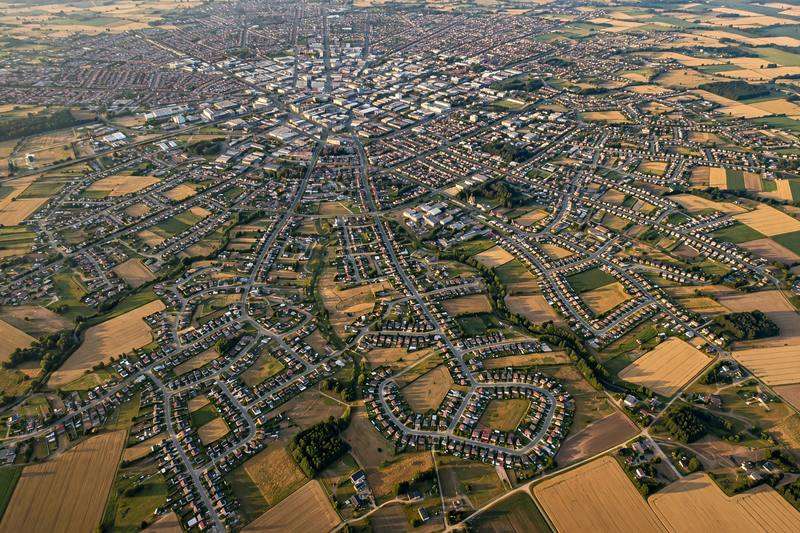
Word four is sprawl. Urban sprawl, that is. The uncontrolled spread of a city outward into the countryside. Endless urban sprawl has swallowed the farmland that once surrounded the city.
You've seen it from a plane window. Sprawl, sprawl, and more sprawl. Subdivision after subdivision, all the way to the horizon, with a highway stitching it together.
Sprawl has real costs, too. Longer commutes, more cars, and wildlife corridors cut into pieces. Fighting sprawl is one of the biggest debates in city planning.
And yet sprawl is where most people actually live. The dream house with the yard often means living inside the sprawl, thirty minutes from everything.
Quick memory checkpoint before we continue. Four words so far: cosmopolitan, conurbation, gentrification, sprawl. How do we remember them? Cosmopolitan sounds like cosmos, the universe, so think of a city as big as the world itself. Conurbation contains the word urban, so a conurbation is just many urbans melted together.
I like that trick. Gentrification hides the word gentry, the old word for wealthy people. So gentrification is when a neighborhood gets too gentry for its old residents. And sprawl is a word you can feel in your mouth. Sprawl just sprawls across the page, the way sprawl sprawls across the land.
Memory hooks are underrated. When a word has a shape in your mind, it stays there. Okay, four more words to go, and they're my favorite kind: the beautiful, strange ones.
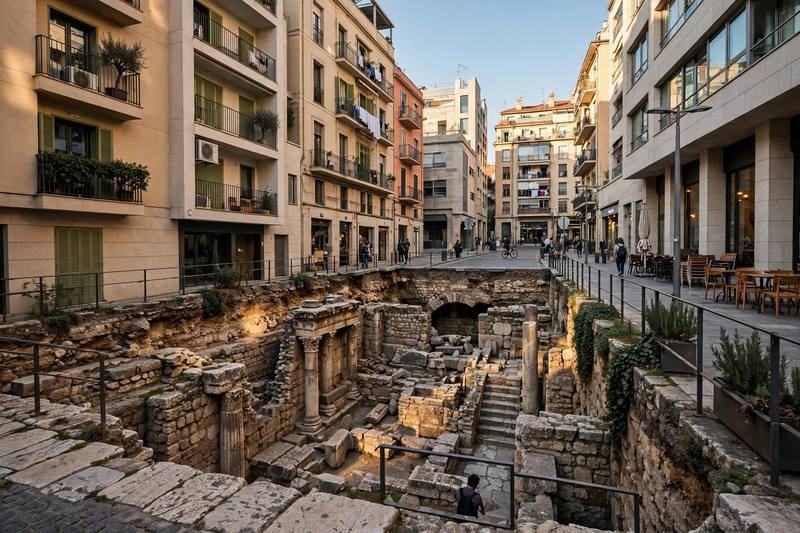
Word five is one of my favorites: palimpsest. PAL-imp-sest. A place with many layers of history built on top of each other, where the old shows through the new.
Rome is a palimpsest of empires. A modern cafe might sit above a two-thousand-year-old market hall. You order an espresso over a ruin.Lena: Istanbul is another palimpsest. Church, mosque, museum, sometimes all in the same building. Every century left a signature, and the city is a palimpsest you can walk through.
That's why I love old cities. A palimpsest city doesn't hide its past, it wears it. And every renovation just adds another layer to the palimpsest.
Quick pause here, friends. If you're enjoying this city tour, imagine it as a daily habit. The Muse English app hands you ten new words every morning, each with a real photo and clear pronunciation, then you hear them in this podcast, practice them in a shadowing story, test yourself with quizzes, review a grammar lesson, and climb the leaderboard with points. Ten minutes a day, completely free. Download it today and make English your daily walk.
Good timing for a breather. Half the tour done.
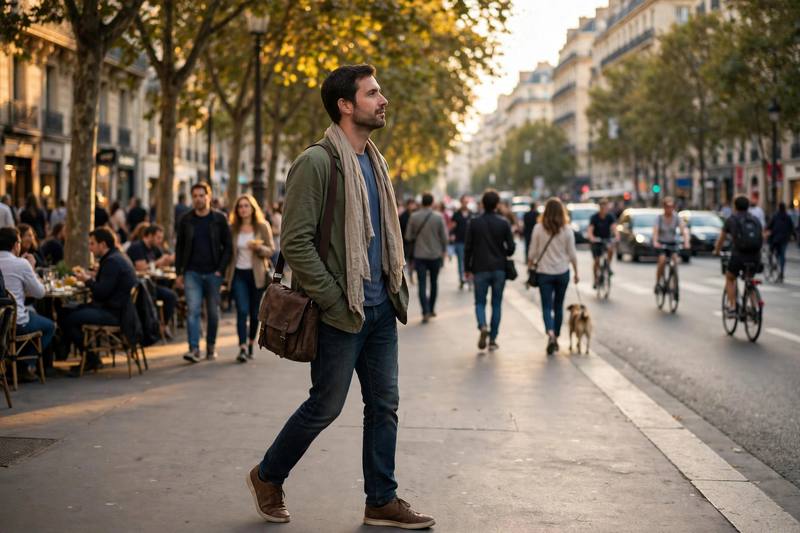
Word six: flâneur. Flah-NUR. A person who strolls through city streets with no destination, observing life with calm curiosity.
A true flâneur has no destination. The crowded boulevard itself is the entertainment. The flâneur watches, listens, and never hurries.
It's a very Parisian idea, but honestly, being a flâneur is the best way to learn a city. Put the phone away, wander like a flâneur, and let the street teach you.
And for language learners, there's a lesson there. The best English practice is a little like being a flâneur: curious, unhurried, absorbing everything around you.
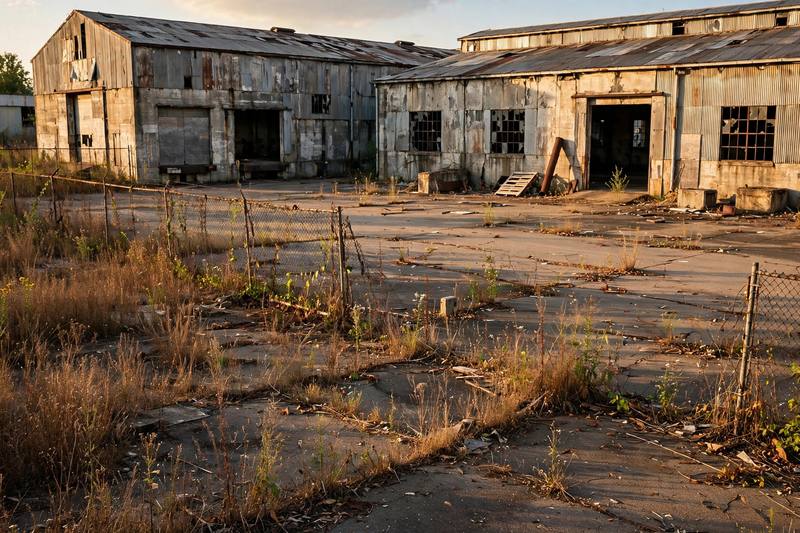
Word seven: brownfield. Abandoned or former industrial land being redeveloped for new uses. The city turned its old brownfield sites into parks and housing instead of building on green land.
Brownfield sites are everywhere. Old factories, rail yards, empty warehouses. Cleaning up a brownfield costs money, but redeveloping it keeps the countryside untouched.
Some of the coolest neighborhoods I know are built on a former brownfield. Galleries in old warehouses, lofts in old factories. The brownfield becomes the future.
That's the optimistic side of city change. A brownfield gets a second life instead of becoming an eyesore. And speaking of eyesores, that's word eight.
An eyesore. EYE-sor. An ugly building or object that spoils the appearance of a place. The abandoned tower block was an eyesore until the council demolished it.
Every city has one. The rusted billboard, the boarded-up store. An eyesore drags the whole street down, and neighbors feel it every day.
But one person's eyesore is another person's landmark. That brutalist car park was called an eyesore for years, then architects declared it a masterpiece.
True. Tastes change, but nobody defends a genuine eyesore forever. Even an eyesore eventually meets the wrecking ball.
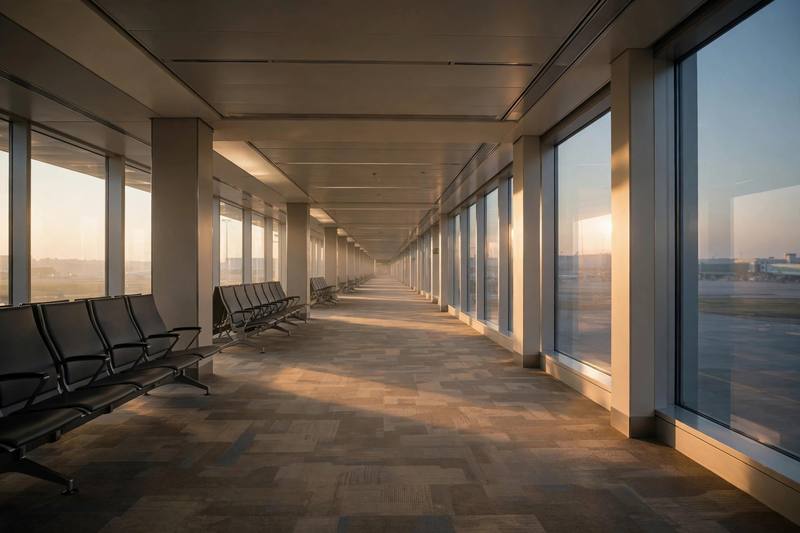
Word nine: liminal. LIM-ih-nul. Describing an in-between stage of change, when the old is gone but the new hasn't arrived yet.
Airports feel liminal. You've left one life behind but haven't arrived in the next. That liminal hour at the gate, watching the sky change color.
Moving house is liminal too. Boxes everywhere, half your life in each place. Liminal moments are uncomfortable, but they're also where change happens.
Cities have liminal spaces as well. The construction site, the half-opened street. Liminal doesn't mean broken. It means becoming.
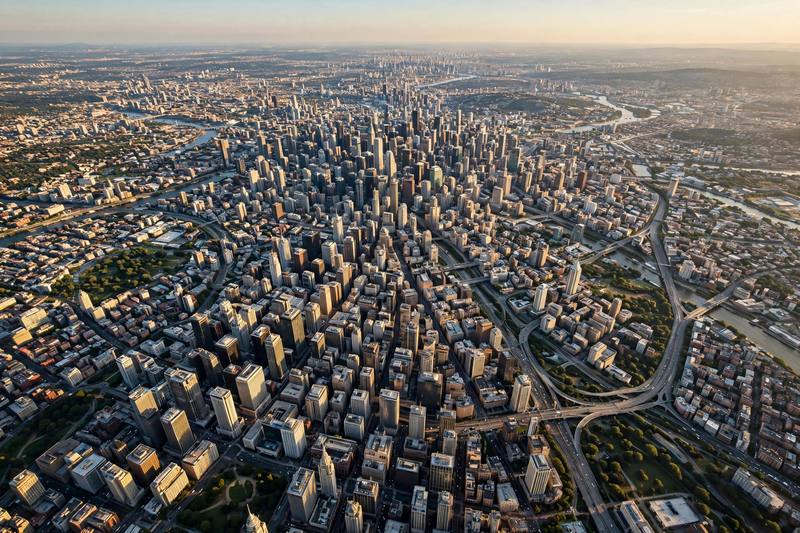
And the final word, number ten: megalopolis. Meg-uh-LOP-uh-lis. An enormous urban region formed by several big cities merging into one continuous area.
The classic example is the Bos-Wash megalopolis, stretching from Boston to Washington in one continuous band of cities. You never really leave it.
The world is filling up with megalopolises. Each megalopolis is an economy, a culture, a weather system of its own.
Living in a megalopolis means everything is connected and nothing is small. The megalopolis never sleeps, never stops, and never fits in one photo.
Let's run the tour one more time, walking-pace style. Cosmopolitan, the city of many cultures. Conurbation, towns merged into one giant city.
Gentrification, the neighborhood that got expensive. Sprawl, the city spreading into the countryside.
Palimpsest, the city of layered history. Flâneur, the joyful wanderer.
Brownfield, the old factory with a new future. Eyesore, the ugly building nobody loves.
Liminal, the in-between moment. And megalopolis, the giant city of cities.
Use them this week, all ten, in real conversations. That's how words move from your notes into your voice.
Here's a challenge, Maya. Can our listeners use all ten in one week? I want to hear someone describe their own neighborhood with these words.
Oh, that's a great game. Is your street becoming more cosmopolitan, or is gentrification changing it? Is there an eyesore on your block, or a brownfield with potential? Tell us in the app's community if you can. A cosmopolitan city is built by people who notice it, and a sharp vocabulary helps you notice more.
This has been Muse English. I'm Lena.
And I'm Maya. See you tomorrow with ten fresh words.
🎙 Try Shadowing free sample
Listen and repeat along with the studio audio. Full shadowing practice with pronunciation scoring is in the app.
The Flâneur's City
1. On the first morning of autumn, I walked into the cosmopolitan heart of the city.
2. Street signs in four languages told me I had entered a truly cosmopolitan neighborhood.
Train your speaking
Shadow every sentence with studio audio and get your pronunciation scored — only in the Muse English app.
📝Grammar: Third Conditional — C2 Mastery
The third conditional imagines a different past: **if + past perfect** in the condition, **would have + past participle** in the result. *If I'd known you had a problem, I would have helped you.* It answers the question: how could things have been different? Remember that **'d** is ambiguous. In the if-clause it means **had** (*If I'd seen the sprawl* = If I had seen), but in the main clause it means **would** (*I'd have turned back* = I would have turned back). Confusing them is the classic C2 slip. For a less certain result, replace **would have** with **might have** or **could have**. *If
Master this grammar in the app
Get clear explanations, more examples and interactive exercises.
Keep learning every day
New lessons, podcasts and quizzes daily — free in the Muse English app.