
📖 What is Muse English?
Muse English is a free English learning app with daily lessons across all 6 CEFR levels (A1 Beginner to C2 Proficient). Every day brings new vocabulary, a real podcast conversation, shadowing practice, grammar and quizzes — all at museenglishapp.com.
📚 Vocabulary
10 new words Learn new words with real examples and audio.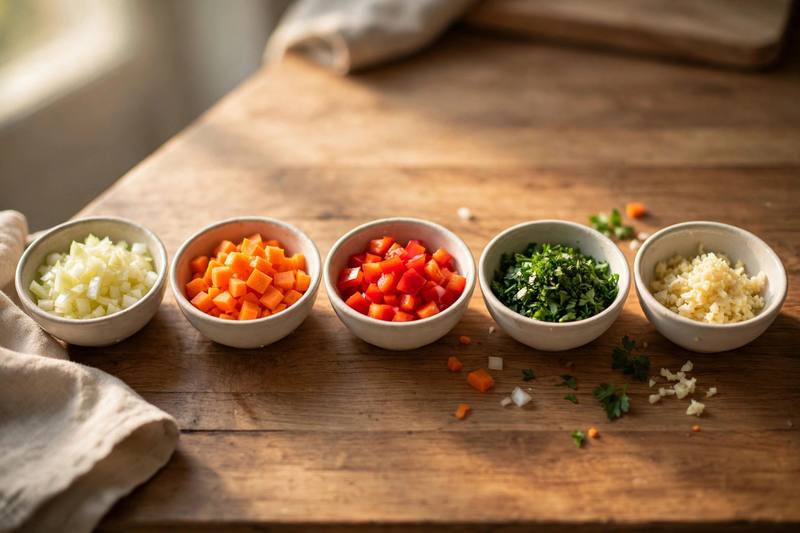
Podcast: Food & Cooking
Listen to today’s conversation.
📝 Podcast Transcript
Welcome back to Word Kitchen, the show where we savor the English language one delicious word at a time. I'm Maya.
And I'm Lena. And Maya, I have to say, today's theme might be my favorite one yet.
I think it's mine too. Today we're exploring the language of fine dining. Ten rich, flavorful words about great food, the people who make it, and the experiences around the table.
Food vocabulary is so much fun because every word comes with a taste or a smell attached. You don't just learn the word, you almost experience it.
That's so true. Let's start in the kitchen, before a single pan gets hot, with a phrase every professional chef swears by: mise en place.
Mise en place. I love how it sounds. It's French, and it literally means everything in its place.
Exactly. Mise en place is the practice of preparing everything before you start cooking. All the vegetables chopped, all the spices measured, all the sauces ready.
So instead of panicking halfway through a recipe, your mise en place keeps you calm and in control.
Precisely. In restaurant kitchens, mise en place is almost a religion. A chef's mise en place has to be perfect before the dinner service begins.
You know, I started doing mise en place at home last month, and it changed everything. No more burnt garlic while I search for the olive oil.
See? Mise en place works in a tiny home kitchen just as well as in a grand restaurant. That was our first word, by the way: mise en place. Everything prepared before cooking begins.
Beautiful. Now, let's move from the kitchen to the dining room. Imagine you sit down at an elegant restaurant, and before you even order, the waiter brings you a tiny, gorgeous bite, completely free.
Oh, I know this one. That's an amuse-bouche.
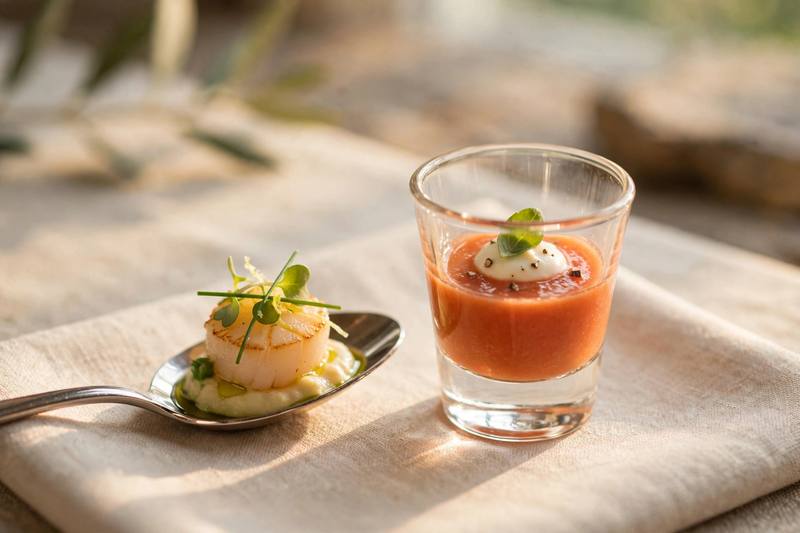
Yes. An amuse-bouche is a small complimentary appetizer from the chef, meant to amuse your mouth and wake up your appetite.
I love receiving an amuse-bouche. It feels like a little gift, a preview of the chef's creativity.
It really is a gift. A great amuse-bouche is tiny, maybe one or two bites, but it tells you so much about the chef's style.
I remember an amuse-bouche I had in Montreal once. It was a single spoonful of chilled corn soup with a drop of truffle oil. I still think about it.
That's the magic of a perfect amuse-bouche. Small, surprising, and unforgettable. So that's word two: amuse-bouche, the chef's little welcome gift.
Now, what if you want the full experience, not just one bite? Then you might order a degustation.
A degustation. That's a tasting menu, right? Many small courses, one after another.
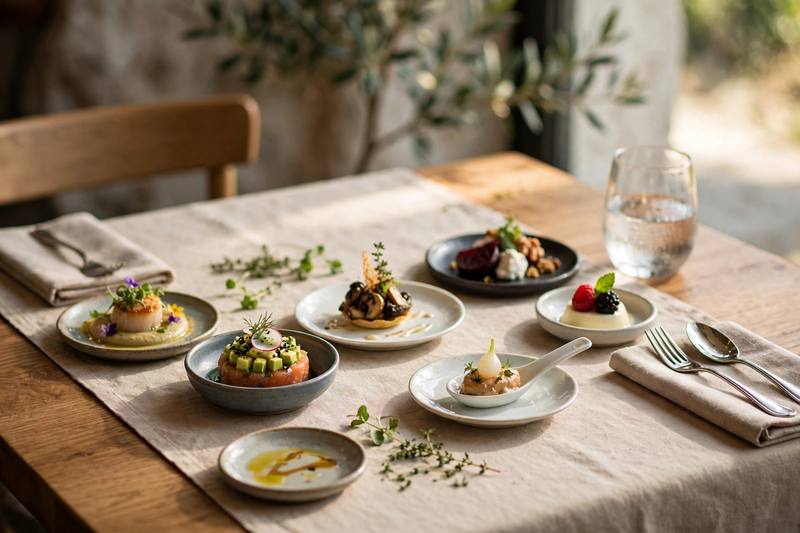
Exactly. A degustation is a carefully designed sequence of small dishes, sometimes five courses, sometimes ten or more.
A degustation is such a wonderful way to explore a chef's imagination. Each course is like a chapter in a story.
And the pacing of a degustation matters so much. The dishes build on each other, from light to rich, from simple to complex.
I did a degustation for my birthday last year. Seven courses. By the fourth course I was in heaven, and I still remember the dessert.
A great degustation can take three hours, and you never want it to end. Word three: degustation, the multi-course tasting menu.
Let's talk about wine for a moment, because our next word belongs to both food and wine lovers: terroir.
Terroir. Another French word. It refers to the land itself, right? The soil, the climate, the hillside where something grows.
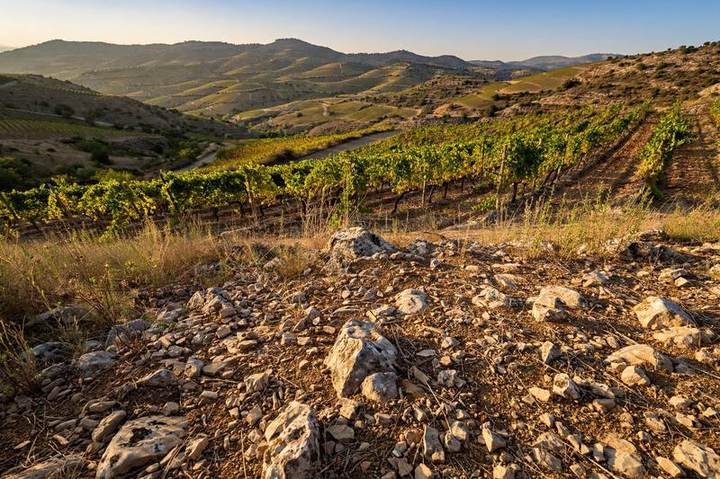
Exactly. Terroir is the complete natural environment that gives a food or a wine its unique character. Two vineyards a mile apart can produce completely different wines because their terroir is different.
So when someone says a cheese tastes of its terroir, they mean you can taste the meadow, the air, the place it came from.
Beautifully put. Terroir reminds us that great flavor starts long before the kitchen, out in the fields and on the hillsides.
I love that idea. The terroir is like the ingredient's birthplace, and it never fully leaves the flavor.
That's word four: terroir, the land and climate behind the taste.
Now, if you're enjoying that wine with its beautiful terroir, you might want some expert guidance. That's where our next word comes in: sommelier.
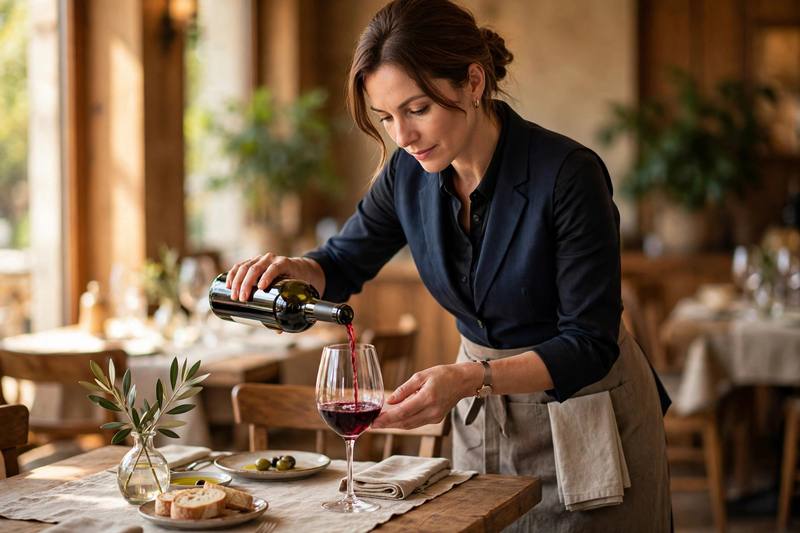
A sommelier is the wine expert in a fine restaurant. They help you choose the perfect bottle for your meal.
A great sommelier does so much more than pour wine. A sommelier understands how flavors work together.
Right. You might tell the sommelier what you're eating, and the sommelier will suggest a wine that makes both the food and the wine taste better.
I always feel a little nervous talking to a sommelier, but honestly, every sommelier I've met loves sharing their knowledge.
Same here. A good sommelier never judges. They just want you to have a wonderful evening. Word five: sommelier, your guide to the wine list.
Speaking of flavor, let's talk about the science of taste. Our next word is umami.
Umami. It's often called the fifth taste, alongside sweet, sour, salty, and bitter.
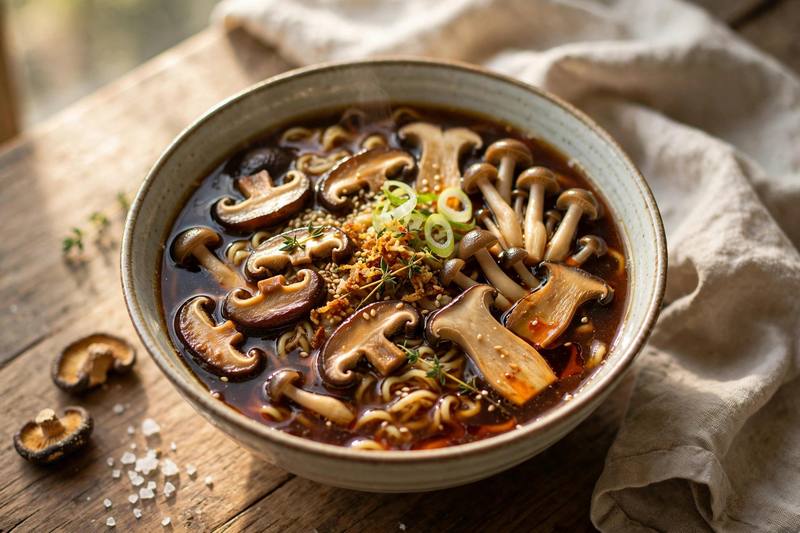
Umami is that deep, savory richness you taste in things like parmesan cheese, mushrooms, soy sauce, and slow-cooked meat.
Exactly. When a dish has wonderful umami, it tastes satisfying in a way that's hard to describe but impossible to miss.
I think umami is why we love so many comfort foods. That savory depth makes us want another bite.
Chefs work hard to build umami into their dishes, layering ingredients that each add their own savory note.
So the next time a soup tastes incredibly rich and you can't explain why, you're probably tasting umami. Word six: umami, the savory fifth taste.
Our next word is a beautiful adjective: gustatory.
Gustatory means relating to the sense of taste, right?
Yes. Anything gustatory is about tasting and flavor. A chef might describe an evening as a gustatory adventure.
I love that. A meal isn't just eating, it's a gustatory experience, engaging all your senses through flavor.
Food critics use gustatory when they want to sound precise. Instead of saying the food tasted good, they describe its gustatory qualities.
So a gustatory delight is a delight for your taste buds. Word seven: gustatory, all about the sense of taste.
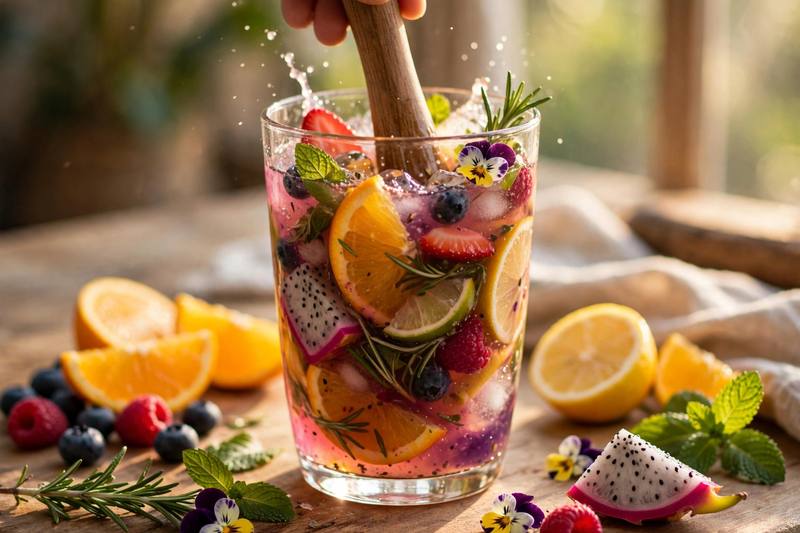
Now for something playful. Imagine a bartender mixing mango, chili, and fresh mint into one surprising drink. That drink is a concoction.
A concoction is a mixture of ingredients, often unusual or inventive. It can be delicious or delightfully strange.
Exactly. Every new cocktail starts as someone's concoction. Some concoctions become classics, and some are never ordered twice.
I once tasted a concoction of espresso, orange peel, and tonic water. Strange, but I still remember it.
That's the fun of a concoction. It doesn't follow the rules. A bold concoction can surprise even an experienced palate.
Word eight: concoction, an inventive mixture.
When that mixture turns out perfectly, we need a word for how it tastes. Our next word is delectable.
Delectable means extremely delicious. It's stronger than just tasty.
Right. You might say a simple sandwich is tasty, but a dessert that makes you close your eyes in happiness is delectable.
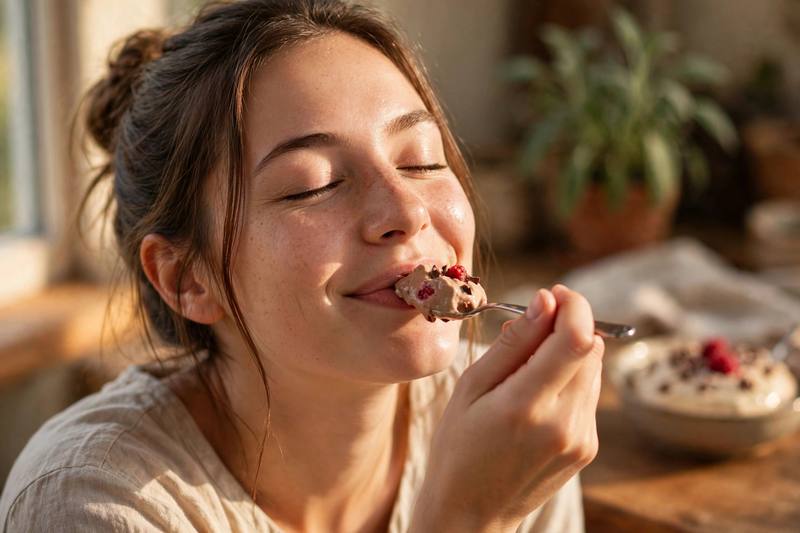
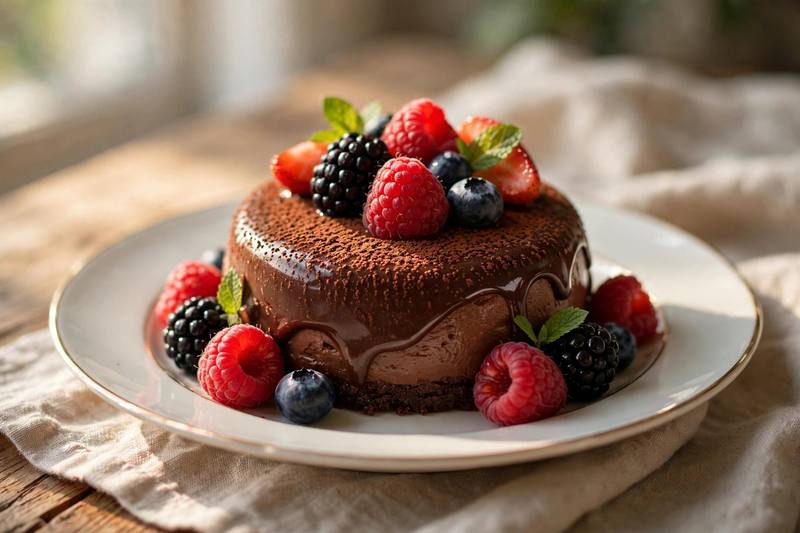
I had a delectable chocolate cake in Toronto last spring. Three layers, dark and rich. Truly delectable.
When food is delectable, you slow down. You want every bite to last.
Delectable is one of those words that almost tastes good just saying it. Word nine: delectable, irresistibly delicious.
And our final word is infusion.
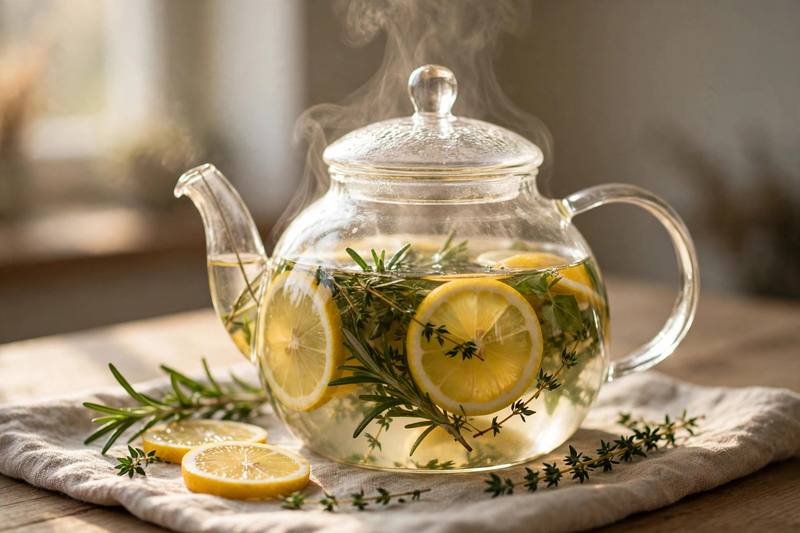
An infusion is flavor drawn out by soaking ingredients in hot liquid, like tea.
Exactly. When you steep chamomile flowers in hot water, you create a calming infusion.
Chefs make infusions all the time, not just for tea. An infusion of herbs in warm oil can transform a simple dish.
Or an infusion of citrus peel in hot cream for a dessert sauce. The gentle heat pulls the flavor out slowly.
I love ending the day with a warm infusion of ginger and honey. So simple, so soothing.
Word ten: infusion, flavor extracted by soaking. And that completes our ten words.
Let's do a quick review, Maya. Ten words, and I want to see if our listeners remember them all.
Challenge accepted. We started with mise en place, the chef's secret to calm cooking. Everything chopped, measured, and ready.
Then the amuse-bouche, that tiny free gift from the chef before the meal begins.
Then the grand degustation, course after course of the chef's best ideas.
We tasted the terroir in every glass, remembering that flavor begins in the soil and the climate.
And the friendly sommelier guided us to the perfect bottle.
We explored umami, the deep savory taste hiding in mushrooms and parmesan.
We celebrated every gustatory pleasure, every delight of the sense of taste.
We laughed over a strange but memorable concoction at the bar.
We savored every delectable bite of dessert.
And we finished with a soothing infusion of herbs and honey.
Ten words, one delicious theme. If you remember the amuse-bouche that starts the meal and the mise en place that starts the cooking, you're already thinking like a chef.
And if you can taste the terroir, thank the sommelier, and describe the umami, you're speaking like a true gourmet.
Join us tomorrow for another trip into the Word Kitchen.
Until then, keep tasting, keep learning, and keep savoring every word. Bye everyone.
Bye.
🎙 Try Shadowing free sample
Listen and repeat along with the studio audio. Full shadowing practice with pronunciation scoring is in the app.
The Chef's Table
Elena believed that great cooking begins long before the flame, with careful mise en place.
Every morning, she arranged her mise en place like an artist preparing a canvas.
Train your speaking
Shadow every sentence with studio audio and get your pronunciation scored — only in the Muse English app.
📝Grammar: First conditional and future time clauses
We use the **first conditional** for real possibilities in the future. The structure is **if + present simple**, **will / won't + infinitive**. Never use **will** after **if**. Say "If the sommelier recommends it" — never "If the sommelier will recommend it". **Unless** means **if not**, and it takes the present simple. We won't serve the degustation unless every amuse-bouche is perfect. After **when**, **as soon as**, **until**, **before**, and **after**, use the present tense for future meaning. The future marker **will** lives only in the main clause. The first conditional can also give
Master this grammar in the app
Get clear explanations, more examples and interactive exercises.
Keep learning every day
New lessons, podcasts and quizzes daily — free in the Muse English app.