📅 2026-09-30📊 C1 Advanced📚 20 new words🎧 daily podcast
📖 What is Muse English?
Muse English is a free English learning app with daily lessons across all 6 CEFR levels (A1 Beginner to C2 Proficient). Every day brings new vocabulary, a real podcast conversation, shadowing practice, grammar and quizzes — all at museenglishapp.com.
📚 Vocabulary
20 new wordsLearn new words with real examples and audio.
ubiquitous /yoo-BIH-kwih-tus/
adjective
present everywhere; found in every place
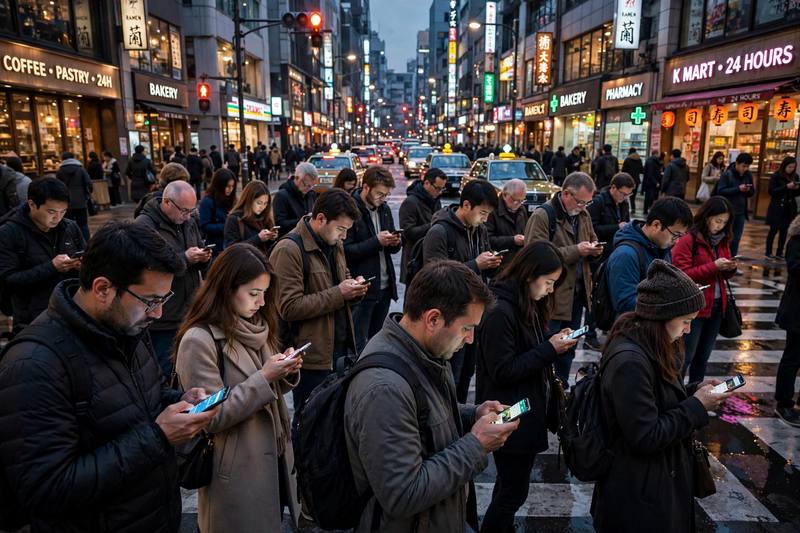
"Facial recognition has become ubiquitous in airports around the world."
unprecedented /un-PREH-seh-den-tid/
adjective
never having happened before
"The pandemic triggered an unprecedented shift toward remote work."
exacerbate /ig-ZA-ser-bayt/
verb
to make a problem or situation worse
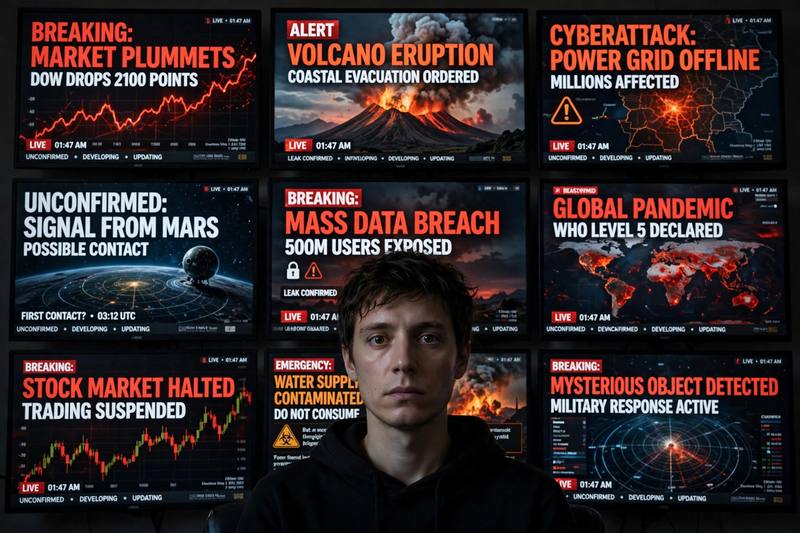
"Sensational headlines only exacerbate public anxiety during a crisis."
proliferation /proh-lih-feh-RAY-shun/
noun
rapid increase in number or spread
"The proliferation of smart devices has transformed how we communicate."
dystopian /dis-TOH-pee-un/
adjective
relating to an imagined frightening, tightly controlled society
"Critics warn that constant tracking could lead to a dystopian future."
surveillance /ser-VAY-lunts/
noun
close observation of people, especially by authorities
"Many citizens are uneasy about the scale of digital surveillance."
algorithm /AL-goh-ri-thum/
noun
a set of rules a computer follows to solve a problem or make decisions
"The algorithm decides which posts appear at the top of your feed."
misinformation /mis-in-fer-MAY-shun/
noun
false information that spreads, regardless of intent
"Misinformation spreads far faster than verified news online."
polarize /POH-luh-ryze/
verb
to divide people into sharply opposing groups
"Heated talk shows tend to polarize viewers rather than inform them."
doomscroll /DOOM-skrohl/
verb
to keep reading bad news online in a compulsive way
"She stayed up until 3 a.m. doomscrolling through disaster headlines."
deepfake /DEEP-fayk/
noun
a fake video or audio made with AI to look and sound real
"Experts worry that deepfakes could undermine trust in video evidence."
addictive /uh-DIK-tiv/
adjective
causing a strong habit that is hard to break
"Social media apps are deliberately designed to be addictive."
desensitize /dee-SEN-sih-tyze/
verb
to make someone less sensitive to shocking things
"Endless violent footage can desensitize viewers to real suffering."
nuance /NOO-ahnss/
noun
a subtle difference in meaning, tone, or expression
"Machine translation still misses the nuance of literary language."
paradox /PA-ruh-doks/
noun
a statement that seems contradictory but may contain truth
"There is a paradox at the heart of social media: it connects us yet leaves us lonelier."
erode /ih-ROHD/
verb
to gradually wear away or weaken something
"Constant interruptions gradually erode our ability to concentrate."
pervasive /per-VAY-siv/
adjective
spreading widely through every part of an area or group
"Advertising has become so pervasive that we barely notice it anymore."
mitigate /MIH-tih-gayt/
verb
to make something less severe or serious
"Tech companies claim new filters will mitigate online harassment."
accountability /uh-kown-tuh-bih-LIH-tee/
noun
responsibility for one's actions, with an obligation to explain them
"There must be greater accountability for how platforms handle personal data."
orwellian /or-WEH-lee-un/
adjective
resembling a totalitarian state with extreme surveillance and control
"The proposal for mandatory location tracking struck many as orwellian."
🎧
Podcast: Technology & Society
Listen to today’s conversation.
🎙
Train your speaking
Shadow every sentence with studio audio and get your pronunciation scored — only in the Muse English app.
Conditional sentences describe what happens, or what would happen, under certain conditions. Type 2 and Type 3 both imagine situations that are <b>not real</b> — but they differ in time.
<b>Second conditional</b> talks about an <b>unreal present or future</b>: something unlikely or impossible right now. Form: <b>If + past simple, would + base verb</b>. Note that after <i>if</i> we use <b>were</b> for all persons: <i>If I were you, I would disconnect for a week.</i>
<b>Third conditional</b> talks about an <b>unreal past</b>: something that already happened differently, so it cannot be changed
Master this grammar in the app
Get clear explanations, more examples and interactive exercises.