

📖 Muse English چیست؟
Muse English یک اپلیکیشن رایگان آموزش زبان انگلیسی است، با درس روزانه برای هر شش سطح، از A1 (مبتدی) تا C2 (تسلط کامل). هر روز لغتهای تازه با معنی فارسی، یک پادکست واقعی، تمرین شدوئینگ، گرامر و آزمون دارید. دربارهٔ اپ
📚 لغتها
۷ لغت تازه لغتهای تازه با معنی فارسی، مثال واقعی و تلفظ.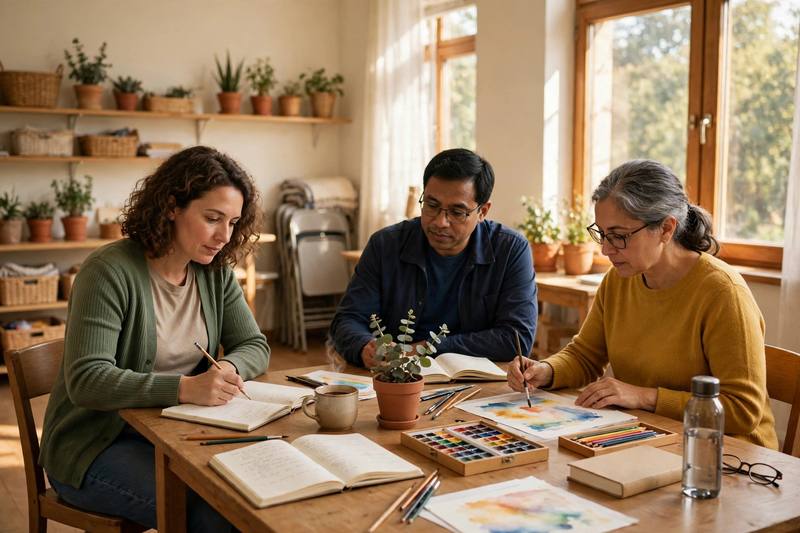


پادکست: شهر و زندگی روزمره
گفتوگوی امروز را گوش کنید.
📝 متن پادکست
Welcome to Muse English! I am Maya, and today Lena and I are talking about cities and daily life, and about settling into a new home in a busy city.
Hello, everyone. I am Lena. My cousin Mina has just moved to a new flat, and her first week sounds like a perfect story for today. She has a small bathroom, a dark basement under the building, and neighbours who are still strangers to her.
Moving city is exciting, but daily life quickly becomes real. On her first morning, what happened?
Her alarm clock rang at six, but she turned the alarm clock off and fell asleep again. The second time the alarm clock rang, she jumped out of bed, ran to the bathroom, and washed her face with cold water.
I know that feeling. My alarm clock is my enemy and my best friend at the same time. If my alarm clock does not ring, I miss my bus, my class, and sometimes my breakfast too.
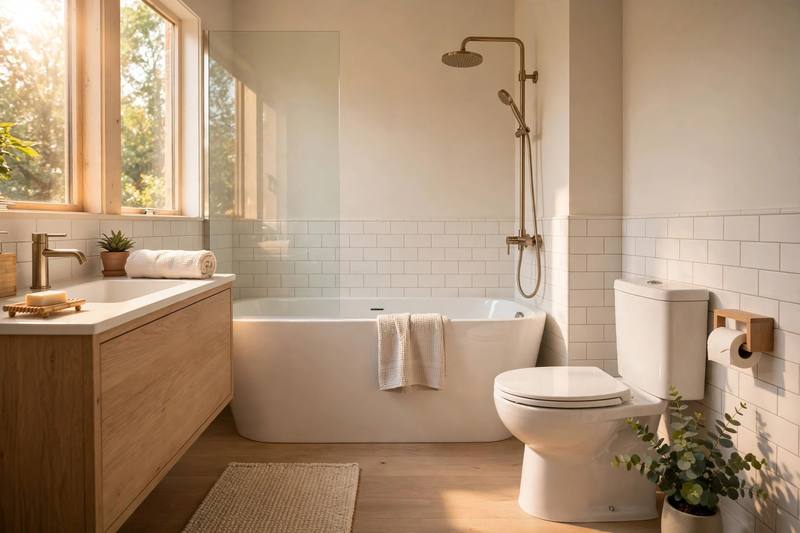
Mina said the bathroom in her new flat is tiny. There is a shower, a small mirror, and just enough space for one person in the bathroom at a time.
A tiny bathroom can still work well if it is clean and organised. Did she like the bathroom, or did the bathroom annoy her?
At first she complained about the bathroom, because the bathroom light was weak. Then she bought a brighter light, cleaned the bathroom tiles, and suddenly the bathroom felt fresh and calm.
That is a good lesson for city life. Small changes matter. What about the basement? Many city buildings have a basement for storage.
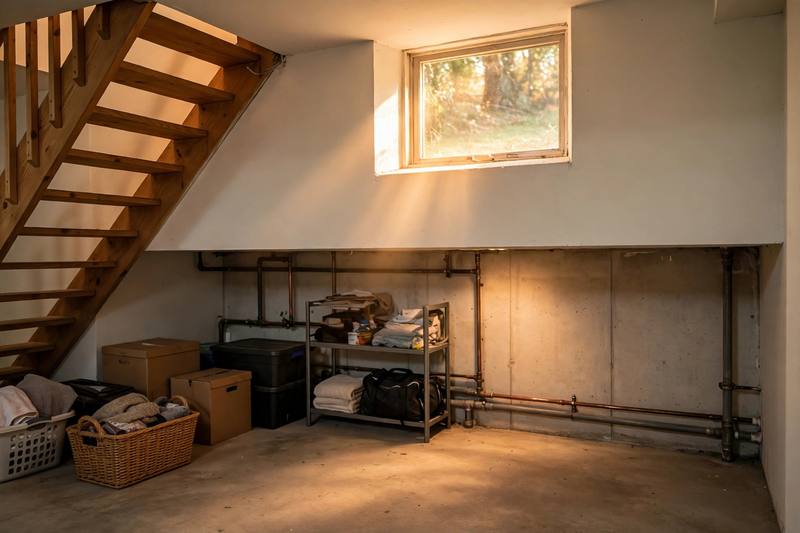
Her building has a long basement with old bikes, boxes, and winter coats. The basement smells a little damp, and the basement stairs are narrow, so she carries only one box down to the basement at a time.
I would be nervous in a dark basement alone at night. Is the basement safe?
Yes, the basement has a strong door and a new light now. Mina keeps her suitcase in the basement, her extra chairs in the basement, and she says the basement is actually very useful, even if the basement is not pretty.
Speaking of useful places in a city, Mina found something wonderful near her street, did she not?
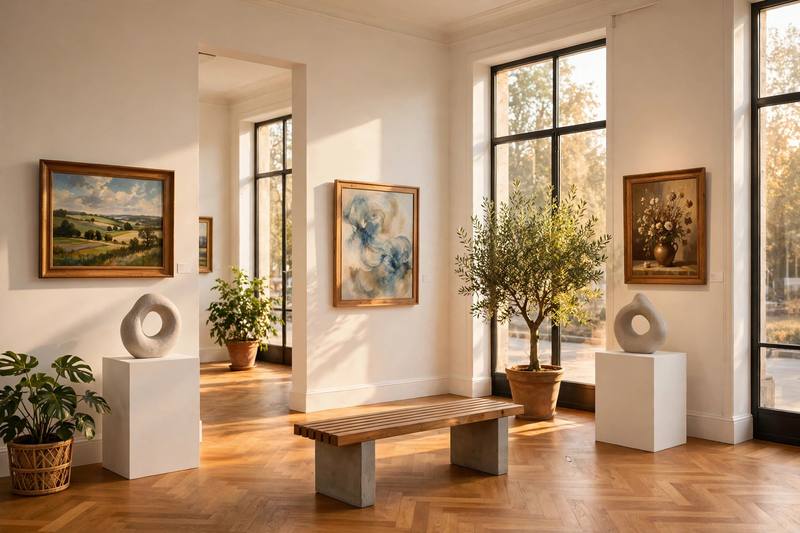
She did. Two streets away there is an art gallery, and next door to the art gallery there is an adult education centre. She walked past the art gallery on Tuesday and saw bright paintings in the window.
An art gallery can make a neighbourhood feel alive. Did she go inside the art gallery?
She went inside the art gallery on Saturday morning. The art gallery was free that day, and a guide at the art gallery explained the photos of old city streets. Mina loved the art gallery so much that she wants to take a photography class.
And that is where the adult education centre comes in, right?
Exactly. The adult education centre offers evening classes for people who work during the day. At the adult education centre you can learn photography, cooking, computer skills, and languages. Mina signed up at the adult education centre for a photography course.
Mina said the staff at the adult education centre were kind. They did not bother to rush her when she asked many questions, and they gave her a map of the art gallery and the adult education centre building.
You used one of our words there in a natural way. To bother means to make an effort. People often say, do not bother, when they mean, do not trouble yourself.
Yes, and Mina is learning when to bother and when to rest. On her first evening, she did not bother to cook a big dinner. She just made soup.
Let me guess. She ate the soup from a bowl, sitting by the window, watching the city.
Exactly right. She filled a big blue bowl with tomato soup, put the bowl on the small table, and ate slowly. That bowl was a gift from her mother, so the bowl makes the new flat feel like home.
Mina broke a bowl on moving day, sadly. The bowl fell in the kitchen, and pieces went everywhere. Now she has only two bowls left, one bowl for soup and one bowl for salad.
Before we continue with Mina and her busy kitchen, let me share something that can help your daily learning. If you are enjoying these city stories, the Muse English app gives you a fresh lesson every day, with new words, clear photos, and pronunciation you can listen to and repeat. You also get this podcast, shadowing stories where you speak along with the voice, fun quizzes, and full grammar lessons, all in one place. It is completely free to install, and your points and leaderboard keep you motivated, even on busy days. Try it after this episode, and make English part of your daily life, just like Mina is doing in her new city.
That is such a good habit. A few minutes every morning, maybe while your alarm clock is still ringing in your head, can change your English over time.
Now, back to Mina. How is she managing her mornings now?
Much better. She sets her alarm clock the night before, and she puts the alarm clock far from her bed, so she must stand up when the alarm clock rings. She goes straight to the bathroom, brushes her teeth in the bathroom, and plans her day.
She does bother to make breakfast now, because she learned that if she does not bother, she feels tired by ten. A bowl of oats, a bowl of fruit, or eggs and toast give her energy. She says, if I bother to start well, the whole day feels easier.
I like that idea. To bother is not negative here. It means to take the trouble to do something good. If you bother to practise English, if you bother to read, if you bother to speak, you improve.
And if you do not bother, nothing changes. Mina did not bother to explore her neighbourhood at first, because she was tired after moving. Then one walk changed everything. She found the art gallery, she found the adult education centre, and she met a neighbour in the basement who helped her carry a box.
His name is Sam. He was taking his bike out of the basement when Mina was struggling with a heavy box on the basement stairs. He carried the box to the basement for her, showed her where the basement lights were, and told her which day the basement is cleaned.
Sam volunteers at the art gallery on weekends. He told Mina that the art gallery has a free evening every month, and that students from the adult education centre can show their photos inside the art gallery in spring.
She is already practising. She took photos of her bathroom window in morning light, of a bowl of oranges on her table, and even of the basement door, which looks mysterious in black and white.
Smart. And what about her evenings at the adult education centre?
Mina laughed at that, because her own alarm clock is loud and ugly, but she will never throw that alarm clock away. It woke her for her first class, her first gallery visit, and her first week at work.
Before we finish Mina's story, here is a second reminder from me, and then Lena will tell you how the week ended. Learning English is easier when it fits into the life you already live, in your bathroom in the morning, at your table with a bowl of soup, or on the bus to class. The Muse English app is built for exactly those small moments. Every day you get new words with photos and sound, a podcast like this one, a shadowing story to practise speaking, quizzes to check your memory, and grammar lessons that use the words you just learned. Install it free, earn points, climb the leaderboard, and turn ten quiet minutes into real progress, starting today.
Thank you, Maya. So, how did Mina's first week end? On Sunday, she invited Sam and two classmates from the adult education centre to her flat. She made a big bowl of pasta, then a second bowl of salad, and they talked about the art gallery exhibition.
Did she bother to tidy the basement and the bathroom before her guests arrived?
She did bother to tidy everything. She cleaned the bathroom until it shone, she put extra boxes neatly in the basement, she set her alarm clock early to buy bread, and she placed a bowl of flowers, well, a bowl with flowers in water, in the middle of the table.
A bowl of flowers is a lovely centrepiece. It shows a bowl is not only for food.
Her guests loved the flat. They said the bathroom was bright, the basement was useful, and the neighbourhood, with its art gallery and its adult education centre, was perfect for a new start.
So Mina's daily life now has a rhythm. Alarm clock, bathroom, bowl of breakfast, work, class at the adult education centre, sometimes the art gallery, and home again.
Yes, and she told me, I do not bother to worry about being perfect in this city anymore. I just bother to try, every single day. That is her motto now.
That is a motto for English learners too. Do not worry about being perfect. Bother to listen, bother to speak, bother to repeat the shadowing story, and your English will grow.
And remember the small words of daily life. An alarm clock starts your day, a bathroom wakes you up, a bowl holds your food, a basement holds your extra things, an art gallery feeds your eyes, and an adult education centre feeds your mind.
Beautifully said, Lena. Thanks for listening today. Practise these words in your own sentences about your city and your daily life, and we will see you tomorrow with a fresh lesson.
Goodbye for now, and do not forget to set your alarm clock tonight.
🎙 تمرین شدوئینگ نمونهٔ رایگان
گوش کنید و همزمان با صدا بلند تکرار کنید. تمرین کامل شدوئینگ در اپ است: هر جمله را تکرار میکنید و میبینید اپ چند کلمه از آن را تشخیص داده است.
Mina moved to a new city flat with a small bathroom and a dark basement below it.
Her alarm clock rang early, so she ate soup from a big bowl before work.
She did not bother to unpack every box on the first busy morning.
صحبت کردن را تمرین کنید
در اپ Muse English همهٔ جملهها را شدوئینگ کنید. اپ گوش میدهد و نشان میدهد چند کلمه از جملهتان را تشخیص داده است.
📝گرامر: Used To, Would, Be Used To and Get Used To
Used to plus the base verb describes a past habit or state that is not true now. I used to live near an art gallery, but now my flat, with its small bathroom and basement, is across the city.
Would plus the base verb describes a repeated past action, not a state. Every Sunday we would visit the art gallery and eat soup from a big bowl afterwards.
For past states with verbs like be, have, live and like, use only used to. Say I used to have an alarm clock in the bathroom, never I would have an alarm clock as a state.
Be used to plus -ing or a no
این گرامر را در اپ کامل یاد بگیرید
توضیح کاملتر، مثالهای بیشتر و تمرین تعاملی.
راهنمای کامل و تمرینها: Used To, Would, Be Used To and Get Used To ←
هر روز ادامه بدهید
هر روز درس، پادکست و آزمون تازه؛ رایگان در اپ Muse English.