📅 2026-09-30📊 B2 Upper-Intermediate📚 20 new words🎧 daily podcast
📖 What is Muse English?
Muse English is a free English learning app with daily lessons across all 6 CEFR levels (A1 Beginner to C2 Proficient). Every day brings new vocabulary, a real podcast conversation, shadowing practice, grammar and quizzes — all at museenglishapp.com.
📚 Vocabulary
20 new wordsLearn new words with real examples and audio.
bargain /BAHR-gun/
noun/verb
something sold for a very good price; to argue with a seller to get a lower price
"I got a real bargain — this jacket was half price!"
refund /REE-fund/
noun/verb
money given back to you when you return something you bought
"The store gave me a full refund for the broken TV."
discount /DIS-kownt/
noun
a lower price than usual
"Students get a ten percent discount at this shop."
receipt /ree-SEET/
noun
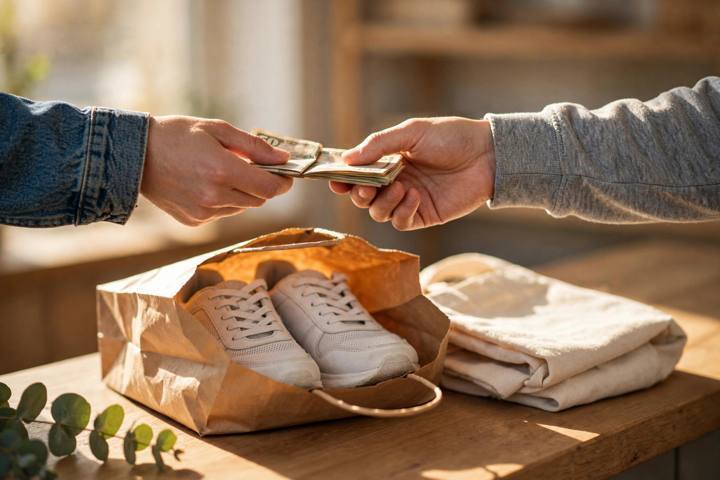
the paper the store gives you to show that you paid
"Keep the receipt if you want to return the shoes."
debt /det/
noun
money that you owe to someone
"He finally paid off all his debt."
afford /uh-FORD/
verb
to have enough money to buy or do something
"I can't afford a new car right now."
budget /BUJ-it/
noun
a plan for how you will spend your money
"We have to stick to our monthly budget."
withdraw /with-DRAW/
verb
to take money out of your bank account
"I withdrew two hundred dollars from the ATM."
deposit /dee-POZ-it/
noun/verb
money you put into your bank account; to put money into an account
"She made a deposit of one thousand dollars."
currency /KUR-un-see/
noun
the type of money used in a country
"The currency of Japan is the yen."
invest /in-VEST/
verb
to put money into something to make more money later
"She decided to invest in real estate."
profit /PROF-it/
noun
the money you make after paying all your costs
"The small shop made a big profit this year."
installment /in-STAWL-munt/
noun
one of several payments you make over time
"He bought the phone in monthly installments."
exchange /iks-CHAYNJ/
noun/verb
to give one thing and get another; to change money of one country into money of another
"Where can I exchange dollars for euros?"
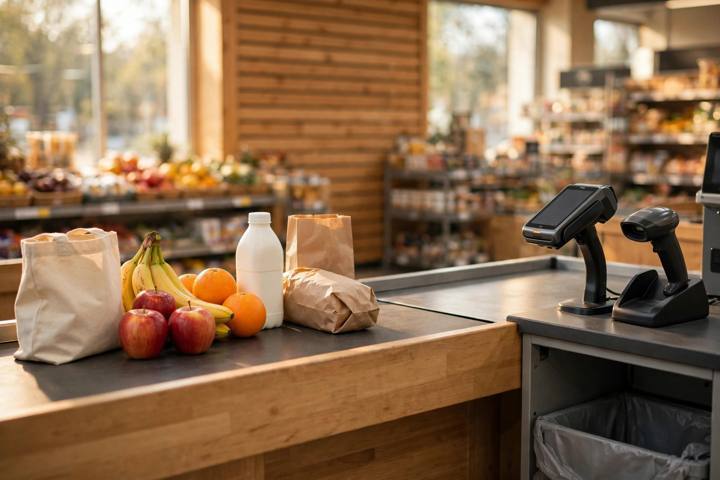
checkout /CHEK-owt/
noun
the place in a store where you pay for things
"The checkout lines were very long."
savings /SAY-vingz/
noun, plural
money you keep and do not spend
"He keeps his savings in a bank account."
loan /lohn/
noun
money you borrow and must pay back later
"They took out a loan to buy a house."
bankrupt /BANG-krupt/
adjective
having no money left; unable to pay your debts
"The company went bankrupt last year."
overpriced /oh-vur-PRYST/
adjective
costing more than it should
"The food was good, but the restaurant was overpriced."
warranty /WOR-un-tee/
noun
a written promise to repair or replace something for free if it breaks
"The laptop comes with a two year warranty."
🎧
Podcast: Money & Shopping
Listen to today’s conversation.
🎙
Train your speaking
Shadow every sentence with studio audio and get your pronunciation scored — only in the Muse English app.
Use a or an with singular countable nouns: to say what something is or what somebody does (She's a lawyer), the first time you mention a thing or person (I saw an old man with a dog), in What...! exclamations (What an awful day!), and in expressions of frequency (three times a week). Use the when you talk about something you already mentioned (The dog was barking), when it is clear what you mean (The bell rang and my father opened the door), when there is only one of something (the moon), with places in a town (the cinema, the theatre), and with superlatives (the best restaurant). Use no artic
Master this grammar in the app
Get clear explanations, more examples and interactive exercises.