

📖 Muse English چیست؟
Muse English یک اپلیکیشن رایگان آموزش زبان انگلیسی است، با درس روزانه برای هر شش سطح، از A1 (مبتدی) تا C2 (تسلط کامل). هر روز لغتهای تازه با معنی فارسی، یک پادکست واقعی، تمرین شدوئینگ، گرامر و آزمون دارید. دربارهٔ اپ
📚 لغتها
۵ لغت تازه لغتهای تازه با معنی فارسی، مثال واقعی و تلفظ.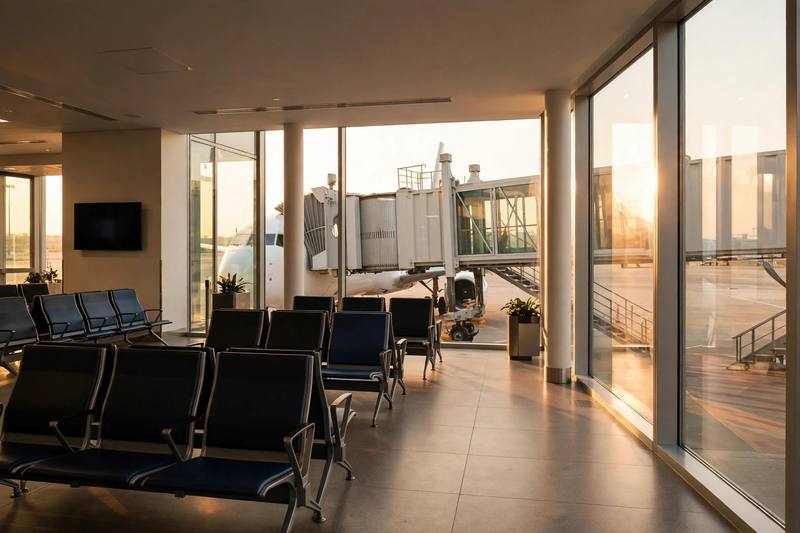




پادکست: سفر و حملونقل
گفتوگوی امروز را گوش کنید.
📝 متن پادکست
Welcome to Muse English! I'm Maya, and this is my friend Lena.
Hello, everyone! Today we are talking about travel. Maya and I both love trips, so this is a fun topic.
It is! And we have five useful travel words for you today. Let's start at the airport. When you fly somewhere, you go to your gate. The gate is the place where you get on the plane.
Yes. Last summer my gate was number twelve. I sat at the gate and waited for one hour.
That is a long wait! I always check the big screen for my gate. Sometimes they change the gate, and you have to run!
That happened to me once. My gate changed from nine to twenty-five. I ran across the whole airport to reach the new gate.
Oh no! Remember, they close the gate about twenty minutes before the flight leaves. So don't walk away from the gate.
Let's talk about the word depart. Depart means to leave a place to start a trip. My morning train departs at eight o'clock.
Mine departs at eight thirty. When a train departs on time, I am so happy.
But buses and trains are not always perfect. Last week my bus did not depart until ten because of rain.
Ugh. I check the departures board before I travel. The board shows when every train departs, so I know what to expect.
Good idea. And when a flight departs late, you can sit and have coffee. No stress.
Quick pause, everyone. If you enjoy this podcast, you will love the Muse English app. Every morning the app gives you new words with clear photos, and you can hear the right pronunciation. You also get shadowing stories to practice speaking, short quizzes to test yourself, and simple grammar lessons. You earn points for every lesson, and you can climb the leaderboard. It is free, and it helps you learn English a little bit every day. Give it a try.
Now let's talk about arrive. Arrive means to get to a place at the end of a trip. I try to arrive early when I fly.
Me too! If you arrive late, your gate might close. I arrived at the hotel at eleven at night once, and the door was locked.
That's terrible! Did you get in?
Yes, I called them and they opened the door. My brother arrived home at midnight after a long flight. He was so happy to arrive safe and sound.
I love arriving at a new city. When you arrive, everything feels exciting.
What about the word carry? Carry means to hold or take something with you. Maya, what do you carry when you travel?
I carry one small bag now. I used to carry three big bags, but that was a mistake!
Ha! I carry my passport, my ticket, and my phone. I also carry snacks, because airport food is too expensive.
Smart. My dad carries a huge suitcase everywhere he goes. He says he needs everything. I carry only what I really need.
Our last word is corner. A corner is the place where two streets meet. Our hotel was on the corner of a busy street.
I love corner cafes. There was a small cafe on the corner near the train station, and we had breakfast there every day.
If you get lost, ask someone: turn left at the corner. Last year we met our tour guide at the corner, right next to a flower shop.
Corners are great landmarks. Just remember the shop on the corner, and you will find your way back.
Before we say goodbye, one more tip. The Muse English app has today's five words waiting for you, with photos and voice audio, so you can practice after this episode. There is a shadowing story where every sentence is read twice, and a short quiz to check what you learned. Your points grow on the leaderboard as you keep learning. It is free to install. Open the Muse English app and practice with us today.
Let's say our five words one more time. Gate — the place where you get on the plane. Depart — to leave to start a trip. Arrive — to get to a place. Carry — to take things with you. Corner — where two streets meet.
Perfect. Use them this week when you talk about travel. Thanks for listening to Muse English. See you tomorrow!
🎙 تمرین شدوئینگ نمونهٔ رایگان
گوش کنید و همزمان با صدا بلند تکرار کنید. تمرین کامل شدوئینگ در اپ است: هر جمله را تکرار میکنید و میبینید اپ چند کلمه از آن را تشخیص داده است.
Sara wanted to visit her friend in the city.
She took a small bag and carried it to the station.
Her train would depart at nine in the morning.
صحبت کردن را تمرین کنید
در اپ Muse English همهٔ جملهها را شدوئینگ کنید. اپ گوش میدهد و نشان میدهد چند کلمه از جملهتان را تشخیص داده است.
📝گرامر: Present Perfect for Experience (ever, never)
We use the present perfect to talk about experiences in our life, when we don't say exactly when it happened. Form: have / has + past participle.
Use ever in questions about your whole life: *Have you ever waited at the gate?*
Use never with a positive verb to say it did not happen in your life: *I've never missed a train.*
When you say when it happened, use the past simple: *I went there in 2022.* A common mistake is *Have you ever went?* — always use the past participle: been, seen, eaten.
این گرامر را در اپ کامل یاد بگیرید
توضیح کاملتر، مثالهای بیشتر و تمرین تعاملی.
راهنمای کامل و تمرینها: Present Perfect for Experience (ever, never) ←
هر روز ادامه بدهید
هر روز درس، پادکست و آزمون تازه؛ رایگان در اپ Muse English.